The Mitsubishi Mirage G4 (A10, facelift 2019): A Global Subcompact Sedan for the Modern Era
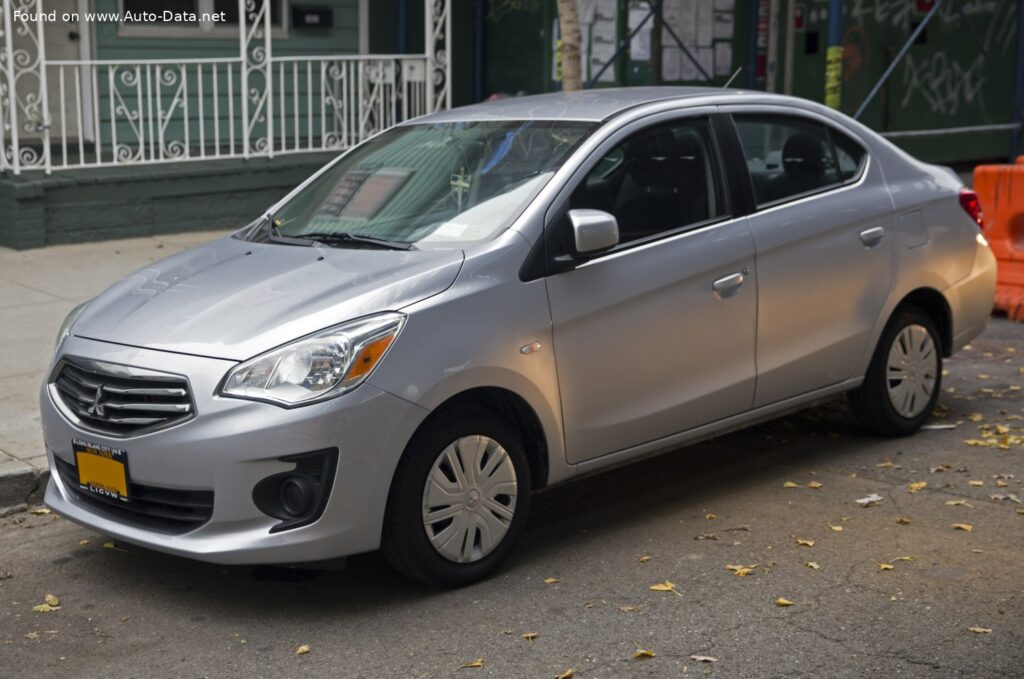
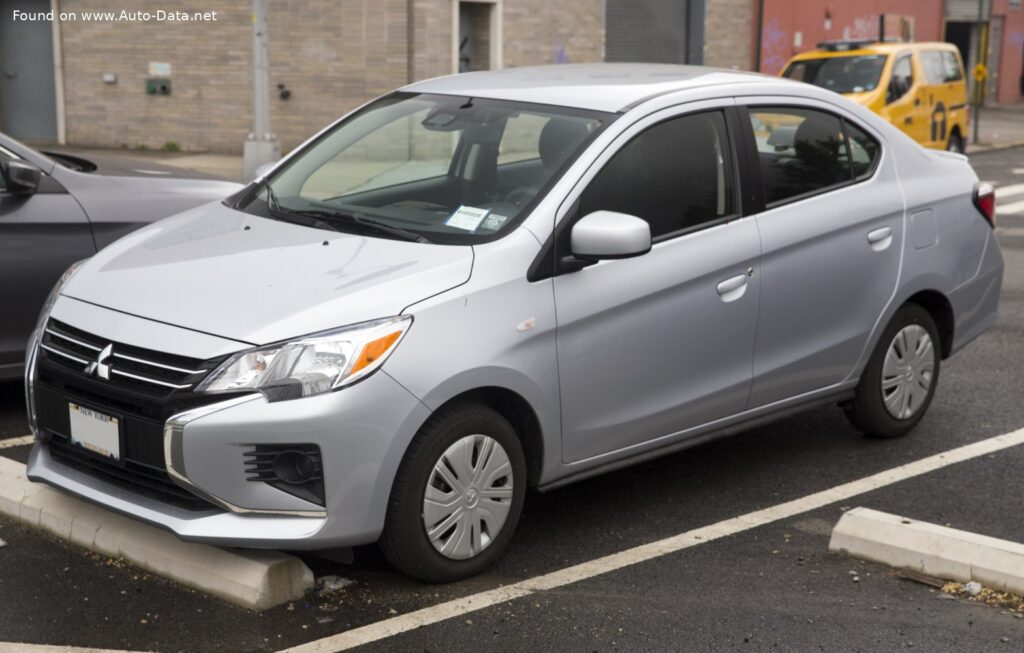
The Mitsubishi Mirage G4 (A10, facelift 2019) represents the sedan variant of Mitsubishi’s long-running subcompact Mirage line. Introduced globally, and specifically available in markets like North America, this particular iteration received a significant refresh in 2019, building upon the sixth-generation A10 platform. Positioned as an entry-level vehicle, the Mirage G4 prioritizes affordability, exceptional fuel economy, and practical urban usability. It aims to deliver reliable transportation for budget-conscious consumers and those seeking an efficient daily commuter, particularly in dense city environments. The 2019 facelift brought updated styling and enhanced features, ensuring its continued relevance in a highly competitive segment.
Engine and Performance: The Heart of the Mitsubishi Mirage G4 (A10, facelift 2019)
Powering the Mitsubishi Mirage G4 (A10, facelift 2019) is a compact and efficient 1.2-liter MIVEC (Mitsubishi Innovative Valve timing Electronic Control system) inline three-cylinder gasoline engine, designated with the code 3A92. This naturally aspirated powerplant is designed with a focus on fuel efficiency and low emissions, rather than outright speed. It produces a modest 78 horsepower at 6000 rpm and 73.76 lb.-ft. (100 Nm) of torque at 4000 rpm. While these figures may seem conservative, they are perfectly adequate for the vehicle’s intended purpose: navigating urban traffic and maintaining highway speeds without excessive strain.
The engine’s small displacement of 1193 cubic centimeters (72.8 cu. in.) and a compression ratio of 10.5:1 contribute to its economical operation. It features a DOHC (Dual Overhead Camshaft) valvetrain with four valves per cylinder and utilizes a multi-port manifold injection system. This setup, combined with the MIVEC technology, optimizes valve timing for improved combustion efficiency across various engine speeds. The engine is mounted transversely in the front, driving the front wheels, a common and efficient layout for subcompact vehicles.
Paired with this engine is a Continuously Variable Transmission (CVT). This transmission type is crucial to the Mirage G4’s fuel economy prowess, as it allows the engine to operate at its most efficient RPM range for a given driving condition, eliminating traditional gear shifts for a smooth, albeit sometimes less engaging, driving experience. The powertrain architecture is front-wheel drive, further contributing to its simplicity and efficiency.
Fuel economy is a standout feature, with combined consumption rated at an impressive 36.8 US mpg (6.4 l/100 km). Urban driving yields 35.1 US mpg (6.7 l/100 km), while extra-urban (highway) driving achieves an excellent 41.3 US mpg (5.7 l/100 km). The vehicle meets the ULEV70 (Ultra-Low Emission Vehicle) standard, underscoring Mitsubishi’s commitment to environmental responsibility. With a curb weight ranging from 2171.55 to 2193.6 lbs. (985-995 kg), the weight-to-power ratio stands at 12.6 kg/Hp, or 79.2 Hp per tonne, reflecting its lightweight construction.
Design and Features: Practicality and Modernity
The Mitsubishi Mirage G4 (A10, facelift 2019) sports a conventional four-door sedan body style, offering seating for five occupants. The 2019 facelift introduced a refreshed exterior design, aligning it with Mitsubishi’s contemporary design language, which typically includes a more aggressive front fascia, revised grille, and updated lighting elements, giving it a sharper and more modern appearance than its pre-facelift predecessor. Despite its compact footprint, the G4 provides a surprisingly spacious interior for its class.
Dimensions are key to its urban maneuverability: a length of 169.49 inches (4305 mm), width of 65.71 inches (1669 mm), and a height of 59.21 inches (1504 mm). A wheelbase of 100.39 inches (2550 mm) contributes to a stable ride for its size, while a tight minimum turning circle of 31.5 feet (9.6 meters) makes it exceptionally agile in tight city streets and parking lots. With a ground clearance of 6.3 inches (160 mm), it can handle minor road imperfections with ease.
Inside, the Mirage G4 focuses on functionality. While specific interior features may vary by trim level, the 2019 facelift typically included updated infotainment options, improved materials, and practical storage solutions. Safety is addressed with standard features such as ABS (Anti-lock Braking System), which enhances braking control in emergency situations. The steering system is a rack and pinion type with electric power steering, providing light and effortless steering, particularly beneficial for city driving and parking.
The car rides on either 165/65 R14 or 175/55 R15 tires, depending on the trim, balancing ride comfort with efficiency. The suspension setup consists of an independent McPherson strut system at the front and a torsion beam axle at the rear, a common and cost-effective arrangement for subcompacts that provides a compliant ride. Braking is handled by ventilated discs at the front and drum brakes at the rear, a proven combination for a vehicle of this size and performance.
Technical Specifications
| Category | Specification | Value |
|---|---|---|
General Information |
||
| Brand | Mitsubishi | |
| Model | Mirage | |
| Generation | Mirage G4 (A10, facelift 2019) | |
| Type (Engine) | 1.2 MIVEC (78 Hp) CVT | |
| Start of Production | 2019 year | |
| Powertrain Architecture | Internal Combustion engine | |
| Body Type | Sedan | |
| Seats | 5 | |
| Doors | 4 | |
Performance Specs |
||
| Fuel Consumption (Urban) | 6.7 l/100 km | 35.1 US mpg |
| Fuel Consumption (Extra Urban) | 5.7 l/100 km | 41.3 US mpg |
| Fuel Consumption (Combined) | 6.4 l/100 km | 36.8 US mpg |
| Fuel Type | Petrol (Gasoline) | |
| Emission Standard | ULEV70 | |
| Weight-to-Power Ratio | 12.6 kg/Hp | 79.2 Hp/tonne |
| Weight-to-Torque Ratio | 9.9 kg/Nm | 101.5 Nm/tonne |
Engine Specs |
||
| Power | 78 Hp @ 6000 rpm | |
| Power per Liter | 65.4 Hp/l | |
| Torque | 100 Nm @ 4000 rpm | 73.76 lb.-ft. @ 4000 rpm |
| Engine Layout | Front, Transverse | |
| Engine Model/Code | 3A92 | |
| Engine Displacement | 1193 cm3 | 72.8 cu. in. |
| Number of Cylinders | 3 | |
| Engine Configuration | Inline | |
| Cylinder Bore | 75 mm | 2.95 in. |
| Piston Stroke | 90 mm | 3.54 in. |
| Compression Ratio | 10.5:1 | |
| Number of Valves per Cylinder | 4 | |
| Fuel Injection System | Multi-port manifold injection | |
| Engine Aspiration | Naturally aspirated engine | |
| Valvetrain | DOHC | |
Space, Volume and Weights |
||
| Kerb Weight | 985-995 kg | 2171.55 – 2193.6 lbs. |
| Max. Weight | 1410 kg | 3108.52 lbs. |
| Max Load | 415-425 kg | 914.92 – 936.96 lbs. |
| Trunk Space (Minimum) | 351 l | 12.4 cu. ft. |
| Fuel Tank Capacity | 35 l | 9.25 US gal |
Dimensions |
||
| Length | 4305 mm | 169.49 in. |
| Width | 1669 mm | 65.71 in. |
| Height | 1504 mm | 59.21 in. |
| Wheelbase | 2550 mm | 100.39 in. |
| Front Track | 1445 mm | 56.89 in. |
| Rear Track | 1430 mm | 56.3 in. |
| Ride Height (Ground Clearance) | 160 mm | 6.3 in. |
| Minimum Turning Circle | 9.6 m | 31.5 ft. |
Drivetrain, Brakes and Suspension Specs |
||
| Drivetrain Architecture | Internal combustion engine (ICE) drives the front wheels | |
| Drive Wheel | Front wheel drive | |
| Front Suspension | Independent type McPherson | |
| Rear Suspension | Torsion | |
| Front Brakes | Ventilated discs | |
| Rear Brakes | Drum | |
| Assisting Systems | ABS (Anti-lock braking system) | |
| Steering Type | Steering rack and pinion | |
| Power Steering | Electric Steering | |
| Tire Sizes | 165/65 R14; 175/55 R15 | |
Legacy and Market Impact
The Mitsubishi Mirage G4, particularly the 2019 facelift model, continues Mitsubishi’s long-standing tradition of offering an affordable and highly fuel-efficient option in the global subcompact market. In regions like North America, where SUVs and larger vehicles dominate, the Mirage G4 carves out a niche for itself as one of the most budget-friendly new cars available, often appealing to first-time buyers, students, or those simply seeking the lowest possible cost of ownership. Its primary competitors in the US market include other entry-level sedans such as the Kia Rio, Hyundai Accent, and Nissan Versa, all of which offer similar value propositions but with varying degrees of refinement and features.
While often critiqued for its modest performance and basic interior compared to more expensive alternatives, the Mirage G4’s strengths lie squarely in its exceptional fuel economy, low purchase price, and Mitsubishi’s robust warranty. These attributes make it a compelling choice for consumers prioritizing economy over exhilaration. Its lightweight construction and compact dimensions also make it an ideal vehicle for navigating congested urban environments, where ease of parking and maneuverability are paramount.
Globally, the Mirage G4 (known as Attrage in some markets) plays an even more significant role for Mitsubishi, especially in developing and emerging markets across Asia and Latin America. In these regions, its affordability, durability, and low running costs are highly valued, making it a popular choice for personal transportation and even for taxi fleets. The 2019 facelift ensured that the vehicle remained fresh and competitive, adopting contemporary design cues that helped it stand out in a crowded segment.
The legacy of the Mitsubishi Mirage G4 (A10, facelift 2019) is not defined by groundbreaking technology or segment-leading luxury, but by its steadfast commitment to delivering fundamental automotive needs: reliable, economical, and practical transportation. It serves as a testament to Mitsubishi’s ability to produce a vehicle that fulfills a crucial role in the automotive landscape, providing accessible mobility to a wide range of consumers worldwide.