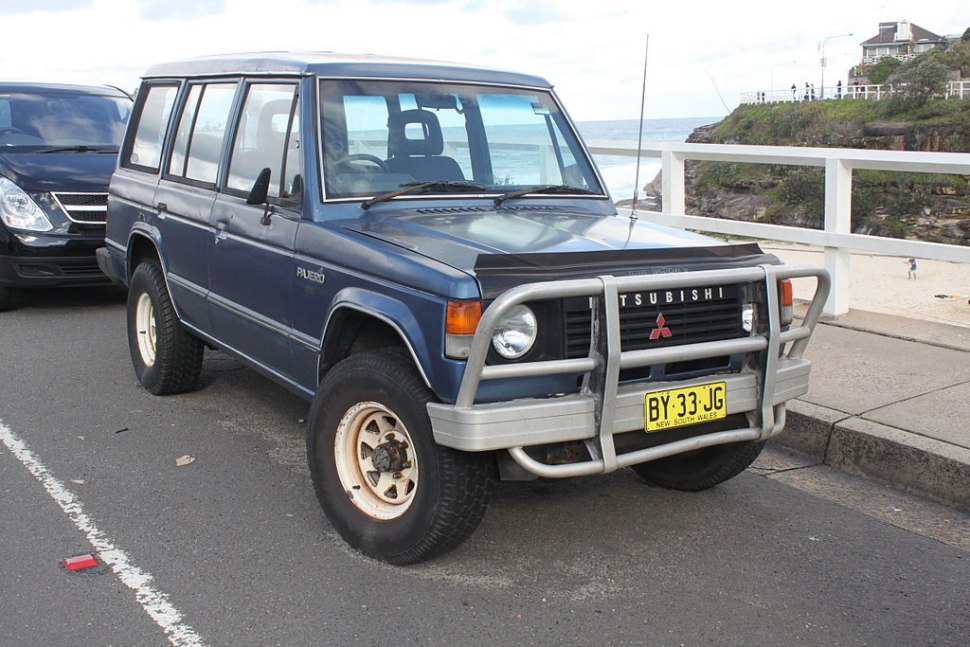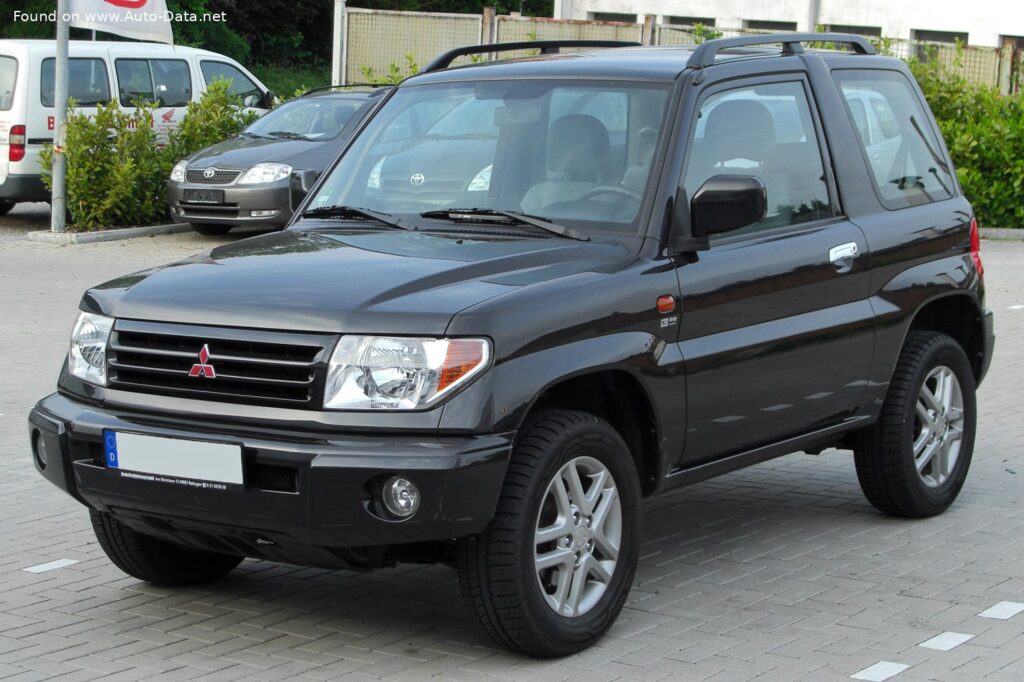
The Mitsubishi Pajero Pinin (H60) represents a distinctive chapter in the Japanese automaker’s storied history of sport utility vehicles. Launched in November 2001 and continuing production through 2006, this particular iteration, the 1.8 i 16V (114 Hp) 5dr Automatic, carved out a niche as a compact SUV. Unlike its larger, more globally recognized sibling, the full-size Pajero (known as Montero in North America and Shogun in the UK), the Pajero Pinin was primarily targeted at the European and Asian markets, where demand for smaller, more maneuverable, yet capable 4×4 vehicles was significant. Its design ethos combined the rugged appeal and off-road prowess associated with the Pajero nameplate with dimensions better suited for urban environments and tighter European roads. The H60 generation, specifically, underscored Mitsubishi’s commitment to offering a diverse range of SUVs, catering to varying consumer needs from hardcore off-roading to daily city commuting with an adventurous spirit.
Engineering and Performance of the Mitsubishi Pajero Pinin (H60)
At the heart of the Mitsubishi Pajero Pinin (H60) 1.8 i 16V (114 Hp) 5dr Automatic lies a robust and efficient powertrain designed for balanced performance and reliability. The vehicle is propelled by a 1.8-liter (1834 cm³) inline four-cylinder engine, designated by Mitsubishi’s 4G93 code. This naturally aspirated unit features a Double Overhead Camshaft (DOHC) valvetrain with 16 valves (four per cylinder), a configuration that was advanced for its time, ensuring efficient air intake and exhaust scavenging for optimal combustion. Fuel delivery is managed by a multi-port manifold injection system, contributing to precise fuel metering and improved engine response.
The engine generates a respectable 114 horsepower at 5500 rpm, which, when combined with 118.01 lb.-ft. of torque peaking at 4000 rpm, provides ample motivation for the compact SUV. This power output translates to a power-to-weight ratio of 85.1 Hp per tonne, indicating a lively feel for its class. Mated to a 4-speed automatic transmission, the powertrain focuses on smooth power delivery and ease of driving, particularly in urban settings. The all-wheel-drive (4×4) system, a hallmark of the Pajero lineage, ensures confident traction across various surfaces, from paved roads to light off-road trails, reinforcing its SUV credentials.
Performance figures for the Pajero Pinin reflect its practical orientation rather than outright speed. It accelerates from 0 to 60 mph in a measured 13.1 seconds, with a maximum speed of 93.21 mph. While these numbers might seem modest by today’s standards, they were entirely adequate for a compact SUV of its era, designed for versatility and utility. Fuel economy, a crucial consideration for many buyers, was rated at a combined 23.5 US mpg (10 l/100 km). Urban driving yielded approximately 19 US mpg (12.4 l/100 km), while extra-urban conditions saw an improved 27.4 US mpg (8.6 l/100 km). These figures positioned the Pajero Pinin as a reasonably efficient option within its segment, especially considering its permanent or selectable all-wheel-drive system. The engine’s compression ratio of 10:1 further contributed to its efficiency and performance characteristics, requiring gasoline as its fuel type.
Design and Practicality of the Mitsubishi Pajero Pinin (H60)
The Mitsubishi Pajero Pinin (H60) distinguishes itself with a design that cleverly balances rugged SUV aesthetics with compact, city-friendly dimensions. As a 5-door SUV, it offers seating for five occupants, making it a practical choice for small families or individuals seeking versatile transportation. Its body type maintained the upright stance and purposeful lines characteristic of the larger Pajero, conveying a sense of adventure and capability in a smaller package.
Measuring 158.86 inches in length, 66.73 inches in width, and 68.31 inches in height, the Pajero Pinin’s compact footprint was a key selling point in markets where space and maneuverability are at a premium. The relatively short wheelbase of 96.46 inches further enhanced its agility and tight turning radius, beneficial for navigating congested city streets and parking in confined spaces. Despite its smaller size, the vehicle offered a commendable curb weight of 2954.19 lbs., suggesting a robust build quality. It could handle a maximum load of 1102.31 lbs., bringing its gross maximum weight to 4056.51 lbs., highlighting its capability for carrying passengers and cargo.
Inside, the Pajero Pinin provided a practical and adaptable cabin. The trunk (boot) space ranged from a useful 12.64 cubic feet with all seats in place, expanding significantly to 40.89 cubic feet when the rear seats were folded, offering ample room for luggage, groceries, or sports equipment. This flexibility was crucial for a vehicle positioned as an everyday adventure companion. The fuel tank capacity of 14 US gallons (53 liters) provided a decent cruising range for its class.
In terms of chassis and safety, the Pajero Pinin was equipped with features appropriate for its time. The suspension system comprised a spring strut setup at the front and coil springs at the rear, a configuration designed to offer a comfortable ride while maintaining competent handling both on and off-road. Braking performance was handled by ventilated discs at the front and solid discs at the rear, complemented by an Anti-lock Braking System (ABS) for enhanced stopping control under various conditions. Steering was managed by a hydraulic rack and pinion system, providing direct feedback and ease of steering, especially at lower speeds. The vehicle rode on 215/65 R16 tires mounted on 16-inch wheel rims, a common size for compact SUVs, balancing ride comfort with adequate grip and durability.
Overall, the Mitsubishi Pajero Pinin (H60) was a well-rounded compact SUV that successfully translated the rugged essence of the Pajero brand into a more accessible and urban-friendly format. Its combination of a capable powertrain, practical interior, and robust chassis design made it a compelling option for consumers in its target markets who sought versatility without the bulk of a full-size SUV.
Technical Specifications
| Category | Specification |
|---|---|
| Brand | Mitsubishi |
| Model | Pajero Pinin (H60) |
| Type (Engine) | 1.8 i 16V (114 Hp) 5dr Automatic |
| Production Start | November, 2001 |
| Production End | 2006 |
| Powertrain Architecture | Internal Combustion engine |
| Body type | SUV |
| Seats | 5 |
| Doors | 5 |
| Fuel Type | Petrol (Gasoline) |
| Fuel Consumption (Urban) | 12.4 l/100 km (19 US mpg) |
| Fuel Consumption (Extra Urban) | 8.6 l/100 km (27.4 US mpg) |
| Fuel Consumption (Combined) | 10 l/100 km (23.5 US mpg) |
| Acceleration 0 – 60 mph | 13.1 sec |
| Maximum Speed | 150 km/h (93.21 mph) |
| Power | 114 Hp @ 5500 rpm |
| Power per liter | 62.2 Hp/l |
| Torque | 160 Nm (118.01 lb.-ft.) @ 4000 rpm |
| Engine Layout | Front, Longitudinal |
| Engine Model/Code | 4G93 |
| Engine Displacement | 1834 cm³ (1.8 Liters / 111.92 cu. in.) |
| Number of Cylinders | 4 |
| Engine Configuration | Inline |
| Cylinder Bore | 81 mm (3.19 in.) |
| Piston Stroke | 89 mm (3.5 in.) |
| Compression Ratio | 10:1 |
| Valves per Cylinder | 4 |
| Fuel Injection System | Multi-port manifold injection |
| Engine Aspiration | Naturally aspirated engine |
| Valvetrain | DOHC |
| Engine Oil Capacity | 3.8 l (4.02 US qt) |
| Coolant Capacity | 6 l (6.34 US qt) |
| Kerb Weight (Curb Weight) | 1340 kg (2954.19 lbs.) |
| Maximum Weight | 1840 kg (4056.51 lbs.) |
| Maximum Load | 500 kg (1102.31 lbs.) |
| Trunk Space (Minimum) | 358 l (12.64 cu. ft.) |
| Trunk Space (Maximum) | 1158 l (40.89 cu. ft.) |
| Fuel Tank Capacity | 53 l (14 US gal) |
| Length | 4035 mm (158.86 in.) |
| Width | 1695 mm (66.73 in.) |
| Height | 1735 mm (68.31 in.) |
| Wheelbase | 2450 mm (96.46 in.) |
| Front Track | 1435 mm (56.5 in.) |
| Rear Track | 1445 mm (56.89 in.) |
| Drive Wheel | All-wheel drive (4×4) |
| Number of Gears / Transmission Type | 4 gears, automatic transmission |
| Front Suspension | Spring Strut |
| Rear Suspension | Coil spring |
| Front Brakes | Ventilated discs |
| Rear Brakes | Disc |
| Assisting Systems | ABS (Anti-lock braking system) |
| Steering Type | Steering rack and pinion |
| Power Steering | Hydraulic Steering |
| Tires Size | 215/65 R16 |
| Wheel Rims Size | 16 inches |