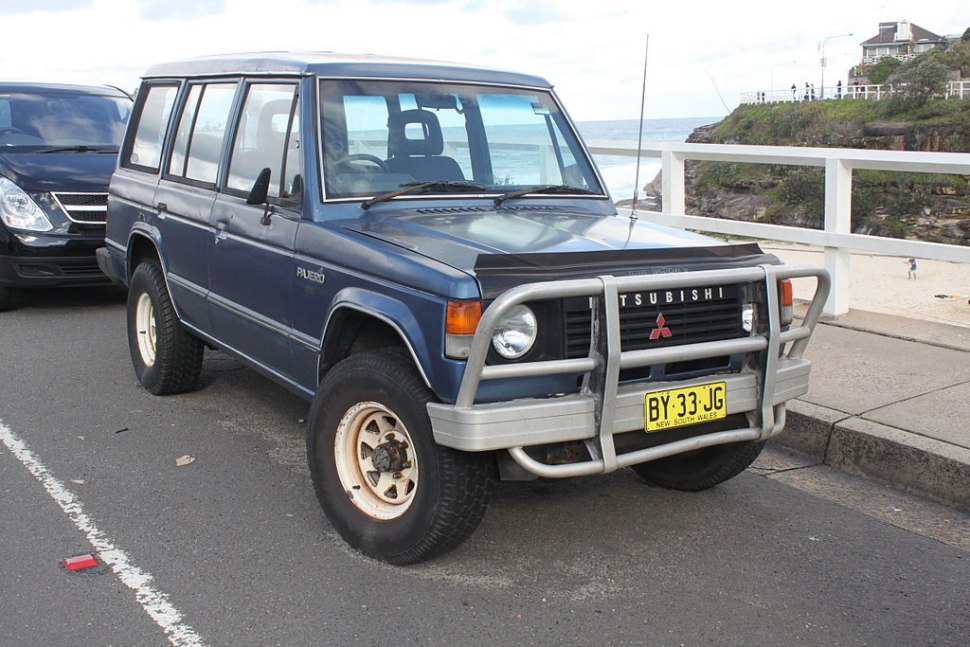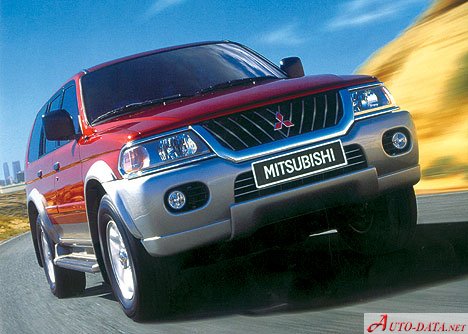
The Mitsubishi Pajero Sport I (K90) 2.5 TD (115 Hp) represents a significant chapter in the global utility vehicle market, emerging as a robust and reliable off-road contender during its production run from 2000 to 2008. While known as the Montero Sport in North America, this specific 2.5 TD (115 Hp) diesel variant was predominantly offered in markets outside the United States, including Europe, Asia, and Australia, where diesel powertrains were highly favored for their torque characteristics and fuel efficiency in demanding conditions. Positioned as a versatile mid-size SUV, the Pajero Sport I (K90) was designed to bridge the gap between Mitsubishi’s more car-like SUVs and its highly capable, dedicated off-road vehicles like the full-size Pajero. It quickly earned a reputation for its blend of practical everyday usability and formidable off-road prowess, making it a popular choice for families, adventurers, and commercial users alike who required a durable and capable vehicle.
General Overview: The Mitsubishi Pajero Sport I (K90)
The first generation of the Mitsubishi Pajero Sport, internally designated K90, was built upon the robust chassis of the Mitsubishi L200/Triton pickup truck, a common strategy for SUVs of its era to ensure durability and off-road capability. This foundation provided a sturdy ladder frame and a proven drivetrain, distinguishing it from unibody SUVs that began to dominate the market. Introduced in 2000, this iteration of the Pajero Sport continued the brand’s legacy of producing go-anywhere vehicles, offering a compelling package for consumers seeking a vehicle capable of handling diverse terrains, from urban commutes to challenging unpaved roads. Its design ethos was centered around functionality and ruggedness, rather than the burgeoning trend of luxury SUVs, making it a workhorse for various applications.
During its eight-year production cycle, the Pajero Sport I (K90) maintained its core identity as a straightforward, dependable off-road vehicle. With a five-door, five-seat configuration, it provided ample space for passengers and cargo, making it a practical choice for a wide range of buyers. The vehicle’s architecture, featuring an internal combustion engine, reflected the prevailing engineering principles of the time, prioritizing mechanical simplicity and reliability. Its enduring presence in markets around the world underscored its fundamental appeal: a no-nonsense SUV built to last and perform.
Powertrain and Performance: The 2.5 TD (115 Hp) Engine
Engine Specifications
At the heart of the Mitsubishi Pajero Sport I (K90) 2.5 TD (115 Hp) lies a robust 2.5-liter (2477 cm3 or 151.16 cubic inches) turbocharged diesel engine. This inline four-cylinder unit, configured with an OverHead Camshaft (OHC) valvetrain and four valves per cylinder, was engineered for durability and consistent performance. The engine’s layout, front-mounted and longitudinal, contributed to a balanced weight distribution and facilitated the integration of its all-wheel-drive system. With a bore of 3.59 inches (91.1 mm) and a stroke of 3.74 inches (95 mm), coupled with a high compression ratio of 21:1, this diesel powerplant was designed to generate substantial torque at lower RPMs, a crucial characteristic for off-road driving and towing applications. The use of a precombustion chamber injection system, while perhaps less refined than later common-rail diesels, was a reliable and effective method for fuel delivery in its time, known for its robustness and tolerance to varying fuel qualities.
Performance Characteristics
The 2.5 TD engine produces 115 horsepower at 4000 rpm, translating to a power output of 46.4 horsepower per liter. More significantly for an off-road utility vehicle, it delivers a healthy 240 Nm (177.01 lb.-ft.) of torque at a low 2000 rpm. This ample torque at accessible engine speeds is vital for negotiating challenging terrain, ascending steep inclines, and pulling heavy loads, allowing the vehicle to maintain momentum without excessive revving. While not designed for blistering acceleration, the Pajero Sport I (K90) 2.5 TD achieves 0 to 60 mph in a calculated 17.6 seconds (0-100 km/h in 18.5 seconds), reflecting its utility-oriented rather than performance-oriented nature. Its maximum speed of 93.21 mph (150 km/h) is perfectly adequate for highway cruising and off-road excursions, emphasizing reliability and capability over outright speed. The weight-to-power ratio stands at 16.7 kg/Hp (59.9 Hp/tonne), and the weight-to-torque ratio is 8 kg/Nm (125 Nm/tonne), indicating a well-matched powertrain for its intended purpose.
Fuel Economy and Drivetrain
As a diesel-powered vehicle, the Pajero Sport I (K90) 2.5 TD offered commendable fuel economy for its size and capability, especially in extra-urban conditions. Fuel consumption figures demonstrate an urban economy of 13.1 liters per 100 km (18 US mpg) and an extra-urban economy of 9 liters per 100 km (26.1 US mpg). These figures highlight the inherent efficiency of diesel engines, particularly beneficial for long-distance travel or prolonged use in remote areas where fuel stops might be infrequent. The vehicle is equipped with a 74-liter (19.55 US gallon) fuel tank, providing a substantial range between fill-ups. Power is delivered to all four wheels through a durable 5-speed manual transmission, offering the driver precise control over gear selection, which is particularly advantageous for off-road driving and maintaining traction in varying conditions. The all-wheel-drive (4×4) system ensures maximum grip and stability across diverse surfaces, from slippery roads to rugged trails.
Design, Utility, and Features
Exterior and Interior Design
The design of the Mitsubishi Pajero Sport I (K90) is characterized by its functional and rugged aesthetic, typical of early 2000s off-road vehicles. Its exterior features a robust and somewhat boxy profile, signaling its practical utility and durability. With a length of 181.5 inches (4610 mm), a width of 69.88 inches (1775 mm), and a height of 68.31 inches (1735 mm), the Pajero Sport commanded a substantial road presence. The generous wheelbase of 107.28 inches (2725 mm) contributed to both interior space and stability, while front and rear tracks of 57.68 inches (1465 mm) and 58.27 inches (1480 mm), respectively, ensured a stable footprint. These dimensions, combined with appropriate ground clearance, were crucial for its off-road capabilities. The interior, designed for utility and resilience, offered a straightforward layout with durable materials, emphasizing practicality and ease of cleaning over luxury, aligning with the expectations of its target market.
Practicality and Cargo Space
The Pajero Sport I (K90) was engineered to be a highly practical vehicle for both passenger transport and cargo hauling. Its five-door configuration provided easy access to both front and rear seating areas, accommodating five occupants comfortably. The rear seating could be configured to expand cargo capacity significantly. With all seats in place, the trunk offered a generous minimum volume of 500 liters (17.66 cubic feet), sufficient for daily errands or family trips. For those requiring more extensive cargo space, folding down the rear seats expanded the capacity to an impressive 1720 liters (60.74 cubic feet), transforming the SUV into a versatile hauler capable of transporting large items, sports equipment, or camping gear. This adaptability made it a popular choice for active lifestyles and those needing a vehicle for work and leisure.
Chassis and Safety
Underneath its robust body, the Pajero Sport I (K90) featured a suspension setup designed for both on-road comfort and off-road articulation. The front suspension utilized torsion bars, known for their durability and ability to handle heavy loads and rough terrain, while the rear employed coil springs, providing a balance of ride comfort and load-carrying capability. Braking performance was handled by disc brakes on both the front and rear axles, offering reliable stopping power. For enhanced safety, the vehicle was equipped with an Anti-lock Braking System (ABS), a crucial feature for maintaining steering control during emergency braking maneuvers, especially on slippery surfaces. Hydraulic power steering provided responsive and predictable handling, reducing driver fatigue during long journeys or challenging off-road expeditions. The vehicle rode on 245/70 R16 tires, a common size for SUVs of its class, offering a good balance of grip, durability, and ride comfort. With a curb weight of 4232.88 lbs. (1920 kg) and a maximum gross weight of 5533.6 lbs. (2510 kg), allowing for a maximum load of 1300.73 lbs. (590 kg), the Pajero Sport I (K90) demonstrated its substantial build quality and load-carrying capacity.
Technical Specifications
| Attribute | Value |
|---|---|
| Brand | Mitsubishi |
| Model | Pajero Sport |
| Generation | Pajero Sport I (K90) |
| Type (Engine) | 2.5 TD (115 Hp) |
| Start of production | 2000 year |
| End of production | 2008 year |
| Powertrain Architecture | Internal Combustion engine |
| Body type | Off-road vehicle |
| Seats | 5 |
| Doors | 5 |
| Fuel consumption (economy) – urban | 13.1 l/100 km (18 US mpg) |
| Fuel consumption (economy) – extra urban | 9 l/100 km (26.1 US mpg) |
| Fuel Type | Diesel |
| Acceleration 0 – 60 mph | 17.6 sec |
| Maximum speed | 93.21 mph (150 km/h) |
| Weight-to-power ratio | 16.7 kg/Hp (59.9 Hp/tonne) |
| Weight-to-torque ratio | 8 kg/Nm (125 Nm/tonne) |
| Power | 115 Hp @ 4000 rpm |
| Power per liter | 46.4 Hp/l |
| Torque | 240 Nm (177.01 lb.-ft.) @ 2000 rpm |
| Engine layout | Front, Longitudinal |
| Engine displacement | 2477 cm3 (2.5 l / 151.16 cu. in.) |
| Number of cylinders | 4 |
| Engine configuration | Inline |
| Cylinder Bore | 91.1 mm (3.59 in.) |
| Piston Stroke | 95 mm (3.74 in.) |
| Compression ratio | 21:1 |
| Number of valves per cylinder | 4 |
| Fuel injection system | Precombustion chamber injection |
| Engine aspiration | Turbocharger |
| Valvetrain | OHC |
| Curb Weight | 1920 kg (4232.88 lbs.) |
| Max. weight | 2510 kg (5533.6 lbs.) |
| Max load | 590 kg (1300.73 lbs.) |
| Trunk (boot) space – minimum | 500 l (17.66 cu. ft.) |
| Trunk (boot) space – maximum | 1720 l (60.74 cu. ft.) |
| Fuel tank capacity | 74 l (19.55 US gal) |
| Length | 4610 mm (181.5 in.) |
| Width | 1775 mm (69.88 in.) |
| Height | 1735 mm (68.31 in.) |
| Wheelbase | 2725 mm (107.28 in.) |
| Front track | 1465 mm (57.68 in.) |
| Rear (Back) track | 1480 mm (58.27 in.) |
| Drive wheel | All wheel drive (4×4) |
| Number of gears and type of gearbox | 5 gears, manual transmission |
| Front suspension | Torsion |
| Rear suspension | Coil spring |
| Front brakes | Disc |
| Rear brakes | Disc |
| Assisting systems | ABS (Anti-lock braking system) |
| Power steering | Hydraulic Steering |
| Tires size | 245/70 R16 |