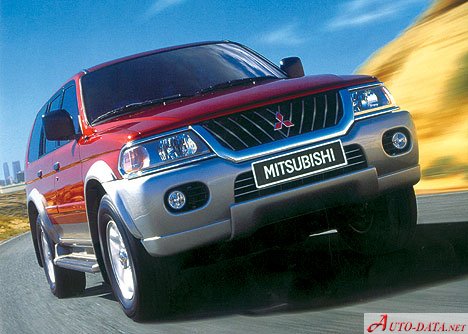
The Mitsubishi Pajero Sport I (K90) 3.0 i V6 24V (170 Hp) represents a significant entry in the mid-size SUV market of the early 21st century, a period when sport utility vehicles were rapidly gaining popularity worldwide for their versatility and rugged capabilities. Launched in 2000 as part of the first generation Pajero Sport lineup, identified by its K90 chassis code, this model was known by various names across different global markets, including the Mitsubishi Challenger in Japan, the Montero Sport in North America, and the Shogun Sport in the UK, among others. Its primary role was to offer a more accessible, family-friendly, and slightly less hardcore alternative to the full-size Pajero (Montero) while retaining substantial off-road prowess. Produced until 2008, the {original_title} combined a robust body-on-frame construction with a capable V6 engine and a practical interior, positioning it as a compelling choice for consumers seeking a durable vehicle equally adept at daily commuting and adventurous weekend excursions.
Engine and Performance of the Mitsubishi Pajero Sport I (K90) 3.0 i V6 24V (170 Hp)
At the heart of the Mitsubishi Pajero Sport I (K90) 3.0 i V6 24V (170 Hp) lies a dependable 3.0-liter (2972 cm3 or 181.36 cu. in.) V6 gasoline engine, designated with the internal code 6G72. This naturally aspirated, multi-port manifold injection powerplant was engineered for a balance of smooth power delivery and durability, characteristics highly valued in the SUV segment. The engine features a V-configuration with six cylinders, each equipped with four valves, totaling 24 valves for the entire engine, managed by a Double Overhead Camshaft (DOHC) valvetrain. This DOHC setup, relatively advanced for its time in this vehicle class, allowed for optimized valve timing and improved engine breathing, contributing to better efficiency and power output across the rev range.
The 6G72 engine generates a healthy 170 horsepower at 5000 revolutions per minute (rpm) and a peak torque of 188.08 lb.-ft. (255 Nm) delivered at 4500 rpm. This power output, translating to 57.2 Hp per liter of displacement, provided ample motivation for the vehicle, whether navigating city streets or tackling unpaved trails. The power is efficiently transferred through a 5-speed manual transmission to an all-wheel-drive (4×4) system, ensuring maximum traction and control in diverse driving conditions. Performance figures for the Mitsubishi Pajero Sport I (K90) 3.0 i V6 24V (170 Hp) are respectable for a vehicle of its size and purpose: it accelerates from 0 to 60 mph in approximately 11 seconds, with a top speed of 108.74 mph (175 km/h). While not designed for outright speed, these figures underscore its capability as a competent all-rounder.
Fuel efficiency for the 3.0-liter V6, while not its primary selling point given its rugged nature, was competitive for the era. The Pajero Sport I (K90) achieved an estimated 14.2 US mpg (16.6 l/100 km) in urban driving conditions and a more economical 23.8 US mpg (9.9 l/100 km) on the highway. With a substantial 19.55 US gallon (74 liter) fuel tank, it offered a decent cruising range. The engine’s compression ratio of 9:1, coupled with its robust construction and a 4.5-liter engine oil capacity, ensured reliability and longevity, making it a favored choice for those needing a dependable workhorse or a family adventure vehicle.
Design and Features of the Pajero Sport I (K90)
The design philosophy behind the Mitsubishi Pajero Sport I (K90) 3.0 i V6 24V (170 Hp) emphasized a blend of utilitarian robustness and practical comfort, reflecting its dual role as a capable off-road vehicle and a daily driver. With its body type defined as an off-road vehicle, it featured a classic five-door, five-seat configuration, offering ample space for passengers and cargo. Its dimensions were generous, measuring 181.5 inches (4610 mm) in length, 69.88 inches (1775 mm) in width, and 68.31 inches (1735 mm) in height. A wheelbase of 107.28 inches (2725 mm) contributed to a stable ride and good interior volume, while a front track of 57.68 inches (1465 mm) and a rear track of 58.27 inches (1480 mm) provided a solid stance.
The exterior styling of the Pajero Sport I (K90) was characterized by its assertive, yet unpretentious lines, signifying its rugged capabilities. Large windows offered good visibility, a crucial aspect for both off-road navigation and urban maneuverability. Inside, the cabin prioritized functionality and durability. While lacking some of the advanced digital interfaces found in modern SUVs, it provided a straightforward layout with essential controls readily accessible. The five-seat arrangement offered comfortable seating, with particular attention paid to headroom and legroom for all occupants. The cargo capacity was a significant highlight, boasting a minimum trunk space of 17.66 cu. ft. (500 liters), which could expand to an impressive 60.74 cu. ft. (1720 liters) with the rear seats folded, making it exceptionally versatile for hauling luggage, sports equipment, or supplies for an adventure.
Underneath its practical exterior, the Pajero Sport I (K90) featured a suspension system designed for both on-road comfort and off-road articulation. The front utilized a double wishbone setup, known for its ability to provide precise handling and absorb road imperfections effectively. The rear featured a coil spring suspension, which offered a more compliant ride compared to traditional leaf springs often found on more utilitarian trucks, enhancing passenger comfort without sacrificing too much load-carrying capability. Braking performance was handled by ventilated discs at the front and disc brakes at the rear, complemented by an Anti-lock Braking System (ABS) for enhanced safety during emergency stops. Hydraulic power steering provided predictable and responsive control, an important feature for a vehicle of this size and weight. The vehicle rode on robust 255/70 R16 tires, offering a good balance of grip and durability for various terrains. With a kerb weight of 4232.88 lbs. (1920 kg) and a maximum gross weight of 5533.6 lbs. (2510 kg), the Pajero Sport I (K90) was built to withstand demanding use, further cementing its reputation as a reliable and capable SUV.
Technical Specifications
| Brand | Mitsubishi |
| Model | Pajero Sport |
| Generation | Pajero Sport I (K90) |
| Type (Engine) | 3.0 i V6 24V (170 Hp) |
| Start of production | 2000 year |
| End of production | 2008 year |
| Powertrain Architecture | Internal Combustion engine |
| Body type | Off-road vehicle |
| Seats | 5 |
| Doors | 5 |
| Fuel consumption (economy) – urban | 16.6 l/100 km (14.2 US mpg / 17 UK mpg) |
| Fuel consumption (economy) – extra urban | 9.9 l/100 km (23.8 US mpg / 28.5 UK mpg) |
| Fuel Type | Petrol (Gasoline) |
| Acceleration 0 – 100 km/h | 11.6 sec |
| Acceleration 0 – 62 mph | 11.6 sec |
| Acceleration 0 – 60 mph (Calculated) | 11 sec |
| Maximum speed | 175 km/h (108.74 mph) |
| Weight-to-power ratio | 11.3 kg/Hp, 88.5 Hp/tonne |
| Weight-to-torque ratio | 7.5 kg/Nm, 132.8 Nm/tonne |
| Power | 170 Hp @ 5000 rpm. |
| Power per litre | 57.2 Hp/l |
| Torque | 255 Nm @ 4500 rpm. (188.08 lb.-ft. @ 4500 rpm) |
| Engine layout | Front, Longitudinal |
| Engine Model/Code | 6G72 |
| Engine displacement | 2972 cm3 (181.36 cu. in.) |
| Number of cylinders | 6 |
| Engine configuration | V-engine |
| Cylinder Bore | 91.1 mm (3.59 in.) |
| Piston Stroke | 76 mm (2.99 in.) |
| Compression ratio | 9:1 |
| Number of valves per cylinder | 4 |
| Fuel injection system | Multi-port manifold injection |
| Engine aspiration | Naturally aspirated engine |
| Valvetrain | DOHC |
| Engine oil capacity | 4.5 l (4.76 US qt / 3.96 UK qt) |
| Coolant | 9 l (9.51 US qt / 7.92 UK qt) |
| Kerb Weight | 1920 kg (4232.88 lbs.) |
| Max. weight | 2510 kg (5533.6 lbs.) |
| Max load | 590 kg (1300.73 lbs.) |
| Trunk (boot) space – minimum | 500 l (17.66 cu. ft.) |
| Trunk (boot) space – maximum | 1720 l (60.74 cu. ft.) |
| Fuel tank capacity | 74 l (19.55 US gal / 16.28 UK gal) |
| Length | 4610 mm (181.5 in.) |
| Width | 1775 mm (69.88 in.) |
| Height | 1735 mm (68.31 in.) |
| Wheelbase | 2725 mm (107.28 in.) |
| Front track | 1465 mm (57.68 in.) |
| Rear (Back) track | 1480 mm (58.27 in.) |
| Drive wheel | All wheel drive (4×4) |
| Number of gears and type of gearbox | 5 gears, manual transmission |
| Front suspension | Double wishbone |
| Rear suspension | Coil spring |
| Front brakes | Ventilated discs |
| Rear brakes | Disc |
| Assisting systems | ABS (Anti-lock braking system) |
| Power steering | Hydraulic Steering |
| Tires size | 255/70 R16 |