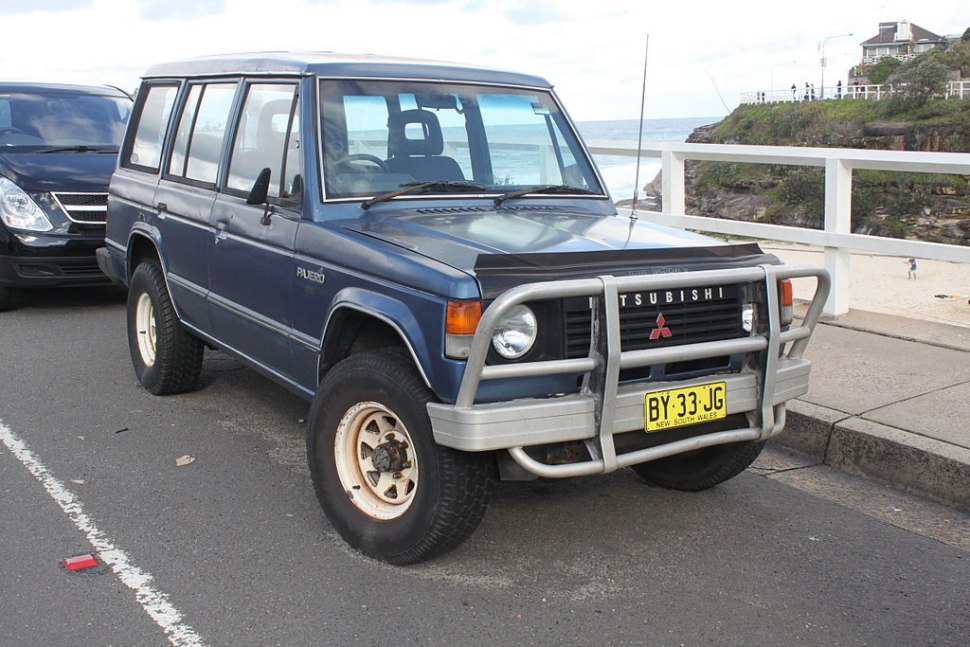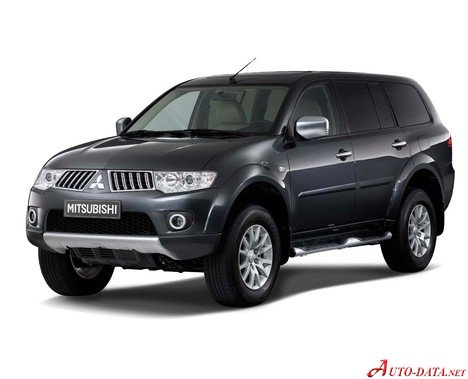
The Mitsubishi Pajero Sport II 3.0 V6 (220 Hp), produced between 2008 and 2015, represents a significant iteration in Mitsubishi’s lineage of robust, body-on-frame off-road vehicles. Known in various markets as the Mitsubishi Challenger or Montero Sport, this second-generation model was strategically positioned to cater to a global audience outside of North America, particularly thriving in Asian, Australian, Middle Eastern, and South American markets. It carved out a niche for itself as a highly capable and reliable mid-size SUV, adept at navigating challenging terrains while offering practical utility for families. Unlike many of its contemporaries that transitioned to unibody platforms for enhanced on-road comfort, the Pajero Sport II retained its rugged ladder-frame chassis, underpinning its reputation as a genuine off-road contender and a dependable workhorse.
The Mitsubishi Pajero Sport II 3.0 V6 (220 Hp): Engineering a Robust Off-Road Legacy
The second-generation Pajero Sport, with its powerful 3.0-liter V6 engine, was designed to embody a blend of traditional SUV ruggedness with modern conveniences. Its development focused on improving both on-road dynamics and off-road prowess, a critical balance for vehicles in its segment in markets where diverse road conditions are the norm. The vehicle’s architecture, derived from the Triton/L200 pickup truck platform, provided it with exceptional durability and towing capabilities, making it a popular choice for those requiring a vehicle that could handle both daily commutes and demanding adventures.
Market Positioning and Design Philosophy
Mitsubishi’s strategy for the Pajero Sport II was clear: offer a versatile and dependable off-road vehicle that could serve multiple purposes. In regions like Southeast Asia, Australia, and South America, where infrastructure can be challenging and long distances are common, the demand for such a vehicle was consistently high. The Pajero Sport II distinguished itself with its purposeful design, featuring a commanding stance, high ground clearance, and robust exterior elements that conveyed its inherent strength. Its four-door, five-seat off-road vehicle body type offered ample space for passengers and cargo, making it suitable for family trips, outdoor pursuits, or commercial applications where durability was paramount. The design prioritized functionality and resilience, with a focus on ease of maintenance and long-term reliability, attributes highly valued in its primary markets.
Powertrain and Performance: The 3.0 V6 Engine
At the heart of the Mitsubishi Pajero Sport II 3.0 V6 (220 Hp) lies the Mitsubishi 6B31 engine, a 3.0-liter (2998 cm³ or 182.95 cu. in.) naturally aspirated V6 gasoline unit. This engine was engineered to deliver a balanced combination of power and torque, suitable for both highway cruising and demanding off-road excursions. It produces a robust 220 horsepower at 6250 rpm, with a respectable power-per-liter rating of 73.4 Hp/l. Torque output stands at 207.25 lb.-ft. (281 Nm) delivered at a relatively accessible 4000 rpm, providing ample pulling power across a wide range of engine speeds. The engine features a DOHC (Double Overhead Camshaft) valvetrain with four valves per cylinder, ensuring efficient breathing and combustion. Fuel is delivered via a multi-port manifold injection system, contributing to its Euro 4 emission standard compliance.
Performance figures for this powertrain are competitive for its class and era. The Pajero Sport II 3.0 V6 accelerates from 0 to 60 mph in an estimated 10.7 seconds, with a 0 to 62 mph (100 km/h) sprint taking 11.3 seconds. Its maximum speed is rated at 111.23 mph (179 km/h). These figures, while not sports-car quick, are more than adequate for a vehicle designed for utility and off-road capability. The engine’s compression ratio of 9.5:1 indicates a design focused on reliability and ability to run on various fuel qualities, which is often a consideration in diverse global markets. The engine oil capacity is 4.54 US quarts (4.3 liters), and the cooling system holds 11.62 US quarts (11 liters) of coolant, indicative of its design for sustained operation under varying conditions.
Power is transmitted to all four wheels through a 5-speed automatic transmission, a configuration chosen for its smoothness, durability, and ease of use, particularly in stop-and-go traffic or during technical off-road maneuvers. The All-Wheel Drive (4×4) system is a cornerstone of the Pajero Sport’s capability, providing enhanced traction and stability on slippery surfaces, loose gravel, or uneven terrain. This drivetrain architecture, combined with a kerb weight of 4332.08 lbs (1965 kg) and a maximum permissible weight of 5732.02 lbs (2600 kg), results in a weight-to-power ratio of 8.9 kg/Hp (112 Hp/tonne) and a weight-to-torque ratio of 7 kg/Nm (143 Nm/tonne), underscoring its robust construction and power delivery for its intended purpose.
Chassis, Suspension, and Braking Systems
The Pajero Sport II’s chassis and suspension systems are engineered to provide a balance between on-road comfort and formidable off-road capability. The front suspension employs an independent McPherson strut setup with coil springs and an anti-roll bar. This design is known for its ability to provide comfortable ride quality and precise steering on paved roads. For the rear, a dependent spring suspension system with a transverse stabilizer is utilized. This robust configuration is ideal for heavy loads, towing, and maintaining articulation over challenging off-road obstacles, ensuring durability and reliability when pushed to its limits.
Braking performance is handled by ventilated discs at the front, offering strong and consistent stopping power, which is crucial for a vehicle of this size and weight. The rear features drum brakes, a common and effective solution for the rear axle in many heavy-duty SUVs and trucks of this era, known for their durability and suitability for off-road conditions where they are less susceptible to damage. An Anti-lock Braking System (ABS) is standard, enhancing safety by preventing wheel lock-up during hard braking, thereby allowing the driver to maintain steering control. Steering is managed by a hydraulic rack and pinion system, providing direct feedback to the driver, which is particularly beneficial for precise maneuvering in off-road environments. The vehicle rides on 265/65 R17 tires mounted on 7.5JJ x 17 wheel rims, a combination that offers a good balance of road grip, off-road traction, and ride comfort.
Interior, Dimensions, and Practicality
The interior of the Pajero Sport II is designed with practicality and durability in mind. As a 4-door, 5-seat off-road vehicle, it offers generous space for occupants and their gear. The cabin layout is straightforward, with controls that are easy to operate, even with gloves on, reflecting its utilitarian nature. While not as overtly luxurious as some unibody SUVs, the materials and construction are chosen for their resilience and ease of cleaning, vital for a vehicle that is expected to venture off the beaten path. Comfort for long journeys is ensured through well-cushioned seating and adequate sound insulation for its class.
Dimensionally, the Pajero Sport II is a substantial vehicle, measuring 184.84 inches (4695 mm) in length, 71.46 inches (1815 mm) in width, and 70.87 inches (1800 mm) in height. Its 110.24-inch (2800 mm) wheelbase contributes to a stable ride and generous interior room. The front track measures 59.84 inches (1520 mm), and the rear track is 59.65 inches (1515 mm), providing a wide stance for improved stability. With a maximum load capacity of 1399.94 lbs (635 kg), the Pajero Sport II is well-equipped to carry significant cargo or passengers, further solidifying its role as a versatile and dependable vehicle for a wide array of uses, from daily commuting to rugged expeditions.
Technical Specifications: Mitsubishi Pajero Sport II 3.0 V6 (220 Hp)
| Brand | Mitsubishi |
| Model | Pajero Sport |
| Generation | Pajero Sport II |
| Type (Engine) | 3.0 V6 (220 Hp) |
| Start of production | 2008 year |
| End of production | 2015 year |
| Powertrain Architecture | Internal Combustion engine |
| Body type | Off-road vehicle |
| Seats | 5 |
| Doors | 4 |
| Fuel Type | Petrol (Gasoline) |
| Acceleration 0 – 100 km/h | 11.3 sec |
| Acceleration 0 – 62 mph | 11.3 sec |
| Acceleration 0 – 60 mph (Calculated) | 10.7 sec |
| Maximum speed | 179 km/h (111.23 mph) |
| Emission standard | Euro 4 |
| Weight-to-power ratio | 8.9 kg/Hp (112 Hp/tonne) |
| Weight-to-torque ratio | 7 kg/Nm (143 Nm/tonne) |
| Power | 220 Hp @ 6250 rpm |
| Power per liter | 73.4 Hp/l |
| Torque | 281 Nm @ 4000 rpm (207.25 lb.-ft. @ 4000 rpm) |
| Engine layout | Front, Transverse |
| Engine Model/Code | 6B31 |
| Engine displacement | 2998 cm³ (3.0 l, 182.95 cu. in.) |
| Number of cylinders | 6 |
| Engine configuration | V-engine |
| Cylinder Bore | 87.6 mm (3.45 in.) |
| Piston Stroke | 82.9 mm (3.26 in.) |
| Compression ratio | 9.5:1 |
| Number of valves per cylinder | 4 |
| Fuel injection system | Multi-port manifold injection |
| Engine aspiration | Naturally aspirated engine |
| Valvetrain | DOHC |
| Engine oil capacity | 4.3 l (4.54 US qt | 3.78 UK qt) |
| Coolant | 11 l (11.62 US qt | 9.68 UK qt) |
| Kerb Weight | 1965 kg (4332.08 lbs) |
| Max. weight | 2600 kg (5732.02 lbs) |
| Max load | 635 kg (1399.94 lbs) |
| Length | 4695 mm (184.84 in.) |
| Width | 1815 mm (71.46 in.) |
| Height | 1800 mm (70.87 in.) |
| Wheelbase | 2800 mm (110.24 in.) |
| Front track | 1520 mm (59.84 in.) |
| Rear (Back) track | 1515 mm (59.65 in.) |
| Drive wheel | All wheel drive (4×4) |
| Number of gears and type of gearbox | 5 gears, automatic transmission |
| Front suspension | Independent, type McPherson with coil spring and anti-roll bar |
| Rear suspension | Dependent spring suspension with transverse stabilizer |
| Front brakes | Ventilated discs |
| Rear brakes | Drum |
| Assisting systems | ABS (Anti-lock braking system) |
| Steering type | Steering rack and pinion |
| Power steering | Hydraulic Steering |
| Tires size | 265/65 R17 |
| Wheel rims size | 7.5JJ x 17 |