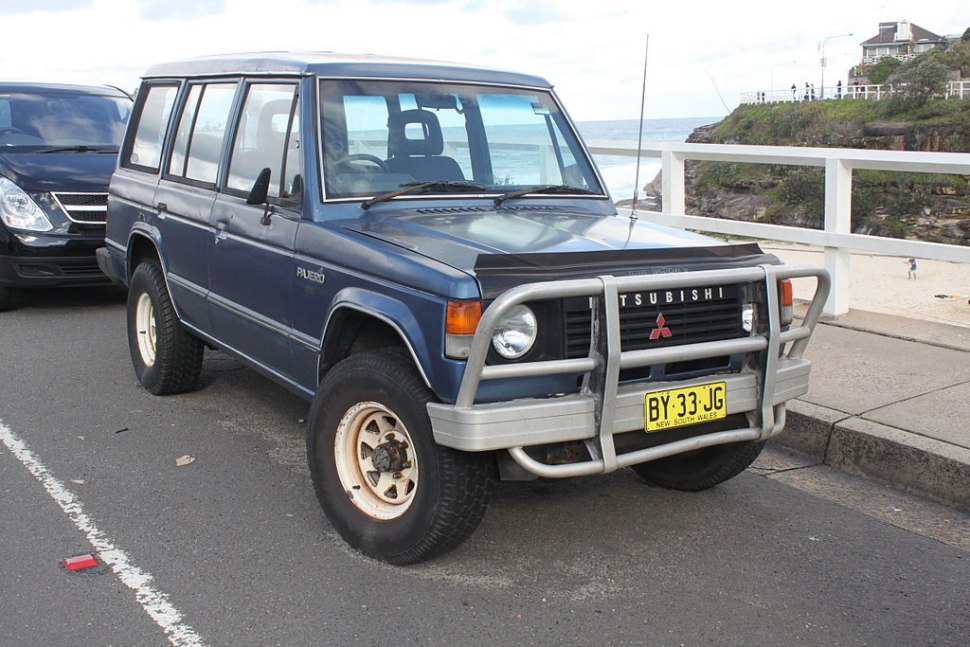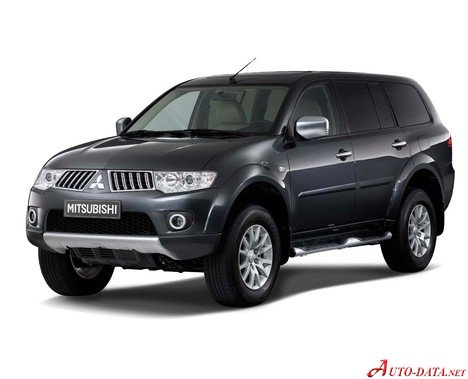
The Mitsubishi Pajero Sport II 3.2 TD (160 Hp) represents a significant chapter in the evolution of rugged, go-anywhere vehicles tailored for markets beyond North America, where it was often known by other monikers or simply not offered. This second-generation model, produced from 2008 to 2015, cemented Mitsubishi’s reputation for building durable and capable off-road vehicles. Positioned as a mid-size SUV, the Pajero Sport II was designed to bridge the gap between a utilitarian workhorse and a family-friendly hauler, excelling in challenging terrains while offering a comfortable ride on paved roads. Its robust body-on-frame construction, derived from the Triton/L200 pickup truck platform, provided the foundation for its formidable off-road prowess and impressive towing capabilities, making it a popular choice in regions like Southeast Asia, Australia, and parts of Europe and South America. The 3.2-liter Turbo Diesel variant, with its 160 horsepower output, was particularly renowned for its blend of power, torque, and fuel efficiency, crucial attributes for buyers in its primary markets who often faced long distances and varied driving conditions.
Engine and Performance: The Heart of the Mitsubishi Pajero Sport II 3.2 TD (160 Hp)
At the core of the Mitsubishi Pajero Sport II 3.2 TD (160 Hp) lies a formidable powertrain, meticulously engineered to deliver a compelling balance of strength and economy. This particular variant is equipped with a 3.2-liter (3200 cm3 or 195.28 cu. in.) inline four-cylinder diesel engine, configured longitudinally at the front of the vehicle. It produces a robust 160 horsepower at 3800 revolutions per minute (rpm), a figure that translates to a respectable 50 horsepower per liter, underscoring its efficient power delivery. More critically for an off-road vehicle of this caliber, the engine generates a substantial 343 Nm (252.98 lb.-ft.) of torque, peaking at a low 2000 rpm. This low-end torque is paramount for navigating steep inclines, hauling heavy loads, and maintaining traction in challenging off-road scenarios, providing the driver with confidence and control.
The engine’s advanced design incorporates a common rail fuel injection system, which precisely atomizes diesel fuel for optimal combustion, contributing to both power output and fuel efficiency. Furthermore, it benefits from a turbocharger with an intercooler, a critical component that forces more air into the engine, significantly boosting power and torque, especially at higher altitudes where atmospheric pressure is lower. The Double Overhead Camshaft (DOHC) valvetrain with four valves per cylinder ensures efficient airflow into and out of the combustion chambers, further enhancing performance and responsiveness. With a compression ratio of 17:1, the engine is optimized for diesel combustion, providing excellent thermal efficiency.
In terms of outright performance, the Mitsubishi Pajero Sport II 3.2 TD (160 Hp) offers a respectable acceleration from 0 to 60 mph in approximately 9.9 seconds. While not a sports car, this figure is commendable for a heavy, all-wheel-drive off-road vehicle. Its maximum speed is rated at 108.12 mph (174 km/h), more than adequate for highway cruising and maintaining pace with traffic. Crucially, the vehicle adheres to the Euro 4 emission standard, reflecting its compliance with environmental regulations prevalent during its production years.
Fuel economy, a vital consideration for many buyers, is a strong suit for this diesel variant. The combined fuel consumption is an impressive 29.8 US mpg (7.9 l/100 km). In urban driving, it achieves 22.4 US mpg (10.5 l/100 km), while extra-urban (highway) driving yields an even more efficient 36.8 US mpg (6.4 l/100 km). These figures highlight the inherent efficiency of the diesel powertrain, offering extended range and lower running costs, which are significant advantages for drivers in regions where fuel prices can be volatile and long journeys are common.
Design and Features: Capability Meets Practicality
The design philosophy of the Mitsubishi Pajero Sport II is unequivocally centered on capability and utility. As a dedicated off-road vehicle, its robust exterior styling reflects its underlying strength and purpose. The body-on-frame architecture, characteristic of serious off-roaders, provides exceptional torsional rigidity and durability, crucial for enduring the rigors of challenging terrain. With four doors and seating for five occupants, it offers practical accessibility and ample interior space for families or work crews, making it a versatile choice for both adventure and daily commuting.
Dimensionally, the Pajero Sport II measures 184.84 inches (4695 mm) in length, 71.46 inches (1815 mm) in width, and 70.87 inches (1800 mm) in height. Its substantial 110.24-inch (2800 mm) wheelbase contributes to a stable ride and generous interior room, while also aiding in off-road stability. The front track of 59.84 inches (1520 mm) and rear track of 59.65 inches (1515 mm) provide a wide stance, further enhancing stability and handling, particularly when traversing uneven surfaces or carrying heavy loads. The vehicle’s ground clearance, while not explicitly stated in the data, is inherently designed to be generous, allowing it to clear obstacles common in off-road environments.
Driving dynamics are significantly influenced by its full-time all-wheel-drive (4×4) system. This sophisticated drivetrain is engineered to provide maximum traction across diverse surfaces, from slippery mud and loose gravel to rocky trails. Mitsubishi’s expertise in 4×4 technology ensures that power is distributed effectively to all four wheels, optimizing grip and control in challenging conditions. This capability is a cornerstone of the Pajero Sport II’s appeal, making it a reliable partner for adventurers and professionals alike.
In terms of braking and safety, the Mitsubishi Pajero Sport II 3.2 TD (160 Hp) is equipped with a combination of ventilated discs at the front and drum brakes at the rear. While drum brakes on the rear might seem traditional for a vehicle of this era, they are known for their durability and effectiveness in rugged environments, often preferred for their resistance to dirt and debris in off-road applications. The inclusion of an Anti-lock Braking System (ABS) as a standard assisting system provides enhanced control during emergency braking, preventing wheel lock-up and allowing the driver to steer around obstacles, a crucial safety feature for both on-road and off-road driving. Although the feature set might appear modest by modern luxury SUV standards, it is perfectly aligned with the vehicle’s utilitarian purpose, prioritizing robustness and essential safety over advanced electronic gadgets, which were still emerging as standard in this segment during its production run.
| Brand | Mitsubishi |
| Model | Pajero Sport |
| Generation | Pajero Sport II |
| Type (Engine) | 3.2 TD (160 Hp) |
| Start of production | 2008 year |
| End of production | 2015 year |
| Powertrain Architecture | Internal Combustion engine |
| Body type | Off-road vehicle |
| Seats | 5 |
| Doors | 4 |
| Fuel consumption (economy) – urban | 10.5 l/100 km (22.4 US mpg) |
| Fuel consumption (economy) – extra urban | 6.4 l/100 km (36.8 US mpg) |
| Fuel consumption (economy) – combined | 7.9 l/100 km (29.8 US mpg) |
| Fuel Type | Diesel |
| Acceleration 0 – 60 mph | 9.9 sec |
| Maximum speed | 174 km/h (108.12 mph) |
| Emission standard | Euro 4 |
| Power | 160 Hp @ 3800 rpm |
| Power per litre | 50 Hp/l |
| Torque | 343 Nm (252.98 lb.-ft.) @ 2000 rpm |
| Engine layout | Front, Longitudinal |
| Engine displacement | 3200 cm3 (195.28 cu. in.) |
| Number of cylinders | 4 |
| Engine configuration | Inline |
| Cylinder Bore | 98.5 mm (3.88 in.) |
| Piston Stroke | 105 mm (4.13 in.) |
| Compression ratio | 17:1 |
| Number of valves per cylinder | 4 |
| Fuel injection system | Diesel Commonrail |
| Engine aspiration | Turbocharger, Intercooler |
| Valvetrain | DOHC |
| Length | 4695 mm (184.84 in.) |
| Width | 1815 mm (71.46 in.) |
| Height | 1800 mm (70.87 in.) |
| Wheelbase | 2800 mm (110.24 in.) |
| Front track | 1520 mm (59.84 in.) |
| Rear (Back) track | 1515 mm (59.65 in.) |
| Drive wheel | All wheel drive (4×4) |
| Front brakes | Ventilated discs |
| Rear brakes | Drum |
| Assisting systems | ABS (Anti-lock braking system) |