The Mitsubishi Pajero Sport III 2.4 DI-D (181 Hp) represents a compelling iteration of Mitsubishi’s globally recognized mid-size SUV, designed to blend robust off-road capability with modern family utility. Launched in 2016 and produced through 2019, this generation, often known as the Challenger, Montero Sport, or Shogun Sport in various markets, primarily targeted regions outside North America where body-on-frame SUVs remain highly popular for their durability and versatility. Positioned as a more lifestyle-oriented and comfortable alternative to a traditional pickup truck, while retaining significant towing and rough-terrain prowess, the Pajero Sport III quickly established itself as a formidable contender in the competitive global SUV segment. This specific variant, powered by a 2.4-liter Direct Injection Diesel engine delivering 181 horsepower, was engineered to offer a balance of fuel efficiency, torque-rich performance, and everyday drivability, making it a practical choice for a wide range of consumers from urban dwellers to adventurous families.
The Mitsubishi Pajero Sport III 2.4 DI-D (181 Hp): A Comprehensive Overview
The third generation of the Mitsubishi Pajero Sport marked a significant evolution in design, technology, and refinement over its predecessors. While sharing its ladder-frame chassis with the Triton/L200 pickup truck, the Pajero Sport III was meticulously engineered to provide a more sophisticated ride and enhanced passenger comfort without compromising its fundamental ruggedness. Its primary markets included Southeast Asia, Australia, Latin America, and parts of Europe, where its combination of diesel power, seven-seat capacity, and formidable off-road credentials resonated strongly with buyers. The model’s introduction was met with anticipation, promising a modern interpretation of Mitsubishi’s long-standing heritage in robust, go-anywhere vehicles. The 2.4 DI-D (181 Hp) variant, in particular, stood out for its efficient yet potent powertrain, catering to the demands for both performance and economical operation in diverse driving conditions.
Engine and Performance
At the heart of this particular Mitsubishi Pajero Sport III 2.4 DI-D (181 Hp) variant is the robust 4N15 engine, a 2.4-liter (2,442 cubic centimeters or 149.02 cubic inches) inline four-cylinder, front-longitudinally mounted diesel unit. This engine utilizes a Double Overhead Cam (DOHC) valvetrain with four valves per cylinder, ensuring efficient gas flow and responsiveness. Power delivery is impressive for its displacement, generating 181 horsepower at a relatively low 3,500 rpm, indicative of its diesel nature. More critically for an SUV designed for towing and off-road excursions, the engine produces a substantial 317.15 lb.-ft. of torque, peaking at just 2,500 rpm. This broad torque band is crucial for effortless acceleration, climbing steep gradients, and managing heavy loads, providing a confident driving experience whether on highways or challenging terrain.
The engine’s advanced common rail direct injection system, coupled with a turbocharger and intercooler, optimizes combustion efficiency and power output while adhering to various emission standards, ranging from Euro 2 to Euro 5 depending on the market and specific configuration. This flexibility in emission compliance underscores Mitsubishi’s commitment to adapting the vehicle for diverse global regulations. Power is transmitted to the rear wheels via a precise 6-speed manual transmission, offering drivers direct control over the engine’s output and enhancing the vehicle’s engaging character. While many Pajero Sport models offer advanced 4WD systems, this specific variant with rear-wheel drive still benefits from its sturdy construction and high ground clearance, making it capable on less demanding rough roads. The vehicle achieves a maximum speed of 111.85 mph (180 km/h), a respectable figure for a vehicle of its size and purpose, demonstrating its capability for sustained highway cruising. With a weight-to-power ratio of 10.6 kg/Hp (94.8 Hp/tonne) and a weight-to-torque ratio of 4.4 kg/Nm (225.1 Nm/tonne), the Pajero Sport III 2.4 DI-D delivers a balanced performance profile that prioritizes utility and durability.
Design and Features
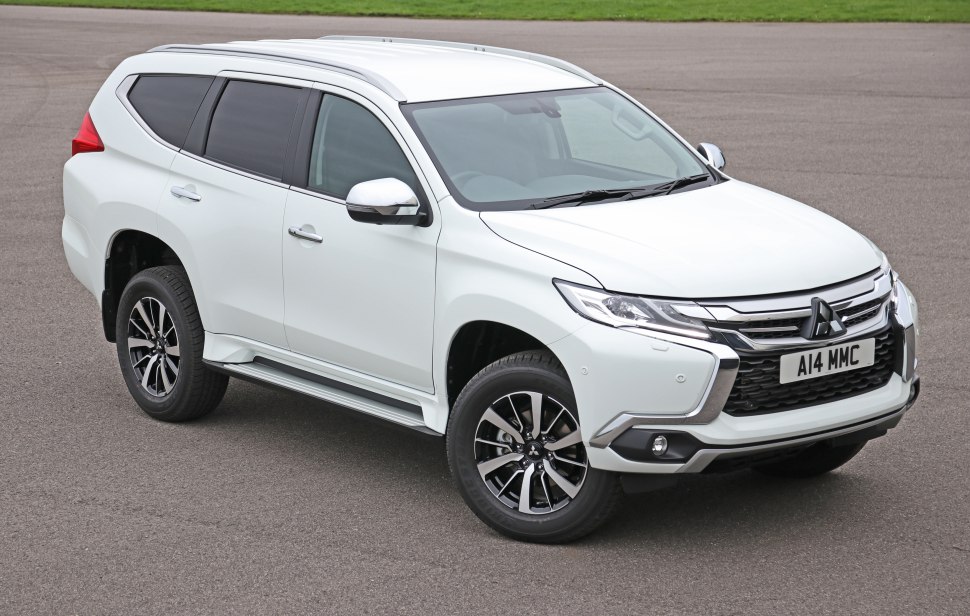
The design of the Mitsubishi Pajero Sport III 2.4 DI-D (181 Hp) marked a significant departure from its predecessor, adopting Mitsubishi’s distinctive “Dynamic Shield” front fascia. This design language, characterized by bold chrome accents and sleek, swept-back headlights, gave the SUV a modern and assertive road presence. The vehicle’s overall dimensions – a length of 188.39 inches, a width of 71.46 inches, and a height ranging from 70.87 to 71.06 inches – contribute to its commanding stance and generous interior volume. A substantial wheelbase of 110.24 inches ensures stability at speed and a comfortable ride, particularly for a body-on-frame vehicle. The Pajero Sport III is configured as a 5-door SUV with seating for seven occupants, underscoring its role as a versatile family hauler capable of accommodating larger groups or significant cargo.
Beyond its aesthetics, the Pajero Sport III is engineered for capability. Its impressive ground clearance of 8.58 inches, combined with an approach angle of 30.0°, a departure angle of 24.2°, and a ramp-over angle of 23.1°, highlight its genuine off-road credentials. These geometric figures allow the vehicle to tackle challenging obstacles and uneven terrain with confidence. The suspension system features a double wishbone setup at the front, which provides excellent wheel articulation and precise steering, while the rear utilizes an independent multi-link suspension. This sophisticated rear suspension design significantly improves ride comfort and handling dynamics compared to simpler leaf-spring setups often found in pickup-based SUVs, offering a more refined experience on paved roads without sacrificing durability. Braking performance is handled by ventilated discs on both the front and rear axles, complemented by an Anti-lock Braking System (ABS) for enhanced safety and control during emergency braking. The steering system employs a rack and pinion setup with electric power steering, providing light and responsive handling for maneuvering in urban environments and on trails. The vehicle rides on 265/60 R18 tires mounted on 7.5J x 18 wheel rims, striking a balance between on-road comfort and off-road grip. With a curb weight ranging from 4,210.83 to 4,232.88 lbs. and a maximum gross weight of 5,974.53 lbs., the Pajero Sport III demonstrates its substantial build quality and payload capacity, making it a reliable partner for diverse driving needs.
Technical Specifications
| Brand | Mitsubishi |
| Model | Pajero Sport |
| Generation | Pajero Sport III |
| Type (Engine) | 2.4 DI-D (181 Hp) |
| Start of production | 2016 year |
| End of production | 2019 year |
| Powertrain Architecture | Internal Combustion engine |
| Body type | SUV |
| Seats | 7 |
| Doors | 5 |
| Fuel Type | Diesel |
| Maximum speed | 111.85 mph (180 km/h) |
| Emission standard | Euro 2/Euro 4/Euro 5 |
| Weight-to-power ratio | 10.6 kg/Hp, 94.8 Hp/tonne |
| Weight-to-torque ratio | 4.4 kg/Nm, 225.1 Nm/tonne |
| Power | 181 Hp @ 3500 rpm |
| Power per liter | 74.1 Hp/l |
| Torque | 317.15 lb.-ft. @ 2500 rpm (430 Nm @ 2500 rpm) |
| Engine layout | Front, Longitudinal |
| Engine Model/Code | 4N15 |
| Engine displacement | 2.442 l (149.02 cu. in.) |
| Number of cylinders | 4 |
| Engine configuration | Inline |
| Cylinder Bore | 3.39 in. (86 mm) |
| Piston Stroke | 4.14 in. (105.1 mm) |
| Compression ratio | 15.5:1 |
| Number of valves per cylinder | 4 |
| Fuel injection system | Diesel Commonrail |
| Engine aspiration | Turbocharger, Intercooler |
| Valvetrain | DOHC |
| Engine oil capacity | 8.88 US qt (8.4 l) |
| Kerb Weight | 4210.83 – 4232.88 lbs. (1910-1920 kg) |
| Max. weight | 5974.53 lbs. (2710 kg) |
| Max load | 1741.65 – 1763.7 lbs. (790-800 kg) |
| Fuel tank capacity | 17.96 US gal (68 l) |
| Length | 188.39 in. (4785 mm) |
| Width | 71.46 in. (1815 mm) |
| Height | 70.87 – 71.06 in. (1800-1805 mm) |
| Wheelbase | 110.24 in. (2800 mm) |
| Front track | 59.84 in. (1520 mm) |
| Rear (Back) track | 59.65 in. (1515 mm) |
| Front overhang | 34.65 in. (880 mm) |
| Rear overhang | 43.5 in. (1105 mm) |
| Ride height (ground clearance) | 8.58 in. (218 mm) |
| Minimum turning circle (turning diameter) | 36.75 ft. (11.2 m) |
| Approach angle | 30.0° |
| Departure angle | 24.2° |
| Ramp-over (brakeover) angle | 23.1° |
| Drivetrain Architecture | The Internal combustion engine (ICE) drives the rear wheels of the vehicle. |
| Drive wheel | Rear wheel drive |
| Number of gears and type of gearbox | 6 gears, manual transmission |
| Front suspension | Double wishbone |
| Rear suspension | Independent multi-link suspension |
| Front brakes | Ventilated discs |
| Rear brakes | Ventilated discs |
| Assisting systems | ABS (Anti-lock braking system) |
| Steering type | Steering rack and pinion |
| Power steering | Electric Steering |
| Tires size | 265/60 R18 |
| Wheel rims size | 7.5J x 18 |