The Mitsubishi Pajero Sport III 2.5 DI-D (136 Hp) Automatic represents a crucial offering in the global mid-size SUV segment, particularly in markets outside of North America where its blend of rugged capability, family-friendly utility, and diesel efficiency resonates strongly. Known as the Mitsubishi Montero Sport or Challenger in some regions, the Pajero Sport lineage traces its roots to robust, body-on-frame SUVs designed to tackle diverse terrains while providing comfortable passenger transport. The third generation, introduced in 2016 and produced through 2019, built upon this heritage, presenting a more refined yet equally capable vehicle. This specific variant, powered by a 2.5-liter DI-D diesel engine coupled with an automatic transmission, was engineered to deliver a balance of power, torque, and fuel economy, making it a popular choice for families and adventurers alike across Asia, Oceania, the Middle East, and parts of Africa and Latin America. Its design language and technical specifications reflect Mitsubishi’s commitment to durability and performance in challenging environments, distinguishing it in a competitive market segment often dominated by passenger car-based crossovers.
Engine & Performance: The Mitsubishi Pajero Sport III 2.5 DI-D (136 Hp) Automatic Powertrain
At the heart of the Mitsubishi Pajero Sport III 2.5 DI-D (136 Hp) Automatic lies a robust and proven 2.5-liter (2477 cm3 or 151.16 cu. in.) 4D56 inline four-cylinder diesel engine. This unit is longitudinally mounted at the front, a configuration that not only contributes to the vehicle’s inherent balance but also facilitates its rear-wheel-drive architecture. Power output stands at 136 horsepower, achieved at a respectable 4000 revolutions per minute, providing ample motivation for daily driving and light off-road excursions. More critically for an SUV of this caliber, the engine delivers a substantial 238.97 lb.-ft. of torque, peaking at a low 2000 rpm. This low-end torque is fundamental to the Pajero Sport’s ability to pull heavy loads, navigate challenging terrain, and provide responsive acceleration from a standstill, a key attribute for a vehicle designed for both urban commutes and rural adventures.
The 4D56 engine benefits from a sophisticated Diesel Commonrail fuel injection system, ensuring precise fuel delivery for optimal combustion efficiency and reduced emissions. Further enhancing its performance and efficiency is a turbocharger, paired with an intercooler, which forces more air into the cylinders, significantly boosting power and torque output compared to naturally aspirated counterparts. The valvetrain features a SOHC (Single Overhead Camshaft) design with two valves per cylinder, a configuration known for its reliability and ease of maintenance. With a compression ratio of 17:1, the engine is designed for the characteristic high-efficiency operation of a diesel. This powertrain is mated to a 5-speed automatic transmission, providing smooth and convenient gear changes. While the specific variant detailed here utilizes a rear-wheel-drive system, reinforcing its traditional SUV credentials, other Pajero Sport models in this generation offered more advanced four-wheel-drive systems, underscoring the platform’s versatility. Performance metrics include a maximum speed of 103.15 mph (166 km/h), with a weight-to-power ratio of 14 kg/Hp and a weight-to-torque ratio of 5.9 kg/Nm, highlighting its respectable capability given its size and intended use. The vehicle adheres to Euro 2/Euro 4 emission standards, depending on the specific market and production year, reflecting its compliance with contemporary environmental regulations.
Design & Features: Form and Functionality
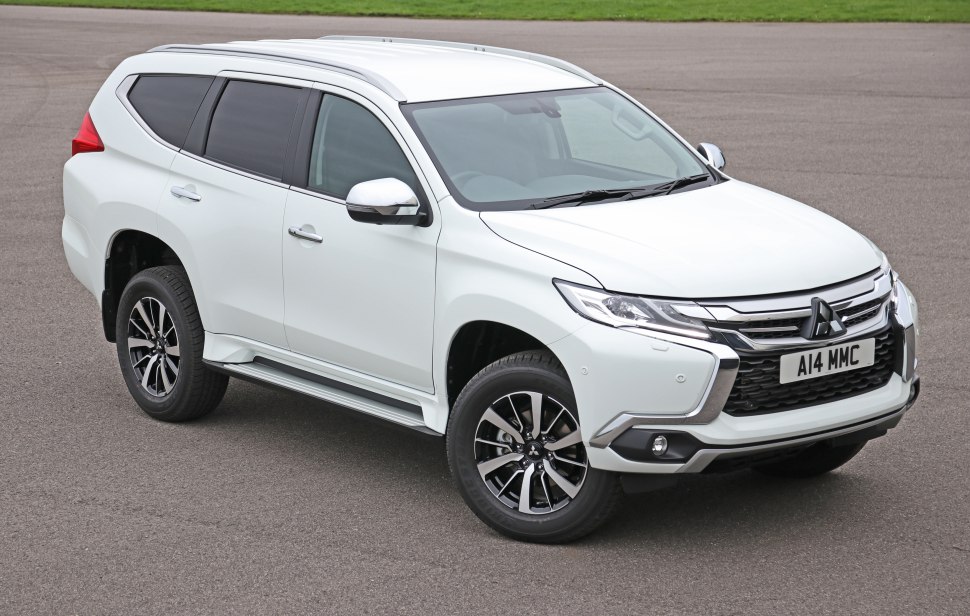
The Mitsubishi Pajero Sport III presents a distinctive and contemporary design, characterized by Mitsubishi’s “Dynamic Shield” front fascia, which integrates the grille and headlights into a cohesive, protective-looking element. As a traditional SUV, it boasts a 5-door body type, offering easy access for up to seven occupants. The generous seating capacity makes it an ideal family vehicle, capable of accommodating larger families or groups with ease. Its dimensions are substantial, with an overall length of 188.39 inches (4785 mm), a width of 71.46 inches (1815 mm), and a height ranging from 70.87 to 71.06 inches (1800-1805 mm). These proportions contribute to a commanding road presence and a spacious interior.
The Pajero Sport III’s design is not merely aesthetic; it’s deeply rooted in functionality, particularly for off-road capability. A significant ground clearance of 8.58 inches (218 mm) allows it to traverse uneven terrain without significant risk of underbody damage. This is complemented by impressive off-road angles: an approach angle of 30.0°, a departure angle of 24.6°, and a ramp-over (breakover) angle of 23.1°. These figures are indicative of a vehicle designed to handle steep inclines, descents, and crests, reinforcing its adventure-ready credentials. The robust suspension system features a double wishbone setup at the front, providing excellent wheel articulation and ride comfort, while the rear benefits from an independent multi-link suspension, which enhances both on-road handling and off-road stability. Braking duties are handled by ventilated discs at the front, offering strong stopping power, while the rear utilizes drum brakes, a common and durable solution for vehicles in this class and market. An Anti-lock Braking System (ABS) is standard, providing crucial safety by preventing wheel lock-up during hard braking. Steering is managed by a rack and pinion system, assisted by electric power steering, which offers a light and responsive feel at low speeds for maneuverability and a more weighted feel at higher speeds for stability. The vehicle rides on 265/70 R16 tires mounted on 7.0J x 16 wheel rims, a combination chosen for its balance of on-road comfort, off-road grip, and durability. With a curb weight of 4210.83 lbs (1910 kg) and a maximum permissible weight of 5732.02 lbs (2600 kg), the Pajero Sport III is built to be a workhorse, capable of handling significant payloads and towing requirements, further solidifying its position as a versatile and dependable SUV in its target markets.
Technical Specifications
| Brand | Mitsubishi |
| Model | Pajero Sport |
| Generation | Pajero Sport III |
| Type (Engine) | 2.5 DI-D (136 Hp) Automatic |
| Start of production | 2016 year |
| End of production | 2019 year |
| Powertrain Architecture | Internal Combustion engine |
| Body type | SUV |
| Seats | 7 |
| Doors | 5 |
| Fuel Type | Diesel |
| Maximum speed | 103.15 mph (166 km/h) |
| Emission standard | Euro 2/Euro 4 |
| Weight-to-power ratio | 14 kg/Hp |
| Weight-to-torque ratio | 5.9 kg/Nm |
| Power | 136 Hp @ 4000 rpm |
| Power per liter | 54.9 Hp/l |
| Torque | 238.97 lb.-ft. (324 Nm) @ 2000 rpm |
| Engine layout | Front, Longitudinal |
| Engine Model/Code | 4D56 |
| Engine displacement | 2.5 l (2477 cm3 / 151.16 cu. in.) |
| Number of cylinders | 4 |
| Engine configuration | Inline |
| Cylinder Bore | 3.59 in. (91.1 mm) |
| Piston Stroke | 3.74 in. (95 mm) |
| Compression ratio | 17:1 |
| Number of valves per cylinder | 2 |
| Fuel injection system | Diesel Commonrail |
| Engine aspiration | Turbocharger, Intercooler |
| Valvetrain | SOHC |
| Engine oil capacity | 6.87 US qt (6.5 l) |
| Coolant | 8.66 US qt (8.2 l) |
| Kerb Weight | 4210.83 lbs. (1910 kg) |
| Max. weight | 5732.02 lbs. (2600 kg) |
| Max load | 1521.19 lbs. (690 kg) |
| Fuel tank capacity | 17.96 US gal (68 l) |
| Length | 188.39 in. (4785 mm) |
| Width | 71.46 in. (1815 mm) |
| Height | 70.87 – 71.06 in. (1800-1805 mm) |
| Wheelbase | 110.24 in. (2800 mm) |
| Front track | 59.84 in. (1520 mm) |
| Rear (Back) track | 59.65 in. (1515 mm) |
| Front overhang | 34.65 in. (880 mm) |
| Rear overhang | 43.5 in. (1105 mm) |
| Ride height (ground clearance) | 8.58 in. (218 mm) |
| Minimum turning circle (turning diameter) | 36.75 ft. (11.2 m) |
| Approach angle | 30.0° |
| Departure angle | 24.6° |
| Ramp-over (brakeover) angle | 23.1° |
| Drivetrain Architecture | Internal combustion engine (ICE) drives the rear wheels |
| Drive wheel | Rear wheel drive |
| Number of gears and type of gearbox | 5 gears, automatic transmission |
| Front suspension | Double wishbone |
| Rear suspension | Independent multi-link suspension |
| Front brakes | Ventilated discs |
| Rear brakes | Drum |
| Assisting systems | ABS (Anti-lock braking system) |
| Steering type | Steering rack and pinion |
| Power steering | Electric Steering |
| Tires size | 265/70 R16 |
| Wheel rims size | 7.0J x 16 |