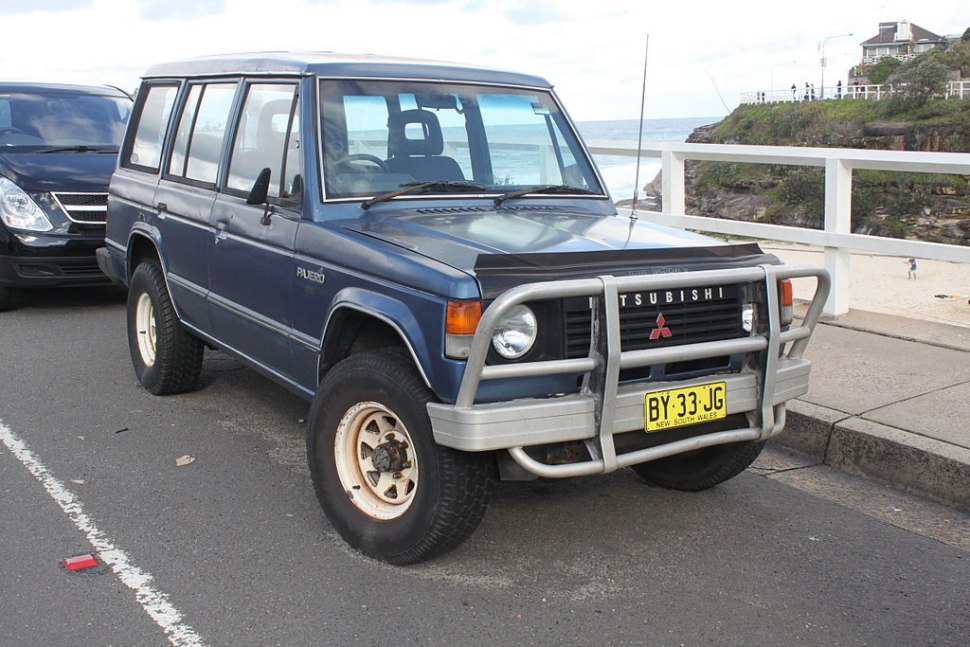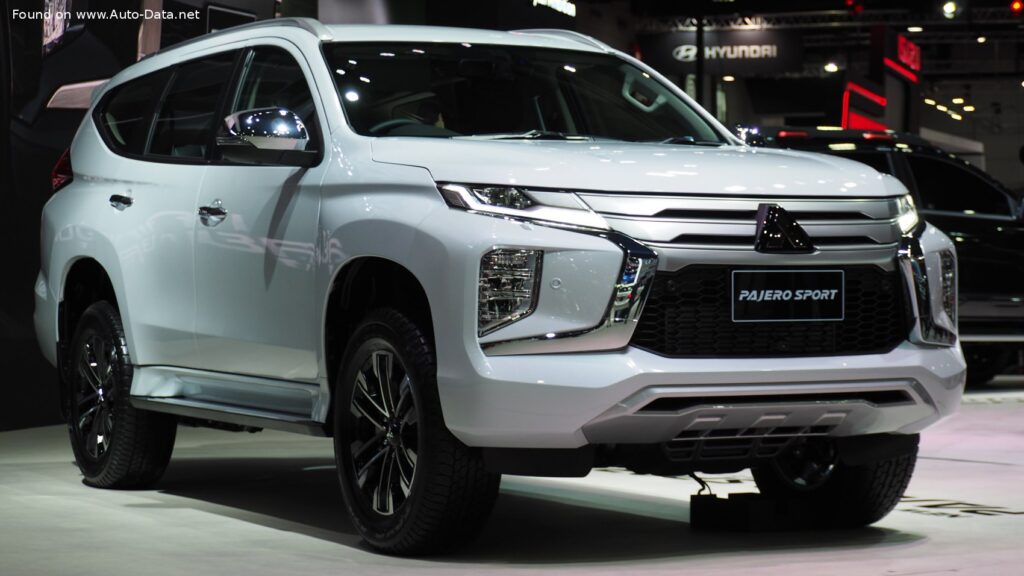
The Mitsubishi Pajero Sport III, specifically the facelifted 2019 model with the 2.4 DI-D (181 Hp) 4WD Automatic powertrain, represents a significant offering in the mid-size SUV segment for markets predominantly outside of North America. Known as the Montero Sport in some regions, and distinct from the larger, more traditional Pajero (Montero) SUV, the Pajero Sport is built on a ladder-frame chassis shared with the Triton/L200 pickup truck, emphasizing its robust off-road capabilities and durability. This particular iteration, produced from July 2019 to March 2024, continued Mitsubishi’s legacy of combining rugged utility with family-oriented comfort and modern amenities, making it a popular choice in Southeast Asia, Australia, and other global markets where such vehicles are highly valued for their versatility across varied terrains and conditions.
Overview of the Mitsubishi Pajero Sport III (facelift 2019)
The third generation of the Mitsubishi Pajero Sport, introduced in 2015, received a comprehensive facelift in 2019, bringing refreshed styling, enhanced features, and technological updates to maintain its competitive edge. This facelifted model continued to offer a compelling package for consumers seeking a durable, capable, and comfortable SUV. The focus for Mitsubishi was to refine an already successful formula, integrating contemporary design cues with proven mechanicals. The vehicle’s architecture, an internal combustion engine-powered SUV, firmly positions it in a segment that demands both daily practicality and adventurous spirit. With its 7-seat configuration and five doors, the Pajero Sport III (facelift 2019) is designed to accommodate families and their gear, whether navigating urban landscapes or venturing off the beaten path.
Engine & Performance
At the heart of the Mitsubishi Pajero Sport III (facelift 2019) lies the robust 2.4-liter DI-D (Direct Injection Diesel) engine, designated by the code 4N15. This inline four-cylinder powerplant is a testament to Mitsubishi’s expertise in diesel engineering, delivering a formidable 181 horsepower at 3500 revolutions per minute (rpm). The power output per liter stands at a respectable 74.1 Hp/l, showcasing efficient power generation from its 2442 cubic centimeters (149.02 cu. in.) displacement. More critically for an SUV of this caliber, the engine generates a substantial 317.15 lb.-ft. (430 Nm) of torque, peaking at a lower 2500 rpm. This low-end torque is crucial for off-road maneuvering, towing, and responsive acceleration, particularly when the vehicle is fully loaded.
The engine’s design incorporates a DOHC (Dual Overhead Camshaft) valvetrain with 4 valves per cylinder, optimizing airflow for combustion efficiency. Fuel is delivered via a sophisticated Diesel Commonrail injection system, which precisely controls fuel delivery for improved fuel economy and reduced emissions. Augmenting its performance is a turbocharger coupled with an intercooler, ensuring a dense charge of air enters the cylinders, further enhancing power and torque across the rev range. The compression ratio of 15.5:1 is typical for modern diesel engines, balancing power and efficiency. The engine is longitudinally mounted at the front, which is a common layout for ladder-frame SUVs, allowing for better weight distribution and accommodating the 4WD system. The powertrain is mated to a smooth and responsive 8-speed automatic transmission, which efficiently manages the engine’s power delivery to all four wheels. This combination provides both seamless on-road driving and precise control during challenging off-road excursions. The vehicle’s weight-to-power ratio is 11.5 kg/Hp (87.2 Hp/tonne), and its weight-to-torque ratio is 4.8 kg/Nm (207.2 Nm/tonne), indicating a well-balanced power-to-weight profile for its class.
Design & Features
The design of the Mitsubishi Pajero Sport III (facelift 2019) embodies a blend of aggressive styling and practical functionality. Its SUV body type, characterized by a length of 189.96 inches (4825 mm), a width of 71.46 inches (1815 mm), and a height of 72.24 inches (1835 mm), projects a commanding presence. The 2019 facelift introduced Mitsubishi’s “Dynamic Shield” front fascia, giving it a more contemporary and assertive look, complete with revised lighting elements and grille design. The generous wheelbase of 110.24 inches (2800 mm) contributes to both interior space and ride stability, while the substantial ground clearance of 8.58 inches (218 mm) underscores its off-road credentials. The front and rear overhangs, at 35.43 inches (900 mm) and 44.29 inches (1125 mm) respectively, are optimized for approach and departure angles, critical for traversing uneven terrain.
Inside, the Pajero Sport III offers a spacious cabin designed for seven occupants across three rows, making it highly versatile for family use or transporting larger groups. The emphasis is on comfort and durability, with practical materials and a layout that is intuitive for the driver. The vehicle features an advanced All-Wheel Drive (4×4) system, providing confident traction in diverse conditions. Suspension duties are handled by a double wishbone setup at the front, offering precise steering and robust handling, while the rear benefits from an independent multi-link spring suspension with a stabilizer, enhancing ride comfort and stability, particularly on rougher roads. Braking performance is ensured by ventilated discs at both the front and rear, complemented by an Anti-lock Braking System (ABS) for enhanced safety during emergency stops. Steering is managed by a rack and pinion system with electric power steering, providing ease of maneuverability at low speeds and a more connected feel at higher speeds. The vehicle rides on 265/60 R18 tires mounted on 7.5J x 18 wheel rims, a combination that balances on-road grip with off-road capability and ride comfort.
Technical Specifications: Mitsubishi Pajero Sport III (facelift 2019) 2.4 DI-D (181 Hp) 4WD Automatic
| Brand | Mitsubishi |
| Model | Pajero Sport |
| Generation | Pajero Sport III (facelift 2019) |
| Type (Engine) | 2.4 DI-D (181 Hp) 4WD Automatic |
| Start of production | July, 2019 year |
| End of production | March, 2024 year |
| Powertrain Architecture | Internal Combustion engine |
| Body type | SUV |
| Seats | 7 |
| Doors | 5 |
| Fuel Type | Diesel |
| Weight-to-power ratio | 11.5 kg/Hp, 87.2 Hp/tonne |
| Weight-to-torque ratio | 4.8 kg/Nm, 207.2 Nm/tonne |
| Power | 181 Hp @ 3500 rpm. |
| Power per liter | 74.1 Hp/l |
| Torque | 317.15 lb.-ft. @ 2500 rpm. (430 Nm) |
| Engine layout | Front, Longitudinal |
| Engine Model/Code | 4N15 |
| Engine displacement | 2.4 l (2442 cm3, 149.02 cu. in.) |
| Number of cylinders | 4 |
| Engine configuration | Inline |
| Cylinder Bore | 3.39 in. (86 mm) |
| Piston Stroke | 4.14 in. (105.1 mm) |
| Compression ratio | 15.5:1 |
| Number of valves per cylinder | 4 |
| Fuel injection system | Diesel Commonrail |
| Engine aspiration | Turbocharger, Intercooler |
| Valvetrain | DOHC |
| Engine oil capacity | 7.82 US qt (7.4 l) |
| Coolant | 8.14 US qt (7.7 l) |
| Kerb Weight | 4574.59 lbs. (2075 kg) |
| Fuel tank capacity | 17.96 US gal (68 l) |
| Length | 189.96 in. (4825 mm) |
| Width | 71.46 in. (1815 mm) |
| Height | 72.24 in. (1835 mm) |
| Wheelbase | 110.24 in. (2800 mm) |
| Front track | 59.84 in. (1520 mm) |
| Rear (Back) track | 59.65 in. (1515 mm) |
| Front overhang | 35.43 in. (900 mm) |
| Rear overhang | 44.29 in. (1125 mm) |
| Ride height (ground clearance) | 8.58 in. (218 mm) |
| Drive wheel | All wheel drive (4×4) |
| Number of gears and type of gearbox | 8 gears, automatic transmission |
| Front suspension | Double wishbone |
| Rear suspension | Independent multi-link spring suspension with stabilizer |
| Front brakes | Ventilated discs |
| Rear brakes | Ventilated discs |
| Assisting systems | ABS (Anti-lock braking system) |
| Steering type | Steering rack and pinion |
| Power steering | Electric Steering |
| Tires size | 265/60 R18 |
| Wheel rims size | 7.5J x 18 |