
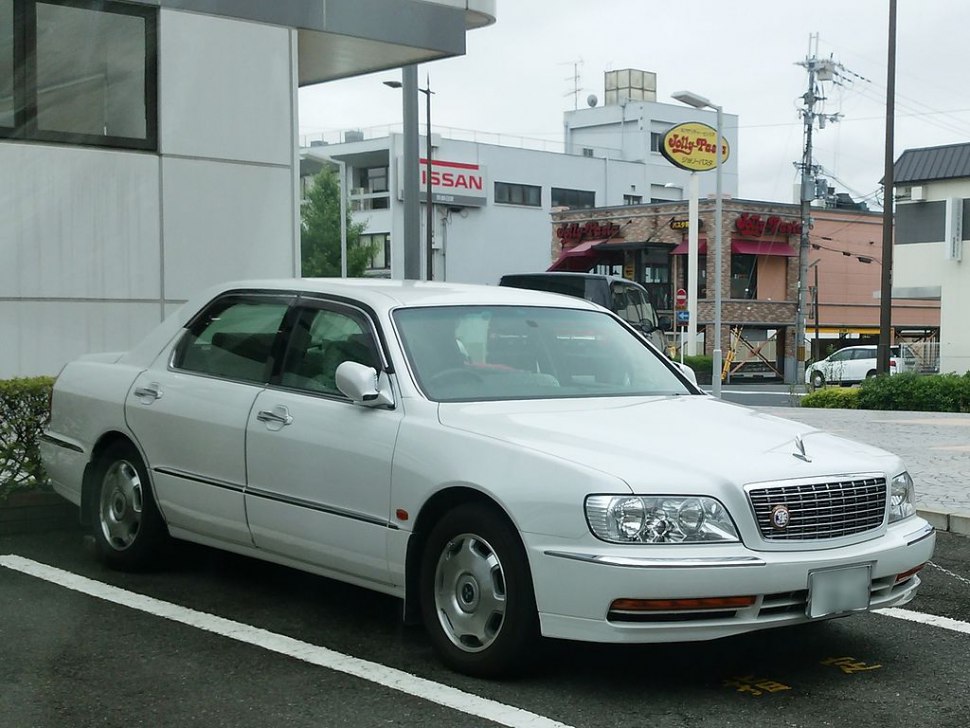
The Mitsubishi Proudia/Dignity, specifically the 4.5 32V (280 Hp) variant produced between 1999 and 2001, represented Mitsubishi’s ambitious foray into the ultra-luxury and executive sedan segment primarily for the Japanese Domestic Market (JDM). Positioned as the brand’s flagship offering, the Proudia was a full-size luxury sedan, while the Dignity was an even longer-wheelbase limousine version, intended to compete with established luxury marques like Toyota’s Century and Nissan’s President. This particular generation, often referred to simply as the Proudia/Dignity generation due to its singular and short-lived run, aimed to showcase Mitsubishi’s engineering prowess and commitment to high-end automotive craftsmanship. It was designed to offer unparalleled comfort, advanced technology for its era, and a commanding road presence, catering to high-ranking executives and government officials. The decision to brand these vehicles as a single generation underscores their unique and integrated development during a pivotal time for Japanese automakers.
Engine and Performance of the Mitsubishi Proudia/Dignity
At the heart of the Mitsubishi Proudia/Dignity 4.5 32V (280 Hp) lay a formidable powertrain designed for smooth, refined performance befitting its luxury status. The vehicle was propelled by a naturally aspirated 4.5-liter, 32-valve V8 engine. This sophisticated powerplant, configured in a V-engine layout and featuring Double Overhead Camshafts (DOHC) with four valves per cylinder, was capable of producing a robust 280 horsepower at 5000 revolutions per minute. Torque figures were equally impressive for its time, peaking at 303.88 pound-feet (412 Nm) at 4000 rpm, ensuring ample pulling power and effortless acceleration even from low speeds. The engine’s displacement measured 4498 cubic centimeters (274.48 cu. in.), with a cylinder bore of 3.39 inches (86 mm) and a piston stroke of 3.81 inches (96.8 mm), all contributing to its responsive and potent character.
Fuel delivery was managed by a multi-port manifold injection system, optimized for efficient combustion and power output. With a compression ratio of 10.7:1, the engine was tuned to run on gasoline, balancing performance with the practicalities of a daily driver in its target market. A distinctive aspect of the Proudia/Dignity’s engineering was its powertrain architecture: the internal combustion engine (ICE) was mounted transversely at the front and drove the front wheels. This front-wheel-drive (FWD) V8 configuration was quite unconventional for a luxury sedan of its size and power, particularly when most competitors in the executive segment opted for rear-wheel-drive (RWD) layouts to enhance handling dynamics and accommodate larger engines longitudinally. This choice likely aimed to maximize interior space and potentially reduce manufacturing complexity, though it did differentiate its driving characteristics from more traditional luxury sedans.
Power was transmitted to the front wheels via a smooth-shifting 5-speed automatic transmission, chosen for its seamless operation and contribution to passenger comfort. While the vehicle’s top speed was electronically limited to 111.85 miles per hour (180 km/h), a common practice for JDM vehicles, its performance metrics showcased a strong focus on luxurious cruising rather than outright speed. The weight-to-power ratio stood at 7.1 kg per horsepower, or 140.7 horsepower per ton, indicating a substantial vehicle with significant power. Fuel economy, while not the primary concern for a luxury V8, was rated at approximately 13.8 US miles per gallon in urban driving conditions and around 23.5 US miles per gallon on the extra-urban cycle, figures that were competitive for a large, powerful sedan of the late 1990s. This combination of a powerful V8, smooth automatic transmission, and an unusual FWD layout defined the unique driving experience of the Mitsubishi Proudia/Dignity.
Design and Features of the Mitsubishi Proudia/Dignity
The Mitsubishi Proudia/Dignity presented itself as a quintessential executive sedan, embodying the design philosophies prevalent in the Japanese luxury market at the turn of the millennium. Its body type was a classic 4-door sedan, accommodating five occupants in a spacious and opulent cabin. The dimensions underscored its commanding presence: a substantial length of 198.82 inches (5050 mm), a width of 73.62 inches (1870 mm), and a height of 58.27 inches (1480 mm). The generous wheelbase of 111.42 inches (2830 mm) was crucial for maximizing interior room, particularly for rear-seat passengers, a key consideration for its executive clientele. Both the front and rear tracks measured 63.58 inches (1615 mm), contributing to a stable and composed ride.
In terms of structural integrity and road presence, the Proudia/Dignity had a kerb weight of 4387.2 pounds (1990 kg), reflecting its robust construction and extensive feature set. The maximum allowable weight was 4739.94 pounds (2150 kg), with a maximum load capacity of 352.74 pounds (160 kg). The trunk space was ample for executive travel, offering 17.83 cubic feet (505 liters) of cargo volume, sufficient for golf clubs or multiple suitcases. The fuel tank capacity of 21.13 US gallons (80 liters) ensured a respectable cruising range.
Underneath its dignified exterior, the Proudia/Dignity featured a suspension system designed for comfort and stability. Both the front and rear suspensions utilized a coil spring setup, carefully tuned to absorb road imperfections and provide a smooth ride, a paramount concern for a vehicle in this class. Braking performance was handled by ventilated discs at both the front and rear, providing reliable stopping power for a vehicle of its size and weight. An Anti-lock Braking System (ABS) was a standard assisting system, enhancing safety by preventing wheel lock-up during hard braking. Steering was managed by a rack and pinion system, complemented by hydraulic power steering, offering precise control and ease of maneuverability, particularly at lower speeds.
The vehicle rode on tires sized 225/60 R14. While R14 wheels might appear modest by today’s standards for a luxury V8 sedan, they were common fitments for comfort-oriented vehicles of that era, prioritizing ride quality and quietness over aggressive handling. Inside, although specific interior features are not detailed in the raw data, a car of this caliber would have undoubtedly offered a suite of luxury amenities. These would typically include premium leather upholstery, power-adjustable heated seats, multi-zone automatic climate control, a sophisticated sound system, power windows and locks, and various wood or metallic trim accents. The overall design ethos of the Mitsubishi Proudia/Dignity was to create a serene, comfortable, and technologically competent environment for its occupants, establishing its place as a distinguished player in the high-end JDM luxury segment, albeit for a brief and impactful period.
Technical Specifications
| General Information | |
| Brand | Mitsubishi |
| Model | Proudia/Dignity |
| Generation | Proudia/Dignity |
| Type (Engine) | 4.5 32V (280 Hp) |
| Start of Production | 1999 year |
| End of Production | 2001 year |
| Powertrain Architecture | Internal Combustion engine |
| Body Type | Sedan |
| Seats | 5 |
| Doors | 4 |
| Performance Specs | |
| Fuel Consumption (Economy) – Urban | 17 l/100 km (13.8 US mpg) |
| Fuel Consumption (Economy) – Extra Urban | 10 l/100 km (23.5 US mpg) |
| Fuel Type | Petrol (Gasoline) |
| Maximum Speed | 180 km/h (111.85 mph) |
| Weight-to-Power Ratio | 7.1 kg/Hp (140.7 Hp/tonne) |
| Weight-to-Torque Ratio | 4.8 kg/Nm (207 Nm/tonne) |
| Engine Specs | |
| Power | 280 Hp @ 5000 rpm |
| Power per Liter | 62.2 Hp/l |
| Torque | 412 Nm @ 4000 rpm (303.88 lb.-ft. @ 4000 rpm) |
| Engine Layout | Front, Transverse |
| Engine Displacement | 4498 cm³ (274.48 cu. in.) |
| Number of Cylinders | 8 |
| Engine Configuration | V-engine |
| Cylinder Bore | 86 mm (3.39 in.) |
| Piston Stroke | 96.8 mm (3.81 in.) |
| Compression Ratio | 10.7:1 |
| Number of Valves per Cylinder | 4 |
| Fuel Injection System | Multi-port manifold injection |
| Engine Aspiration | Naturally aspirated engine |
| Valvetrain | DOHC |
| Space, Volume and Weights | |
| Kerb Weight | 1990 kg (4387.2 lbs.) |
| Max. Weight | 2150 kg (4739.94 lbs.) |
| Max Load | 160 kg (352.74 lbs.) |
| Trunk (Boot) Space – Minimum | 505 l (17.83 cu. ft.) |
| Fuel Tank Capacity | 80 l (21.13 US gal | 17.6 UK gal) |
| Dimensions | |
| Length | 5050 mm (198.82 in.) |
| Width | 1870 mm (73.62 in.) |
| Height | 1480 mm (58.27 in.) |
| Wheelbase | 2830 mm (111.42 in.) |
| Front Track | 1615 mm (63.58 in.) |
| Rear (Back) Track | 1615 mm (63.58 in.) |
| Drivetrain, Brakes and Suspension Specs | |
| Drivetrain Architecture | The Internal combustion engine (ICE) drives the front wheels of the vehicle. |
| Drive Wheel | Front wheel drive |
| Number of Gears and Type of Gearbox | 5 gears, automatic transmission |
| Front Suspension | Coil spring |
| Rear Suspension | Coil spring |
| Front Brakes | Ventilated discs |
| Rear Brakes | Ventilated discs |
| Assisting Systems | ABS (Anti-lock braking system) |
| Steering Type | Steering rack and pinion |
| Power Steering | Hydraulic Steering |
| Tires Size | 225/60 R14 |
