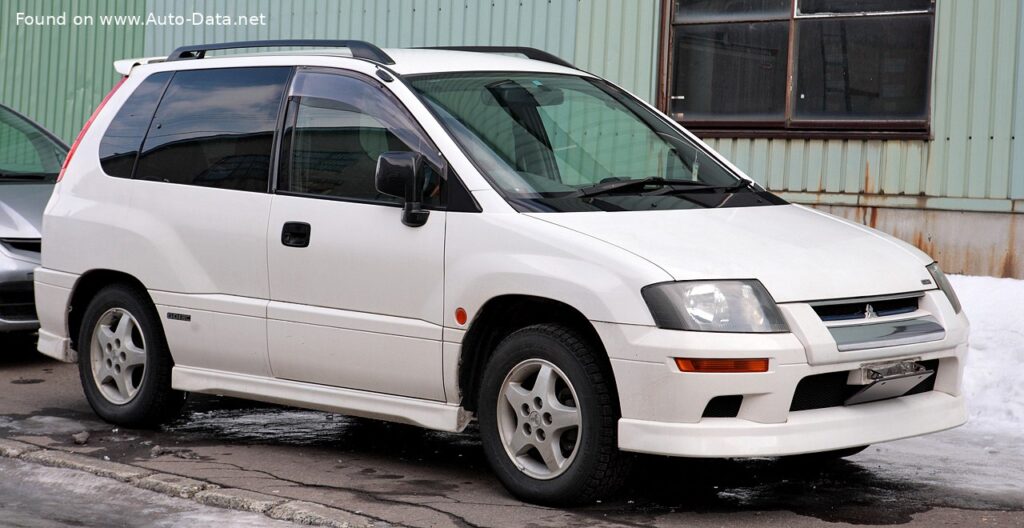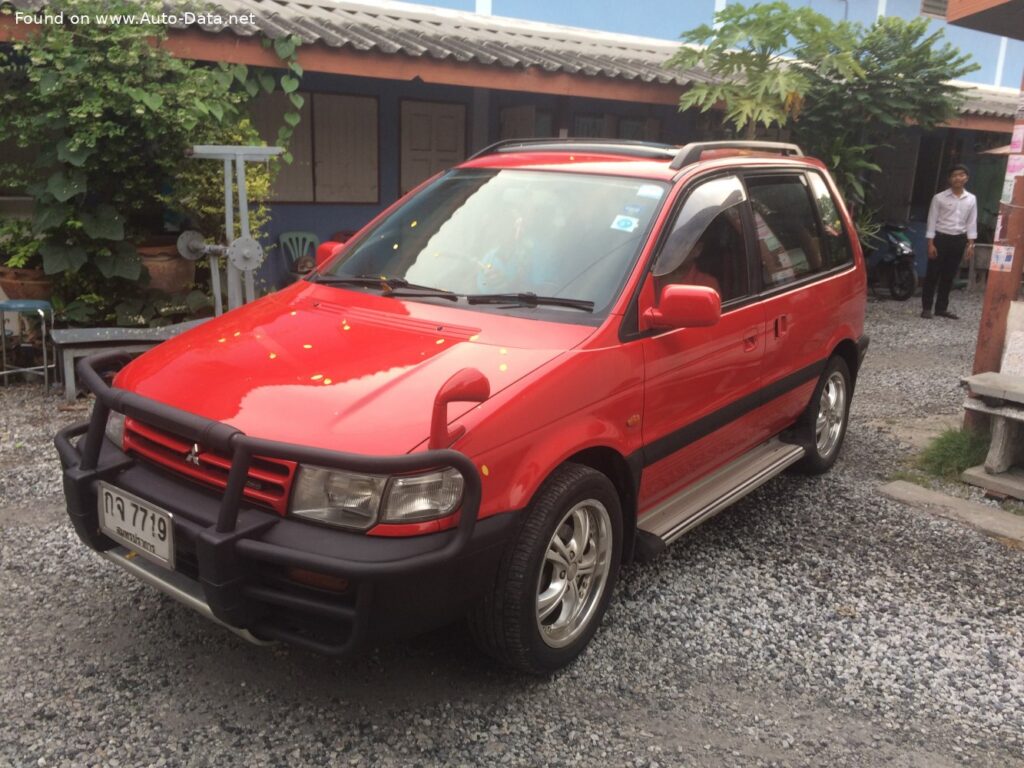
The Mitsubishi RVR (E-N23W) 1.8 i 16V Z (120 Hp) represents a fascinating chapter in the evolution of compact multi-purpose vehicles (MPVs), particularly within the Japanese Domestic Market (JDM) and various international markets where it carved out a unique niche. Produced from 1991 to 1997, this first-generation RVR, known as the ‘Recreational Vehicle Runner,’ was Mitsubishi’s innovative response to a growing consumer demand for vehicles that blended the practicality of a minivan with the dynamic appeal of a smaller car. Unlike traditional, larger minivans prevalent in the North American market, the RVR was conceived as a more agile, lifestyle-oriented vehicle, often characterized by its shorter wheelbase and distinctive styling. It provided a compelling package for families and individuals seeking versatility without the bulk, offering a compact footprint combined with surprising interior flexibility and a spirited powertrain, exemplified by the 1.8 i 16V Z (120 Hp) variant. While not officially sold in the United States, its influence and design philosophy resonated globally, inspiring similar compact MPV designs and demonstrating Mitsubishi’s engineering prowess in creating adaptable and efficient vehicles for diverse urban and recreational needs.
The Mitsubishi RVR (E-N23W) 1.8 i 16V Z (120 Hp): An Overview of its Market Impact and Design Philosophy
The Mitsubishi RVR (E-N23W) emerged during a period of significant innovation in automotive design, particularly in Asia, where space efficiency and adaptability were paramount. Its “Recreational Vehicle Runner” moniker perfectly encapsulated its dual purpose: a practical family hauler during the week and a capable adventure companion on weekends. This specific E-N23W generation, with its 1.8 i 16V Z (120 Hp) engine, was a cornerstone of its appeal. Positioned as a compact minivan, it offered a more car-like driving experience than its larger counterparts, making it an attractive option for urban dwellers and those navigating tighter spaces. Its production run from 1991 to 1997 marked it as a contemporary of other groundbreaking compact MPVs that sought to redefine family transportation, emphasizing a blend of utility, comfort, and a touch of sporty flair. The RVR’s unique selling proposition in its primary markets was its ability to bridge the gap between a conventional sedan and a full-size van, offering elevated seating, a flexible interior, and an accessible entry height, all within dimensions suitable for dense city environments.
Engine and Performance Characteristics
At the heart of the Mitsubishi RVR (E-N23W) 1.8 i 16V Z (120 Hp) was a robust and efficient powertrain designed to deliver a balanced blend of performance and economy. The vehicle was equipped with a 1.8-liter (1834 cm3 or 111.92 cu. in.) inline four-cylinder engine. This naturally aspirated unit featured a multi-port manifold injection system, ensuring precise fuel delivery and optimal combustion. With a compression ratio of 9.5:1 and an OHC (Overhead Camshaft) valvetrain with four valves per cylinder, the engine was engineered for smooth operation and responsive power delivery throughout its rev range. It produced a respectable 120 horsepower at 6000 rpm, translating to a power-per-liter output of 65.4 Hp/l, a competitive figure for its era and segment. Torque was equally impressive for a vehicle of its size, peaking at 117.27 lb.-ft. (159 Nm) at 4500 rpm, providing ample pulling power for daily driving and light hauling.
Power was efficiently transmitted to the front wheels via a 5-speed manual transmission, offering engaging control for the driver and contributing to the vehicle’s overall fuel efficiency. The front-wheel-drive architecture, with the engine mounted transversely at the front, optimized interior space and provided predictable handling characteristics. Performance figures included a top speed of approximately 114.95 mph (185 km/h), making it capable of highway cruising with ease. Despite its spirited performance, the RVR 1.8 i 16V Z maintained commendable fuel economy, rated at an average of 35.1 US mpg (6.7 l/100 km) in combined driving conditions. This efficiency, coupled with a 14.53 US gallon (55-liter) fuel tank capacity, provided a practical cruising range, enhancing its appeal as a versatile family vehicle. The vehicle’s weight-to-power ratio of 10.1 kg/Hp and a weight-to-torque ratio of 7.6 kg/Nm underscored its nimble nature, allowing for responsive acceleration and maneuverability in various driving scenarios.
Design, Features, and Practicality
The Mitsubishi RVR (E-N23W) was characterized by its distinctive minivan body type, a design that skillfully balanced compact exterior dimensions with a surprisingly spacious and adaptable interior. Measuring 168.9 inches (4290 mm) in length, 66.73 inches (1695 mm) in width, and 63.98 inches (1625 mm) in height, the RVR was a genuinely compact vehicle by modern standards, yet its clever packaging maximized utility. A wheelbase of 99.21 inches (2520 mm) contributed to its stable ride and maneuverability. The 4-door configuration provided convenient access for both front and rear passengers, while the 4-seat layout, common in many compact MPVs of the era, offered comfortable seating for its occupants, with a focus on individual space and comfort rather than cramming in an extra seat.
Interior versatility was a key strength of the RVR. The trunk (boot) space ranged from a substantial 23.87 cubic feet (676 liters) with all seats in place, expanding dramatically to an impressive 57.56 cubic feet (1630 liters) when the rear seats were folded or removed. This flexible cargo capacity made the RVR highly practical for carrying luggage, sports equipment, or larger items, reinforcing its “recreational” credentials. From a chassis and safety perspective, the RVR featured a well-engineered suspension system, with a Spring Strut setup at the front and a Coil Spring arrangement at the rear, designed to provide a comfortable ride and competent handling. Braking duties were handled by ventilated discs at the front for effective heat dissipation and drum brakes at the rear. An Anti-lock Braking System (ABS) was a significant safety feature for its time, enhancing control during emergency braking maneuvers. The steering system utilized a rack and pinion setup, complemented by hydraulic power steering, ensuring light and precise control for the driver, a crucial aspect for a vehicle intended for both city driving and longer journeys. The vehicle rode on 185/70 R14 S tires, providing a good balance of grip and ride comfort for its intended use.
Technical Specifications: Mitsubishi RVR (E-N23W) 1.8 i 16V Z (120 Hp)
| Brand | Mitsubishi |
| Model | RVR |
| Generation | RVR (E-N23W) |
| Type (Engine) | 1.8 i 16V Z (120 Hp) |
| Start of production | 1991 year |
| End of production | 1997 year |
| Powertrain Architecture | Internal Combustion engine |
| Body type | Minivan |
| Seats | 4 |
| Doors | 4 |
| Fuel consumption (economy) – combined | 6.7 l/100 km (35.1 US mpg | 42.2 UK mpg | 14.9 km/l) |
| Fuel Type | Petrol (Gasoline) |
| Maximum speed | 185 km/h (114.95 mph) |
| Weight-to-power ratio | 10.1 kg/Hp (99.2 Hp/tonne) |
| Weight-to-torque ratio | 7.6 kg/Nm (131.4 Nm/tonne) |
| Power | 120 Hp @ 6000 rpm |
| Power per liter | 65.4 Hp/l |
| Torque | 159 Nm @ 4500 rpm (117.27 lb.-ft. @ 4500 rpm) |
| Engine layout | Front, Transverse |
| Engine displacement | 1834 cm3 (1.8 l | 111.92 cu. in.) |
| Number of cylinders | 4 |
| Engine configuration | Inline |
| Cylinder Bore | 81 mm (3.19 in.) |
| Piston Stroke | 89 mm (3.5 in.) |
| Compression ratio | 9.5:1 |
| Number of valves per cylinder | 4 |
| Fuel injection system | Multi-port manifold injection |
| Engine aspiration |