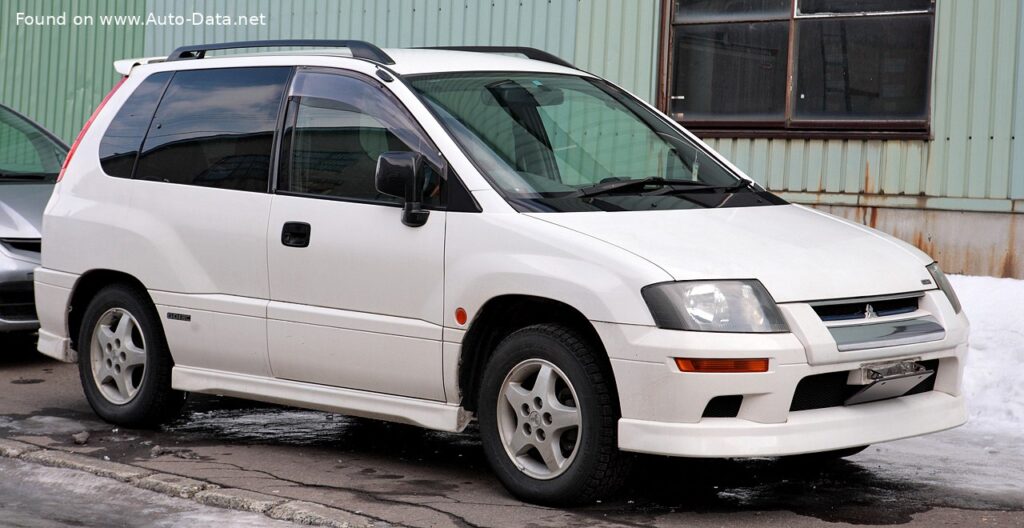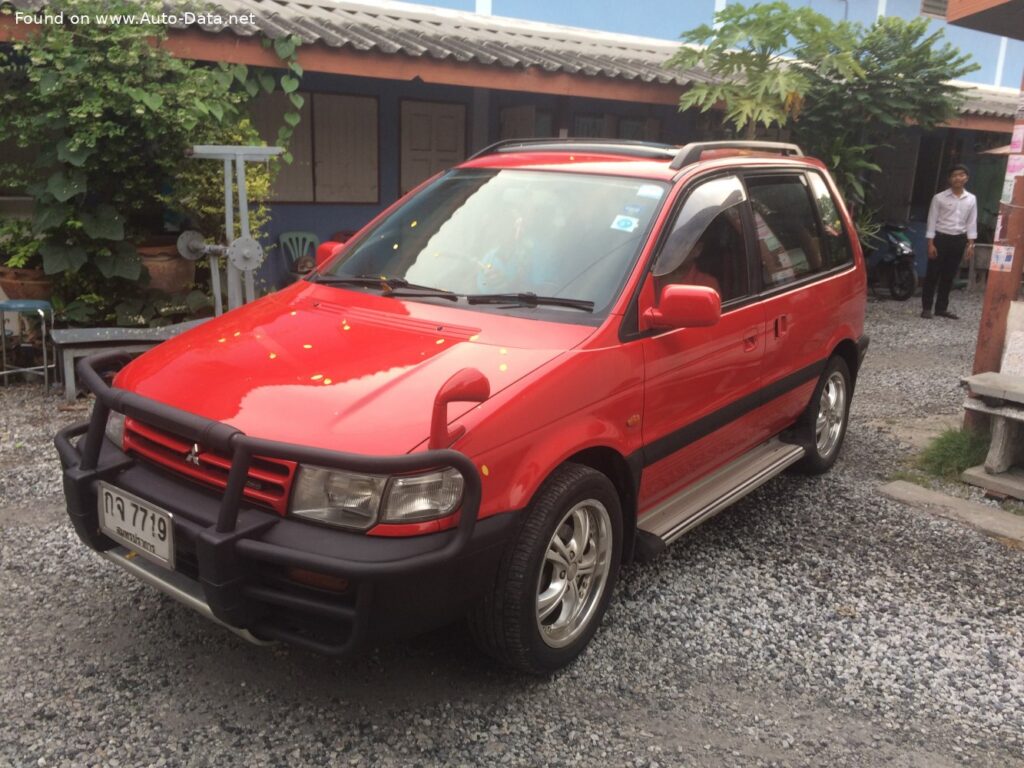
The Mitsubishi RVR (E-N23W) 2.0 i 16V 4WD R (160 Hp) Automatic represents a significant entry in the compact minivan segment, particularly prominent in its primary markets during its production run from 1991 to 1997. This generation, known internally as the E-N23W chassis code, carved out a niche for itself by blending the practicality of a people mover with the robust capabilities of an all-wheel-drive system, a hallmark of Mitsubishi’s engineering prowess. While the RVR nameplate was predominantly used in Japan and parts of Asia, this versatile vehicle was also marketed internationally under various monikers, including the Mitsubishi Space Runner and Space Wagon in Europe, and perhaps most notably for the North American market, as the Mitsubishi Expo LRV, Dodge Colt Wagon, and Plymouth Colt Vista. This strategic rebranding allowed the innovative design and engineering of the RVR to reach a broader global audience, adapting to regional market preferences while retaining its core identity as a compact, four-door minivan designed for both urban utility and light adventurous excursions. Its introduction marked a period where manufacturers began exploring more flexible vehicle architectures, moving beyond traditional sedans and station wagons to offer consumers greater versatility in a smaller footprint. The Mitsubishi RVR (E-N23W), in its 2.0 i 16V 4WD R (160 Hp) Automatic configuration, stood out with its potent powertrain and sophisticated drivetrain for its class, offering a compelling package of performance, space, and all-weather capability that was relatively uncommon in compact minivans of the early 1990s. This particular variant, with its 160 horsepower engine and automatic transmission coupled with an advanced 4WD system, aimed to provide a dynamic driving experience without compromising on the practical aspects expected from a family-oriented vehicle.
Engine and Performance of the Mitsubishi RVR (E-N23W)
At the heart of the Mitsubishi RVR (E-N23W) 2.0 i 16V 4WD R (160 Hp) Automatic was a meticulously engineered 2.0-liter, naturally aspirated inline-four gasoline engine, designed to deliver a compelling balance of power and reliability. This 1997 cm³ (121.86 cubic inches) powerplant featured a multi-port manifold injection system, ensuring precise fuel delivery and optimal combustion efficiency. The engine’s advanced design incorporated a Double Overhead Camshaft (DOHC) valvetrain with four valves per cylinder, totaling 16 valves, which allowed for superior airflow and enhanced engine breathing at higher RPMs. With an 85 mm bore and an 88 mm piston stroke, combined with a robust 10.4:1 compression ratio, the engine was tuned to produce a respectable 160 horsepower at a peak of 6500 rpm. This translated to an impressive power output of 80.1 horsepower per liter, a strong figure for a naturally aspirated engine of its era.
Equally important to its performance credentials was the engine’s torque delivery. The RVR generated 186 Nm (approximately 137.19 lb.-ft.) of torque at 4750 rpm, providing ample pulling power for various driving conditions, whether navigating city streets or tackling light off-road trails. The engine’s front, transverse layout was typical for front-wheel-drive biased platforms, optimizing interior space. Power was seamlessly transferred to all four wheels via a four-speed automatic transmission, a sophisticated feature for a compact minivan of its time, offering ease of use and improved traction. The full-time all-wheel-drive (4×4) system was a significant differentiator, providing enhanced stability and grip, particularly beneficial in adverse weather conditions or on unpaved roads. This robust drivetrain architecture contributed to a favorable weight-to-power ratio of 8.3 kg/Hp (121.2 Hp/tonne) and a weight-to-torque ratio of 7.1 kg/Nm (140.9 Nm/tonne), indicating a well-balanced power delivery for its 2910.1 lbs (1320 kg) curb weight. Despite its performance capabilities, the RVR also demonstrated reasonable fuel economy for an AWD vehicle of its class and era, achieving approximately 6.17 liters per 100 km (38.1 US mpg) in extra-urban driving conditions, showcasing Mitsubishi’s commitment to engineering efficiency alongside power.
Design and Features of the Mitsubishi RVR (E-N23W)
The design philosophy behind the Mitsubishi RVR (E-N23W) emphasized versatility, practicality, and a compact footprint, making it an ideal choice for urban families and those requiring flexible cargo and passenger configurations. As a four-door minivan, its body type offered easy access for both front and rear occupants, while its overall dimensions struck a balance between maneuverability and interior spaciousness. Measuring 171.65 inches (4360 mm) in length, 66.73 inches (1695 mm) in width, and 64.57 inches (1640 mm) in height, the RVR was designed to be easily navigable through congested city environments and tight parking spaces, a common requirement in its primary Asian and European markets. A wheelbase of 99.21 inches (2520 mm) contributed to a stable ride and maximized interior volume, especially for rear passengers.
Inside, the RVR was configured with four seats, which, while fewer than some larger minivans, allowed for generous individual space and comfort for all occupants. This seating arrangement, combined with the vehicle’s compact exterior, made it a unique offering. The vehicle’s utility was further enhanced by its impressive cargo capacity. The trunk space ranged from a minimum of 676 liters (23.87 cu. ft.) with all seats in place, expanding significantly to a maximum of 1630 liters (57.56 cu. ft.) when the rear seats were folded or removed, providing ample room for luggage, groceries, or larger items. This flexibility was a key selling point, catering to diverse lifestyle needs.
Underpinning the RVR’s comfortable ride and capable handling were its well-tuned suspension and braking systems. The front suspension utilized a reliable Spring Strut design, while the rear featured Coil springs, a setup that provided a good balance between ride comfort and dynamic stability. Stopping power was ensured by ventilated disc brakes at the front and solid disc brakes at the rear, complemented by an Anti-lock Braking System (ABS). ABS was a notable safety feature for vehicles in the early 1990s, enhancing control during emergency braking maneuvers. Steering was managed by a hydraulic rack and pinion system, offering direct feedback and ease of steering, especially at lower speeds. The vehicle rode on 185/70 R14 tires mounted on 5.5J x 14 wheel rims, a practical size offering a good blend of comfort, grip, and durability. The 55-liter (14.53 US gal) fuel tank capacity provided a reasonable cruising range. Overall, the Mitsubishi RVR (E-N23W) was a thoughtfully designed vehicle that prioritized functionality, safety, and a pleasant driving experience within a versatile and compact package, establishing it as a pioneer in the burgeoning compact MPV segment.
Technical Specifications
| Brand | Mitsubishi |
| Model | RVR |
| Generation | RVR (E-N23W) |
| Type (Engine) | 2.0 i 16V 4WD R (160 Hp) Automatic |
| Start of production | 1991 year |
| End of production | 1997 year |
| Powertrain Architecture | Internal Combustion engine |
| Body type | Minivan |
| Seats | 4 |
| Doors | 4 |
| Fuel consumption (economy) – extra urban | 6.17 l/100 km (38.1 US mpg) |
| Fuel Type | Petrol (Gasoline) |
| Weight-to-power ratio | 8.3 kg/Hp (121.2 Hp/tonne) |
| Weight-to-torque ratio | 7.1 kg/Nm (140.9 Nm/tonne) |
| Power | 160 Hp @ 6500 rpm |
| Power per litre | 80.1 Hp/l |
| Torque | 186 Nm (137.19 lb.-ft.) @ 4750 rpm |
| Engine layout | Front, Transverse |
| Engine displacement | 1997 cm3 (121.86 cu. in.) |
| Number of cylinders | 4 |
| Engine configuration | Inline |
| Cylinder Bore | 85 mm (3.35 in.) |
| Piston Stroke | 88 mm (3.46 in.) |
| Compression ratio | 10.4:1 |
| Number of valves per cylinder | 4 |
| Fuel injection system | Multi-port manifold injection |
| Engine aspiration | Naturally aspirated engine |
| Valvetrain | DOHC |
| Kerb Weight | 1320 kg (2910.1 lbs) |
| Trunk (boot) space – minimum | 676 l (23.87 cu. ft.) |
| Trunk (boot) space – maximum | 1630 l (57.56 cu. ft.) |
| Fuel tank capacity | 55 l (14.53 US gal) |
| Length | 4360 mm (171.65 in.) |
| Width | 1695 mm (66.73 in.) |
| Height | 1640 mm (64.57 in.) |
| Wheelbase | 2520 mm (99.21 in.) |
| Front track | 1455 mm (57.28 in.) |

|