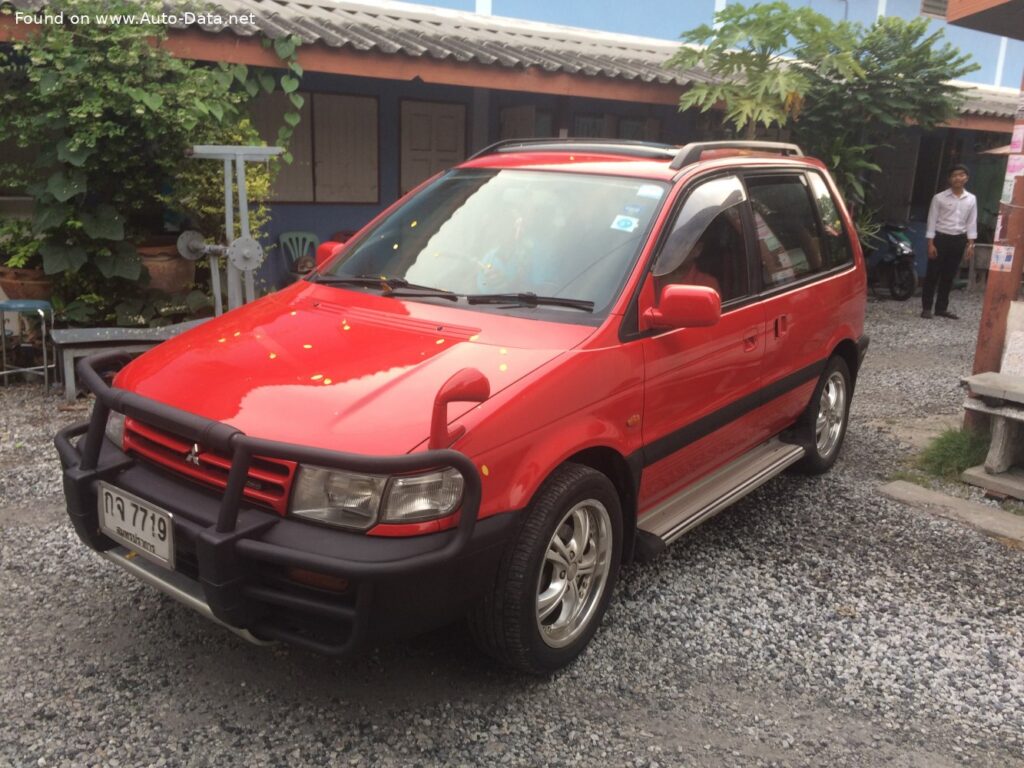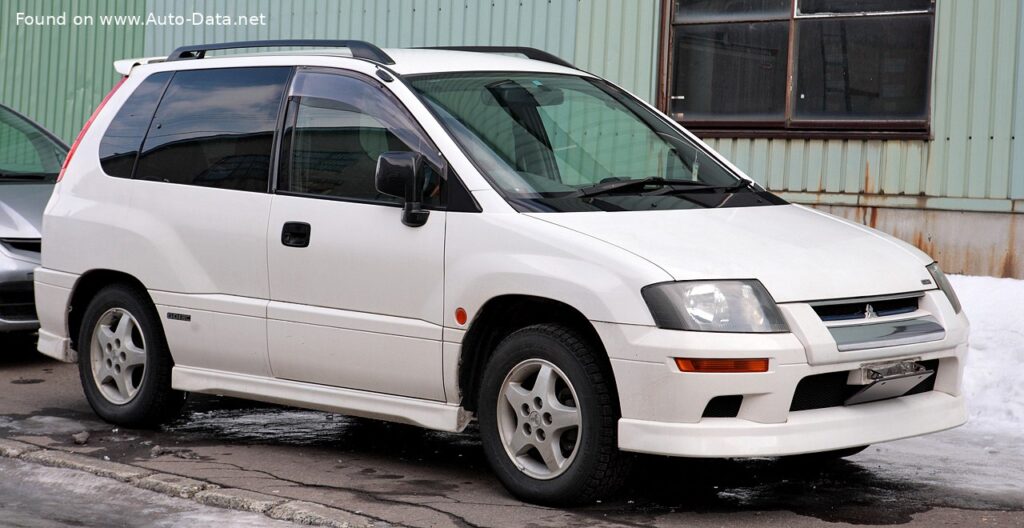
The Mitsubishi RVR (N61W) represents a significant entry in the compact multi-purpose vehicle (MPV) segment, a category that gained substantial traction in global markets during the late 1990s. This particular generation, identified by its N61W chassis code, was primarily developed for the Japanese domestic market (JDM) and saw distribution in various Asian and European countries, where it was often marketed as the Space Runner or Space Wagon in some regions. While not a mainstream offering in the United States, the RVR embodied Mitsubishi’s commitment to versatile, family-friendly transportation, blending the practicality of a minivan with the more agile footprint and driving dynamics of a compact car. Produced between 1997 and 1999, the RVR (N61W) 1.8 i 16V (140 Hp) 4dr variant stood out for its efficient yet capable powertrain and its thoughtful interior packaging, designed to maximize utility within its relatively compact dimensions.
Engine and Performance of the Mitsubishi RVR (N61W)
At the heart of the Mitsubishi RVR (N61W) 1.8 i 16V (140 Hp) 4dr lay a robust 1.8-liter (1834 cm³ or 111.92 cu. in.) inline four-cylinder gasoline engine. This powerplant was engineered for a balance of everyday drivability and respectable efficiency, reflecting the pragmatic demands of its target market. It delivered a peak output of 140 horsepower at a relatively high 6000 rpm, indicative of its free-revving, naturally aspirated design. Torque figures were equally competent for its class, with 181 Nm (133.5 lb.-ft.) available at 3750 rpm, providing ample pulling power for urban commuting and highway cruising alike. The engine’s layout was a conventional front, transverse configuration, driving the front wheels, a common and efficient setup for compact MPVs of this era.
A notable technical highlight for a vehicle of its time and segment was the inclusion of a direct injection fuel system. This advanced technology allowed for precise fuel delivery directly into the combustion chambers, contributing to improved fuel efficiency and reduced emissions compared to traditional port injection systems. Coupled with a high compression ratio of 12:1 and a 16-valve cylinder head (four valves per cylinder), the engine achieved a strong power-per-liter rating of 76.3 Hp/l, showcasing Mitsubishi’s engineering prowess. The bore and stroke measurements of 81 mm (3.19 in.) and 89 mm (3.5 in.), respectively, pointed to an engine designed for a good balance of low-end torque and high-end power. Power was managed through a 4-speed automatic transmission, which, while not as sophisticated as modern multi-speed units, provided smooth and predictable shifts, perfectly suited to the RVR’s role as a comfortable family transporter. With a curb weight of 3042.38 pounds (1380 kg), the RVR offered a weight-to-power ratio of 9.9 kg/Hp (101.4 Hp/tonne) and a weight-to-torque ratio of 7.6 kg/Nm (131.2 Nm/tonne), indicating a responsive feel for its class rather than outright performance.
Design and Features
The design philosophy of the Mitsubishi RVR (N61W) emphasized practicality and efficient use of space, characteristic of Japanese MPVs from the late 1990s. Its minivan body type, featuring four doors and seating for four occupants, was conceived to offer flexible interior configurations. Measuring 168.5 inches (4280 mm) in length, 66.73 inches (1695 mm) in width, and 64.96 inches (1650 mm) in height, the RVR presented a compact exterior that was easy to maneuver in congested city environments, yet provided surprising interior volume. The relatively long wheelbase of 100.39 inches (2550 mm) contributed to a stable ride and maximized cabin space for passengers and cargo.
Inside, the RVR was designed with versatility in mind. The trunk (boot) space ranged from a generous 15.19 cubic feet (430 liters) with all seats in place, expanding significantly to a cavernous 63.57 cubic feet (1800 liters) when the rear seats were folded, making it highly adaptable for various hauling needs, from groceries to sports equipment. The vehicle’s exterior styling was contemporary for its era, featuring smooth, rounded lines that contributed to its aerodynamic profile and a friendly, approachable aesthetic. The front and rear track measurements of 57.48 inches (1460 mm) and 57.68 inches (1465 mm), respectively, along with a minimum turning circle of 34.12 feet (10.4 m), further underscored its urban-friendly design, allowing for easy navigation and parking in tight spaces.
Underneath its practical exterior, the RVR (N61W) incorporated a well-engineered chassis for comfort and safety. The front suspension utilized a spring strut design, known for its balance of ride comfort and handling precision. The rear suspension featured a semi-independent, coil spring setup, which efficiently managed road imperfections while maintaining a compact design to preserve cargo space. Braking performance was handled by ventilated discs at the front, offering superior heat dissipation for consistent stopping power, complemented by reliable drum brakes at the rear. An Anti-lock Braking System (ABS) was a standard assisting system, enhancing safety by preventing wheel lock-up during hard braking. Steering was managed by a rack and pinion system, coupled with hydraulic power steering, providing positive feedback to the driver and reducing effort at low speeds. The RVR rode on 205/65 R15 tires, a size that offered a good compromise between ride comfort, grip, and durability, suitable for a wide range of driving conditions.
Technical Specifications
| Brand | Mitsubishi |
| Model | RVR |
| Generation | RVR (N61W) |
| Type (Engine) | 1.8 i 16V (140 Hp) 4dr |
| Start of production | 1997 year |
| End of production | 1999 year |
| Powertrain Architecture | Internal Combustion engine |
| Body type | Minivan |
| Seats | 4 |
| Doors | 4 |
| Fuel Type | Petrol (Gasoline) |
| Weight-to-power ratio | 9.9 kg/Hp, 101.4 Hp/tonne |
| Weight-to-torque ratio | 7.6 kg/Nm, 131.2 Nm/tonne |
| Power | 140 Hp @ 6000 rpm. |
| Power per litre | 76.3 Hp/l |
| Torque | 181 Nm @ 3750 rpm. (133.5 lb.-ft. @ 3750 rpm.) |
| Engine layout | Front, Transverse |
| Engine displacement | 1834 cm³ (111.92 cu. in.) |
| Number of cylinders | 4 |
| Engine configuration | Inline |
| Cylinder Bore | 81 mm (3.19 in.) |
| Piston Stroke | 89 mm (3.5 in.) |
| Compression ratio | 12:1 |
| Number of valves per cylinder | 4 |
| Fuel injection system | Direct injection |
| Engine aspiration | Naturally aspirated engine |
| Kerb Weight | 1380 kg (3042.38 lbs.) |
| Trunk (boot) space – minimum | 430 l (15.19 cu. ft.) |
| Trunk (boot) space – maximum | 1800 l (63.57 cu. ft.) |
| Fuel tank capacity | 63 l (16.64 US gal) |
| Length | 4280 mm (168.5 in.) |
| Width | 1695 mm (66.73 in.) |
| Height | 1650 mm (64.96 in.) |
| Wheelbase | 2550 mm (100.39 in.) |
| Front track | 1460 mm (57.48 in.) |
| Rear (Back) track | 1465 mm (57.68 in.) |
| Minimum turning circle (turning diameter) | 10.4 m (34.12 ft.) |
| Drivetrain Architecture | The Internal combustion engine (ICE) drives the front wheels of the vehicle. |
| Drive wheel | Front wheel drive |
| Number of gears and type of gearbox | 4 gears, automatic transmission |
| Front suspension | Spring Strut |
| Rear suspension | Semi-independent, coil spring |
| Front brakes | Ventilated discs |
| Rear brakes | Drum |
| Assisting systems | ABS (Anti-lock braking system) |
| Steering type | Steering rack and pinion |
| Power steering | Hydraulic Steering |
| Tires size | 205/65 R15 |