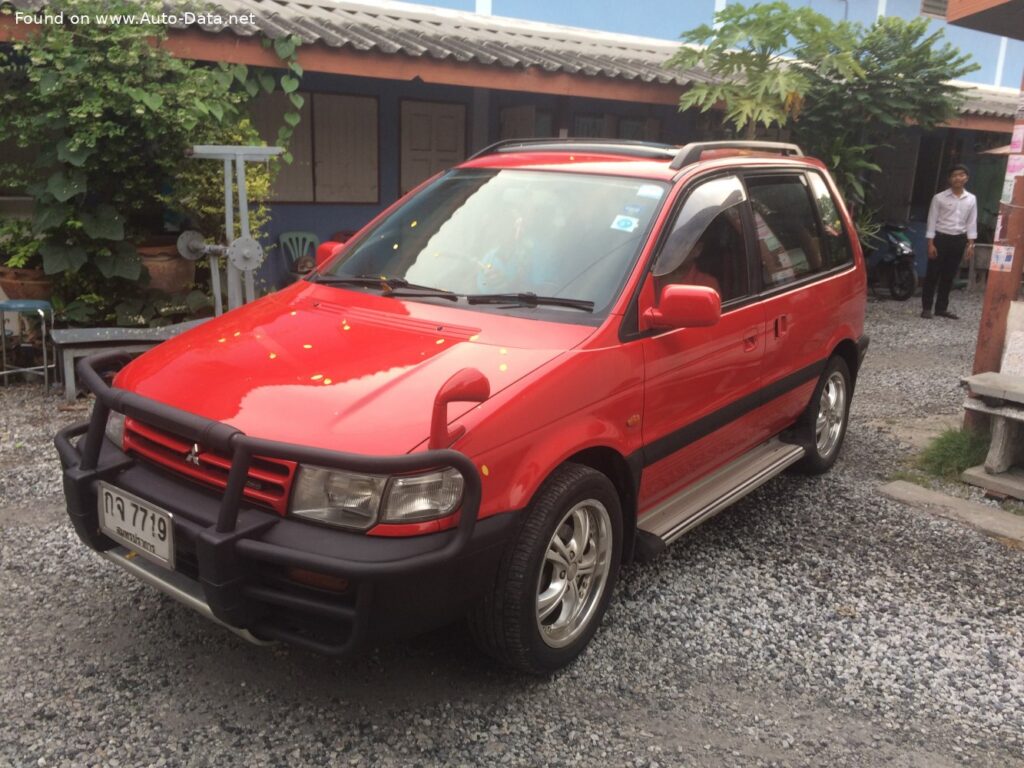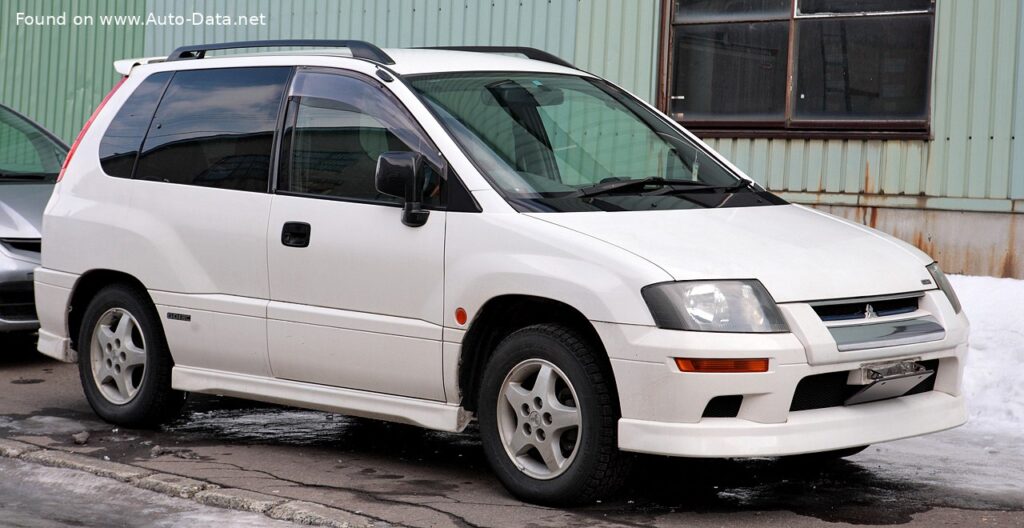
The Mitsubishi RVR (N61W) 2.0 i 16V Turbo (230 Hp) represents a fascinating and somewhat unconventional offering from the Japanese automaker, produced between 1997 and 2002. While largely unknown in the North American market under the RVR nameplate, this specific generation, particularly its high-performance variant, carved out a niche in its primary markets, including Japan, parts of Asia, and Europe. Positioned as a compact multi-purpose vehicle (MPV) or minivan, the RVR (N61W) defied typical segment expectations by integrating a potent turbocharged engine and an advanced all-wheel-drive system, elements more commonly associated with Mitsubishi’s rally-bred performance cars like the Lancer Evolution. This blend of family-friendly practicality with surprising dynamic capabilities made the Mitsubishi RVR (N61W) 2.0 i 16V Turbo (230 Hp) a unique proposition for buyers seeking versatility without sacrificing a spirited driving experience. Its design and engineering reflected Mitsubishi’s prowess in powertrain development during the late 1990s, applying performance technology to a more utilitarian form factor.
Engine and Performance: The Heart of the Mitsubishi RVR (N61W) 2.0 i 16V Turbo (230 Hp)
At the core of the Mitsubishi RVR (N61W) 2.0 i 16V Turbo (230 Hp) lies a formidable powertrain that stands out in the compact minivan segment. This variant is equipped with a 2.0-liter (1997 cm3 or 121.86 cu. in.) inline four-cylinder engine, transversely mounted at the front. What truly distinguishes this engine is its turbocharger, a performance enhancement that transforms the RVR from a mere family hauler into a genuine “sleeper.” The engine utilizes a multi-port manifold injection system and features a 16-valve cylinder head (four valves per cylinder), optimizing both fuel delivery and airflow for efficient combustion. With an 85 mm (3.35 in.) cylinder bore and an 88 mm (3.46 in.) piston stroke, combined with a 9:1 compression ratio, the engine is designed for both robust power output and durability.
The performance figures are particularly impressive for a vehicle of its class and era. This 2.0-liter turbocharged unit generates a substantial 230 horsepower at 5500 rpm. This power output translates to a remarkable 115.2 horsepower per liter, indicating a highly optimized and efficient engine design for its time. Torque delivery is equally compelling, peaking at 343 Nm (252.98 lb.-ft.) at a relatively low 2500 rpm. This broad torque band ensures strong acceleration and flexible driving characteristics, whether navigating urban environments or cruising on highways. The impressive torque at low RPMs is a hallmark of turbocharged engines, providing immediate responsiveness and reducing the need for constant gear changes.
Further enhancing its dynamic capabilities, the RVR (N61W) 2.0 i 16V Turbo (230 Hp) comes standard with an all-wheel-drive (4×4) system. This sophisticated drivetrain ensures excellent traction and stability, especially under challenging road conditions or during spirited driving. Power is managed through a five-speed manual transmission, offering drivers direct control over the engine’s output and contributing to a more engaging driving experience. This combination of a powerful turbocharged engine, all-wheel-drive, and a manual gearbox was a rare find in the minivan segment, underscoring Mitsubishi’s commitment to injecting performance into unexpected vehicle types. The vehicle’s weight-to-power ratio of 6.8 kg/Hp (146.5 Hp/tonne) and a weight-to-torque ratio of 4.6 kg/Nm (218.5 Nm/tonne) further illustrate its athletic potential, positioning it as one of the most performance-oriented compact minivans of its time.
Design and Features: Practicality Meets Performance
The Mitsubishi RVR (N61W) 2.0 i 16V Turbo (230 Hp) adopts a minivan body type, prioritizing practicality and passenger comfort, yet it retains a sporty stance that hints at its underlying performance. With five doors and seating for five occupants, it offers versatile interior space suitable for families or those needing ample cargo capacity. The exterior dimensions are compact for a minivan, measuring 168.5 inches (4280 mm) in length, 66.73 inches (1695 mm) in width, and 64.96 inches (1650 mm) in height. Its wheelbase of 100.39 inches (2550 mm) contributes to a stable ride and manageable maneuverability in urban settings.
Inside, the RVR (N61W) provides considerable flexibility. The trunk space starts at a respectable 15.19 cubic feet (430 liters) with all seats in use, expanding dramatically to an impressive 63.57 cubic feet (1800 liters) when the rear seats are folded down. This adaptability makes it highly functional for hauling luggage, sports equipment, or even larger items, a key attribute for its target market. The kerb weight of the vehicle stands at 3461.26 lbs (1570 kg), a reasonable figure given its all-wheel-drive system and robust construction.
In terms of chassis and safety, the RVR (N61W) was equipped with features appropriate for its era. Both the front and rear suspensions utilize coil springs, providing a balanced ride that blends comfort with responsive handling. The braking system consists of ventilated discs at the front and solid discs at the rear, offering ample stopping power. An Anti-lock Braking System (ABS) was included as a crucial assisting system, enhancing safety by preventing wheel lock-up during hard braking. Steering is handled by a rack and pinion system, complemented by hydraulic power steering, ensuring precise control and reduced effort for the driver. The vehicle rides on 215/70 R16 tires, offering a good balance of grip and ride comfort. The fuel tank capacity of 15.32 US gallons (58 liters) provides a decent range for extended journeys, reinforcing its utility as a versatile family vehicle.
Technical Specifications
| Brand | Mitsubishi |
| Model | RVR |
| Generation | RVR (N61W) |
| Type (Engine) | 2.0 i 16V Turbo (230 Hp) |
| Start of production | 1997 year |
| End of production | 2002 year |
| Powertrain Architecture | Internal Combustion engine |
| Body type | Minivan |
| Seats | 5 |
| Doors | 5 |
| Fuel Type | Petrol (Gasoline) |
| Weight-to-power ratio | 6.8 kg/Hp, 146.5 Hp/tonne |
| Weight-to-torque ratio | 4.6 kg/Nm, 218.5 Nm/tonne |
| Power | 230 Hp @ 5500 rpm. |
| Power per liter | 115.2 Hp/l |
| Torque | 343 Nm @ 2500 rpm. (252.98 lb.-ft. @ 2500 rpm.) |
| Engine layout | Front, Transverse |
| Engine displacement | 1997 cm3 (121.86 cu. in.) |
| Number of cylinders | 4 |
| Engine configuration | Inline |
| Cylinder Bore | 85 mm (3.35 in.) |
| Piston Stroke | 88 mm (3.46 in.) |
| Compression ratio | 9:1 |
| Number of valves per cylinder | 4 |
| Fuel injection system | Multi-port manifold injection |
| Engine aspiration | Turbocharger |
| Kerb Weight | 1570 kg (3461.26 lbs.) |
| Trunk (boot) space – minimum | 430 l (15.19 cu. ft.) |
| Trunk (boot) space – maximum | 1800 l (63.57 cu. ft.) |
| Fuel tank capacity | 58 l (15.32 US gal) |
| Length | 4280 mm (168.5 in.) |
| Width | 1695 mm (66.73 in.) |
| Height | 1650 mm (64.96 in.) |
| Wheelbase | 2550 mm (100.39 in.) |
| Front track | 1460 mm (57.48 in.) |
| Rear (Back) track | 1460 mm (57.48 in.) |
| Drive wheel | All wheel drive (4×4) |
| Number of gears and type of gearbox | 5 gears, manual transmission |
| Front suspension | Coil spring |
| Rear suspension | Coil spring |
| Front brakes | Ventilated discs |
| Rear brakes | Disc |
| Assisting systems | ABS (Anti-lock braking system) |
| Steering type | Steering rack and pinion |
| Power steering | Hydraulic Steering |
| Tires size | 215/70 R16 |