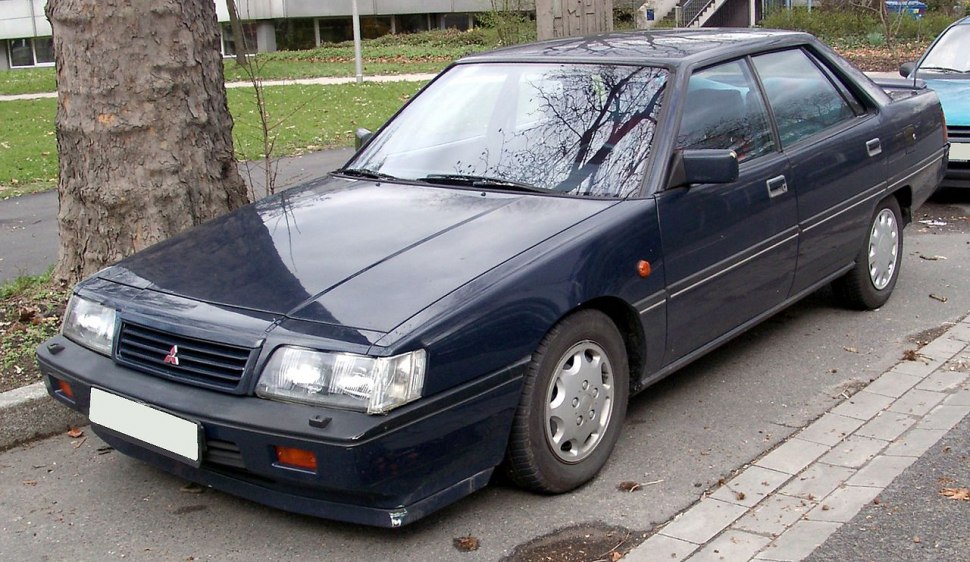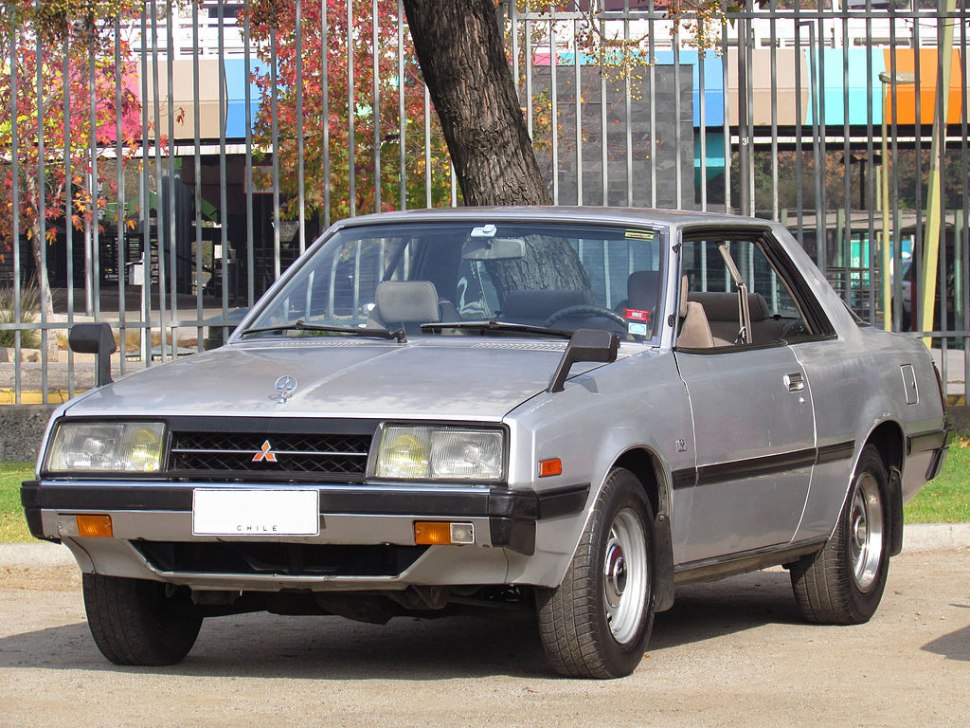
The Mitsubishi Sapporo I (A12_) represents a significant chapter in Mitsubishi’s global expansion during the late 1970s, emerging as a distinctive personal luxury coupe designed to appeal to diverse international markets. Launched in 1978, this first-generation Sapporo, known internally by its A12_ chassis code, was a stylish and relatively upscale offering that shared its underpinnings with the Mitsubishi Galant Lambda. While bearing the Sapporo nameplate in some export markets, including parts of Europe and as the Plymouth Sapporo in North America, it was also rebadged as the Dodge Challenger in the United States, showcasing Mitsubishi’s strategy of leveraging OEM partnerships to establish its presence. Its production run, spanning from 1978 to 1980, positioned it as a competitor in a segment that valued both comfort and a degree of sporting aspiration, albeit with a clear emphasis on cruising elegance rather than outright performance. The vehicle embodied a blend of Japanese engineering reliability with styling cues often associated with American personal luxury coupes of the era, making it a unique proposition for consumers seeking something different from the mainstream offerings.
The Genesis and Market Positioning of the Mitsubishi Sapporo I (A12_)
The Mitsubishi Sapporo I (A12_) was more than just another model; it was a statement of Mitsubishi’s ambition to compete on a global scale, particularly in the lucrative North American market. As a direct descendant of the popular Galant series, the Sapporo I was engineered to carve out its own niche. In its home market of Japan, it was known as the Galant Lambda, a name that emphasized its connection to the well-established Galant line while denoting its more specialized, coupe-oriented design. The decision to brand it as the Sapporo for export markets like Europe and as a captive import for Chrysler (Dodge Challenger and Plymouth Sapporo) underscored a strategic move to offer a distinctive, aspirational vehicle. This allowed Mitsubishi to showcase its design capabilities and engineering prowess to a wider audience, positioning the Sapporo as an accessible luxury coupe that offered a compelling alternative to domestic and European competitors. Its relatively short production cycle for this generation, from 1978 to 1980, reflected the rapid evolution of automotive design and technology during that period, as manufacturers continuously sought to refresh their lineups to meet changing consumer demands and stricter emissions regulations.
Powertrain and Performance Characteristics
At the heart of the Mitsubishi Sapporo I (A12_) 2.0 (A123) model lay a robust, naturally aspirated 2.0-liter internal combustion engine. This powerplant, designated as the A123 variant, was engineered to deliver a balanced combination of reliability and adequate performance for its segment in the late 1970s. Generating 98 horsepower (Hp), the engine provided sufficient motivation for the coupe, allowing for comfortable highway cruising and confident urban driving. While 98 Hp may seem modest by today’s standards, it was a respectable output for a non-turbocharged four-cylinder engine of its time, especially one designed with an eye towards fuel efficiency and longevity. The engine’s naturally aspirated nature meant a linear power delivery, devoid of the sudden surges associated with turbocharged units, contributing to a smooth and predictable driving experience. This characteristic was well-suited to the Sapporo’s identity as a personal luxury coupe, prioritizing refinement and ease of operation over raw, unbridled speed. The use of petrol (gasoline) as its fuel type was standard for the era, and the engine was designed to be relatively straightforward in its maintenance, a hallmark of Japanese engineering during this period. The drivetrain, powered by this internal combustion engine, primarily directed power to the rear wheels, offering a traditional and engaging driving dynamic that many enthusiasts appreciated, providing a good balance for both spirited driving and comfortable touring.
Design Philosophy and Key Features of the Mitsubishi Sapporo I (A12_)
The design of the Mitsubishi Sapporo I (A12_) was a striking blend of contemporary Japanese aesthetics and influences from the American personal luxury coupe segment. As a dedicated coupe, its body type was characterized by a sleek, elongated profile with a relatively long hood and a short rear deck, a styling cue popular in the late 1970s. The Sapporo featured distinctive styling elements such as opera windows, often small, fixed windows located behind the main side windows, which added to its luxurious and somewhat formal appearance. Its angular lines, prominent grille, and rectangular headlamps were indicative of the design trends of the period, giving it a sophisticated and modern look that stood apart from many of its contemporaries. The interior of the Sapporo I was designed with comfort and convenience in mind, reflecting its premium positioning. While specific features varied by market and trim level, typical amenities for the era would have included comfortable cloth or vinyl upholstery, a well-appointed dashboard with clear instrumentation, and potentially options like air conditioning, power windows, and an AM/FM radio. These features, while standard in modern vehicles, were considered luxuries in 1978, enhancing the Sapporo’s appeal as a refined and well-equipped vehicle. Safety features, in line with the standards of the late 1970s, would have included three-point seatbelts for front occupants and a sturdy unibody construction designed to offer a degree of occupant protection. The Sapporo’s overall design aimed to offer a compelling package that combined eye-catching style with practical functionality, cementing its place as an important model in Mitsubishi’s global product portfolio and contributing to its growing reputation for building reliable and attractive vehicles.
The legacy of the Mitsubishi Sapporo I (A12_) is rooted in its role as a transitional model for the brand. It helped Mitsubishi establish a stronger foothold in critical export markets, particularly by demonstrating its ability to produce vehicles that could compete on style and comfort, not just economy. While its production run was brief, it paved the way for future generations of Mitsubishi coupes and sedans, influencing design language and engineering approaches. Today, the Sapporo I is recognized by classic car enthusiasts as a unique piece of automotive history, a testament to an era when Japanese manufacturers were rapidly evolving their designs to cater to a global audience with diverse tastes. Its blend of traditional rear-wheel-drive dynamics with a distinctly 1970s aesthetic makes it a fascinating subject for collectors and historians alike, embodying a period of significant change and ambition for Mitsubishi Motors.
Technical Specifications: Mitsubishi Sapporo I (A12_) 2.0 (A123) (98 Hp)
| Brand | Mitsubishi |
| Model | Sapporo |
| Generation | Sapporo I (A12_) |
| Type (Engine) | 2.0 (A123) |
| Start of production | 1978 year |
| End of production | 1980 year |
| Powertrain Architecture | Internal Combustion engine |
| Body type | Coupe |
| Fuel Type | Petrol (Gasoline) |
| Power | 98 Hp |
| Engine aspiration | Naturally aspirated engine |