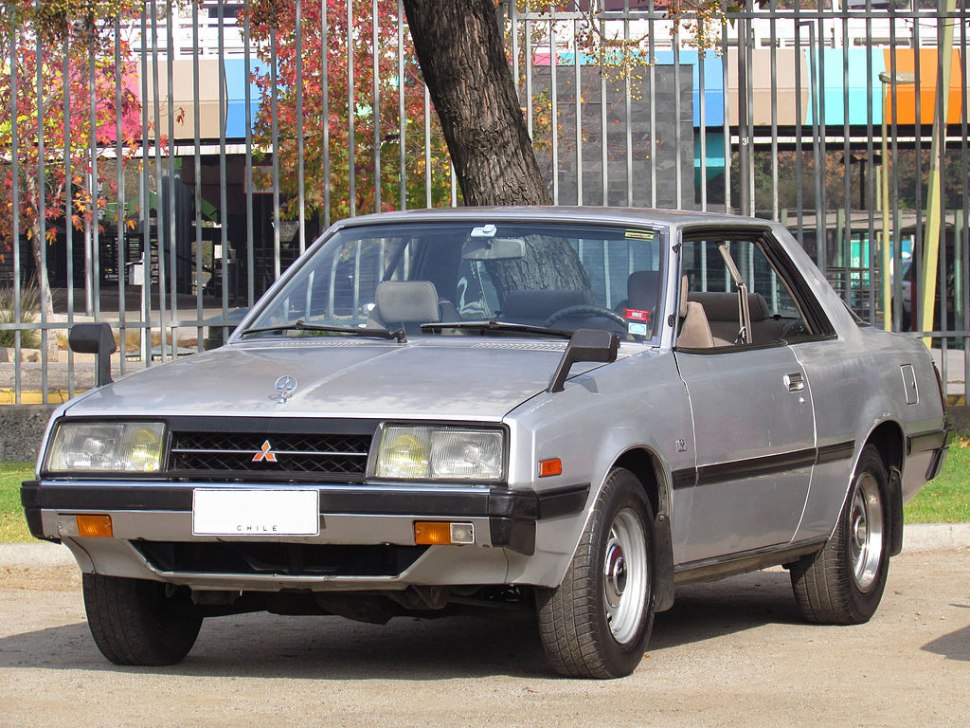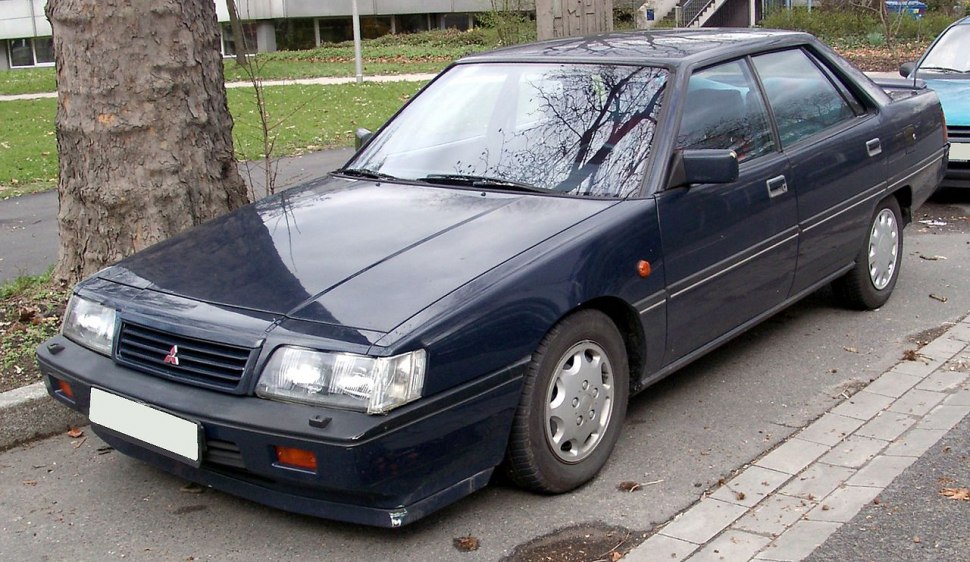
The Mitsubishi Sapporo II (A16_A) 1.6 GLX (A161A) (75 Hp), produced between 1980 and 1984, represents a significant chapter in Mitsubishi’s foray into the global personal luxury coupe market. While the Sapporo nameplate itself was primarily used in European and some Asian markets, this generation, internally designated A16_, was widely known in North America as the Dodge Challenger and Plymouth Sapporo, a testament to Mitsubishi’s growing partnership with Chrysler Corporation. This strategic rebadging allowed Mitsubishi to establish a foothold in the competitive US automotive landscape, offering a blend of Japanese engineering and distinct styling to American consumers. The second-generation Sapporo built upon the success of its predecessor, evolving its design language and refining its mechanical underpinnings to appeal to buyers seeking an economical yet stylish two-door vehicle with a touch of sophistication. Positioned as a mid-size coupe, it aimed to offer a more upscale experience than typical economy cars of the era, without venturing into true luxury territory, making it an accessible option for a broad demographic.
The Heritage and Engineering of the Mitsubishi Sapporo II (A16_A)
The Mitsubishi Sapporo II (A16_A) emerged during a pivotal era for Japanese automakers, characterized by a global demand for fuel-efficient vehicles following the energy crises of the 1970s. Mitsubishi, like its contemporaries, focused on delivering reliable, well-built cars that offered good value. The Sapporo, known as the Galant Λ (Lambda) in its home market of Japan, was a derivative of the larger Galant sedan platform, tailored into a sleek, two-door coupe. Its design and engineering reflected Mitsubishi’s ambition to compete with popular personal coupes from other manufacturers, both domestic and international. The A16_A generation introduced a more contemporary aesthetic compared to the first Sapporo, featuring sharper lines and a more aerodynamic profile that hinted at the evolving design trends of the 1980s. The choice of a rear-wheel-drive (RWD) architecture was typical for coupes of this period, offering a traditional driving feel that appealed to enthusiasts and those accustomed to American and European vehicle dynamics. This setup contributed to a balanced chassis and predictable handling characteristics, which were considered desirable traits for a coupe designed for comfortable cruising.
Engine and Performance: The 1.6 GLX (A161A) Powertrain
At the heart of the Mitsubishi Sapporo II (A16_A) 1.6 GLX (A161A) (75 Hp) lay a naturally aspirated 1.6-liter (1597 cc) inline-four gasoline engine. This powerplant, designated as the 4G32, was a workhorse for Mitsubishi during this period, known for its robustness and efficiency. Generating 75 horsepower (Hp), the engine was optimized for smooth operation and economical fuel consumption rather than outright speed or acceleration. In the context of the early 1980s, 75 Hp for a 1.6-liter engine was a respectable output, particularly for a vehicle marketed as a personal coupe designed for comfortable daily driving and occasional longer journeys. The naturally aspirated design meant a straightforward, reliable engine with fewer complex components, contributing to lower maintenance costs and greater longevity. Power delivery was linear, providing adequate motivation for urban commuting and highway cruising, albeit without the exhilarating thrust found in more performance-oriented offerings. The focus for the 1.6 GLX variant was on providing a dependable and refined driving experience, characteristic of Japanese engineering from that era. The engine was typically paired with either a manual transmission for an engaging drive or an automatic transmission for greater convenience, catering to a wide range of driver preferences. This combination ensured that the Sapporo II 1.6 GLX was a practical and user-friendly vehicle, embodying the spirit of accessible personal transportation.
Design and Features: An Early 80s Personal Coupe
The design of the Mitsubishi Sapporo II (A16_A) was a quintessential representation of early 1980s automotive styling. As a two-door coupe, it featured a sleek, low-slung profile with a long hood and a relatively short deck, conveying a sporty yet elegant demeanor. The body lines were sharper and more angular than its predecessor, incorporating design cues that would become prevalent throughout the decade. Chrome accents, particularly around the window frames and bumpers, added a touch of classic sophistication, contrasting with the painted body panels. The Sapporo II often featured distinctive quad rectangular headlights and a prominent grille that gave it a recognizable face. Inside, the cabin was designed to offer a comfortable and driver-focused environment. While luxury appointments were modest by today’s standards, the GLX trim level likely included features aimed at enhancing comfort and convenience for the time. These could have encompassed cloth upholstery, a decent stereo system with a radio and cassette player, power windows, and air conditioning—features that were considered desirable, if not premium, for a car in its class. Ergonomics were typically sound, with clear instrumentation and logically placed controls. Safety features, as with most vehicles of the early 1980s, were rudimentary compared to modern standards but would have included three-point seatbelts, robust body construction, and perhaps impact-absorbing bumpers. The overall interior ambiance aimed for a balance of practicality and understated elegance, reflecting the Japanese approach to design that prioritized functionality without sacrificing aesthetic appeal. The Sapporo II’s design and features allowed it to carve out a niche for itself as a stylish and comfortable personal coupe, appealing to buyers who valued individuality and reliability.
Technical Specifications: Mitsubishi Sapporo II (A16_A) 1.6 GLX (A161A) (75 Hp)
| Brand | Mitsubishi |
| Model | Sapporo |
| Generation | Sapporo II (A16_A) |
| Type (Engine) | 1.6 GLX (A161A) (75 Hp) |
| Start of production | 1980 year |
| End of production | 1984 year |
| Powertrain Architecture | Internal Combustion engine |
| Body type | Coupe |
| Fuel Type | Petrol (Gasoline) |
| Power | 75 Hp |
| Engine aspiration | Naturally aspirated engine |