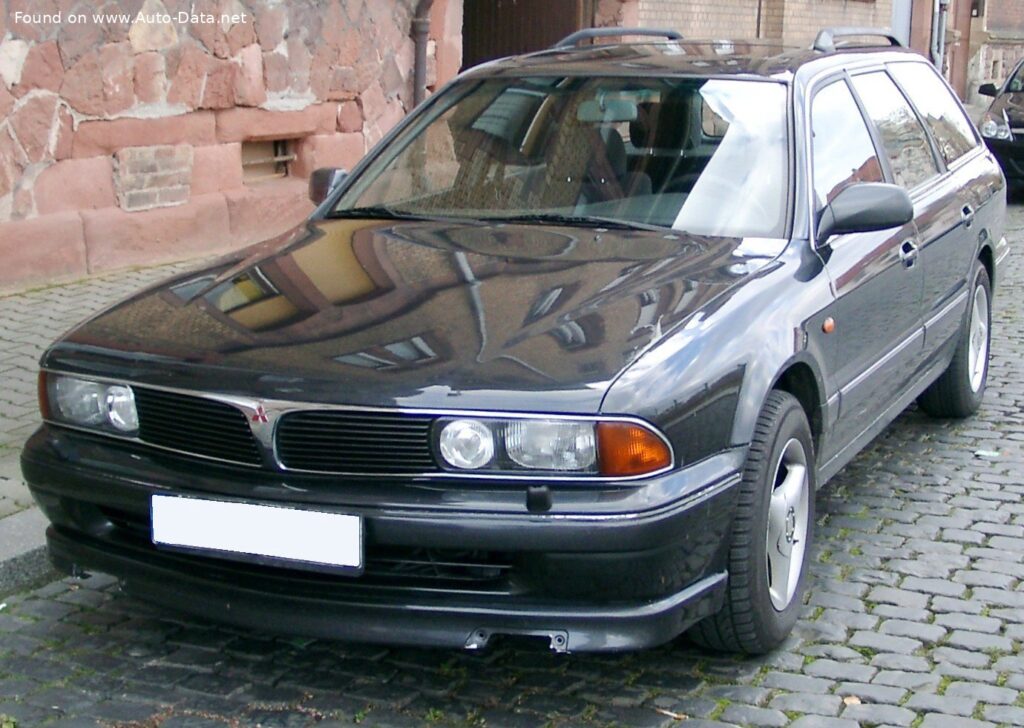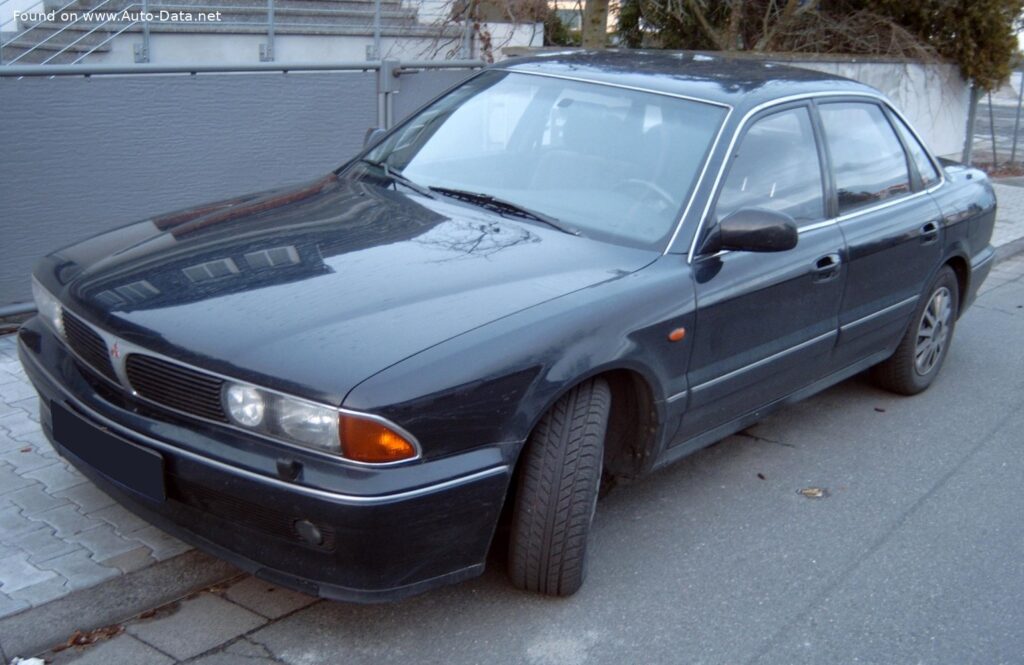
The Mitsubishi Sigma (F16A) is a mid-size sedan produced by Mitsubishi Motors between 1990 and 1996. While not officially sold in the United States, the Sigma was a significant model in the Japanese domestic market (JDM) and European markets, particularly as a competitor to vehicles like the Ford Mondeo, Opel/Vauxhall Vectra, and Toyota Camry. The Sigma represented Mitsubishi’s attempt to create a more refined and technologically advanced sedan, offering a blend of performance, comfort, and practicality. The F16A designation refers to the specific chassis code for this generation of the Sigma.
Mitsubishi Sigma (F16A): An Overview
The Sigma was positioned as a step up from Mitsubishi’s more mainstream offerings, aiming for a more premium feel. It was available with a range of engines, but the 3.0-liter V6, producing 205 horsepower, was the flagship powertrain. This engine provided a good balance of power and fuel efficiency for its time. The Sigma’s design was conservative yet modern, reflecting the styling trends of the early 1990s. It offered a comfortable interior and a range of features designed to appeal to family buyers and those seeking a more sophisticated driving experience.
Engine & Performance
The heart of the Sigma F16A 3.0 V6 is its 2.972-liter (181.36 cubic inch) naturally aspirated V6 engine. This engine delivers 205 horsepower at 6000 rpm and 270 Nm (199.14 lb-ft) of torque at 3000 rpm. The power-to-weight ratio of 7.7 kg/Hp and torque-to-weight ratio of 5.8 kg/Nm contribute to respectable performance. Acceleration from 0 to 100 km/h (0-62 mph) takes 8.1 seconds, while 0 to 60 mph is achieved in a calculated 7.7 seconds. The Sigma boasts a maximum speed of 230 km/h (142.92 mph). The engine utilizes a multi-port fuel injection system and a double overhead camshaft (DOHC) valvetrain with four valves per cylinder, contributing to its smooth operation and power delivery. The engine’s 10:1 compression ratio is typical for naturally aspirated gasoline engines of this era.
Design & Features
The Mitsubishi Sigma F16A is a four-door sedan with a conventional front-engine, front-wheel-drive layout. It seats five passengers and offers a practical 447-liter (15.79 cubic feet) trunk space, expandable to 892 liters (31.5 cubic feet) with the rear seats folded down. The vehicle’s dimensions are 4750 mm (187.01 inches) in length, 1775 mm (69.88 inches) in width, and 1435 mm (56.5 inches) in height, with a wheelbase of 2720 mm (107.09 inches).
Safety features for the time included an Anti-lock Braking System (ABS), which was becoming increasingly common on mid-size sedans. The Sigma also featured hydraulic power steering for ease of maneuverability. The suspension system utilizes a wishbone configuration at the front and a spring strut setup at the rear, providing a comfortable ride. The vehicle rides on 205/65 R15 tires. The interior was designed with comfort and practicality in mind, offering a reasonable level of refinement for its market segment. While not overtly luxurious, the Sigma aimed to provide a pleasant and functional cabin environment.
Technical Specifications
| Brand | Mitsubishi |
| Model | Sigma |
| Generation | Sigma (F16A) |
| Type (Engine) | 3.0 V6 (205 Hp) |
| Start of production | 1990 |
| End of production | 1996 |
| Powertrain Architecture | Internal Combustion engine |
| Body type | Sedan |
| Seats | 5 |
| Doors | 4 |
| Fuel consumption (combined) | 10.1 l/100 km |
| Fuel consumption (US mpg) | 23.3 US mpg |
| Fuel consumption (UK mpg) | 28 UK mpg |
| Fuel consumption (km/l) | 9.9 km/l |
| Fuel Type | Petrol (Gasoline) |
| Acceleration 0 – 100 km/h | 8.1 sec |
| Acceleration 0 – 62 mph | 8.1 sec |
| Acceleration 0 – 60 mph | 7.7 sec |
| Maximum speed | 230 km/h (142.92 mph) |
| Weight-to-power ratio | 7.7 kg/Hp |
| Weight-to-torque ratio | 5.8 kg/Nm |
| Power | 205 Hp @ 6000 rpm |
| Power per litre | 69 Hp/l |
| Torque | 270 Nm @ 3000 rpm (199.14 lb.-ft. @ 3000 rpm) |
| Engine layout | Front, Transverse |
| Engine displacement | 2972 cm3 (181.36 cu. in.) |
| Number of cylinders | 6 |
| Engine configuration | V-engine |
| Cylinder Bore | 91.1 mm (3.59 in.) |
| Piston Stroke | 76 mm (2.99 in.) |
| Compression ratio | 10:1 |
| Number of valves per cylinder | 4 |
| Fuel injection system | Multi-port manifold injection |
| Engine aspiration | Naturally aspirated engine |
| Valvetrain | DOHC |
| Kerb Weight | 1579 kg (3481.1 lbs.) |
| Max. weight | 2070 kg (4563.57 lbs.) |
| Max load | 491 kg (1082.47 lbs.) |
| Trunk (boot) space – minimum | 447 l (15.79 cu. ft.) |
| Trunk (boot) space – maximum | 892 l (31.5 cu. ft.) |
| Fuel tank capacity | 72 l (19.02 US gal | 15.84 UK gal) |
| Length | 4750 mm (187.01 in.) |
| Width | 1775 mm (69.88 in.) |
| Height | 1435 mm (56.5 in.) |
| Wheelbase | 2720 mm (107.09 in.) |
| Front track | 1535 mm (60.43 in.) |
| Rear (Back) track | 1530 mm (60.24 in.) |
| Drivetrain Architecture | Front wheel drive |
| Number of gears and type of gearbox | 5 gears, manual transmission |
| Front suspension | Wishbone |
| Rear suspension | Spring Strut |
| Front brakes | Ventilated discs |
| Rear brakes | Ventilated discs |
| Assisting systems | ABS (Anti-lock braking system) |
| Steering type | Steering rack and pinion |
| Power steering | Hydraulic Steering |
| Tires size | 205/65 R15 |
The Mitsubishi Sigma (F16A) 3.0 V6, while not a household name in the United States, was a well-regarded sedan in its target markets. It offered a compelling combination of performance, comfort, and features, making it a worthy competitor in the mid-size segment. Its legacy lies in demonstrating Mitsubishi’s engineering capabilities and its commitment to producing refined and technologically advanced vehicles.