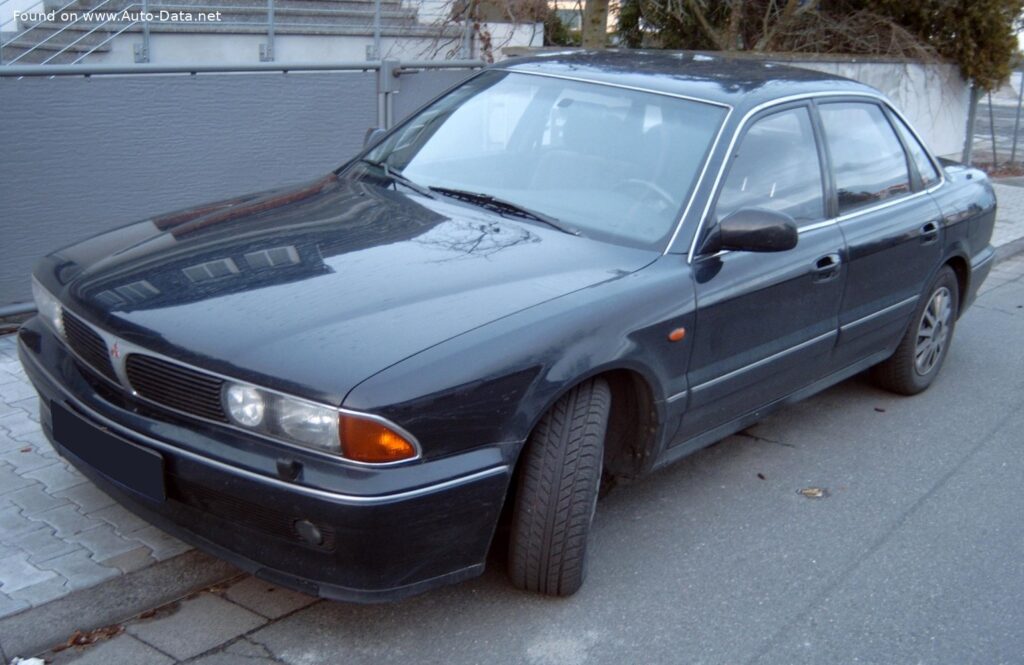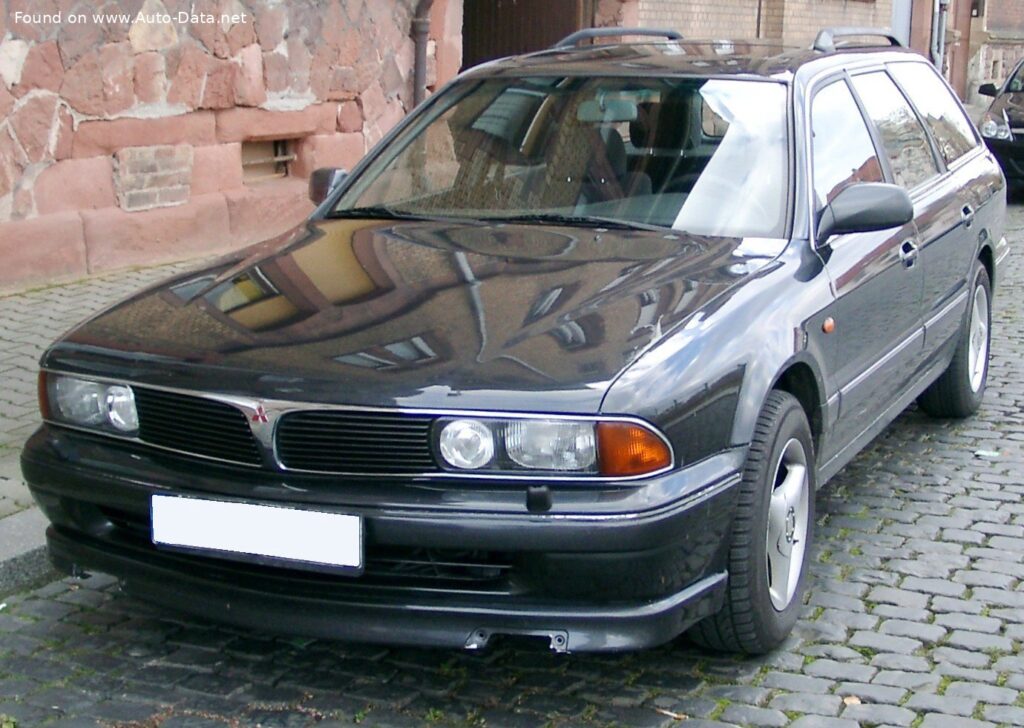
The Mitsubishi Sigma Station Wagon (F07W), specifically the 3.0 V6 variant producing 170 horsepower, represents a significant offering from Mitsubishi during the early to mid-1990s. While not officially sold in the United States, the Sigma held a prominent position in the European market as a large family car, competing with models like the Ford Mondeo, Opel Vectra, and Peugeot 406. The F07W generation, produced between 1993 and 1996, offered a blend of practicality, comfort, and performance aimed at buyers seeking a spacious and well-equipped vehicle. This model showcased Mitsubishi’s engineering capabilities and design aesthetic of the era.
Mitsubishi Sigma Station Wagon (F07W): An Overview
The Sigma, in its various iterations, was Mitsubishi’s attempt to establish a stronger foothold in the competitive mid-size and large car segments, particularly in Europe. The station wagon (estate) body style was particularly popular, catering to families and those requiring ample cargo space. The 3.0 V6 engine was the top-of-the-line powertrain option, providing a noticeable performance advantage over the four-cylinder alternatives. The F07W generation represented a refinement of the original Sigma, with improvements to styling, interior appointments, and available technology.
Engine & Performance
The heart of the Sigma 3.0 V6 is its 2.972-liter (181.36 cubic inch) naturally aspirated V6 engine. This engine produces 170 horsepower at 5500 rpm and 248 Nm (182.92 lb-ft) of torque at 3000 rpm. The engine utilizes a multi-port fuel injection system and an overhead camshaft (OHC) valvetrain with 2 valves per cylinder. This configuration delivers a smooth and responsive driving experience. Acceleration from 0 to 100 km/h (0-62 mph) takes 9.6 seconds, while 0 to 60 mph is achieved in approximately 9.1 seconds. The Sigma 3.0 V6 boasts a top speed of 210 km/h (130.49 mph). The weight-to-power ratio of 9.3 kg/Hp and a weight-to-torque ratio of 6.4 kg/Nm contribute to its respectable performance. Fuel consumption is rated at 9.9 liters per 100 kilometers (23.8 US mpg, 28.5 UK mpg, or 10.1 km/l).
Design & Features
The Mitsubishi Sigma Station Wagon (F07W) is a five-door, five-seat vehicle characterized by its practical and understated design. The station wagon body style maximizes interior space, offering 428 liters (15.11 cubic feet) of trunk space with the rear seats up, expanding to 737 liters (26.03 cubic feet) when folded down. The vehicle’s dimensions are 4800 mm (188.98 inches) in length, 1775 mm (69.88 inches) in width, and 1505 mm (59.25 inches) in height, with a wheelbase of 2720 mm (107.09 inches).
Safety features for the time included an Anti-lock Braking System (ABS) and ventilated disc brakes on all four wheels. The Sigma also featured hydraulic power steering and rode on 205/65 R15 tires. Interior features focused on comfort and convenience, though specifics varied depending on trim level. The Sigma aimed to provide a comfortable and refined driving experience, prioritizing practicality and space for families.
Technical Specifications
| Brand | Mitsubishi |
| Model | Sigma |
| Generation | Sigma Station Wagon (F07W) |
| Type (Engine) | 3.0 V6 (170 Hp) |
| Start of production | 1993 |
| End of production | 1996 |
| Powertrain Architecture | Internal Combustion engine |
| Body type | Station wagon (estate) |
| Seats | 5 |
| Doors | 5 |
| Fuel consumption (combined) | 9.9 l/100 km |
| Fuel consumption (US mpg) | 23.8 US mpg |
| Fuel consumption (UK mpg) | 28.5 UK mpg |
| Fuel consumption (km/l) | 10.1 km/l |
| Fuel Type | Petrol (Gasoline) |
| Acceleration 0 – 100 km/h | 9.6 sec |
| Acceleration 0 – 62 mph | 9.6 sec |
| Acceleration 0 – 60 mph | 9.1 sec |
| Maximum speed | 210 km/h (130.49 mph) |
| Weight-to-power ratio | 9.3 kg/Hp |
| Weight-to-torque ratio | 6.4 kg/Nm |
| Power | 170 Hp @ 5500 rpm |
| Power per litre | 57.2 Hp/l |
| Torque | 248 Nm @ 3000 rpm (182.92 lb.-ft. @ 3000 rpm) |
| Engine layout | Front, Transverse |
| Engine displacement | 2972 cm3 (181.36 cu. in.) |
| Number of cylinders | 6 |
| Engine configuration | V-engine |
| Cylinder Bore | 91.1 mm (3.59 in.) |
| Piston Stroke | 76 mm (2.99 in.) |
| Compression ratio | 10:1 |
| Number of valves per cylinder | 2 |
| Fuel injection system | Multi-port manifold injection |
| Engine aspiration | Naturally aspirated engine |
| Valvetrain | OHC |
| Kerb Weight | 1575 kg (3472.28 lbs.) |
| Max. weight | 2130 kg (4695.85 lbs.) |
| Max load | 555 kg (1223.57 lbs.) |
| Trunk (boot) space – minimum | 428 l (15.11 cu. ft.) |
| Trunk (boot) space – maximum | 737 l (26.03 cu. ft.) |
| Fuel tank capacity | 71 l (18.76 US gal | 15.62 UK gal) |
| Length | 4800 mm (188.98 in.) |
| Width | 1775 mm (69.88 in.) |
| Height | 1505 mm (59.25 in.) |
| Wheelbase | 2720 mm (107.09 in.) |
| Front track | 1535 mm (60.43 in.) |
| Rear (Back) track | 1505 mm (59.25 in.) |
| Drivetrain Architecture | Front wheel drive |
| Number of gears and type of gearbox | 5 gears, manual transmission |
| Front suspension | Wishbone |
| Rear suspension | Spring Strut |
| Front brakes | Ventilated discs |
| Rear brakes | Ventilated discs |
| Assisting systems | ABS (Anti-lock braking system) |
| Steering type | Steering rack and pinion |
| Power steering | Hydraulic Steering |
| Tires size | 205/65 R15 |
The Mitsubishi Sigma Station Wagon (F07W) 3.0 V6, while largely unknown in the American market, represents a capable and well-rounded family car from the early 1990s. Its blend of performance, practicality, and comfort made it a competitive offering in the European market, showcasing Mitsubishi’s engineering prowess during that era.