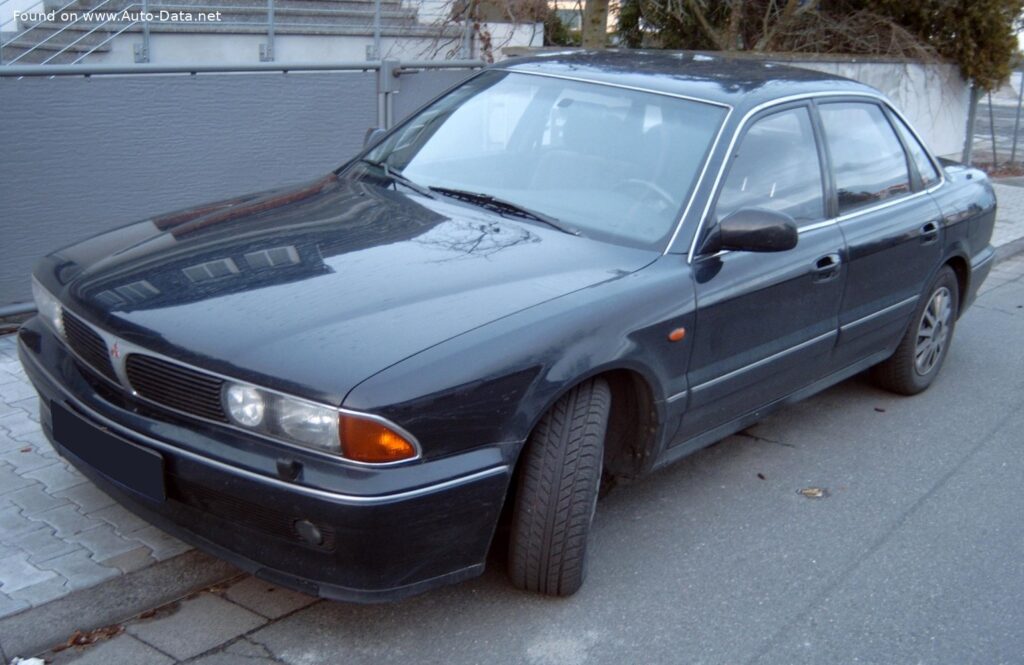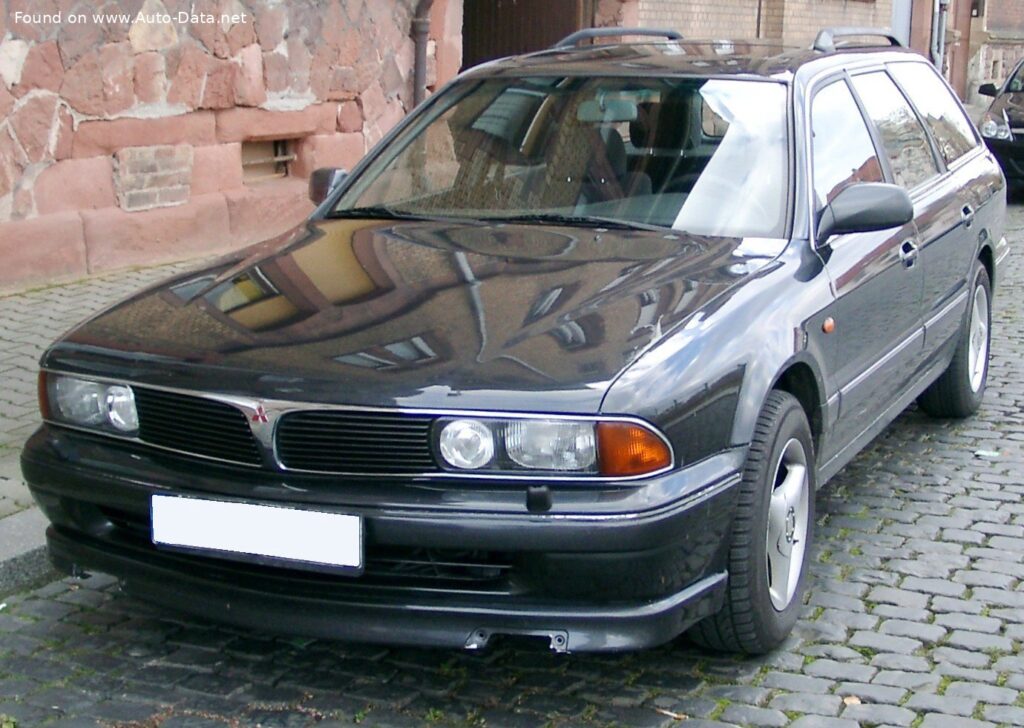
The Mitsubishi Sigma Station Wagon (F07W), specifically the 3.0 V6 variant introduced in 1993 and produced through 1996, represents a significant offering from Mitsubishi during a period of expansion and refinement in their passenger vehicle lineup. While not officially sold in the United States, the Sigma held a prominent position in the European and Japanese markets as a large family car, competing with models like the Ford Mondeo, Opel Vectra, and Toyota Camry. The station wagon (estate) body style offered practicality and space, appealing to families and those requiring substantial cargo capacity. This model showcased Mitsubishi’s engineering capabilities, particularly in powertrain development, and served as a platform for incorporating contemporary features for its time.
Mitsubishi Sigma Station Wagon (F07W): An Overview
The Sigma, in its various iterations, was Mitsubishi’s attempt to establish a strong foothold in the mid-size and large family car segments. The F07W generation, launched in 1990, was a substantial redesign from its predecessor, offering improved styling, interior space, and mechanical sophistication. The station wagon variant, introduced shortly after the sedan, further broadened the Sigma’s appeal. It was positioned as a more premium offering within Mitsubishi’s range, emphasizing comfort, refinement, and a relatively powerful engine option with the 3.0-liter V6.
Engine & Performance
The heart of the Sigma 3.0 V6 is its 2.972-liter (181.36 cubic inches) naturally aspirated V6 engine. This powerplant produces 170 horsepower at 5500 rpm and 248 Nm (182.92 lb-ft) of torque at 3000 rpm. The engine utilizes a multi-port fuel injection system and an overhead camshaft (OHC) valvetrain with two valves per cylinder. This configuration delivers a smooth and responsive driving experience, suitable for both city commuting and long-distance highway travel. Power is delivered to the front wheels via a 4-speed automatic transmission. Performance figures indicate a 0-60 mph (0-96 km/h) acceleration time of approximately 9.1 seconds and a top speed of 210 km/h (130.49 mph). The weight-to-power ratio of 9.3 kg/Hp and weight-to-torque ratio of 6.4 kg/Nm demonstrate a reasonable balance between engine output and vehicle mass.
Design & Features
The Mitsubishi Sigma Station Wagon (F07W) features a traditional station wagon body style, characterized by its extended roofline and large rear cargo area. The design, while conservative by modern standards, was considered contemporary for the early 1990s, with smooth lines and a relatively aerodynamic profile. The interior prioritizes practicality and comfort, offering seating for five passengers. Key features included power steering, ventilated disc brakes on all four wheels, and an Anti-lock Braking System (ABS) for enhanced safety. The spacious interior and large trunk – offering between 428 and 737 liters (15.11 to 26.03 cubic feet) of cargo space – were major selling points. The vehicle’s dimensions – 4800 mm (188.98 in) in length, 1775 mm (69.88 in) in width, and 1505 mm (59.25 in) in height – positioned it as a sizable vehicle within its class. The suspension utilizes a wishbone setup at the front and a spring strut arrangement at the rear, aiming to provide a comfortable ride quality.
Technical Specifications
| Brand | Mitsubishi |
| Model | Sigma |
| Generation | Sigma Station Wagon (F07W) |
| Type (Engine) | 3.0 V6 (177 Hp) Automatic |
| Start of production | 1993 |
| End of production | 1996 |
| Powertrain Architecture | Internal Combustion engine |
| Body type | Station wagon (estate) |
| Seats | 5 |
| Doors | 5 |
| Fuel consumption (combined) | 9.9 l/100 km |
| Fuel consumption (US mpg) | 23.8 US mpg |
| Fuel consumption (UK mpg) | 28.5 UK mpg |
| Fuel consumption (km/l) | 10.1 km/l |
| Fuel Type | Petrol (Gasoline) |
| Acceleration 0 – 100 km/h | 9.6 sec |
| Acceleration 0 – 62 mph | 9.6 sec |
| Acceleration 0 – 60 mph | 9.1 sec |
| Maximum speed | 210 km/h (130.49 mph) |
| Weight-to-power ratio | 9.3 kg/Hp |
| Weight-to-torque ratio | 6.4 kg/Nm |
| Power | 170 Hp @ 5500 rpm |
| Power per litre | 57.2 Hp/l |
| Torque | 248 Nm @ 3000 rpm (182.92 lb.-ft. @ 3000 rpm) |
| Engine layout | Front, Transverse |
| Engine displacement | 2972 cm3 (181.36 cu. in.) |
| Number of cylinders | 6 |
| Engine configuration | V-engine |
| Cylinder Bore | 91.1 mm (3.59 in.) |
| Piston Stroke | 76 mm (2.99 in.) |
| Compression ratio | 10:1 |
| Number of valves per cylinder | 2 |
| Fuel injection system | Multi-port manifold injection |
| Engine aspiration | Naturally aspirated engine |
| Valvetrain | OHC |
| Kerb Weight | 1575 kg (3472.28 lbs.) |
| Max. weight | 2130 kg (4695.85 lbs.) |
| Max load | 555 kg (1223.57 lbs.) |
| Trunk (boot) space – minimum | 428 l (15.11 cu. ft.) |
| Trunk (boot) space – maximum | 737 l (26.03 cu. ft.) |
| Fuel tank capacity | 71 l (18.76 US gal | 15.62 UK gal) |
| Length | 4800 mm (188.98 in.) |
| Width | 1775 mm (69.88 in.) |
| Height | 1505 mm (59.25 in.) |
| Wheelbase | 2720 mm (107.09 in.) |
| Front track | 1535 mm (60.43 in.) |
| Rear (Back) track | 1505 mm (59.25 in.) |
| Drivetrain Architecture | Front wheel drive |
| Number of gears and type of gearbox | 4 gears, automatic transmission |
| Front suspension | Wishbone |
| Rear suspension | Spring Strut |
| Front brakes | Ventilated discs |
| Rear brakes | Ventilated discs |
| Assisting systems | ABS (Anti-lock braking system) |
| Steering type | Steering rack and pinion |
| Power steering | Hydraulic Steering |
| Tires size | 205/65 R15 |
| Wheel rims size | 15 |
The Mitsubishi Sigma Station Wagon (F07W) 3.0 V6, while not a widely recognized model in the United States, represents a competent and well-engineered vehicle that served a specific niche in the European and Japanese markets. Its blend of practicality, comfort, and reasonable performance made it a viable option for families seeking a spacious and reliable mode of transportation during the early to mid-1990s.