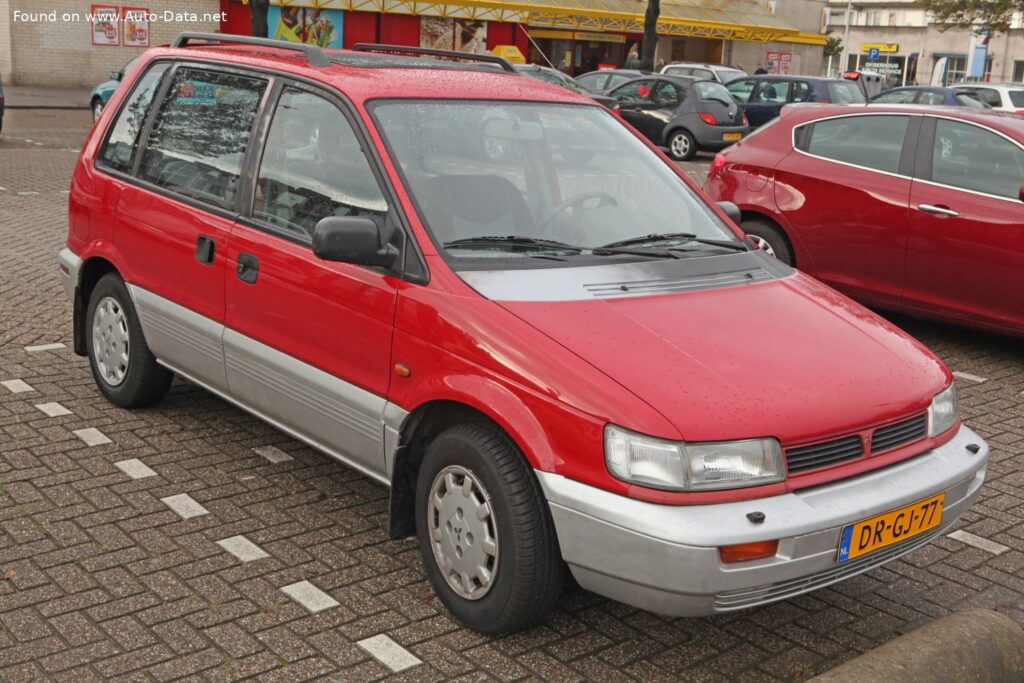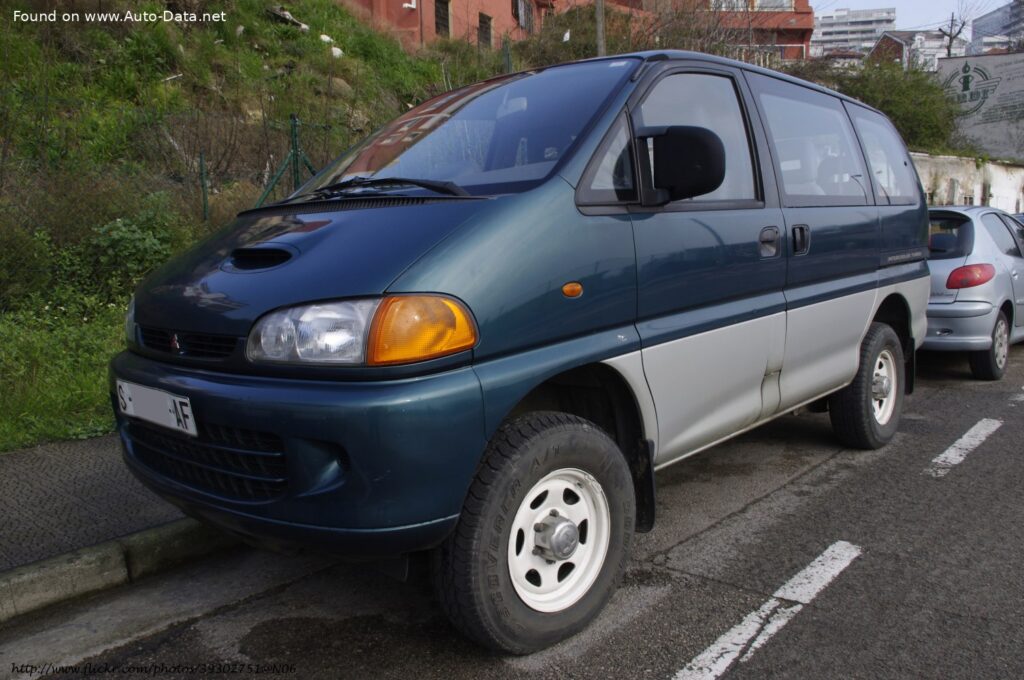
The Mitsubishi Space Gear, known as the Mitsubishi Chariot Grandis in its native Japan, is a seven-seat minivan produced between 1996 and 2000. Representing the second generation of the Space Gear lineage, the PA0 series was primarily aimed at the Asian and European markets, offering a spacious and versatile family vehicle. While not officially sold in the United States, the Space Gear provides an interesting case study in late 1990s minivan design, emphasizing practicality and a comfortable driving experience. It occupied a niche between smaller, more compact MPVs and larger, full-size vans, offering a compelling alternative for families needing substantial space without the bulk of a larger vehicle.
Mitsubishi Space Gear (PA0): A Detailed Overview
The Space Gear PA0 was designed to cater to the growing demand for multi-purpose vehicles in the late 1990s. It distinguished itself with its relatively compact dimensions for a seven-seater, combined with a powerful engine option and available all-wheel drive. This combination made it a popular choice for families and individuals needing a versatile vehicle capable of handling various terrains and passenger loads. The Space Gear’s design prioritized interior space and functionality, offering a comfortable and practical environment for passengers.
Engine & Performance
The most notable engine option for the Mitsubishi Space Gear PA0 was the 3.0-liter V6 24V engine, producing 185 horsepower at 5500 rpm and 265 Nm (195.45 lb.-ft.) of torque at 4500 rpm. This engine, coupled with a four-speed automatic transmission and an all-wheel-drive system, provided ample power for both urban driving and highway cruising. The longitudinal engine layout contributed to a balanced weight distribution, enhancing handling and stability. The power-to-weight ratio of 11.3 kg/Hp (88.5 Hp/tonne) and torque-to-weight ratio of 7.9 kg/Nm (126.8 Nm/tonne) indicated a reasonably responsive vehicle for its class. Fuel consumption was rated at 10 liters per 100 kilometers (23.5 US mpg, 28.2 UK mpg, or 10 km/l), which was typical for a V6-powered minivan of that era. The naturally aspirated engine design, combined with multi-port fuel injection, delivered smooth and predictable performance.
Design & Features
The Mitsubishi Space Gear PA0 is a five-door minivan with a seating capacity of seven. Its body style is characterized by a boxy, yet functional design, maximizing interior space. The vehicle’s dimensions – 4685 mm (184.45 in) in length, 1695 mm (66.73 in) in width, and 2070 mm (81.5 in) in height – positioned it as a mid-size minivan. The wheelbase of 2800 mm (110.24 in) contributed to a relatively stable ride. Interior features focused on practicality and comfort, with flexible seating arrangements to accommodate varying passenger and cargo needs. Trunk space ranged from a minimum of 375 liters (13.24 cu. ft.) to a maximum of 805 liters (28.43 cu. ft.) with the rear seats folded. Safety features, while not as advanced as modern standards, included ventilated disc brakes on the front wheels and drum brakes on the rear, providing adequate stopping power. The suspension system, consisting of torsion bars at the front and coil springs at the rear, aimed to deliver a comfortable ride quality. The vehicle rode on 225/80 R15 V tires.
Technical Specifications
| Brand | Mitsubishi |
| Model | Space Gear |
| Generation | Space Gear (PA0) |
| Type | 3.0 i V6 24V 4WD (185 Hp) |
| Start of production | 1996 |
| End of production | 2000 |
| Powertrain Architecture | Internal Combustion engine |
| Body type | Minivan |
| Seats | 7 |
| Doors | 5 |
| Fuel consumption (combined) | 10 l/100 km |
| Fuel consumption (US mpg) | 23.5 US mpg |
| Fuel consumption (UK mpg) | 28.2 UK mpg |
| Fuel Type | Petrol (Gasoline) |
| Weight-to-power ratio | 11.3 kg/Hp |
| Weight-to-torque ratio | 7.9 kg/Nm |
| Power | 185 Hp @ 5500 rpm |
| Power per litre | 62.2 Hp/l |
| Torque | 265 Nm @ 4500 rpm (195.45 lb.-ft. @ 4500 rpm) |
| Engine layout | Front, Longitudinal |
| Engine displacement | 2972 cm3 (181.36 cu. in.) |
| Number of cylinders | 6 |
| Engine configuration | V-engine |
| Cylinder Bore | 91.1 mm (3.59 in.) |
| Piston Stroke | 76 mm (2.99 in.) |
| Compression ratio | 9:1 |
| Number of valves per cylinder | 4 |
| Fuel injection system | Multi-port manifold injection |
| Engine aspiration | Naturally aspirated engine |
| Kerb Weight | 2090 kg (4607.66 lbs.) |
| Trunk (boot) space – minimum | 375 l (13.24 cu. ft.) |
| Trunk (boot) space – maximum | 805 l (28.43 cu. ft.) |
| Fuel tank capacity | 75 l (19.81 US gal | 16.5 UK gal) |
| Length | 4685 mm (184.45 in.) |
| Width | 1695 mm (66.73 in.) |
| Height | 2070 mm (81.5 in.) |
| Wheelbase | 2800 mm (110.24 in.) |
| Front track | 1440 mm (56.69 in.) |
| Rear (Back) track | 1435 mm (56.5 in.) |
| Drive wheel | All wheel drive (4×4) |
| Number of gears and type of gearbox | 4 gears, automatic transmission |
| Front suspension | Torsion |
| Rear suspension | Coil spring |
| Front brakes | Ventilated discs |
| Rear brakes | Drum |
| Tires size | 225/80 R15 V |
The Mitsubishi Space Gear PA0, while not a household name in the United States, represents a significant example of Japanese minivan engineering from the late 1990s. Its combination of spaciousness, a powerful V6 engine, and available all-wheel drive made it a practical and versatile vehicle for families in its target markets. Though production ceased in 2000, the Space Gear remains a testament to Mitsubishi’s commitment to building functional and reliable vehicles.