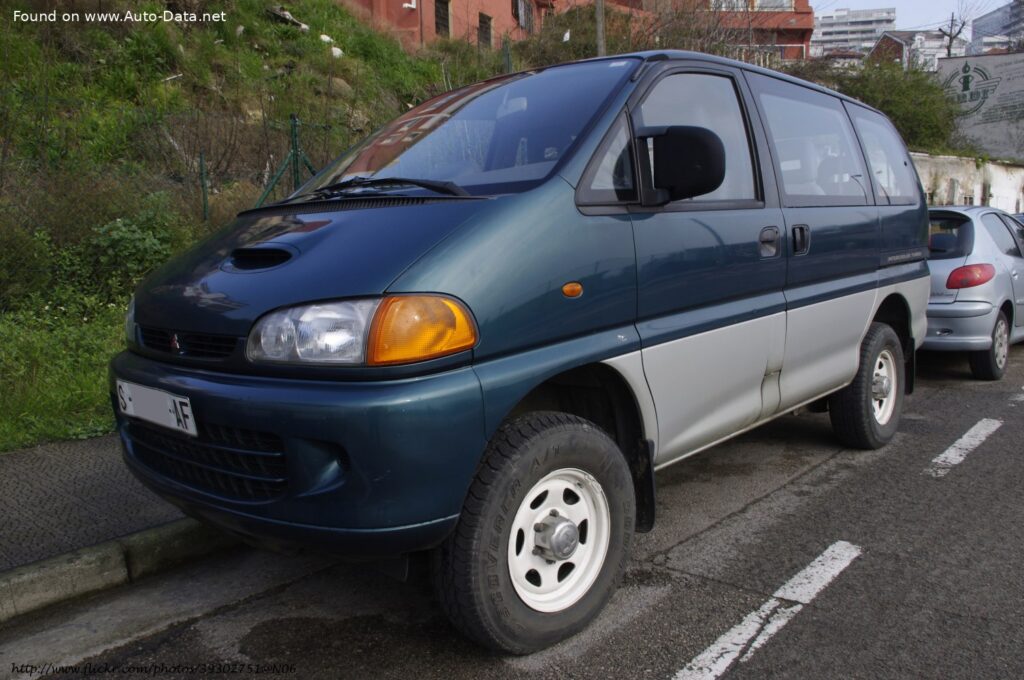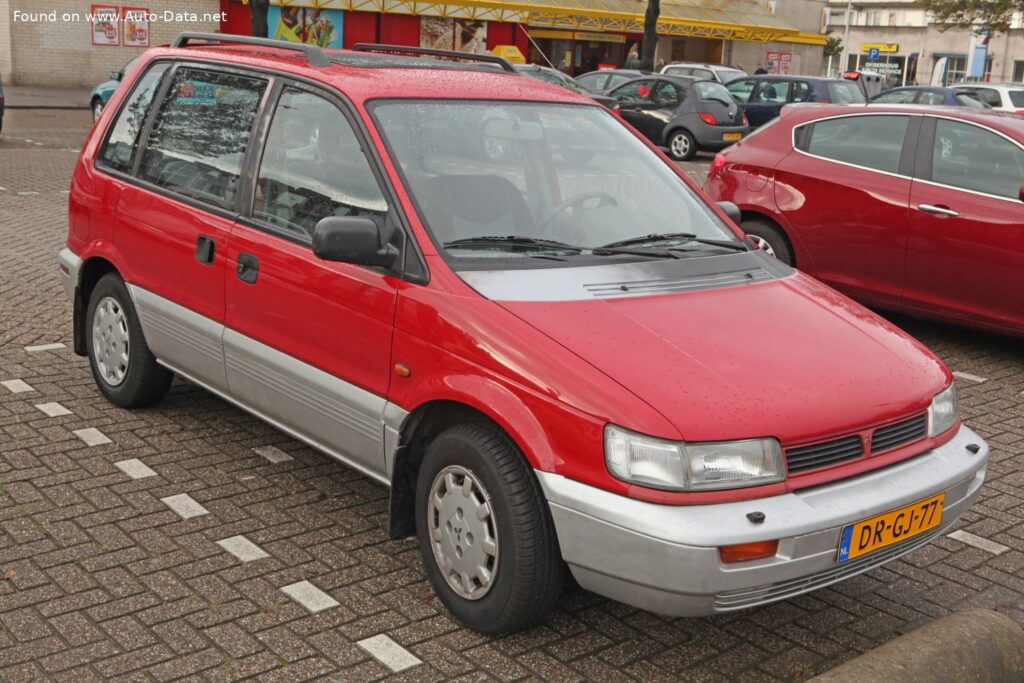
The Mitsubishi Space Runner, known as the Mitsubishi RVR or Mitsubishi Expo in some markets, is a compact minivan produced by Mitsubishi Motors between 1991 and 1999. Representing the first generation (N1_W, N2_W) of the model, the Space Runner aimed to provide a versatile and practical vehicle for families, blending the maneuverability of a smaller car with the spaciousness expected of a minivan. While not officially sold in the United States, the Space Runner was a popular choice in Europe, Australia, and parts of Asia, offering an alternative to larger, more expensive MPVs. This article focuses on the 1.8 4×4 (N21W) variant, equipped with a 122 horsepower engine.
Mitsubishi Space Runner (N1_W, N2_W)
The Space Runner occupied a unique niche in the early 1990s. It wasn’t a full-size minivan like the Dodge Caravan or Toyota Previa, but offered more interior space and practicality than a typical hatchback. Its available four-wheel drive system further enhanced its appeal in regions with challenging weather conditions or those seeking light off-road capability. The Space Runner’s design prioritized functionality and affordability, making it a popular choice for budget-conscious buyers.
Engine & Performance
The 1.8 4×4 (N21W) Space Runner is powered by a 1.8-liter (1834 cm3, 111.92 cu. in.) inline four-cylinder gasoline engine. This naturally aspirated engine produces 122 horsepower at 6000 rpm and 161 Nm (118.75 lb.-ft.) of torque at 4500 rpm. Power delivery is managed through a five-speed manual transmission, directing power to all four wheels via a 4×4 drivetrain. Acceleration from 0 to 100 km/h (0-62 mph) takes 11.5 seconds, while 0 to 60 mph is achieved in 10.9 seconds. The Space Runner boasts a maximum speed of 175 km/h (108.74 mph). The engine’s power-to-weight ratio is 10.8 kg/Hp, or 92.8 Hp/tonne, and the torque-to-weight ratio is 8.2 kg/Nm, or 122.4 Nm/tonne. Fuel economy is rated at 12.5 l/100 km (18.8 US mpg, 22.6 UK mpg, 8 km/l) in urban driving and 8.2 l/100 km (28.7 US mpg, 34.4 UK mpg, 12.2 km/l) on the open road.
Design & Features
The Mitsubishi Space Runner is a four-door minivan with a relatively boxy, utilitarian design. Its compact dimensions – 4270 mm (168.11 in.) in length, 1695 mm (66.73 in.) in width, and 1680 mm (66.14 in.) in height – make it easy to maneuver in urban environments. The vehicle seats five passengers and offers a versatile interior layout. A key feature is its generous cargo capacity, ranging from 676 liters (23.87 cu. ft.) with the rear seats up to 1498 liters (52.9 cu. ft.) when folded down.
Safety features for the era were relatively basic, typically including an Anti-lock Braking System (ABS) as an option. The Space Runner’s suspension utilizes a wishbone setup at the front and coil springs at the rear, providing a comfortable ride. Steering is rack and pinion with hydraulic power assistance. The vehicle rides on 185/70 R14 tires. The Space Runner’s design prioritized practicality and affordability over luxurious appointments, focusing on providing a functional and reliable vehicle for everyday use.
Technical Specifications
| Brand | Mitsubishi |
| Model | Space Runner |
| Generation | Space Runner (N1_W,N2_W) |
| Type (Engine) | 1.8 4×4 (N21W) (122 Hp) |
| Start of production | 1991 |
| End of production | 1999 |
| Powertrain Architecture | Internal Combustion engine |
| Body type | Minivan |
| Seats | 5 |
| Doors | 4 |
| Fuel consumption (urban) | 12.5 l/100 km (18.8 US mpg, 22.6 UK mpg, 8 km/l) |
| Fuel consumption (extra urban) | 8.2 l/100 km (28.7 US mpg, 34.4 UK mpg, 12.2 km/l) |
| Fuel Type | Petrol (Gasoline) |
| Acceleration 0 – 100 km/h | 11.5 sec |
| Acceleration 0 – 62 mph | 11.5 sec |
| Acceleration 0 – 60 mph | 10.9 sec |
| Maximum speed | 175 km/h (108.74 mph) |
| Weight-to-power ratio | 10.8 kg/Hp |
| Weight-to-torque ratio | 8.2 kg/Nm |
| Power | 122 Hp @ 6000 rpm |
| Torque | 161 Nm @ 4500 rpm (118.75 lb.-ft. @ 4500 rpm) |
| Engine layout | Front, Transverse |
| Engine displacement | 1834 cm3 (111.92 cu. in.) |
| Number of cylinders | 4 |
| Engine configuration | Inline |
| Cylinder Bore | 81 mm (3.19 in.) |
| Piston Stroke | 89 mm (3.5 in.) |
| Compression ratio | 10:1 |
| Number of valves per cylinder | 4 |
| Fuel injection system | Multi-port manifold injection |
| Engine aspiration | Naturally aspirated |
| Valvetrain | OHC |
| Kerb Weight | 1315 kg (2899.08 lbs.) |
| Max. weight | 1800 kg (3968.32 lbs.) |
| Max load | 485 kg (1069.24 lbs.) |
| Trunk (boot) space – minimum | 676 l (23.87 cu. ft.) |
| Trunk (boot) space – maximum | 1498 l (52.9 cu. ft.) |
| Fuel tank capacity | 55 l (14.53 US gal | 12.1 UK gal) |
| Length | 4270 mm (168.11 in.) |
| Width | 1695 mm (66.73 in.) |
| Height | 1680 mm (66.14 in.) |
| Wheelbase | 2520 mm (99.21 in.) |
| Front track | 1455 mm (57.28 in.) |
| Rear (Back) track | 1460 mm (57.48 in.) |
| Drive wheel | All wheel drive (4×4) |
| Number of gears and type of gearbox | 5 gears, manual transmission |
| Front suspension | Wishbone |
| Rear suspension | Coil spring |
| Front brakes | Ventilated discs |
| Rear brakes | Disc |
| Assisting systems | ABS (Anti-lock braking system) |
| Steering type | Steering rack and pinion |
| Power steering | Hydraulic Steering |
| Tires size | 185/70 R14 |
The Mitsubishi Space Runner, while not a mainstream vehicle in the US market, offered a compelling combination of practicality, affordability, and available all-wheel drive. It served as a versatile option for families and individuals seeking a compact and functional minivan during the 1990s.