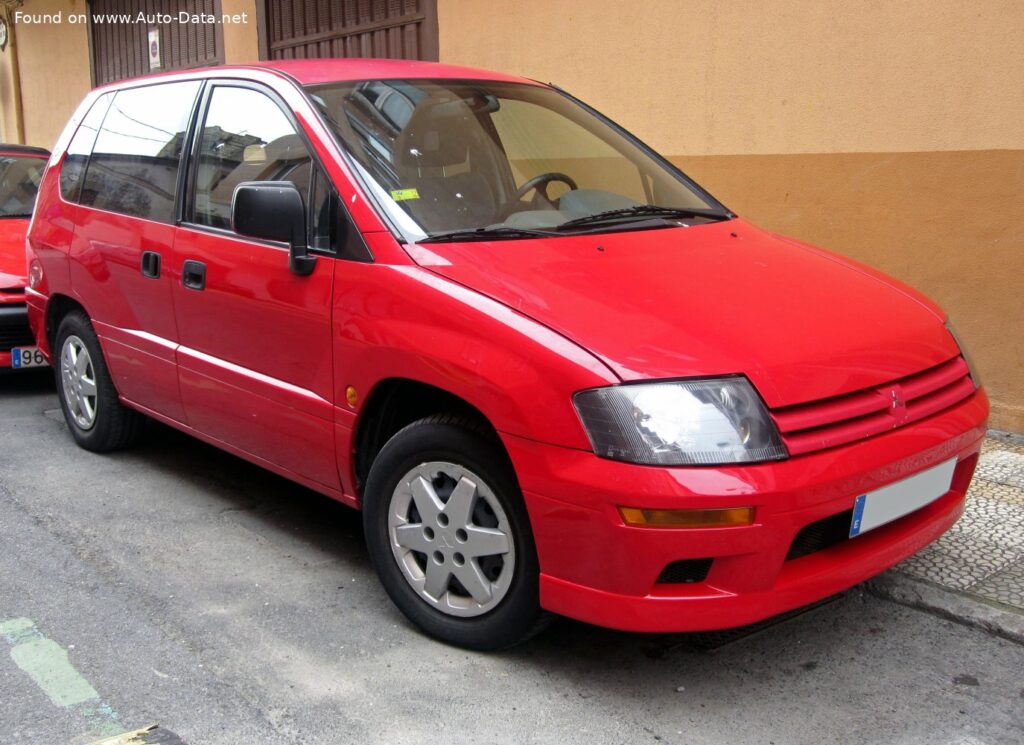
The Mitsubishi Space Runner (N50), produced between 1999 and 2002, is a compact minivan primarily aimed at the European market. While not officially sold in the United States, it represents Mitsubishi’s offering in the increasingly popular multi-purpose vehicle (MPV) segment of the late 1990s and early 2000s. The N50 generation, powered by a 2.0-liter gasoline engine producing 136 horsepower, offered a practical and versatile option for families seeking a vehicle larger than a hatchback but smaller and more maneuverable than a full-size van.
Mitsubishi Space Runner (N50): An Overview
The Space Runner, known as the Mitsubishi RVR in some markets like Canada, was designed to bridge the gap between traditional passenger cars and larger, more cumbersome vans. It focused on providing a comfortable and spacious interior with flexible seating arrangements, making it ideal for both daily commuting and weekend trips. The N50 generation represented a refinement of the original Space Runner, with improvements to the engine, suspension, and interior features. Its compact dimensions and front-wheel-drive configuration made it easy to handle in urban environments, while its relatively affordable price point made it an attractive option for budget-conscious buyers.
Engine & Performance
The heart of the Space Runner N50 2.0 is a 1,997 cc (121.86 cubic inches) inline-four cylinder gasoline engine. This naturally aspirated engine delivers 136 horsepower at 6000 rpm and 178 Nm (131.29 lb-ft) of torque at 4500 rpm. The engine utilizes a multi-port fuel injection system and an overhead camshaft (OHC) valvetrain with four valves per cylinder. This configuration provides a reasonable balance of power and fuel efficiency. Performance figures include a 0-100 km/h (0-62 mph) acceleration time of 11 seconds, and a 0-60 mph time of approximately 10.5 seconds. The vehicle boasts a maximum speed of 185 km/h (114.95 mph). The weight-to-power ratio is 9.6 kg/Hp, and the weight-to-torque ratio is 7.3 kg/Nm, indicating a decent power delivery for its class. Fuel economy is rated at 12.2 l/100 km (19.3 US mpg) in urban conditions and 7.5 l/100 km (31.4 US mpg) on the open road.
Design & Features
The Mitsubishi Space Runner N50 is a four-door minivan with a relatively boxy, yet functional design. Its compact footprint allows for easy maneuverability, while the tall roofline maximizes interior space. The vehicle comfortably seats five passengers. Key design features include a relatively upright windshield, large windows for good visibility, and a rear liftgate for easy access to the cargo area. Inside, the Space Runner offers a practical and durable interior. The rear seats can be folded or removed to create a larger cargo area, offering a minimum of 430 liters (15.19 cubic feet) and expanding to a maximum of 1800 liters (63.57 cubic feet) with the seats down. Safety features for the era included an Anti-lock Braking System (ABS) as standard equipment. The steering utilizes a hydraulic power steering rack and pinion system for responsive handling. The vehicle rides on 205/65 R15 tires.
Technical Specifications
| Brand | Mitsubishi |
| Model | Space Runner |
| Generation | Space Runner (N50) |
| Type (Engine) | 2.0 (136 Hp) |
| Start of production | 1999 |
| End of production | 2002 |
| Powertrain Architecture | Internal Combustion engine |
| Body type | Minivan |
| Seats | 5 |
| Doors | 4 |
| Fuel consumption (urban) | 12.2 l/100 km (19.3 US mpg) |
| Fuel consumption (extra urban) | 7.5 l/100 km (31.4 US mpg) |
| Fuel Type | Petrol (Gasoline) |
| Acceleration 0 – 100 km/h | 11 sec |
| Acceleration 0 – 62 mph | 11 sec |
| Acceleration 0 – 60 mph | 10.5 sec |
| Maximum speed | 185 km/h (114.95 mph) |
| Weight-to-power ratio | 9.6 kg/Hp |
| Weight-to-torque ratio | 7.3 kg/Nm |
| Power | 136 Hp @ 6000 rpm |
| Torque | 178 Nm @ 4500 rpm (131.29 lb.-ft. @ 4500 rpm) |
| Engine layout | Front, Transverse |
| Engine displacement | 1997 cm3 (121.86 cu. in.) |
| Number of cylinders | 4 |
| Engine configuration | Inline |
| Cylinder Bore | 85 mm (3.35 in.) |
| Piston Stroke | 88 mm (3.46 in.) |
| Compression ratio | 10:1 |
| Number of valves per cylinder | 4 |
| Fuel injection system | Multi-port manifold injection |
| Engine aspiration | Naturally aspirated |
| Valvetrain | OHC |
| Kerb Weight | 1300 kg (2866.01 lbs.) |
| Max. weight | 1880 kg (4144.69 lbs.) |
| Max load | 580 kg (1278.68 lbs.) |
| Trunk (boot) space – minimum | 430 l (15.19 cu. ft.) |
| Trunk (boot) space – maximum | 1800 l (63.57 cu. ft.) |
| Fuel tank capacity | 63 l (16.64 US gal | 13.86 UK gal) |
| Length | 4290 mm (168.9 in.) |
| Width | 1695 mm (66.73 in.) |
| Height | 1650 mm (64.96 in.) |
| Wheelbase | 2550 mm (100.39 in.) |
| Front track | 1460 mm (57.48 in.) |
| Rear track | 1460 mm (57.48 in.) |
| Drivetrain Architecture | Front wheel drive |
| Number of gears | 5 |
| Gearbox type | Manual transmission |
| Front suspension | Double wishbone |
| Rear suspension | Coil spring |
| Front brakes | Ventilated discs |
| Rear brakes | Disc |
| Assisting systems | ABS (Anti-lock braking system) |
| Steering type | Steering rack and pinion |
| Power steering | Hydraulic |
| Tires size | 205/65 R15 |
The Mitsubishi Space Runner (N50) 2.0, while not a performance vehicle, offered a practical and reliable transportation solution for families in Europe. Its blend of compact dimensions, spacious interior, and reasonable fuel economy made it a popular choice in its segment. Though largely unknown in the US market, it represents a significant example of Mitsubishi’s engineering and design capabilities during the late 1990s and early 2000s.