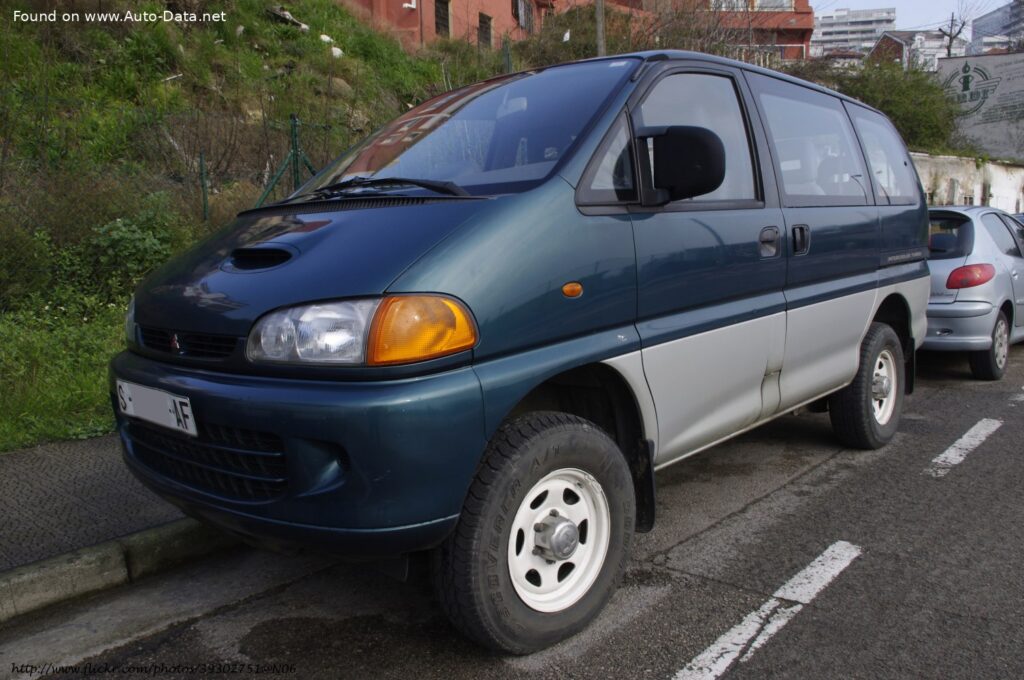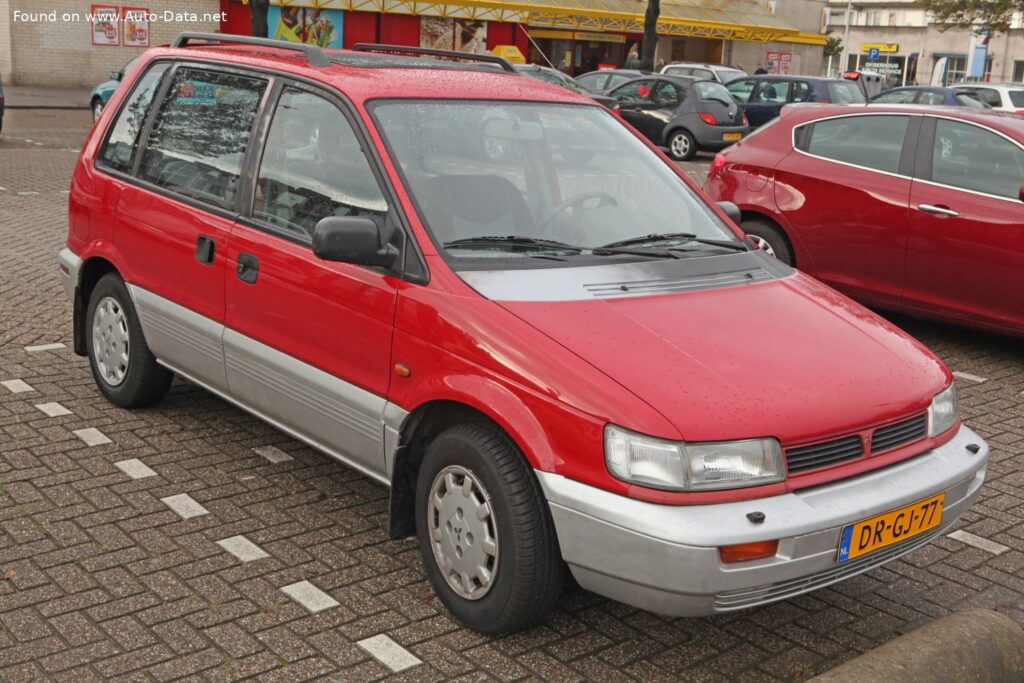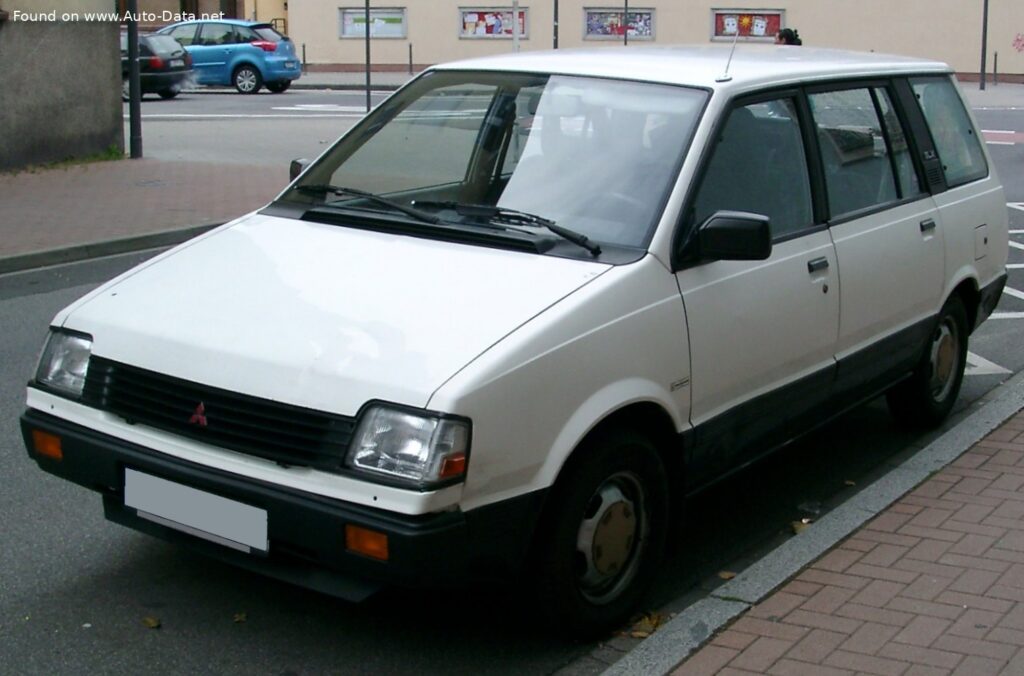
The Mitsubishi Space Wagon, known as the Mitsubishi Chariot in Japan, represents Mitsubishi’s entry into the increasingly popular compact minivan segment of the mid-1980s. Introduced in 1983, the first generation (D09W) Space Wagon aimed to provide practical, family-oriented transportation with a focus on space efficiency and affordability. While not officially sold in the United States, the Space Wagon was a significant vehicle in European and Asian markets, particularly as a competitor to models like the Renault Espace and Toyota Previa. The 1.8 TD variant, produced from 1986 to 1991, offered a diesel engine option, catering to markets where diesel fuel was more prevalent and economical. This model distinguished itself with a turbocharged diesel engine, providing a balance of fuel efficiency and reasonable performance for its class.
Mitsubishi Space Wagon I: A Compact Minivan for a Growing Market
The Space Wagon I emerged during a period of shifting automotive preferences. Families were increasingly seeking vehicles that offered more space and versatility than traditional sedans or station wagons. The minivan format, pioneered by Chrysler, quickly gained traction, and Mitsubishi sought to capitalize on this trend with a vehicle tailored to the needs of European and Asian consumers. The Space Wagon’s design prioritized interior space and practicality, offering a relatively compact footprint for ease of maneuverability in crowded urban environments. The 1.8 TD model, with its diesel powertrain, was particularly well-suited to long-distance travel and offered a cost-effective solution for families needing a spacious vehicle.
Origins and Market Positioning
The Space Wagon was initially developed for the Japanese domestic market under the name “Chariot.” The name was changed to “Space Wagon” for export markets, primarily in Europe and other parts of Asia. Mitsubishi strategically positioned the Space Wagon as a more affordable and compact alternative to larger, more expensive minivans. The diesel engine option, specifically the 1.8 TD, was crucial for success in European markets where diesel vehicles enjoyed significant tax advantages and were favored for their fuel economy. The Space Wagon competed directly with early European minivans and offered a unique blend of Japanese engineering and practicality.
Engine & Performance
The heart of the Space Wagon I 1.8 TD is a 1.8-liter turbocharged diesel engine. This engine, designated D09W, produced 75 horsepower. While this output may seem modest by modern standards, it was considered adequate for the vehicle’s weight and intended purpose. The turbocharger significantly enhanced the engine’s torque output, providing improved acceleration and towing capacity compared to naturally aspirated diesel engines of the time. The engine’s diesel configuration prioritized fuel efficiency, making it an attractive option for long-distance travel and cost-conscious buyers.
The Space Wagon I 1.8 TD featured a rear-wheel-drive drivetrain, a common configuration for vehicles of this era. This layout contributed to the vehicle’s handling characteristics and provided a stable platform for carrying passengers and cargo. The transmission was typically a five-speed manual, offering drivers precise control over the engine’s power delivery. While an automatic transmission was available on some Space Wagon models, it was less common on the diesel variants. The overall performance of the 1.8 TD was geared towards practicality and efficiency rather than outright speed. The focus was on providing a comfortable and reliable driving experience for families.
Technological Considerations
The 1.8 TD engine incorporated technologies common for diesel engines of the 1980s, including indirect injection and mechanical fuel injection. These systems were designed to optimize combustion efficiency and reduce emissions, although they were less sophisticated than the direct injection systems found in modern diesel engines. The turbocharger was a key component, utilizing exhaust gases to spin a turbine that forces more air into the engine, increasing power output. The engine’s durability and relatively simple design contributed to its reliability and ease of maintenance.
Design & Features
The Mitsubishi Space Wagon I adopted a boxy, utilitarian design characteristic of minivans from the 1980s. Its compact dimensions allowed for easy maneuverability, while the tall roofline maximized interior space. The vehicle featured sliding rear doors, providing convenient access to the second and third-row seats. The interior was designed with practicality in mind, offering flexible seating arrangements and ample storage compartments. The dashboard layout was straightforward and functional, with clearly labeled controls.
Safety features were relatively basic compared to modern standards, reflecting the automotive safety regulations of the time. The Space Wagon I typically included seatbelts for all occupants, but airbags and advanced driver-assistance systems were not yet commonplace. The vehicle’s structural design focused on providing a robust passenger cell in the event of a collision. The emphasis was on providing a safe and reliable vehicle for families, prioritizing basic safety features and durable construction. The Space Wagon’s design was largely dictated by its function – to provide a spacious and practical vehicle for transporting people and cargo.
Interior and Comfort
The interior of the Space Wagon I 1.8 TD was designed to maximize space and versatility. The seating configuration typically allowed for up to seven passengers, with the third-row seats often folding flat to create additional cargo space. The materials used in the interior were durable and easy to clean, reflecting the vehicle’s intended use as a family vehicle. Comfort features were relatively basic, including cloth upholstery and manual climate control. However, the spacious interior and flexible seating arrangements provided a comfortable and practical environment for passengers.
Technical Specifications
| Brand | Mitsubishi |
| Model | Space Wagon |
| Generation | Space Wagon I |
| Type (Engine) | 1.8 TD (D09W) (75 Hp) |
| Start of production | 1986 |
| End of production | 1991 |
| Powertrain Architecture | Internal Combustion engine |
| Body type | Minivan |
| Fuel Type | Diesel |
| Power | 75 Hp |
| Engine aspiration | Turbocharger |