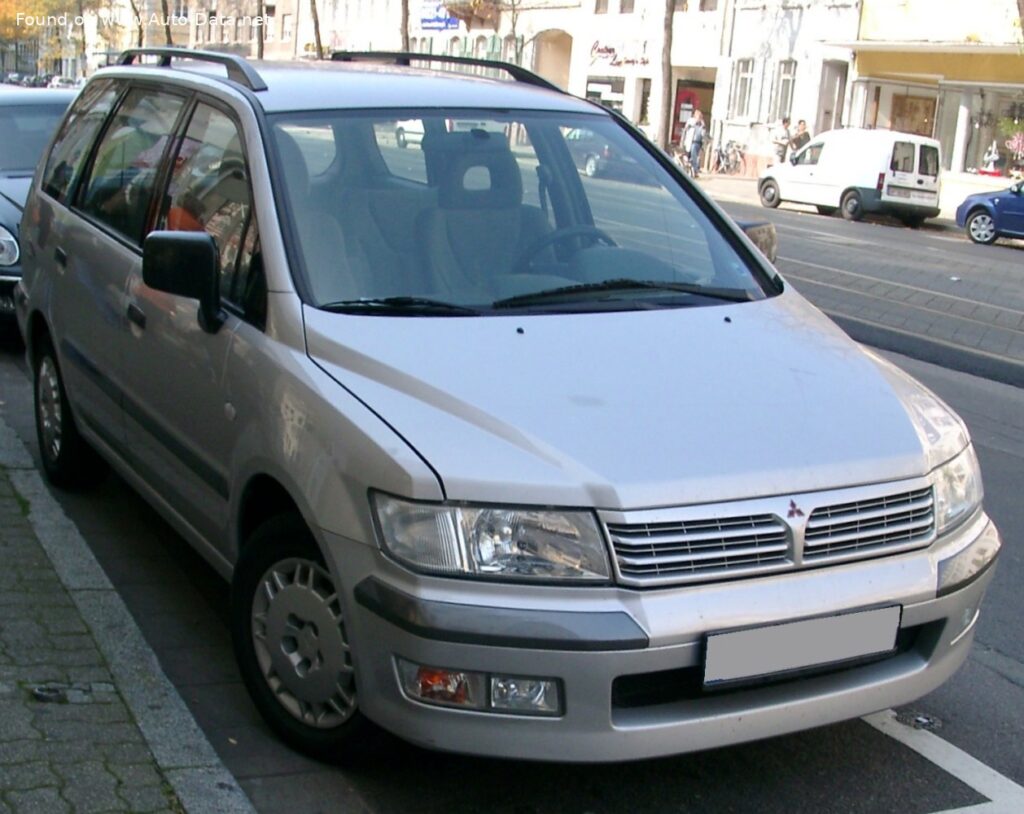
The Mitsubishi Space Wagon III 2.0 i 16V, produced between 2002 and 2004, represents the third generation of Mitsubishi’s popular compact minivan. While not officially sold in the United States, the Space Wagon (known as the RVR in some markets) was a significant vehicle in Europe, Asia, and other regions, offering a practical and versatile family transport solution. This generation focused on refining the formula of its predecessors, providing increased space, improved comfort, and a more modern driving experience within the compact MPV (Multi-Purpose Vehicle) segment.
Mitsubishi Space Wagon III: An Overview
The Space Wagon III aimed to cater to families needing a flexible and spacious vehicle without the bulk of larger vans. It distinguished itself with its seven-seat configuration, a relatively uncommon feature in its class at the time. The 2.0 i 16V variant, equipped with a 2.0-liter inline-four engine, was a common trim level, balancing performance with fuel efficiency. The vehicle’s design emphasized practicality and ease of use, making it a popular choice for everyday family duties.
Engine & Performance
Powering the Space Wagon III 2.0 i 16V is a 1,997 cc (121.86 cubic inches) inline-four cylinder engine. This naturally aspirated engine produces 133 horsepower at 6000 rpm and 176 Nm (129.81 lb-ft) of torque at 4750 rpm. The engine utilizes a multi-port fuel injection system and an overhead camshaft (OHC) valvetrain with four valves per cylinder. This configuration delivers a power-to-liter ratio of 66.6 hp/l. Performance figures include a 0-100 km/h (0-62 mph) acceleration time of 12 seconds and a top speed of 180 km/h (111.85 mph). The 0-60 mph acceleration is calculated at 11.4 seconds. The engine is coupled with a 5-speed manual transmission, driving the front wheels. The weight-to-power ratio is 11.1 kg/Hp, and the weight-to-torque ratio is 8.4 kg/Nm.
Design & Features
The Space Wagon III is a five-door minivan designed to accommodate up to seven passengers. Its body style prioritizes interior space and accessibility. The vehicle’s dimensions are 4600 mm (181.1 inches) in length, 1775 mm (69.88 inches) in width, and 1690 mm (66.54 inches) in height, with a wheelbase of 2780 mm (109.45 inches). The interior is designed for flexibility, with the rear seats capable of folding or being removed to create a larger cargo area. Trunk space ranges from a minimum of 240 liters (8.48 cubic feet) to a maximum of 1930 liters (68.16 cubic feet) with the rear seats folded.
Safety features for the era included an Anti-lock Braking System (ABS). The Space Wagon III features a hydraulic power steering system and rides on 205/65 R15 tires. The suspension utilizes a wishbone setup at the front and a coil spring arrangement at the rear. Braking is provided by ventilated discs at the front and discs at the rear. The vehicle’s kerb weight is 1475 kg (3251.82 lbs), with a maximum permissible weight of 2120 kg (4673.8 lbs) and a maximum load capacity of 645 kg (1421.98 lbs).
Technical Specifications
| Brand | Mitsubishi |
| Model | Space Wagon |
| Generation | Space Wagon III |
| Type (Engine) | 2.0 i 16V (133 Hp) |
| Start of production | 2002 |
| End of production | 2004 |
| Powertrain Architecture | Internal Combustion engine |
| Body type | Minivan |
| Seats | 7 |
| Doors | 5 |
| Fuel consumption (urban) | 12.6 l/100 km (18.7 US mpg, 22.4 UK mpg, 7.9 km/l) |
| Fuel consumption (extra urban) | 7.6 l/100 km (30.9 US mpg, 37.2 UK mpg, 13.2 km/l) |
| Fuel Type | Petrol (Gasoline) |
| Acceleration 0 – 100 km/h | 12 sec |
| Acceleration 0 – 62 mph | 12 sec |
| Acceleration 0 – 60 mph | 11.4 sec |
| Maximum speed | 180 km/h (111.85 mph) |
| Weight-to-power ratio | 11.1 kg/Hp |
| Weight-to-torque ratio | 8.4 kg/Nm |
| Power | 133 Hp @ 6000 rpm |
| Power per litre | 66.6 Hp/l |
| Torque | 176 Nm @ 4750 rpm (129.81 lb.-ft. @ 4750 rpm) |
| Engine layout | Front, Transverse |
| Engine displacement | 1997 cm3 (121.86 cu. in.) |
| Number of cylinders | 4 |
| Engine configuration | Inline |
| Cylinder Bore | 85 mm (3.35 in.) |
| Piston Stroke | 88 mm (3.46 in.) |
| Compression ratio | 10:1 |
| Number of valves per cylinder | 4 |
| Fuel injection system | Multi-port manifold injection |
| Engine aspiration | Naturally aspirated engine |
| Valvetrain | OHC |
| Kerb Weight | 1475 kg (3251.82 lbs.) |
| Max. weight | 2120 kg (4673.8 lbs.) |
| Max load | 645 kg (1421.98 lbs.) |
| Trunk (boot) space – minimum | 240 l (8.48 cu. ft.) |
| Trunk (boot) space – maximum | 1930 l (68.16 cu. ft.) |
| Fuel tank capacity | 63 l (16.64 US gal | 13.86 UK gal) |
| Length | 4600 mm (181.1 in.) |
| Width | 1775 mm (69.88 in.) |
| Height | 1690 mm (66.54 in.) |
| Wheelbase | 2780 mm (109.45 in.) |
| Front track | 1500 mm (59.06 in.) |
| Rear (Back) track | 1535 mm (60.43 in.) |
| Drivetrain Architecture | Front wheel drive |
| Number of gears and type of gearbox | 5 gears, manual transmission |
| Front suspension | Wishbone |
| Rear suspension | Coil spring |
| Front brakes | Ventilated discs |
| Rear brakes | Disc |
| Assisting systems | ABS (Anti-lock braking system) |
| Steering type | Steering rack and pinion |
| Power steering | Hydraulic Steering |
| Tires size | 205/65 R15 |
The Mitsubishi Space Wagon III 2.0 i 16V, while not a performance vehicle, offered a compelling package of practicality, space, and reasonable efficiency for families in its target markets. Its seven-seat configuration and flexible interior made it a versatile choice, and its relatively modern engine provided adequate power for everyday driving needs.