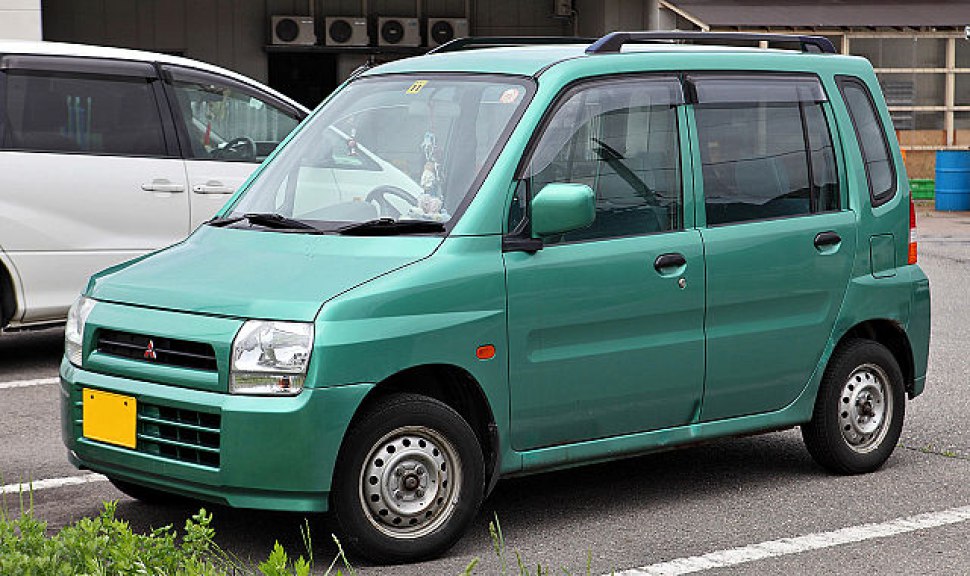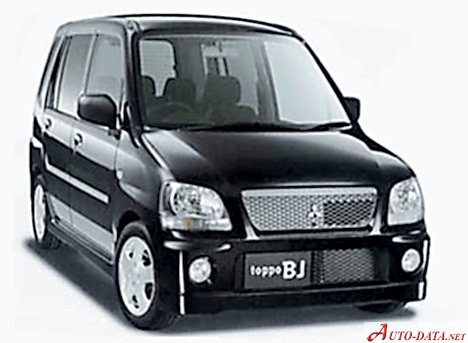
The Mitsubishi Toppo, specifically the BJ generation produced between 2000 and 2004, represents a unique offering within the Japanese Kei car class, though it wasn’t directly marketed as a Kei car outside of Japan. This diminutive minivan was primarily designed for the highly congested urban environments of Japan, prioritizing maneuverability and efficient use of space. While not officially sold in the United States, understanding the Toppo BJ provides insight into the innovative approaches Japanese manufacturers took to address specific market needs. It served as an affordable and practical transportation solution for individuals and small families in Japan, competing with other micro-minivans like the Suzuki Wagon R and Daihatsu Move.
Mitsubishi Toppo (BJ): An Overview
The Toppo BJ (the “BJ” denoting this specific generation) is a five-door, four-seater minivan powered by a small-displacement engine. Its compact dimensions and focus on interior space made it a popular choice for city dwellers. The Toppo line itself has a long history, dating back to the 1960s, evolving through several generations. The BJ generation represented a modernization of the concept, incorporating contemporary styling and features for the early 2000s. It’s important to note that the Toppo was not designed for high-speed highway driving, but rather for navigating narrow streets and tight parking spaces.
Engine & Performance
The heart of the Mitsubishi Toppo BJ 0.7 i 12V is a 657cc (40.09 cubic inches) inline-three cylinder gasoline engine. This engine produces 50 horsepower at 6500 rpm and 62 Nm (45.73 lb-ft) of torque at 4000 rpm. While these figures may seem modest by American standards, they were adequate for the vehicle’s intended purpose and weight. The engine features a multi-port fuel injection system and a compression ratio of 10.2:1. Power delivery is managed through a four-speed automatic transmission, driving the front wheels. The weight-to-power ratio of 15.8 kg/Hp and a weight-to-torque ratio of 12.7 kg/Nm indicate a relatively efficient powertrain for its size. The engine’s power per liter is a respectable 76.1 Hp/l, showcasing a degree of engineering optimization within the constraints of its displacement.
Design & Features
The Toppo BJ’s design prioritizes maximizing interior space within a small footprint. Its boxy shape, typical of Kei car design, allows for a relatively tall cabin, enhancing headroom for passengers. The five-door configuration provides easy access to both front and rear seats. The interior, while basic, was designed for practicality and durability. Features included coil spring suspension on both the front and rear axles, providing a comfortable ride on city streets. Safety features for the time included an Anti-lock Braking System (ABS), a notable inclusion for a vehicle in this class. The vehicle’s dimensions – 3395 mm (133.66 in) in length, 1475 mm (58.07 in) in width, and 1740 mm (68.5 in) in height – highlight its compact nature. Ventilated disc brakes were used on the front wheels, while drum brakes were fitted to the rear. The Toppo BJ rode on 145/80 R13 tires.
Technical Specifications
| Brand | Mitsubishi |
| Model | Toppo |
| Generation | Toppo (BJ) |
| Type (Engine) | 0.7 i 12V (50 Hp) |
| Start of production | 2000 year |
| End of production | 2004 year |
| Powertrain Architecture | Internal Combustion engine |
| Body type | Minivan |
| Seats | 4 |
| Doors | 5 |
| Fuel Type | Petrol (Gasoline) |
| Weight-to-power ratio | 15.8 kg/Hp |
| Weight-to-torque ratio | 12.7 kg/Nm |
| Power | 50 Hp @ 6500 rpm |
| Power per litre | 76.1 Hp/l |
| Torque | 62 Nm @ 4000 rpm / 45.73 lb.-ft. @ 4000 rpm |
| Engine layout | Front, Transverse |
| Engine displacement | 657 cm3 / 40.09 cu. in. |
| Number of cylinders | 3 |
| Engine configuration | Inline |
| Cylinder Bore | 65 mm / 2.56 in. |
| Piston Stroke | 66 mm / 2.6 in. |
| Compression ratio | 10.2:1 |
| Number of valves per cylinder | 4 |
| Fuel injection system | Multi-port manifold injection |
| Engine aspiration | Naturally aspirated engine |
| Kerb Weight | 790 kg / 1741.65 lbs |
| Max. weight | 1010 kg / 2226.67 lbs |
| Max load | 220 kg / 485.02 lbs |
| Fuel tank capacity | 30 l / 7.93 US gal | 6.6 UK gal |
| Length | 3395 mm / 133.66 in |
| Width | 1475 mm / 58.07 in |
| Height | 1740 mm / 68.5 in |
| Wheelbase | 2340 mm / 92.13 in |
| Front track | 1300 mm / 51.18 in |
| Rear (Back) track | 1295 mm / 50.98 in |
| Drivetrain Architecture | The Internal combustion engine (ICE) drives the front wheels of the vehicle. |
| Drive wheel | Front wheel drive |
| Number of gears and type of gearbox | 4 gears, automatic transmission |
| Front suspension | Coil spring |
| Rear suspension | Coil spring |
| Front brakes | Ventilated discs |
| Rear brakes | Drum |
| Assisting systems | ABS (Anti-lock braking system) |
| Steering type | Steering rack and pinion |
| Tires size | 145/80 R13 |
In conclusion, the Mitsubishi Toppo BJ, while not a vehicle commonly found in the United States, represents a fascinating example of Japanese automotive engineering focused on practicality, efficiency, and maximizing space in a compact package. It served a vital role in the Japanese transportation landscape, offering an affordable and maneuverable solution for urban commuting.