
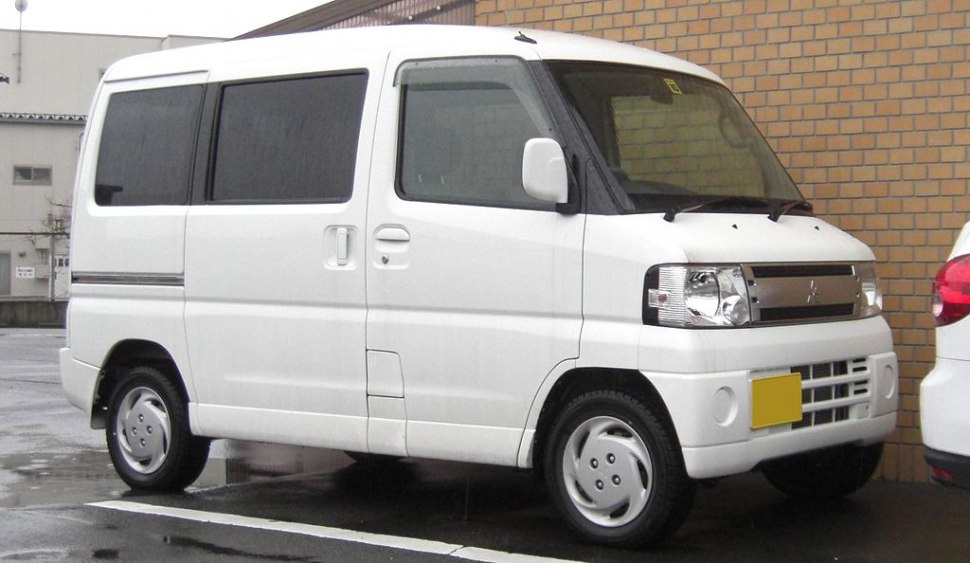
The Mitsubishi Town Box is a microvan produced by Mitsubishi Motors from 1999 to 2011. Primarily sold in Japan, it falls into the “kei car” category, a segment of vehicles designed to meet specific size and engine displacement regulations for tax and insurance benefits within Japan. The Town Box served as a practical and affordable transportation solution for families and businesses, emphasizing interior space and ease of use within a compact footprint. While not officially sold in the United States, understanding the Town Box provides insight into the unique automotive landscape of Japan and the engineering challenges of maximizing utility in a small package.
Mitsubishi Town Box: A Kei Car Overview
The Town Box represents Mitsubishi’s entry into the highly competitive kei car market. These vehicles are characterized by their diminutive size, limited engine capacity (typically 660cc or less), and focus on practicality. The Town Box specifically targeted buyers needing a small, versatile vehicle for urban commuting and light commercial use. Its boxy shape maximized interior volume, making it a popular choice for small families and delivery services. The model underwent minor revisions throughout its production run, but retained its core design philosophy of efficient space utilization and affordability.
Engine & Performance
The Mitsubishi Town Box 0.7 i 12V LX is powered by a 657cc inline three-cylinder gasoline engine. This engine produces 48 horsepower at 6000 rpm and 62 Nm (45.73 lb-ft) of torque at 4000 rpm. While modest by American standards, this output is typical for kei cars and sufficient for navigating Japan’s often congested urban environments. The engine features a multi-port fuel injection system and a compression ratio of 8.5:1. Power delivery is managed through a five-speed manual transmission, driving the front wheels. The vehicle’s weight-to-power ratio is 18.3 kg/Hp, and its weight-to-torque ratio is 14.2 kg/Nm. The naturally aspirated engine prioritizes fuel efficiency and reliability over outright performance.
Design & Features
The Town Box is a five-door minivan with seating for four passengers. Its design is characterized by its tall, boxy silhouette, maximizing interior space within the kei car dimensions. The vehicle’s dimensions are 3395 mm (133.66 in) in length, 1475 mm (58.07 in) in width, and 1890 mm (74.41 in) in height. The wheelbase measures 2390 mm (94.09 in). The interior is designed for practicality, with durable materials and a focus on ease of cleaning. Features included a relatively spacious cabin for its size, sliding rear doors for easy access, and a functional dashboard layout. Safety features for the era included an Anti-lock Braking System (ABS), a notable inclusion for a vehicle in this class. The suspension utilizes coil springs on both the front and rear axles, providing a comfortable ride on Japan’s typically well-maintained roads. The Town Box rides on 165/65 R13 tires.
Technical Specifications
| Brand | Mitsubishi |
| Model | Town BOX |
| Generation | Town Box |
| Type (Engine) | 0.7 i 12V LX (48 Hp) |
| Start of production | 1999 year |
| End of production | 2011 year |
| Powertrain Architecture | Internal Combustion engine |
| Body type | Minivan |
| Seats | 4 |
| Doors | 5 |
| Fuel Type | Petrol (Gasoline) |
| Weight-to-power ratio | 18.3 kg/Hp, 54.5 Hp/tonne |
| Weight-to-torque ratio | 14.2 kg/Nm, 70.5 Nm/tonne |
| Power | 48 Hp @ 6000 rpm |
| Power per litre | 73.1 Hp/l |
| Torque | 62 Nm @ 4000 rpm. 45.73 lb.-ft. @ 4000 rpm |
| Engine layout | Front, Transverse |
| Engine displacement | 657 cm3 / 40.09 cu. in. |
| Number of cylinders | 3 |
| Engine configuration | Inline |
| Cylinder Bore | 65 mm / 2.56 in. |
| Piston Stroke | 66 mm / 2.6 in. |
| Compression ratio | 8.5:1 |
| Number of valves per cylinder | 4 |
| Fuel injection system | Multi-port manifold injection |
| Engine aspiration | Naturally aspirated engine |
| Kerb Weight | 880 kg / 1940.07 lbs |
| Max. weight | 1100 kg / 2425.08 lbs |
| Max load | 220 kg / 485.02 lbs |
| Fuel tank capacity | 30 l / 7.93 US gal | 6.6 UK gal |
| Length | 3395 mm / 133.66 in |
| Width | 1475 mm / 58.07 in |
| Height | 1890 mm / 74.41 in |
| Wheelbase | 2390 mm / 94.09 in |
| Front track | 1290 mm / 50.79 in |
| Rear (Back) track | 1290 mm / 50.79 in |
| Drivetrain Architecture | The Internal combustion engine (ICE) drives the front wheels of the vehicle. |
| Drive wheel | Front wheel drive |
| Number of gears and type of gearbox | 5 gears, manual transmission |
| Front suspension | Coil spring |
| Rear suspension | Coil spring |
| Front brakes | Ventilated discs |
| Rear brakes | Drum |
| Assisting systems | ABS (Anti-lock braking system) |
| Steering type | Steering rack and pinion |
| Power steering | Hydraulic Steering |
| Tires size | 165/65 R13 |
The Mitsubishi Town Box, while not a vehicle commonly seen outside of Japan, represents a significant segment of the Japanese automotive market. Its focus on practicality, affordability, and efficient use of space made it a popular choice for urban dwellers. The Town Box exemplifies the engineering ingenuity required to create a functional and reliable vehicle within the strict constraints of the kei car regulations.
