
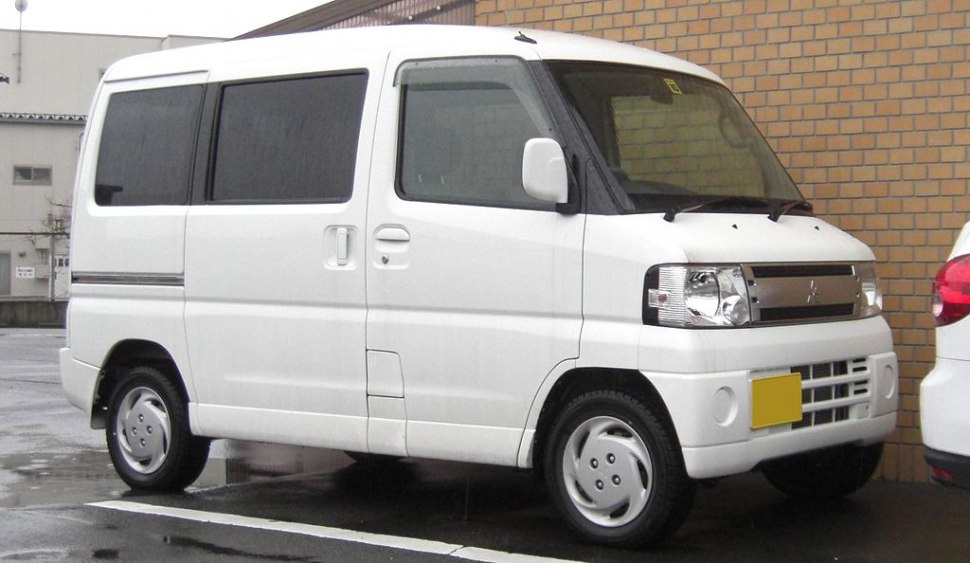
The Mitsubishi Town Box is a microvan produced by Mitsubishi Motors from 1999 to 2011. Primarily designed for the Japanese domestic market (JDM), the Town Box catered to the demand for compact, practical, and affordable vehicles ideal for navigating Japan’s narrow urban streets. It falls into the “kei car” category, a segment of vehicles with strict regulations regarding size and engine displacement, offering tax and insurance benefits to owners. While not officially sold in the United States, the Town Box represents a significant part of the kei car culture and Mitsubishi’s commitment to efficient and space-conscious transportation.
Mitsubishi Town Box: A Kei Car Overview
The Town Box was conceived as a versatile vehicle for small families and individuals needing a practical solution for daily commutes and light commercial use. Its boxy shape maximizes interior space within the kei car dimensions, offering surprising room for passengers and cargo. The vehicle’s popularity stemmed from its affordability, fuel efficiency, and ease of maneuverability in congested urban environments. The Town Box competed with other kei vans like the Suzuki Carry, Daihatsu Hijet, and Honda Vamos, all vying for dominance in the Japanese microvan market.
Engine & Performance
The 1999-2011 Mitsubishi Town Box 0.7 i 20V 4WD RX is powered by a 659cc (40.21 cubic inches) inline-four cylinder gasoline engine. This engine produces 64 horsepower at 6500 rpm and 98 Nm (72.28 lb-ft) of torque at 3000 rpm. While modest by American standards, this output is typical for kei cars, prioritizing fuel economy over outright performance. The engine features a multi-port fuel injection system and, in the RX trim, a turbocharger, enhancing low-end torque and improving drivability. The Town Box utilizes a five-speed manual transmission and an all-wheel-drive (4WD) system, providing enhanced traction in various weather conditions. The weight-to-power ratio is 15.3 kg/Hp, and the weight-to-torque ratio is 10 kg/Nm. The power per liter is an impressive 97.1 Hp/l, showcasing the efficiency of the small engine.
Design & Features
The Mitsubishi Town Box is a five-door minivan with a seating capacity of four. Its design prioritizes practicality and space utilization. The boxy exterior maximizes interior volume, while the sliding rear doors facilitate easy access in tight parking spaces. The interior is functional and utilitarian, designed for durability and ease of cleaning. Features included hydraulic power steering and an anti-lock braking system (ABS) for improved safety. The Town Box’s compact dimensions – 3395 mm (133.66 in) in length, 1475 mm (58.07 in) in width, and 1905 mm (75 in) in height – made it exceptionally easy to maneuver and park in crowded city environments. The vehicle’s relatively light curb weight of 980 kg (2160.53 lbs) contributed to its fuel efficiency and nimble handling.
Safety and Practicality
While safety standards in the late 1990s and early 2000s were different than today, the Town Box incorporated essential safety features for its time, including ABS. The vehicle’s compact size and excellent visibility also contributed to safer driving. The Town Box’s primary appeal lay in its practicality. The spacious interior, combined with the versatile seating arrangement and ample cargo space, made it ideal for small families, delivery services, and individuals needing a reliable and efficient vehicle for everyday tasks. The 30-liter (7.93 US gal) fuel tank provided a reasonable driving range, further enhancing its practicality.
Technical Specifications
| Brand | Mitsubishi |
| Model | Town BOX |
| Generation | Town Box |
| Type (Engine) | 0.7 i 20V 4WD RX (64 Hp) |
| Start of production | 1999 year |
| End of production | 2011 year |
| Powertrain Architecture | Internal Combustion engine |
| Body type | Minivan |
| Seats | 4 |
| Doors | 5 |
| Fuel Type | Petrol (Gasoline) |
| Weight-to-power ratio | 15.3 kg/Hp |
| Weight-to-torque ratio | 10 kg/Nm |
| Power | 64 Hp @ 6500 rpm |
| Power per litre | 97.1 Hp/l |
| Torque | 98 Nm @ 3000 rpm / 72.28 lb.-ft. @ 3000 rpm |
| Engine layout | Front, Transverse |
| Engine displacement | 659 cm3 / 40.21 cu. in. |
| Number of cylinders | 4 |
| Engine configuration | Inline |
| Cylinder Bore | 60 mm / 2.36 in. |
| Piston Stroke | 58.3 mm / 2.3 in. |
| Compression ratio | 8.5:1 |
| Number of valves per cylinder | 5 |
| Fuel injection system | Multi-port manifold injection |
| Engine aspiration | Turbocharger |
| Kerb Weight | 980 kg / 2160.53 lbs |
| Max. weight | 1200 kg / 2645.55 lbs |
| Max load | 220 kg / 485.02 lbs |
| Fuel tank capacity | 30 l / 7.93 US gal | 6.6 UK gal |
| Length | 3395 mm / 133.66 in |
| Width | 1475 mm / 58.07 in |
| Height | 1905 mm / 75 in |
| Wheelbase | 2390 mm / 94.09 in |
| Front track | 1290 mm / 50.79 in |
| Rear (Back) track | 1290 mm / 50.79 in |
| Drive wheel | All wheel drive (4×4) |
| Number of gears and type of gearbox | 5 gears, manual transmission |
| Front suspension | Coil spring |
| Rear suspension | Coil spring |
| Front brakes | Ventilated discs |
| Rear brakes | Drum |
| Assisting systems | ABS (Anti-lock braking system) |
| Steering type | Steering rack and pinion |
| Power steering | Hydraulic Steering |
| Tires size | 165/65 R13 |
The Mitsubishi Town Box, though largely unknown in the American market, represents a successful example of kei car engineering and design. Its focus on practicality, fuel efficiency, and affordability made it a popular choice for Japanese consumers, and it remains a testament to Mitsubishi’s ability to create innovative and space-conscious vehicles.
