
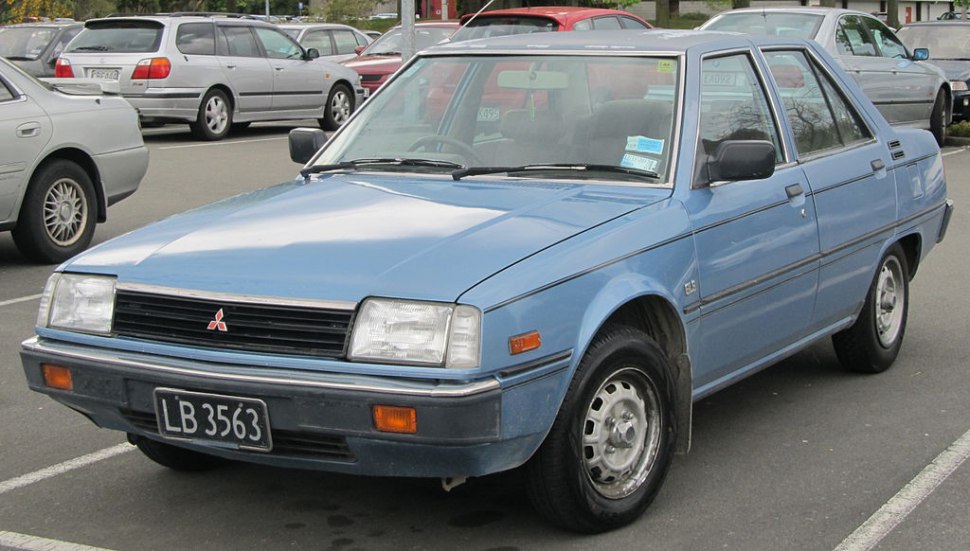
The Mitsubishi Tredia, known internally as the A21 series, was a compact sedan produced by Mitsubishi Motors between 1984 and 1986. Positioned as an affordable and practical vehicle, the Tredia aimed to compete in the burgeoning compact car market. While not widely recognized in the United States, the Tredia was primarily sold in Japan, Europe, Australia, and other international markets. It represented Mitsubishi’s effort to offer a modern, fuel-efficient sedan during a period of increasing demand for smaller vehicles. The 1.8 GLS (A215) variant, producing 90 horsepower, was a mid-range offering within the Tredia lineup, balancing performance with economy.
Mitsubishi Tredia (A21_) Overview
The Tredia emerged during a time when Japanese automakers were gaining significant traction globally, known for their reliability and fuel efficiency. Mitsubishi sought to capitalize on this trend with a vehicle that offered a comfortable ride, reasonable performance, and a competitive price point. The A21 series Tredia was a front-engine, front-wheel-drive sedan, a configuration becoming increasingly standard in the automotive industry during the 1980s. It was designed to appeal to a broad range of buyers, including families and commuters seeking a dependable and economical mode of transportation. The Tredia’s relatively short production run suggests it was superseded by newer models within Mitsubishi’s expanding lineup, but it remains a notable example of 1980s Japanese automotive design.
Historical Context
The early 1980s saw a shift in automotive preferences, driven by oil crises and growing environmental awareness. Consumers began to favor smaller, more fuel-efficient vehicles over the large, gas-guzzling cars that had dominated the market in previous decades. Mitsubishi responded to this trend with the Tredia, a vehicle designed to meet the demands of this changing landscape. The car’s design reflected the prevailing aesthetic of the time, characterized by clean lines, a boxy silhouette, and a focus on practicality. While not a groundbreaking vehicle in terms of innovation, the Tredia represented a solid and dependable offering in a competitive segment.
Engine & Performance
The 1.8 GLS (A215) Tredia was powered by a 1.8-liter, naturally aspirated four-cylinder gasoline engine. This engine produced 90 horsepower, providing adequate performance for everyday driving. While not a particularly powerful engine by modern standards, it was sufficient for navigating city streets and highways. The engine was paired with either a four-speed manual or a three-speed automatic transmission, allowing buyers to choose a configuration that suited their driving preferences. The front-wheel-drive layout contributed to improved fuel efficiency and handling, particularly in adverse weather conditions. The Tredia’s suspension system was designed to provide a comfortable ride, absorbing bumps and irregularities in the road surface. Performance figures, while not extensively documented, suggest a 0-60 mph time in the range of 11-13 seconds, and a top speed of approximately 95-100 mph. The engine’s naturally aspirated design meant it relied solely on atmospheric pressure for air intake, resulting in a relatively linear power delivery.
Powertrain Details
The 1.8-liter engine featured a single overhead camshaft (SOHC) configuration, a common design for engines of that era. This design simplified the engine’s construction and reduced maintenance requirements. Fuel delivery was managed by a carburetor, a technology that was gradually being replaced by fuel injection during the 1980s. The engine’s block was constructed from cast iron, providing durability and rigidity. The cylinder head was made from aluminum alloy, helping to reduce weight. The engine’s relatively simple design contributed to its reliability and ease of maintenance. The Tredia’s powertrain was designed to prioritize fuel efficiency and longevity over outright performance.
Design & Features
The Mitsubishi Tredia A21_ was a traditional three-box sedan, characterized by a distinct separation between the engine compartment, passenger cabin, and trunk. Its exterior styling was conservative and functional, reflecting the design trends of the early 1980s. The car featured a relatively spacious interior for its size, offering comfortable seating for four adults. Interior materials were typically durable and practical, with a focus on longevity rather than luxury. Standard features included basic instrumentation, such as a speedometer, odometer, and fuel gauge. Depending on the trim level, the Tredia could also be equipped with features such as a radio, heater, and air conditioning. Safety features were relatively limited by modern standards, typically including seat belts and a collapsible steering column. The Tredia’s design prioritized practicality and affordability, making it an appealing option for budget-conscious buyers. The car’s trunk offered a reasonable amount of cargo space, suitable for everyday needs. The overall aesthetic was understated and functional, lacking the flamboyant styling of some of its competitors.
Market Positioning
In markets where it was sold, the Tredia competed with other compact sedans such as the Toyota Corolla, Nissan Sunny, and Honda Civic. It was positioned as a value-oriented alternative, offering a competitive price point and a reputation for reliability. While it may not have possessed the same level of refinement or performance as some of its rivals, the Tredia provided a practical and dependable transportation solution. Its fuel efficiency was a key selling point, particularly in regions where gasoline prices were high. The Tredia’s relatively simple design and robust construction contributed to its longevity and low maintenance costs.
Technical Specifications
| Brand | Mitsubishi |
| Model | Tredia |
| Generation | Tredia (A21_) |
| Type (Engine) | 1.8 GLS (A215) (90 Hp) |
| Start of production | 1984 |
| End of production | 1986 |
| Powertrain Architecture | Internal Combustion engine |
| Body type | Sedan |
| Fuel Type | Petrol (Gasoline) |
| Power | 90 Hp |
| Engine aspiration | Naturally aspirated engine |
