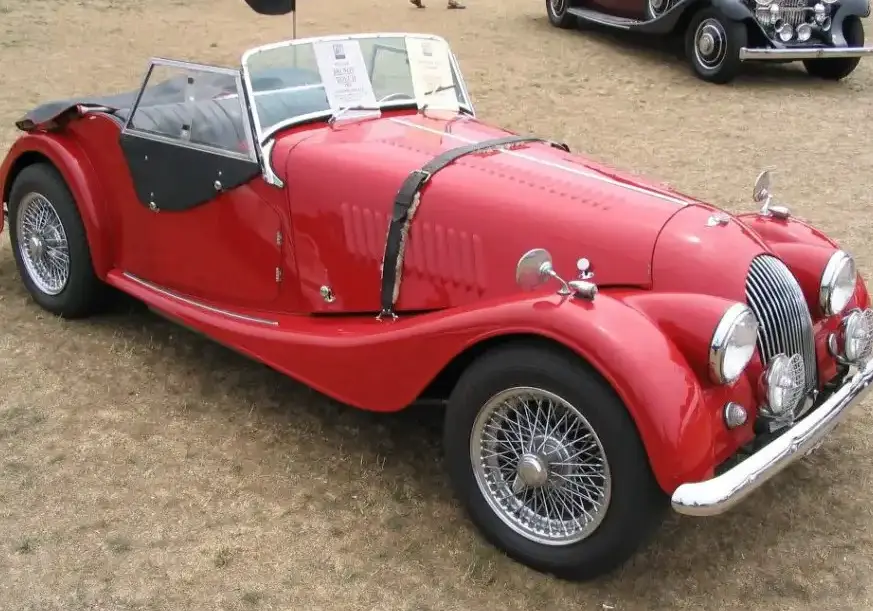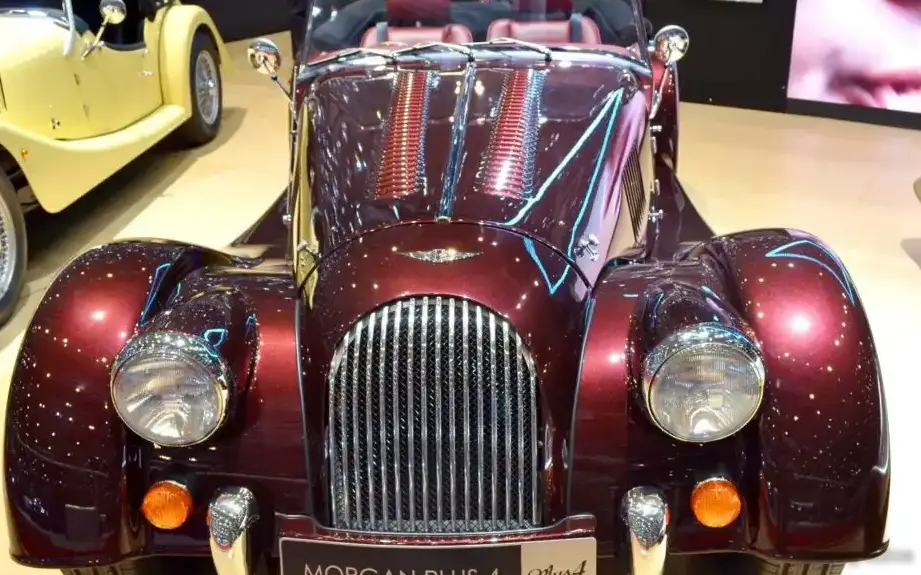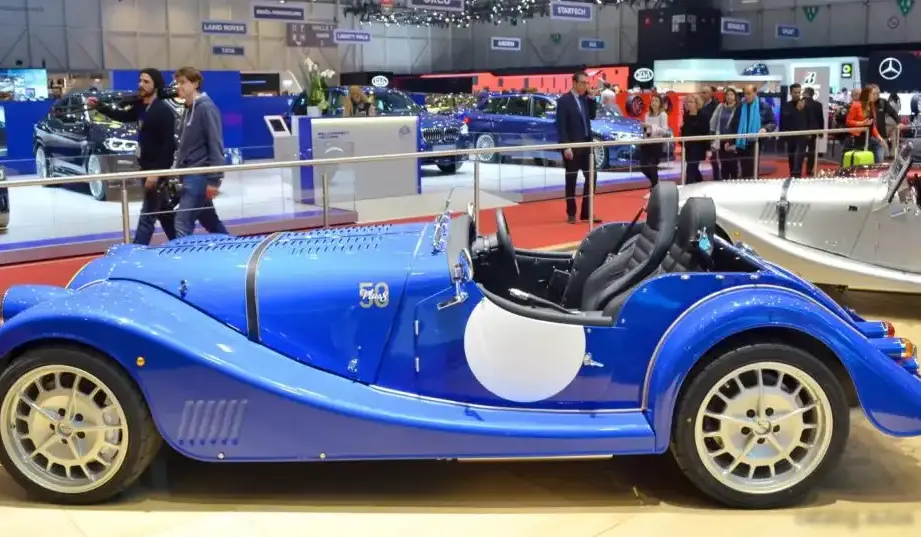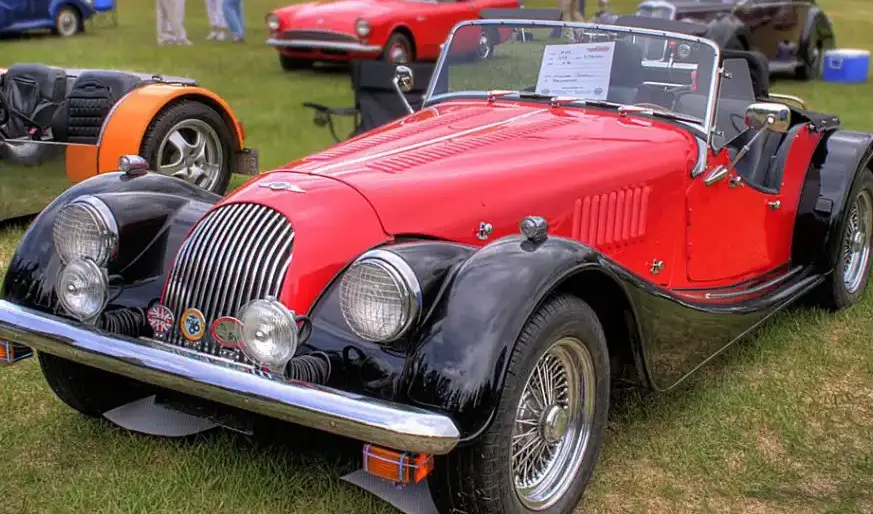
The Morgan Plus 8 3.9, produced from 1990 to 2004, represents a significant evolution in the long-running Plus 8 lineage. This iteration, powered by a Rover V8 engine displacing 3.9 liters, marked a shift towards increased performance and refinement while retaining the classic Morgan aesthetic and driving experience. It occupied the top-tier position within the Plus 8 range during its production run, offering a more potent alternative to the earlier 2.8-liter models and serving as a flagship for the Morgan Motor Company. The 3.9 model was a key part of Morgan’s strategy to appeal to a broader audience seeking a blend of traditional British sports car charm and modern performance.
Technical Specifications
| Brand | Morgan |
| Model | Plus 8 |
| Generation | Plus 8 |
| Type (Engine) | 3.9 (190 Hp) |
| Start of production | 1990 |
| End of production | 2004 |
| Powertrain Architecture | Internal Combustion engine |
| Body type | Cabriolet |
| Seats | 2 |
| Doors | 2 |
| Fuel consumption (urban) | 11.8 l/100 km (19.9 US mpg) |
| Fuel Type | Petrol (Gasoline) |
| Acceleration 0 – 100 km/h | 5.6 sec |
| Acceleration 0 – 62 mph | 5.6 sec |
| Acceleration 0 – 60 mph | 5.3 sec |
| Maximum speed | 210 km/h (130.49 mph) |
| Weight-to-power ratio | 4.9 kg/Hp |
| Weight-to-torque ratio | 3 kg/Nm |
| Power | 190 Hp @ 4750 rpm |
| Power per litre | 48.1 Hp/l |
| Torque | 312 Nm @ 2600 rpm (230.12 lb.-ft. @ 2600 rpm) |
| Engine layout | Front, Longitudinal |
| Engine displacement | 3947 cm3 (240.86 cu. in.) |
| Number of cylinders | 8 |
| Engine configuration | V-engine |
| Cylinder Bore | 94 mm (3.7 in.) |
| Piston Stroke | 71.12 mm (2.8 in.) |
| Compression ratio | 9.35:1 |
| Engine aspiration | Naturally aspirated |
| Engine oil capacity | 5.7 l (6.02 US qt | 5.02 UK qt) |
| Kerb Weight | 940 kg (2072.35 lbs.) |
| Max. weight | 1200 kg (2645.55 lbs.) |
| Max load | 260 kg (573.2 lbs.) |
| Fuel tank capacity | 61 l (16.11 US gal | 13.42 UK gal) |
| Length | 3960 mm (155.91 in.) |
| Width | 1600 mm (62.99 in.) |
| Height | 1220 mm (48.03 in.) |
| Wheelbase | 2490 mm (98.03 in.) |
| Front track | 1345 mm (52.95 in.) |
| Rear track | 1375 mm (54.13 in.) |
| Drivetrain Architecture | Rear wheel drive |
| Number of gears | 5 gears, manual transmission |
| Assisting systems | ABS (Anti-lock braking system) |
| Tires size | 205/60 VR15 |
Powertrain & Engine Architecture
The heart of the Plus 8 3.9 is the Rover V8 engine, specifically the 3.9-liter variant. This engine, derived from the original Buick-designed aluminum block V8, had undergone significant development by Rover. It featured a 90-degree V-angle, providing inherent balance and smoothness. The engine employed a single overhead camshaft per bank, operating two valves per cylinder. Fuel delivery was managed by a Lucas fuel injection system, providing precise control over the air-fuel mixture. The 3.9-liter version benefited from larger intake ports and revised cylinder heads, contributing to its increased power output compared to earlier 2.8-liter versions. The engine’s robust construction and relatively simple design made it known for its reliability and ease of maintenance. The Plus 8 3.9 exclusively utilized a five-speed manual transmission, providing a direct and engaging driving experience. The transmission was sourced from the British manufacturer LT77, known for its durability and positive shift feel.
Driving Characteristics
The Plus 8 3.9 offered a distinctly different driving experience compared to its predecessors and other contemporary sports cars. The 190 horsepower and 230 lb-ft of torque, while not overwhelming by modern standards, were ample for the lightweight Morgan chassis. Acceleration from 0 to 60 mph was achieved in around 5.3 seconds, making it a genuinely quick car for its time. The manual transmission allowed for precise control over the engine’s power, and the rear-wheel-drive configuration provided a traditional sports car feel. The car’s relatively short wheelbase and live axle rear suspension contributed to a lively and engaging handling characteristic, though it could also be prone to oversteer if pushed hard. The 3.9-liter engine delivered a broad torque curve, making it tractable and enjoyable to drive in a variety of conditions. Compared to the 2.8-liter Plus 8, the 3.9 offered a noticeable improvement in performance, particularly in mid-range acceleration.
Equipment & Trim Levels
The Plus 8 3.9 was generally well-equipped for a traditional sports car, though it prioritized driving experience over outright luxury. Standard features included leather upholstery, wood trim on the dashboard and door panels, and a full set of instrumentation, including a speedometer, tachometer, oil pressure gauge, and water temperature gauge. A stainless steel exhaust system was also standard. Options included a variety of hood styles, wire wheels, and upgraded audio systems. The interior was relatively spartan, reflecting the car’s focus on driving. The Plus 8 3.9 did not have distinct trim levels; customization was largely achieved through the selection of optional extras. The emphasis was on creating a bespoke vehicle tailored to the individual customer’s preferences.
Chassis & Braking
The Plus 8 3.9 retained the traditional Morgan chassis construction, consisting of a steel ladder frame with ash wood framing. This construction method, while unconventional by modern standards, provided a unique blend of strength and flexibility. The suspension utilized a traditional leaf spring setup at the rear and independent suspension with wishbones at the front. Braking was initially equipped with front disc brakes and rear drum brakes, though later models often featured all-round disc brakes. The braking system was adequate for the car’s performance, but lacked the sophistication of more modern systems. The car’s relatively low weight helped to offset the limitations of the braking system. The steering was unassisted, providing a direct and communicative feel.
Market Reception & Comparison
The Plus 8 3.9 was generally well-received by automotive critics, who praised its classic styling, engaging driving experience, and robust engine. However, some critics noted the car’s lack of modern amenities and its somewhat primitive chassis construction. Compared to other sports cars of the era, such as the Porsche 911 and Mazda MX-5, the Plus 8 3.9 offered a unique and distinctly British alternative. Fuel economy was reasonable for a V8-powered sports car, averaging around 19 mpg in mixed driving. Reliability was generally good, though the Rover V8 engine could be prone to overheating if not properly maintained. The Plus 8 3.9 represented a compelling value proposition for enthusiasts seeking a classic sports car experience.
Legacy
The Morgan Plus 8 3.9 remains a highly sought-after classic sports car today. Its combination of classic styling, robust engine, and engaging driving experience continues to appeal to enthusiasts. The Rover V8 engine, while no longer in production, is well-supported by aftermarket parts suppliers, ensuring that these cars can be kept running for years to come. The Plus 8 3.9 has become a symbol of British motoring heritage and a testament to Morgan’s commitment to traditional sports car values. Values for well-maintained examples have steadily increased in recent years, reflecting the car’s growing popularity and collectibility. The 3.9 model is considered by many to be the definitive Plus 8, representing the peak of the model’s development.