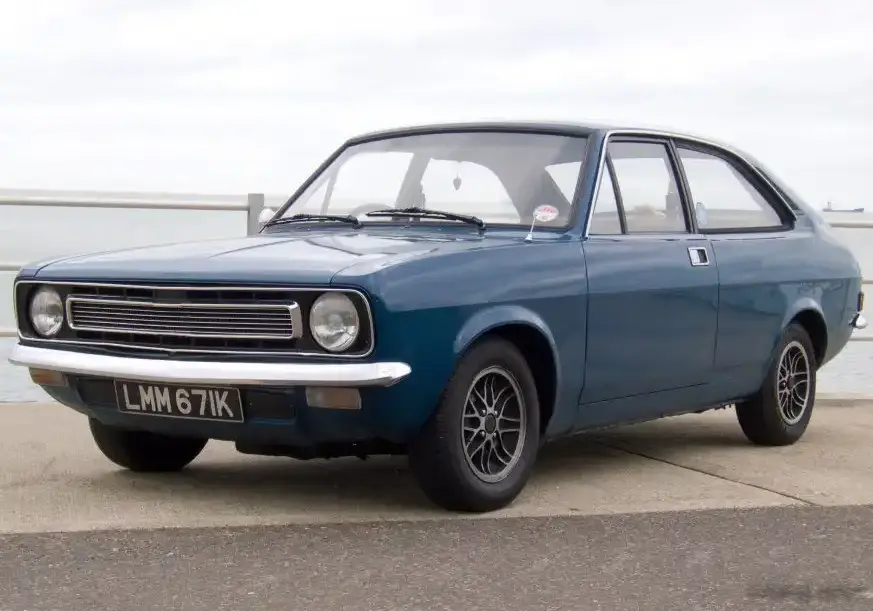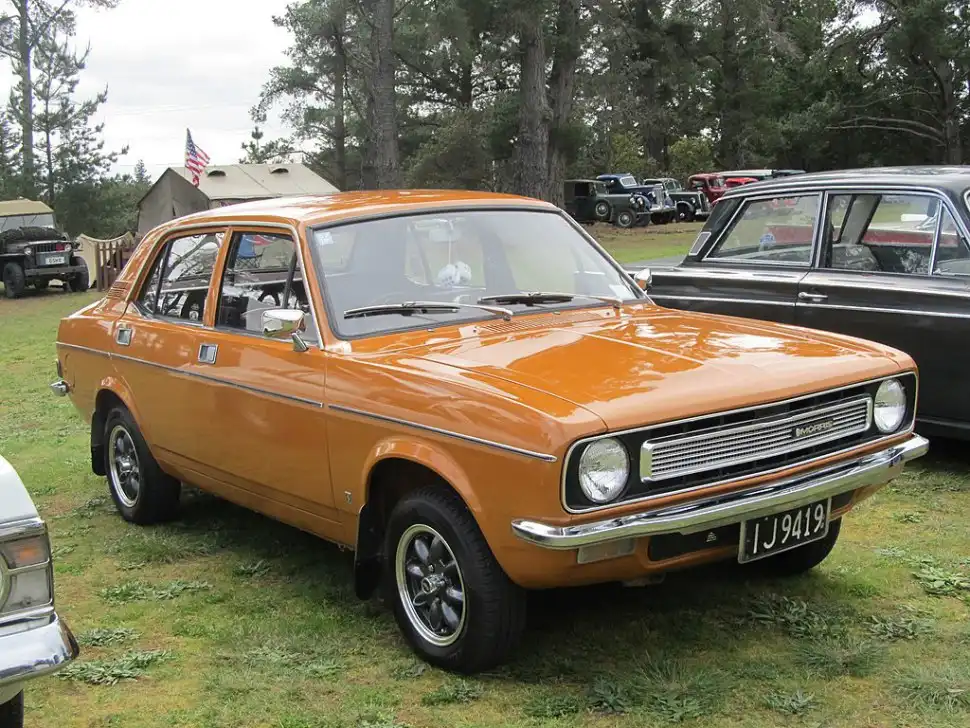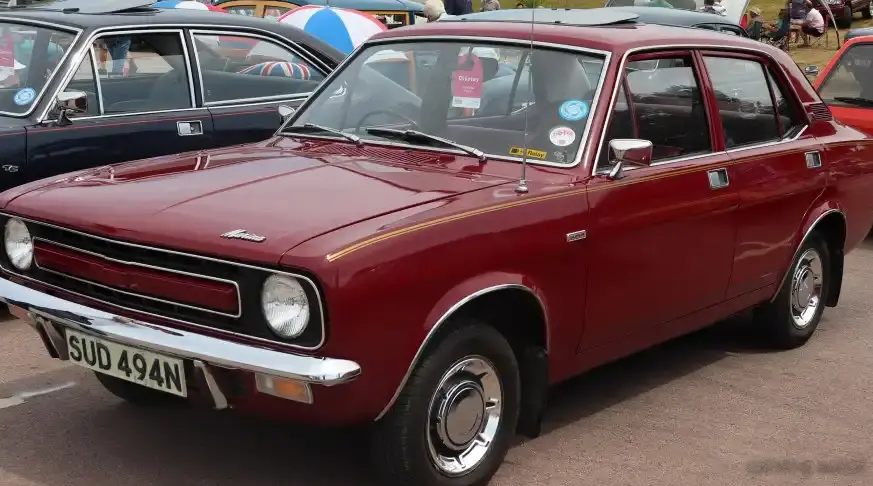
The Morris Marina 1.8 TC, produced between 1971 and 1975, represented a significant offering in the British Leyland lineup. Positioned as a mid-range variant within the broader Marina I series, it aimed to provide a balance of performance and affordability in the competitive family car segment. The Marina was intended to consolidate several existing models under a single, modern banner, and the 1.8 TC, with its 95 horsepower engine, was a key component of that strategy. It was built on the ADO17 platform, a design intended to replace a multitude of aging models from both Morris and Austin.
Technical Specifications
| Brand | Morris |
| Model | Marina |
| Generation | Marina I |
| Type (Engine) | 1.8 TC (95 Hp) |
| Start of production | 1971 |
| End of production | 1975 |
| Powertrain Architecture | Internal Combustion engine |
| Body type | Sedan |
| Seats | 5 |
| Doors | 5 |
| Fuel Type | Petrol (Gasoline) |
| Acceleration 0 – 100 km/h | 13.7 sec |
| Acceleration 0 – 62 mph | 13.7 sec |
| Acceleration 0 – 60 mph | 13 sec |
| Maximum speed | 153 km/h (95.07 mph) |
| Weight-to-power ratio | 9.7 kg/Hp, 102.7 Hp/tonne |
| Weight-to-torque ratio | 6.9 kg/Nm, 144.9 Nm/tonne |
| Power | 95 Hp @ 5200 rpm |
| Power per litre | 52.8 Hp/l |
| Torque | 134 Nm (98.83 lb.-ft.) |
| Engine layout | Front, Longitudinal |
| Engine displacement | 1799 cm3 (109.78 cu. in.) |
| Number of cylinders | 4 |
| Engine configuration | Inline |
| Cylinder Bore | 80.26 mm (3.16 in.) |
| Piston Stroke | 88.9 mm (3.5 in.) |
| Compression ratio | 9:1 |
| Number of valves per cylinder | 2 |
| Fuel injection system | Carburettor |
| Engine aspiration | Naturally aspirated engine |
| Kerb Weight | 925 kg (2039.28 lbs.) |
| Fuel tank capacity | 52 l (13.74 US gal | 11.44 UK gal) |
| Length | 4150 mm (163.39 in.) |
| Width | 1650 mm (64.96 in.) |
| Height | 1410 mm (55.51 in.) |
| Wheelbase | 2440 mm (96.06 in.) |
| Drivetrain Architecture | The Internal combustion engine (ICE) drives the rear wheels of the vehicle. |
| Drive wheel | Rear wheel drive |
| Number of gears and type of gearbox | 4 gears, manual transmission |
| Front brakes | Disc |
| Rear brakes | Drum |
| Steering type | Steering rack and pinion |
Powertrain & Engine Architecture
The heart of the Marina 1.8 TC was the 1799cc inline-four cylinder engine. This engine, often referred to as the ‘B’ series, was a relatively simple and robust design. It featured a cast iron block and cylinder head, with a two-valve per cylinder configuration. Fuel delivery was handled by a single Zenith 36mm carburetor, a common setup for the time. The engine’s 95 horsepower output at 5200 rpm and 134 Nm (98.83 lb-ft) of torque were respectable for a family saloon of this era. The engine was mounted longitudinally in the front of the vehicle, driving the rear wheels. The four-speed manual transmission was a standard feature, providing a straightforward driving experience. While an automatic transmission was offered on other Marina models, it wasn’t typically paired with the 1.8 TC engine.
Driving Characteristics
The Marina 1.8 TC offered a fairly typical driving experience for a British saloon of the early 1970s. Acceleration was adequate, with a 0-60 mph time of around 13 seconds, but it wasn’t particularly sporty. The engine provided sufficient power for everyday driving and cruising on motorways, but it lacked the punch of the larger 2.0-litre versions. The rear-wheel-drive configuration provided a balanced feel, although the car’s relatively soft suspension meant that it wasn’t particularly engaging in corners. The four-speed gearbox offered a reasonable spread of ratios, but it wasn’t known for its precision. Compared to the more basic 1.3-litre Marina models, the 1.8 TC offered a noticeable improvement in performance, making it a more suitable choice for drivers who frequently carried passengers or drove on hilly terrain.
Equipment & Trim Levels
The 1.8 TC trim level generally offered a step up in comfort and convenience compared to the base models. Standard features typically included cloth upholstery, a wood-effect dashboard trim, and a basic AM radio. Optional extras included a vinyl roof, heated rear window, and a more sophisticated radio with additional speakers. The interior was functional and reasonably well-appointed for the price point, but it lacked the refinement of some of its European competitors. The Marina 1.8 TC was positioned as a practical and affordable family car, and its equipment levels reflected that.
Chassis & Braking
The Marina I featured a conventional chassis layout with independent front suspension using coil springs and a live axle with leaf springs at the rear. The front brakes were disc brakes, providing adequate stopping power, while the rear brakes were drums. Steering was via a rack and pinion system, offering reasonable precision. The suspension was tuned for comfort rather than handling, resulting in a relatively soft ride. The car’s weight of around 925 kg (2039.28 lbs) contributed to its manageable handling characteristics. Stabilizer bars were not standard equipment on the 1.8 TC, which further emphasized the car’s comfort-oriented setup.
Market Reception & Comparison
The Morris Marina received a mixed reception from automotive critics. While it was praised for its spacious interior and affordability, it was often criticized for its bland styling and somewhat agricultural driving experience. The 1.8 TC variant was generally considered to be a good compromise between performance and economy. It offered a noticeable improvement in performance over the smaller-engined models, without the higher running costs of the larger 2.0-litre versions. Compared to rivals such as the Ford Cortina and Vauxhall Victor, the Marina 1.8 TC offered a competitive price point and a reasonable level of equipment. However, it lacked the sophistication and refinement of some of its competitors.
Legacy
The Morris Marina, despite its shortcomings, was a commercially successful car, selling over 800,000 units during its production run. The 1.8 TC engine proved to be relatively reliable, although it was prone to overheating if not properly maintained. Today, the Marina 1.8 TC is a relatively rare sight on the roads, but it has a growing following among classic car enthusiasts. Parts availability can be a challenge, but the ‘B’ series engine is well-known and relatively easy to repair. The Marina represents a significant chapter in British automotive history, and the 1.8 TC variant remains a popular choice for those seeking a classic British saloon with a touch of practicality and affordability.