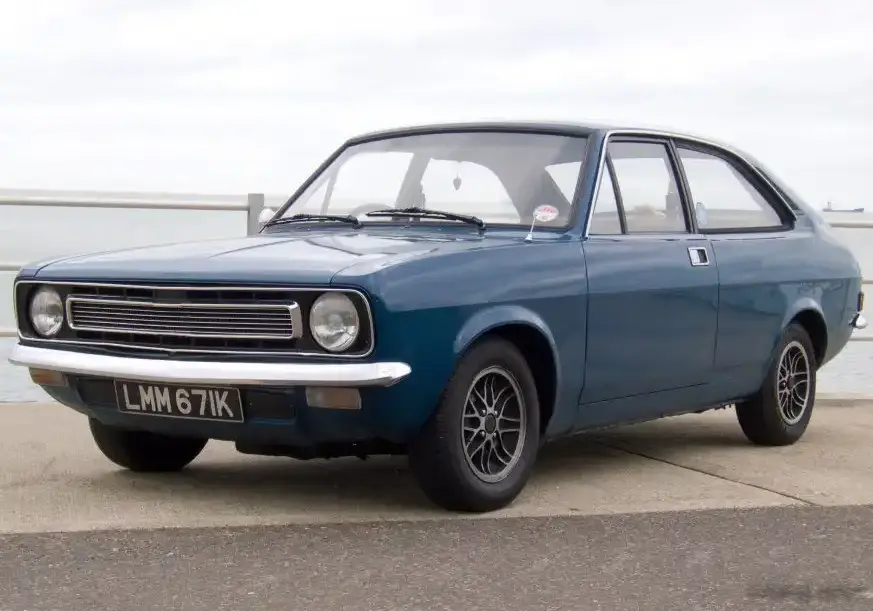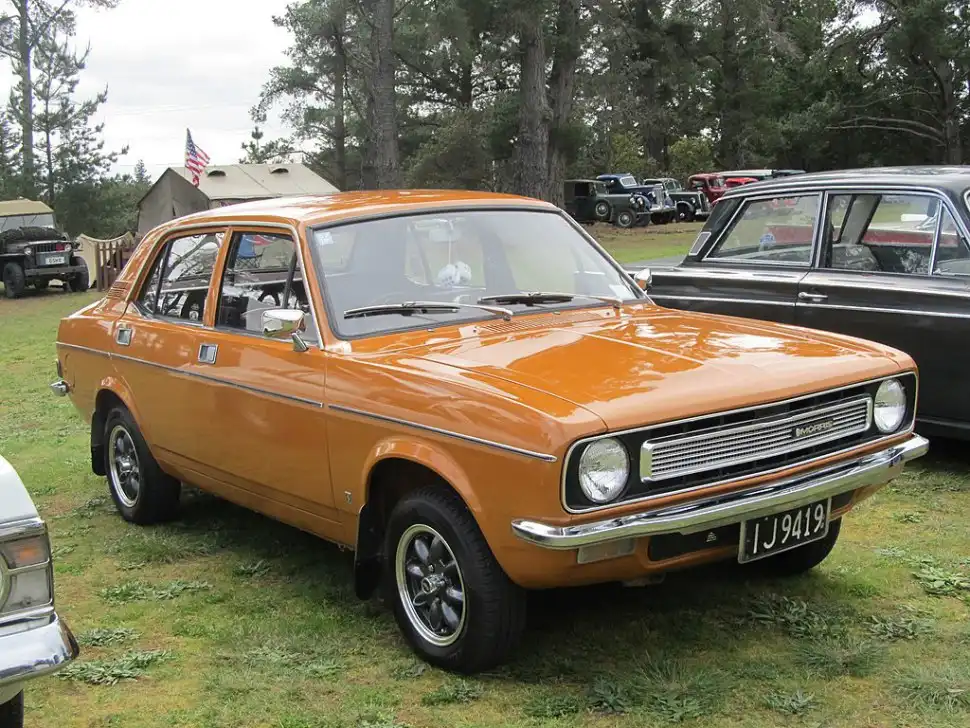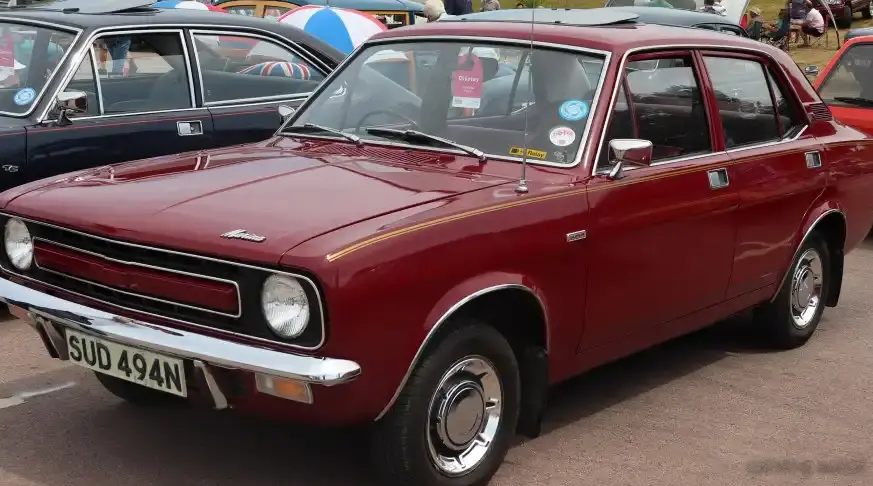
The Morris Marina 1300, produced between 1971 and 1975, represented a significant attempt by British Leyland to consolidate its small family car offerings. Positioned as the entry-level model within the Marina range, the 1300 was intended to provide affordable transportation for the mass market. It was a key component of British Leyland’s strategy to rationalize production and offer a modern, if somewhat controversial, alternative to established competitors like the Ford Cortina and Vauxhall Victor. The Marina, and specifically the 1300 variant, aimed to appeal to buyers seeking practicality and economy, though it often faced criticism regarding its styling and build quality.
Technical Specifications
| Brand | Morris |
| Model | Marina |
| Generation | Marina I |
| Type (Engine) | 1300 (60 Hp) |
| Start of Production | 1971 |
| End of Production | 1975 |
| Powertrain Architecture | Internal Combustion Engine |
| Body Type | Sedan |
| Fuel Type | Petrol (Gasoline) |
| Power | 60 Hp |
| Engine Aspiration | Naturally Aspirated |
Powertrain & Engine Architecture
The Morris Marina 1300 was powered by the A-Series engine, a 1275cc inline-four cylinder unit. This engine, while a long-standing design dating back to the Austin A30 in the 1950s, had undergone numerous revisions over the years. In its 1971-1975 Marina 1300 guise, it produced 60 horsepower at 5000 rpm. The engine featured a single Zenith 34WE carburetor, a relatively simple fuel delivery system chosen for its cost-effectiveness and ease of maintenance. The valvetrain employed a single overhead camshaft, operating two valves per cylinder. The engine block was cast iron, while the cylinder head was aluminum. The 1300 utilized a four-speed manual gearbox as standard, though a Borg-Warner three-speed automatic transmission was offered as an optional extra. The automatic transmission, while providing convenience, significantly impacted the car’s acceleration and fuel economy. The engine’s design prioritized durability and low-end torque over outright performance, making it suitable for everyday driving conditions.
Driving Characteristics
The Marina 1300, with its 60 horsepower, was not a performance car. Acceleration was modest, taking approximately 18 seconds to reach 60 mph. The four-speed manual gearbox allowed drivers to make the most of the available power, but the engine felt strained at higher speeds. The optional automatic transmission further dulled performance, resulting in sluggish acceleration and a noticeable lack of responsiveness. Gear ratios were geared towards economy rather than speed. Handling was generally considered adequate for the time, but the Marina’s suspension – independent front suspension with coil springs and a live axle rear suspension with leaf springs – offered a somewhat compromised ride quality. The car tended to exhibit body roll in corners, and the steering lacked precision. However, the relatively soft suspension did provide a degree of comfort on uneven road surfaces. The overall driving experience was best described as functional and uninspiring.
Equipment & Trim Levels
The Morris Marina 1300 was offered with a relatively basic level of equipment, reflecting its position as the entry-level model. Standard features included cloth upholstery, a basic instrument panel with speedometer and fuel gauge, and manually operated windows and door locks. The interior was typically finished in muted colors, such as beige or brown. Optional extras included a radio, heater, and upgraded upholstery. The trim level was fairly consistent across the 1300 range, with minor variations in interior color schemes and the availability of certain accessories. The dashboard layout was functional but lacked any real aesthetic appeal. The car’s interior was designed for practicality and durability rather than luxury or sophistication.
Chassis & Braking
The Morris Marina 1300 utilized a monocoque chassis construction, a relatively modern design for the early 1970s. The front suspension featured independent coil springs and wishbones, while the rear suspension employed a live axle with leaf springs. Braking was initially provided by Girling hydraulic disc brakes on the front wheels and drum brakes on the rear wheels. Later models saw the introduction of larger diameter drum brakes on the rear. The braking system was adequate for normal driving conditions, but lacked the stopping power of more modern cars. Steering was by a worm and sector mechanism, which provided a relatively heavy and imprecise feel. The car’s suspension setup prioritized ride comfort over handling precision, resulting in a somewhat wallowy ride. Stabilizer bars were not typically fitted to the standard 1300 model.
Market Reception & Comparison
The Morris Marina 1300 received a mixed reception from automotive critics. While it was praised for its affordability and practicality, it was often criticized for its styling, build quality, and lack of refinement. Compared to its rivals, such as the Ford Cortina and Vauxhall Victor, the Marina 1300 was generally considered to be less sophisticated and less enjoyable to drive. However, it offered a competitive price point, which appealed to budget-conscious buyers. Fuel economy was reasonable for the time, averaging around 35-40 mpg. Reliability was a concern, with reports of issues with the engine, transmission, and electrical system. The 1300 was often compared to the higher-spec Marina 1.75 models, which offered significantly more power and refinement, but at a higher price. The automatic transmission version of the 1300 was particularly criticized for its sluggish performance and poor fuel economy.
Legacy
The Morris Marina 1300, while not a resounding success, played an important role in the British automotive landscape of the early 1970s. It provided affordable transportation for a large segment of the population. Today, the Marina 1300 is a relatively rare sight on the roads, but it has gained a following among classic car enthusiasts. The A-Series engine is known for its durability and ease of maintenance, making it a popular choice for restoration projects. Parts availability is generally good, although some trim and interior components can be difficult to find. The car’s simple mechanical design makes it relatively easy to work on for amateur mechanics. While not a particularly desirable or valuable classic car, the Marina 1300 represents a significant piece of British automotive history, and a reminder of a time when affordability and practicality were paramount.