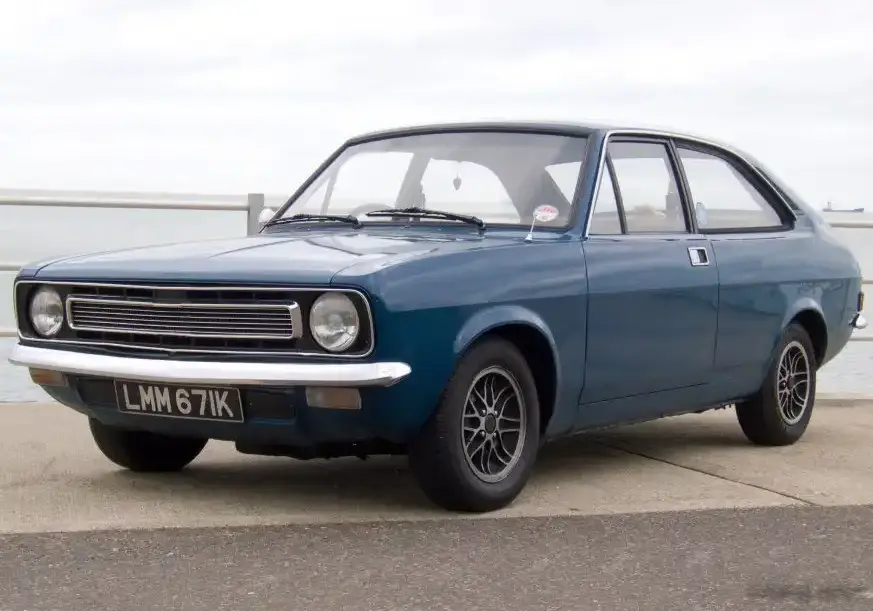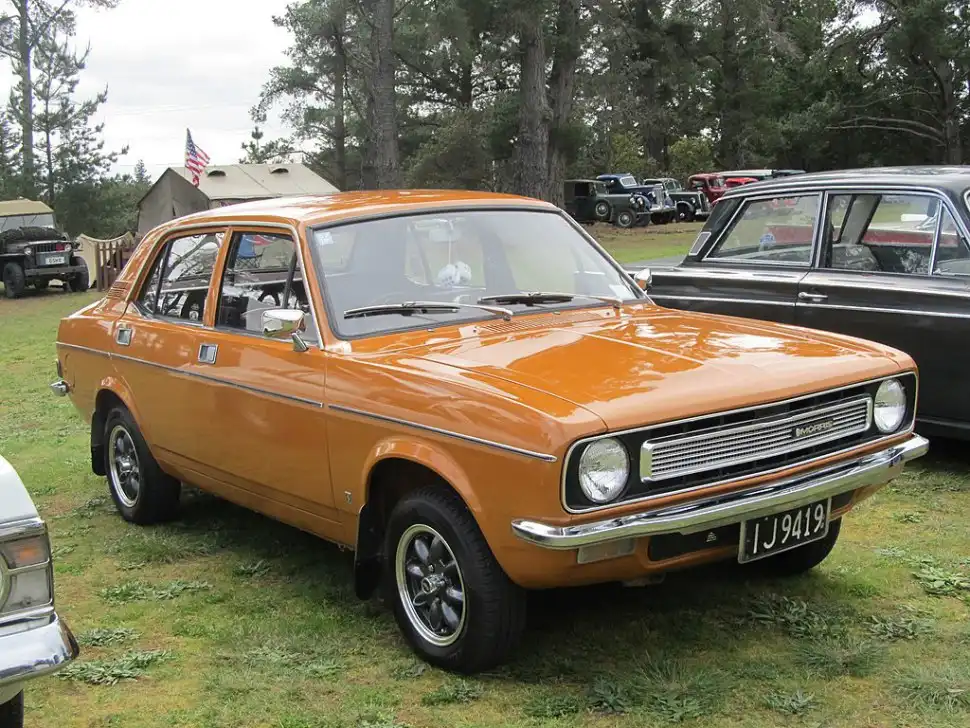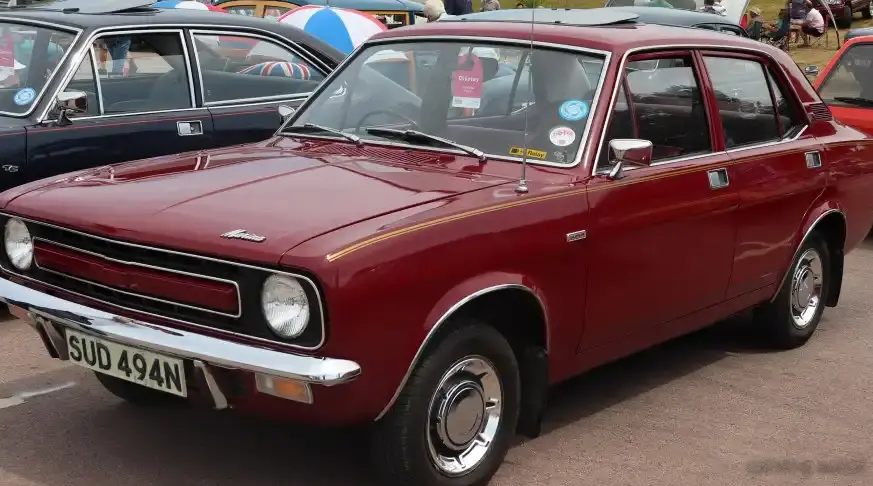
The Morris Marina 1800, produced between 1975 and 1978, represented a significant mid-range offering within the broader Morris Marina range. Launched as part of the Marina Mark I series (designated ADO28 internally by British Leyland), the 1800 aimed to provide a more refined and powerful alternative to the base models, appealing to buyers seeking a comfortable and capable family saloon. It occupied a position between the smaller-engined 1.3 and 1.5-liter variants and the more luxurious and expensive 1.75 and 2.0-liter models. The Marina, intended as a modern replacement for the aging Morris Minor and Riley One-Point-Five, was a crucial model for British Leyland during a period of significant industrial and economic challenges.
Technical Specifications
| Brand | Morris |
| Model | Marina |
| Generation | Marina I |
| Type (Engine) | 1800 (73 Hp) |
| Start of Production | 1975 |
| End of Production | 1978 |
| Powertrain Architecture | Internal Combustion Engine |
| Body Type | Sedan |
| Fuel Type | Petrol (Gasoline) |
| Power | 73 Hp |
| Engine Aspiration | Naturally Aspirated |
Powertrain & Engine Architecture
The Morris Marina 1800 was powered by the B-Series engine, specifically the 1798cc (approximately 1.8 liters) four-cylinder unit. This engine, a long-running and widely used design within the British Leyland portfolio, was known for its robustness and relative simplicity. The 1800 version featured a single Zenith 36mm carburetor, providing fuel delivery. The engine utilized a pushrod valvetrain, with two valves per cylinder, and a relatively low compression ratio (typically around 8.5:1) to accommodate the available fuel quality of the time. The 73 horsepower output was achieved at 5000 rpm, with peak torque of approximately 109 lb-ft at 3000 rpm. The Marina 1800 was typically paired with a four-speed manual gearbox, but a Borg-Warner three-speed automatic transmission was also offered, and it’s this automatic configuration that defines this specific variant. The automatic transmission, while offering convenience, did impact acceleration and fuel economy compared to the manual version.
Driving Characteristics
The Marina 1800 Automatic offered a comfortable, if not particularly sporty, driving experience. The automatic transmission provided smooth, if somewhat leisurely, gear changes. Acceleration was adequate for everyday driving, but the 73 horsepower and the weight of the vehicle (around 2,400 lbs) meant that overtaking required careful planning. The gear ratios in the automatic transmission were geared towards fuel efficiency and cruising comfort rather than outright performance. Compared to the manual transmission version, the automatic suffered a noticeable performance deficit. The 1.75 and 2.0-liter Marina models, with their higher power outputs, offered significantly more spirited performance. Handling was generally considered safe and predictable, but the Marina’s suspension – consisting of independent front suspension with coil springs and a live axle rear suspension with leaf springs – wasn’t particularly sophisticated, resulting in a somewhat bouncy ride, especially on uneven surfaces. Steering was by a recirculating ball system, which lacked the precision of more modern rack-and-pinion setups.
Equipment & Trim Levels
The Morris Marina 1800 Automatic typically came equipped with a reasonable level of standard features for its time. These included cloth upholstery, a heater, and a basic instrument panel with speedometer, fuel gauge, and temperature gauge. The trim level was generally considered to be a step above the base Marina models, with slightly more refined interior materials and detailing. Optional extras included a radio, a vinyl roof, and upgraded seat fabrics. The dashboard layout was functional but somewhat dated, even when the Marina was new. The interior space was generous for a car of its size, offering comfortable seating for five adults. The automatic transmission selector was column-mounted, a common feature on American cars of the era, and carried over to the Marina.
Chassis & Braking
The Morris Marina utilized a body-on-frame construction, which contributed to its relatively robust build but also added to its weight. The front suspension featured independent wishbones and coil springs, while the rear suspension employed a live axle with leaf springs. Braking was initially provided by Girling hydraulic disc brakes on the front wheels and drum brakes on the rear wheels. Later models saw the introduction of rear disc brakes on some trims, but the 1800 Automatic typically retained the rear drum setup. The braking system was adequate for normal driving conditions, but lacked the stopping power of more modern cars. Steering was by a recirculating ball mechanism, offering relatively light steering effort but limited feedback. Stabilizer bars were fitted to both the front and rear axles to reduce body roll during cornering.
Market Reception & Comparison
The Morris Marina 1800 Automatic received mixed reviews from automotive critics. While praised for its comfortable ride and spacious interior, it was often criticized for its lack of performance, particularly with the automatic transmission. Compared to its rivals, such as the Ford Cortina and Vauxhall Victor, the Marina was often seen as being less refined and less dynamically engaging. However, it offered a competitive price point and a reputation for reliability, which appealed to budget-conscious buyers. Fuel economy was reasonable for the time, averaging around 25-30 mpg, but was lower than that of the manual transmission version. The 1.75 and 2.0-liter Marina models offered significantly better performance, but at a higher price. The 1.3 and 1.5-liter models were more fuel-efficient but lacked the power of the 1800.
Legacy
The Morris Marina, despite its shortcomings, sold in significant numbers during its production run. The 1800 Automatic, while not the most popular version, provided a comfortable and convenient option for buyers seeking a family saloon. Today, the Morris Marina is considered a classic car, and well-maintained examples are sought after by enthusiasts. The B-Series engine, in particular, is known for its durability and ease of maintenance. However, rust is a common problem with Marinas, and finding a rust-free example can be challenging. The automatic transmission, while reliable, can be prone to wear and tear with age. The Marina’s legacy lies in its role as a mass-market family car that provided affordable transportation for a generation of British motorists, and its place as a representative of British Leyland’s ambitious, if ultimately troubled, era.