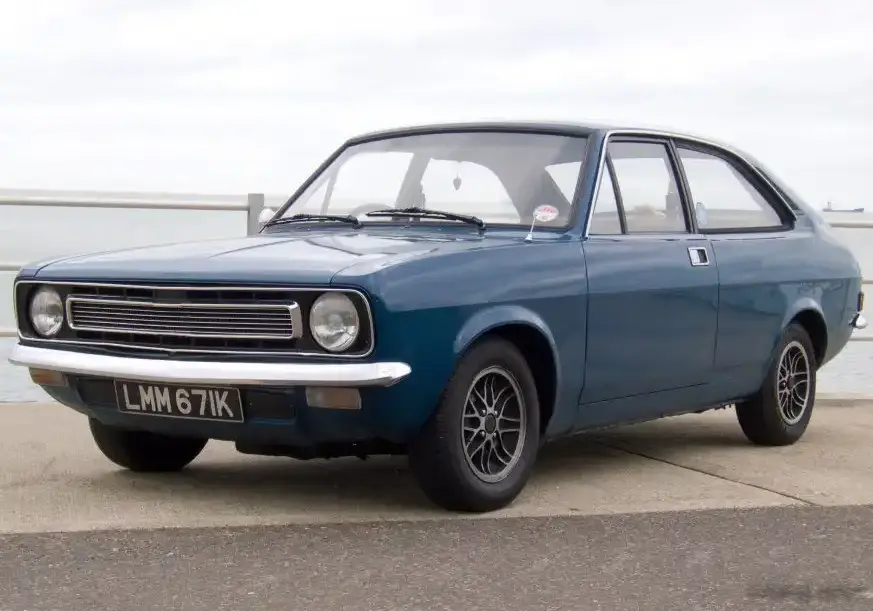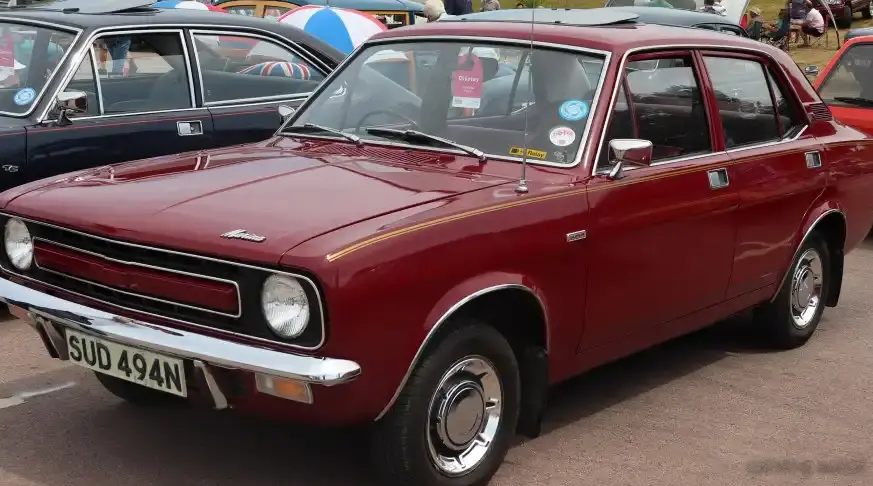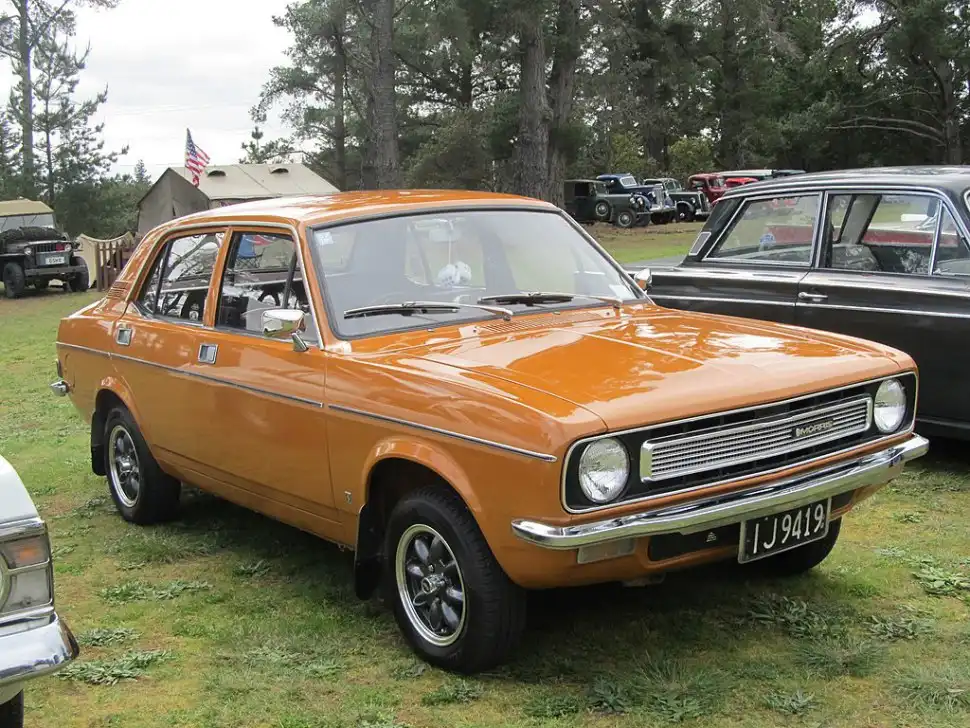
The Morris Marina II 1750 (ZA), producing 79 horsepower, was a variant of the popular British family saloon produced between 1975 and 1978. Positioned as a mid-range offering within the Marina II lineup, it aimed to provide a balance between affordability, practicality, and a degree of performance that the lower-powered models lacked. The Marina II, itself a significant update to the original Morris Marina launched in 1971, was a product of British Leyland’s attempt to rationalize its diverse range of vehicles. It was built on the ADO17 platform, a design intended to replace several older models across the BLMC portfolio, including the Morris Minor, Austin Cambridge, and Wolseley 18/85. The 1750 ZA model represented a step up from the base 1.3-liter engines, offering a larger displacement and increased power output, appealing to buyers who needed a car capable of handling longer journeys and carrying heavier loads.
Technical Specifications
| Brand | Morris |
| Model | Marina |
| Generation | Marina II |
| Type (Engine) | 1750 (ZA) (79 Hp) |
| Start of Production | 1975 |
| End of Production | 1978 |
| Powertrain Architecture | Internal Combustion Engine |
| Body Type | Sedan |
| Fuel Type | Petrol (Gasoline) |
| Power | 79 Hp |
| Engine Aspiration | Naturally Aspirated |
Powertrain & Engine Architecture
The heart of the Marina II 1750 ZA was the 1750cc (1.75-liter) ‘E’ series inline-four engine. This engine, designated as the ‘ZA’ variant, was a naturally aspirated, overhead valve (OHV) design. It featured a cast iron block and cylinder head, a relatively common configuration for British engines of the era. The engine utilized a single Zenith 36mm carburetor for fuel delivery, a system known for its simplicity but also for its potential for tuning challenges. The engine’s 79 horsepower output was achieved at 5,000 rpm, with peak torque of approximately 109 lb-ft at 3,000 rpm. This torque figure, while modest by modern standards, provided reasonable pulling power for a vehicle of the Marina’s weight. The engine was typically paired with a four-speed manual gearbox, but the variant in question utilized a Borg-Warner three-speed automatic transmission. This automatic was a key differentiator, targeting buyers who prioritized ease of driving over outright performance. The automatic transmission, while offering convenience, did impact acceleration and fuel economy compared to the manual versions.
Driving Characteristics
The Marina II 1750 ZA with the automatic transmission offered a comfortable, if not particularly exhilarating, driving experience. The three-speed automatic gearbox provided smooth, if somewhat slow, gear changes. Acceleration from a standstill was adequate for typical urban driving, but overtaking maneuvers on highways required careful planning. The gear ratios were optimized for cruising rather than rapid acceleration. The Marina’s suspension, consisting of independent front suspension with coil springs and a live axle rear suspension with leaf springs, provided a reasonably comfortable ride, absorbing bumps and imperfections in the road surface effectively. However, the live axle rear end could exhibit some axle tramp under hard acceleration or on uneven surfaces. Steering was by a recirculating ball system, which offered a degree of feel but lacked the precision of more modern rack-and-pinion setups. Compared to the 1.3-liter Marina II, the 1750 ZA offered noticeably improved performance, particularly when fully loaded or tackling inclines. However, it couldn’t match the responsiveness of the more powerful 2.0-liter versions.
Equipment & Trim Levels
The 1750 ZA trim level generally sat in the middle of the Marina II range. Standard equipment included cloth upholstery, a heater, and basic instrumentation consisting of a speedometer, fuel gauge, and temperature gauge. The interior was functional and durable, reflecting the car’s intended role as a practical family vehicle. Optional extras included a radio, upgraded upholstery, a vinyl roof, and a heated rear window. The dashboard layout was straightforward, with clearly labeled controls. The 1750 ZA typically featured a woodgrain effect on the dashboard trim, adding a touch of visual appeal. Exterior features included chrome bumpers, brightwork around the windows, and often, hubcaps. The overall impression was one of understated practicality rather than luxury.
Chassis & Braking
The Marina II utilized a body-on-frame construction, a relatively traditional approach for the time. The chassis was robust and provided a solid foundation for the vehicle. Front suspension consisted of independent wishbones with coil springs and an anti-roll bar. The rear suspension employed a live axle with leaf springs. Braking was initially provided by Girling hydraulic disc brakes on the front wheels and drum brakes on the rear wheels. Later models saw the introduction of rear disc brakes on some variants, but the 1750 ZA typically retained the drum setup. The braking system was adequate for normal driving conditions, but lacked the stopping power of more modern systems. Steering was by a recirculating ball mechanism, offering reasonable feedback but requiring a fair amount of effort, particularly at low speeds.
Market Reception & Comparison
The Morris Marina II 1750 ZA received mixed reviews from automotive critics. While praised for its improved performance compared to the smaller-engined models, it was often criticized for its somewhat dated design and lack of refinement. The automatic transmission was seen as a positive feature by some, but others found it to be sluggish and inefficient. Compared to rivals such as the Ford Cortina and Vauxhall Victor, the Marina II was often perceived as being less sophisticated. However, it offered a competitive price point and a reputation for reliability, making it a popular choice among budget-conscious buyers. Fuel economy for the 1750 ZA automatic was around 22-26 mpg, which was typical for a car of its size and engine capacity in the 1970s. The manual transmission versions offered slightly better fuel economy. Maintenance costs were generally reasonable, thanks to the engine’s relatively simple design and the widespread availability of spare parts.
Legacy
The Morris Marina II, and the 1750 ZA variant specifically, holds a nostalgic place in the hearts of many British car enthusiasts. While not a groundbreaking vehicle, it represented a significant effort by British Leyland to modernize its product range. The ‘E’ series engine, while not known for its high performance, proved to be a durable and reliable unit when properly maintained. Today, the Marina II 1750 ZA is a relatively affordable classic car, appealing to those seeking a taste of 1970s motoring. Parts availability is generally good, although some trim items can be difficult to find. The automatic transmission versions, while less sought after by performance enthusiasts, offer a unique and comfortable driving experience. Well-maintained examples are becoming increasingly rare, making them a potentially good investment for collectors. The car serves as a reminder of a bygone era of British automotive manufacturing, and its enduring popularity is a testament to its practicality and affordability.