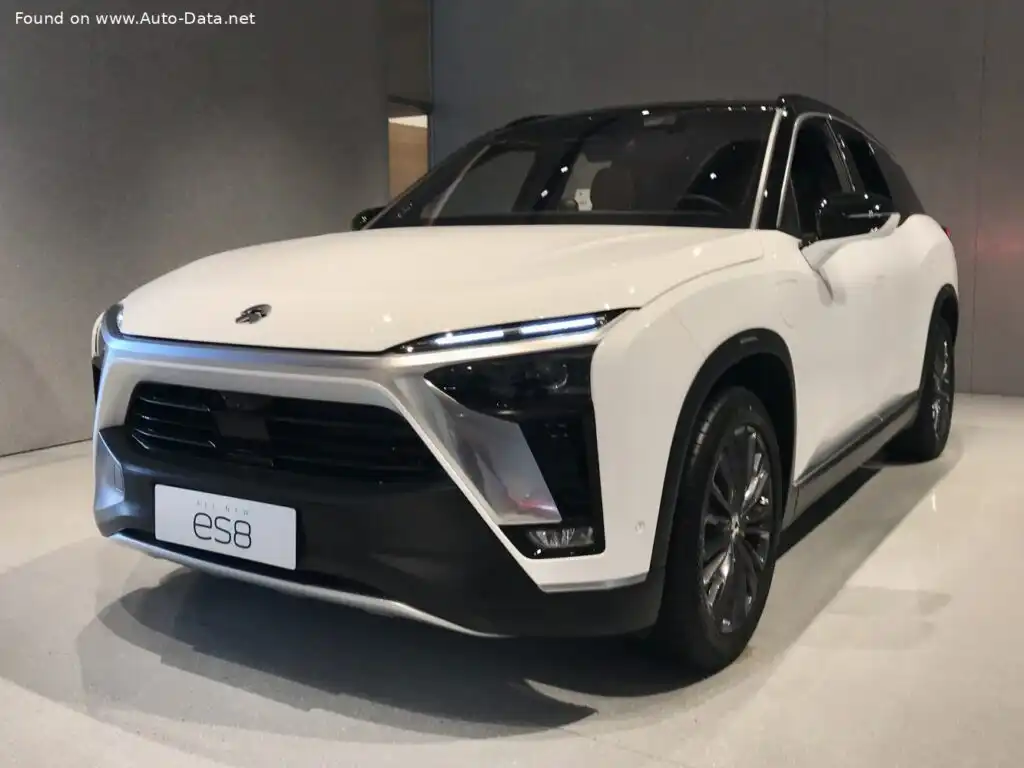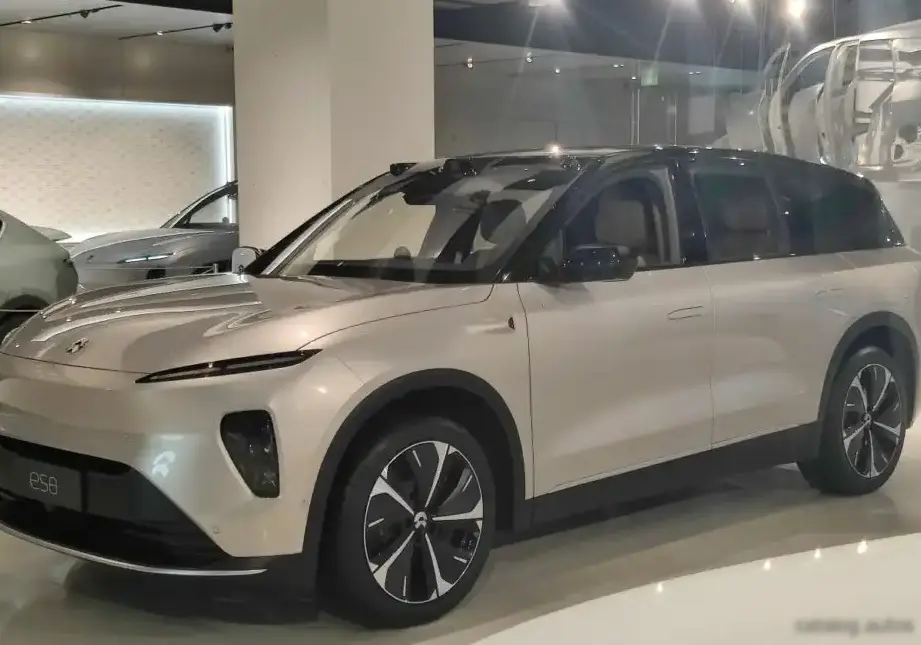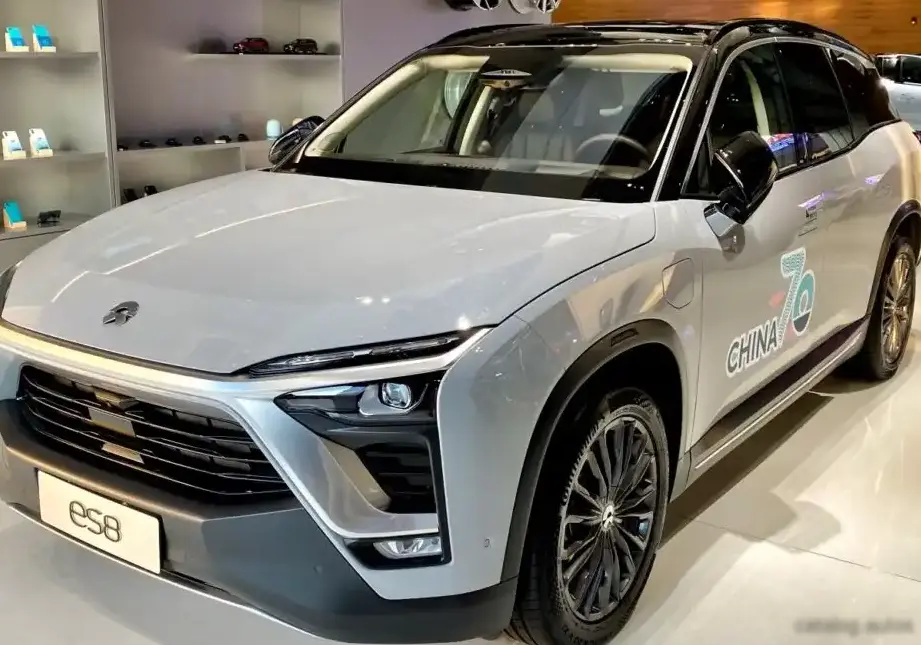
The NIO ES8, launched in 2018, represents a pivotal moment for the Chinese automaker as its first production model and a direct challenge to established luxury electric SUV manufacturers like Tesla. The ES8 I 70 kWh (653 Hp) 4WD Electric variant, produced from 2018 to 2020, served as the initial offering, establishing the brand’s commitment to high-performance, long-range electric vehicles. Positioned as a premium, technologically advanced SUV, the ES8 aimed to deliver a compelling alternative within the burgeoning electric vehicle market, particularly in China, and later, with expansion plans, internationally. It was designed to accommodate up to seven passengers, blending spaciousness with cutting-edge electric vehicle technology.
Technical Specifications
| Brand | NIO |
| Model | ES8 |
| Generation | ES8 I |
| Type (Engine) | 70 kWh (653 Hp) 4WD Electric |
| Start of production | 2018 |
| End of production | 2020 |
| Powertrain Architecture | BEV (Electric Vehicle) |
| Body type | SUV |
| Seats | 6-7 |
| Doors | 5 |
| Fuel Type | Electricity |
| Acceleration 0 – 100 km/h | 4.4 sec |
| Acceleration 0 – 62 mph | 4.4 sec |
| Acceleration 0 – 60 mph | 4.2 sec |
| Maximum speed | 200 km/h (124.27 mph) |
| Weight-to-power ratio | 3.8 kg/Hp, 265.4 Hp/tonne |
| Weight-to-torque ratio | 2.9 kg/Nm, 341.5 Nm/tonne |
| Gross battery capacity | 70 kWh |
| Battery technology | Lithium-ion (Li-Ion) |
| Battery location | Below the floor |
| All-electric range | 355 km (220.59 mi) |
| System power | 653 Hp |
| System torque | 840 Nm (619.55 lb.-ft.) |
| Kerb Weight | 2460 kg (5423.37 lbs.) |
| Trunk (boot) space – minimum | 312 l (11.02 cu. ft.) |
| Length | 5022 mm (197.72 in.) |
| Width | 1962 mm (77.24 in.) |
| Height | 1756 mm (69.13 in.) |
| Wheelbase | 3010 mm (118.5 in.) |
| Ride height (ground clearance) | 170 mm (6.69 in.) |
| Drivetrain Architecture | One electric motor drives the front wheels, one electric motor drives the rear wheels. |
| Drive wheel | All wheel drive (4×4) |
| Number of gears and type of gearbox | 1 gears, automatic transmission |
| Front suspension | Double wishbone |
| Rear suspension | Independent multi-link suspension |
| Front brakes | Ventilated discs |
| Rear brakes | Ventilated discs |
| Assisting systems | ABS (Anti-lock braking system) |
| Steering type | Steering rack and pinion |
| Power steering | Electric Steering |
| Tires size | 255/55 R19 |
| Wheel rims size | 19 |
Powertrain & Engine Architecture
The ES8 I 70 kWh utilizes a dual-motor all-wheel-drive (AWD) powertrain, a core element of NIO’s early electric vehicle strategy. Each axle is powered by a permanent magnet synchronous motor, delivering instant torque and responsive acceleration. The 70 kWh lithium-ion battery pack is mounted beneath the vehicle floor, contributing to a low center of gravity and improved handling. The battery employs a sophisticated thermal management system to maintain optimal operating temperatures, crucial for both performance and longevity. The vehicle features a single-speed automatic transmission, typical of electric vehicles, simplifying the drivetrain and maximizing efficiency. The electronic control unit (ECU) manages power distribution between the front and rear motors, optimizing traction and stability in various driving conditions. The system power output of 653 Hp and 840 Nm (619.55 lb.-ft.) of torque provides brisk acceleration, with a 0-60 mph time of approximately 4.2 seconds.
Driving Characteristics
The ES8 I 70 kWh delivers a driving experience characterized by smooth, near-silent acceleration and confident handling. The dual-motor AWD system provides excellent traction, particularly in inclement weather. The low center of gravity, thanks to the underfloor battery pack, minimizes body roll during cornering. While the 70 kWh battery offered a respectable range of 355 km (220.59 mi), it was later superseded by larger battery packs offering extended range. Compared to future ES8 variants with larger batteries and more powerful motors, the 70 kWh version offered a more balanced approach, prioritizing efficiency and affordability. The single-speed transmission provides seamless acceleration, eliminating the need for gear changes. Regenerative braking contributes to increased efficiency by capturing energy during deceleration.
Equipment & Trim Levels
The ES8 I 70 kWh was generously equipped, reflecting its positioning as a premium electric SUV. Standard features included a large touchscreen infotainment system, advanced driver-assistance systems (ADAS) such as adaptive cruise control and lane-keeping assist, and a panoramic sunroof. Interior upholstery typically consisted of high-quality leather, and the cabin was designed to accommodate up to seven passengers with flexible seating configurations. Optional extras included a premium sound system, upgraded interior trim materials, and NIO’s innovative battery swapping technology, allowing drivers to quickly exchange depleted batteries for fully charged ones at dedicated swapping stations. The ES8 also featured over-the-air (OTA) software updates, enabling continuous improvement and the addition of new features.
Chassis & Braking
The ES8 I 70 kWh features a double wishbone front suspension and an independent multi-link rear suspension, providing a comfortable and controlled ride. Ventilated disc brakes on all four wheels ensure strong stopping power. The electronic stability control (ESC) system works in conjunction with the anti-lock braking system (ABS) to maintain stability during emergency braking maneuvers. The steering system is an electric power-assisted rack and pinion setup, offering precise and responsive steering feel. The vehicle’s relatively high curb weight of 2460 kg (5423.37 lbs.) necessitates a robust suspension and braking system to maintain optimal handling and safety.
Market Reception & Comparison
The NIO ES8 was generally well-received by critics, who praised its spacious interior, advanced technology, and impressive performance. However, the initial 70 kWh variant’s range was considered a limitation compared to some competitors, such as the Tesla Model X. The ES8’s pricing positioned it competitively within the luxury electric SUV segment. Compared to other ES8 variants, the 70 kWh model offered a more accessible entry point into the NIO brand, appealing to buyers who prioritized value and efficiency over maximum range and performance. The vehicle’s unique features, such as the battery swapping technology, also garnered positive attention.
Legacy
The ES8 I 70 kWh served as a crucial stepping stone for NIO, establishing the brand as a serious contender in the electric vehicle market. While the 70 kWh variant was relatively short-lived, it paved the way for subsequent ES8 models with larger batteries and improved performance. Today, used ES8 I 70 kWh models represent an affordable entry point into the NIO ecosystem. The powertrain has proven to be generally reliable, although battery degradation is a common concern with all electric vehicles. The ES8’s innovative features and luxurious interior continue to appeal to buyers seeking a technologically advanced and spacious electric SUV.