
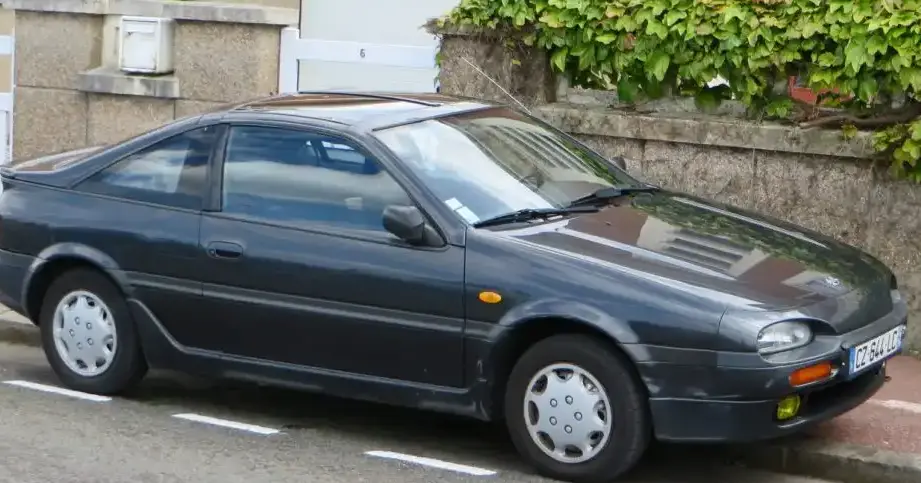
The Nissan 100 NX (B13) 1.6, equipped with a 90 horsepower engine and automatic transmission, was a compact coupe produced between 1990 and 1994. Positioned as an entry-level offering within the 100 NX range, it aimed to provide affordable and stylish transportation, particularly appealing to younger drivers and those seeking a fuel-efficient city car. The B13 generation 100 NX represented Nissan’s attempt to recapture the spirit of the original Datsun Cherry Coupe, offering a distinctive design and a focus on driver enjoyment. It was primarily sold in European and Asian markets, with limited availability in North America.
Technical Specifications
| Brand | Nissan |
| Model | 100 NX |
| Generation | 100 NX (B13) |
| Type (Engine) | 1.6 (90 Hp) Automatic |
| Start of production | 1990 |
| End of production | 1994 |
| Powertrain Architecture | Internal Combustion engine |
| Body type | Coupe |
| Seats | 4 |
| Doors | 2 |
| Fuel consumption (urban) | 7.2 l/100 km (32.7 US mpg) |
| Fuel consumption (extra urban) | 5.3 l/100 km (44.4 US mpg) |
| Fuel consumption (combined) | 6.2 l/100 km (37.9 US mpg) |
| Fuel Type | Petrol (Gasoline) |
| Acceleration 0 – 100 km/h | 10.7 sec |
| Acceleration 0 – 62 mph | 10.7 sec |
| Acceleration 0 – 60 mph | 10.2 sec |
| Maximum speed | 185 km/h (114.95 mph) |
| Weight-to-power ratio | 11.9 kg/Hp |
| Weight-to-torque ratio | 7.8 kg/Nm |
| Power | 90 Hp @ 6000 rpm |
| Torque | 136 Nm @ 4000 rpm (100.31 lb.-ft. @ 4000 rpm) |
| Engine layout | Front, Transverse |
| Engine Model/Code | GA16DS |
| Engine displacement | 1597 cm3 (97.45 cu. in.) |
| Number of cylinders | 4 |
| Engine configuration | Inline |
| Cylinder Bore | 76 mm (2.99 in.) |
| Piston Stroke | 88 mm (3.46 in.) |
| Compression ratio | 9.8:1 |
| Number of valves per cylinder | 4 |
| Fuel injection system | Multi-port manifold injection |
| Engine aspiration | Naturally aspirated engine |
| Valvetrain | DOHC |
| Engine oil capacity | 3.2 l (3.38 US qt | 2.82 UK qt) |
| Coolant capacity | 5.5 l (5.81 US qt | 4.84 UK qt) |
| Kerb Weight | 1067 kg (2352.33 lbs.) |
| Max. weight | 1459 kg (3216.54 lbs.) |
| Max load | 392 kg (864.21 lbs.) |
| Trunk (boot) space – minimum | 330 l (11.65 cu. ft.) |
| Fuel tank capacity | 50 l (13.21 US gal | 11 UK gal) |
| Length | 4135 mm (162.8 in.) |
| Width | 1680 mm (66.14 in.) |
| Height | 1315 mm (51.77 in.) |
| Wheelbase | 2430 mm (95.67 in.) |
| Front track | 1435 mm (56.5 in.) |
| Rear (Back) track | 1415 mm (55.71 in.) |
| Drivetrain Architecture | Front wheel drive |
| Number of gears and type of gearbox | 4 gears, automatic transmission |
| Front suspension | Wishbone |
| Rear suspension | Spring Strut |
| Front brakes | Ventilated discs |
| Rear brakes | Disc |
| Assisting systems | ABS (Anti-lock braking system) |
| Steering type | Steering rack and pinion |
| Power steering | Hydraulic Steering |
| Tires size | 175/65 R14 |
| Wheel rims size | 14 |
Powertrain & Engine Architecture
The 100 NX 1.6 Automatic utilized the GA16DS engine, a 1.6-liter inline-four cylinder powerplant. This engine featured a double overhead camshaft (DOHC) valvetrain and multi-point fuel injection. The GA16DS was known for its relatively smooth operation and decent fuel economy, but it wasn’t a particularly powerful engine. The automatic transmission was a four-speed unit, designed for ease of use rather than outright performance. This transmission, while reliable, contributed to a noticeable reduction in acceleration compared to the available five-speed manual gearbox. The engine’s 9.8:1 compression ratio was a compromise between efficiency and performance, typical for engines of this era.
Driving Characteristics
The 100 NX 1.6 Automatic offered a comfortable, if not exhilarating, driving experience. Acceleration from 0-60 mph took around 10.2 seconds, making it adequate for city driving and highway merging, but noticeably slower than the manual transmission or higher-powered variants. The automatic transmission’s gear ratios were geared towards fuel efficiency, resulting in a somewhat sluggish response during quick acceleration. The power delivery was linear, but the engine lacked the punch of the 2.0-liter models. Handling was generally good for a car of its class, with a relatively stable feel, but it wasn’t designed for sporty driving. The steering, while hydraulic, lacked significant feedback.
Equipment & Trim Levels
The 1.6 Automatic trim typically included features such as power steering, central locking, and electric front windows. Interior upholstery was usually cloth, with a relatively basic dashboard layout. Optional extras included air conditioning, a sunroof, and upgraded audio systems. The trim level was generally considered the base model, focusing on providing essential features at an affordable price point. Higher trim levels, often paired with the larger engines, offered more luxurious appointments like leather seats and alloy wheels.
Chassis & Braking
The 100 NX 1.6 Automatic featured a front-wheel-drive layout with independent wishbone suspension at the front and a spring strut rear suspension. Braking consisted of ventilated discs at the front and solid discs at the rear. Anti-lock Braking System (ABS) was often included as standard equipment, enhancing safety. The suspension setup was tuned for comfort, providing a reasonably smooth ride over uneven surfaces. The relatively light weight of the 1.6 model helped to compensate for the lower engine output, contributing to acceptable braking performance.
Market Reception & Comparison
The 1.6 Automatic variant of the 100 NX received mixed reviews. Critics generally praised its fuel efficiency and affordability, but criticized its lack of performance. Compared to the 2.0-liter models, the 1.6 Automatic was significantly slower and less engaging to drive. However, it offered a lower purchase price and better fuel economy. The 1.9 TDI diesel version, available in some markets, provided even better fuel economy but lacked the refinement of the gasoline engine. The 1.6 Automatic appealed to buyers prioritizing practicality and economy over sporty performance.
Legacy
The Nissan 100 NX 1.6 Automatic, while not a performance icon, remains a fondly remembered car for many. The GA16DS engine proved to be relatively reliable, and the automatic transmission, while not particularly advanced, was generally durable. Today, well-maintained examples are becoming increasingly sought after by classic car enthusiasts. Parts availability can be a challenge, but the relatively simple mechanical design makes it a viable project for home mechanics. The 100 NX represents a unique period in Nissan’s history, offering a blend of style, affordability, and practicality that appealed to a specific segment of the market.
