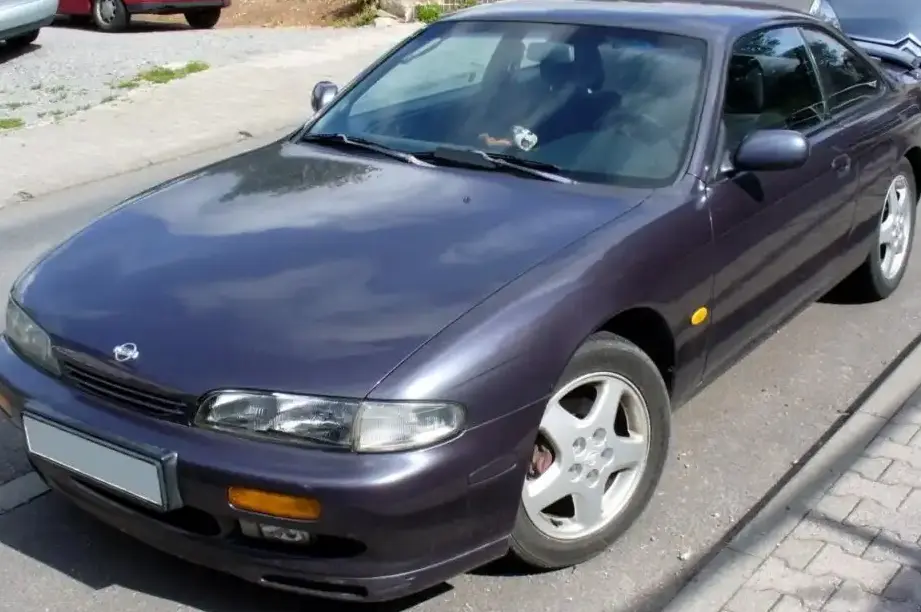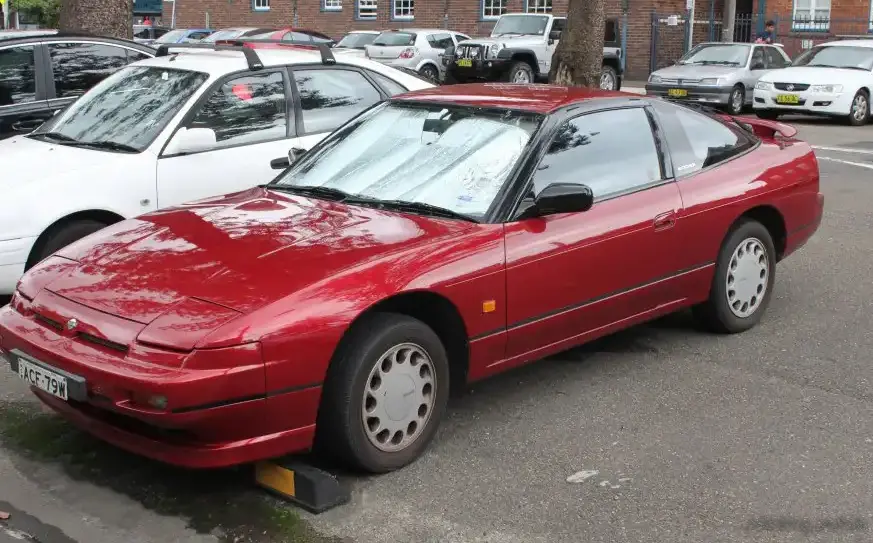
The Nissan 200 SX (S13) 1.8 Turbo with an automatic transmission, produced between 1988 and 1993, represents a unique configuration within the broader S13 chassis family. Positioned as a comfortable, yet still sporty, option, this variant aimed to broaden the 200 SX’s appeal beyond the enthusiast market typically drawn to the manual transmission models. The S13 generation, sold in North America as the 240 SX, was Nissan’s entry into the competitive compact sports coupe segment, and the 1.8 Turbo Automatic offered a blend of performance and convenience. It was built on the Nissan S platform, shared with models like the Bluebird and Primera, but tailored for a more dynamic driving experience.
Technical Specifications
| Brand | Nissan |
| Model | 200 SX |
| Generation | 200 SX (S13) |
| Type (Engine) | 1.8 Turbo (169 Hp) Automatic |
| Start of production | 1988 |
| End of production | 1993 |
| Powertrain Architecture | Internal Combustion engine |
| Body type | Coupe |
| Seats | 4 |
| Doors | 2 |
| Fuel consumption (combined) | 9.1 l/100 km |
| Fuel consumption (US mpg) | 25.8 US mpg |
| Fuel consumption (UK mpg) | 31 UK mpg |
| Fuel consumption (km/l) | 11 km/l |
| Fuel Type | Petrol (Gasoline) |
| Acceleration 0 – 100 km/h | 7.5 sec |
| Acceleration 0 – 62 mph | 7.5 sec |
| Acceleration 0 – 60 mph | 7.1 sec |
| Maximum speed | 220 km/h (136.7 mph) |
| Weight-to-power ratio | 7.2 kg/Hp |
| Weight-to-torque ratio | 5.4 kg/Nm |
| Power | 169 Hp @ 6400 rpm |
| Power per litre | 93.4 Hp/l |
| Torque | 224 Nm @ 4000 rpm (165.21 lb.-ft. @ 4000 rpm) |
| Engine layout | Front, Longitudinal |
| Engine Model/Code | CA18DET |
| Engine displacement | 1809 cm3 (110.39 cu. in.) |
| Number of cylinders | 4 |
| Engine configuration | Inline |
| Cylinder Bore | 83 mm (3.27 in.) |
| Piston Stroke | 83.6 mm (3.29 in.) |
| Compression ratio | 8.5:1 |
| Number of valves per cylinder | 4 |
| Fuel injection system | Multi-port manifold injection |
| Engine aspiration | Turbocharger |
| Valvetrain | DOHC |
| Engine oil capacity | 3.5 l (3.7 US qt | 3.08 UK qt) |
| Coolant capacity | 7 l (7.4 US qt | 6.16 UK qt) |
| Kerb Weight | 1220 kg (2689.64 lbs.) |
| Max. weight | 1675 kg (3692.74 lbs.) |
| Max load | 455 kg (1003.1 lbs.) |
| Trunk (boot) space – minimum | 320 l (11.3 cu. ft.) |
| Fuel tank capacity | 60 l (15.85 US gal | 13.2 UK gal) |
| Length | 4535 mm (178.54 in.) |
| Width | 1690 mm (66.54 in.) |
| Height | 1290 mm (50.79 in.) |
| Wheelbase | 2475 mm (97.44 in.) |
| Front track | 1465 mm (57.68 in.) |
| Rear (Back) track | 1465 mm (57.68 in.) |
| Drivetrain Architecture | Rear wheel drive |
| Number of gears | 4 |
| Gearbox type | Automatic transmission |
| Front suspension | Wishbone |
| Rear suspension | Spring Strut |
| Front brakes | Ventilated discs |
| Rear brakes | Disc |
| Assisting systems | ABS (Anti-lock braking system) |
| Steering type | Steering rack and pinion |
| Power steering | Hydraulic Steering |
| Tires size | 195/60 R15 |
| Wheel rims size | 15 |
Powertrain & Engine Architecture
The heart of the 200 SX 1.8 Turbo Automatic is the CA18DET engine, a 1.8-liter inline-four cylinder powerplant. This engine utilizes a single turbocharger with an intercooler to boost power output. The CA18DET features multi-port fuel injection, providing precise fuel delivery for improved efficiency and performance. The engine’s double overhead camshaft (DOHC) valvetrain, with four valves per cylinder, contributes to its relatively high specific output. The automatic transmission is a four-speed unit, designed to provide smooth shifts and ease of driving. While not known for its sporting character compared to the five-speed manual, it offered a more relaxed driving experience, particularly in urban environments. The transmission’s gear ratios were tuned for a balance of acceleration and fuel economy, prioritizing comfort over outright performance.
Driving Characteristics
The 1.8 Turbo Automatic 200 SX delivers a noticeably different driving experience compared to its manual counterparts. While the 169 horsepower and 165 lb-ft of torque are respectable, the automatic transmission introduces some inherent inefficiencies. Acceleration from a standstill is adequate, with a 0-60 mph time around 7.1 seconds, but lacks the immediacy of the manual. The automatic transmission tends to hunt for gears during spirited driving, and doesn’t offer the driver the same level of control. However, the automatic transmission makes the 200 SX more accessible to a wider range of drivers, and provides a more comfortable experience for long journeys. The rear-wheel-drive layout still provides a balanced chassis, but the automatic transmission diminishes the driver’s ability to exploit the car’s handling potential.
Equipment & Trim Levels
The 1.8 Turbo Automatic trim typically included features such as power windows, power locks, and a basic audio system. Interior upholstery was generally cloth, with options for upgraded materials available. Air conditioning was a common feature, and some models included a sunroof. The dashboard layout was functional and straightforward, prioritizing usability over aesthetic flair. Optional extras included upgraded sound systems, alloy wheels, and a limited-slip differential, though the latter was rare on automatic models. The trim level generally sat in the mid-range of the 200 SX lineup, offering a good balance of features and affordability.
Chassis & Braking
The S13 200 SX utilizes a wishbone front suspension and a spring strut rear suspension. The suspension setup is tuned for a compromise between comfort and handling. Braking duties are handled by ventilated discs at the front and solid discs at the rear. Anti-lock brakes (ABS) were often included as standard equipment, enhancing safety. The chassis is relatively lightweight, contributing to the car’s nimble handling characteristics. Stabilizer bars were fitted front and rear, helping to reduce body roll during cornering. The suspension components were generally robust and reliable, but bushings and dampers may require replacement over time.
Market Reception & Comparison
The 1.8 Turbo Automatic 200 SX received mixed reviews. Critics generally praised its comfortable ride and ease of use, but noted that the automatic transmission detracted from the car’s sporting potential. Compared to the manual transmission models, the automatic version offered slightly lower fuel economy and slower acceleration. However, it appealed to buyers who prioritized convenience and comfort over outright performance. Compared to other coupes in its class, such as the Toyota Celica and Mazda MX-6, the 200 SX offered a unique combination of rear-wheel-drive handling and turbocharged power. Reliability was generally good, although the turbocharger and automatic transmission required regular maintenance.
Legacy
The Nissan 200 SX (S13) 1.8 Turbo Automatic has developed a modest following among enthusiasts. While not as highly sought after as the manual transmission models, it remains a relatively affordable entry point into the S13 platform. The CA18DET engine is known for its durability and potential for modification, although parts availability can be a challenge. The automatic transmission, while not ideal for performance driving, is generally reliable if properly maintained. Today, these cars are often found in the used car market, offering a unique blend of 1980s/early 1990s styling and turbocharged performance. They represent a unique chapter in Nissan’s history, and continue to provide enjoyment to a dedicated group of owners.