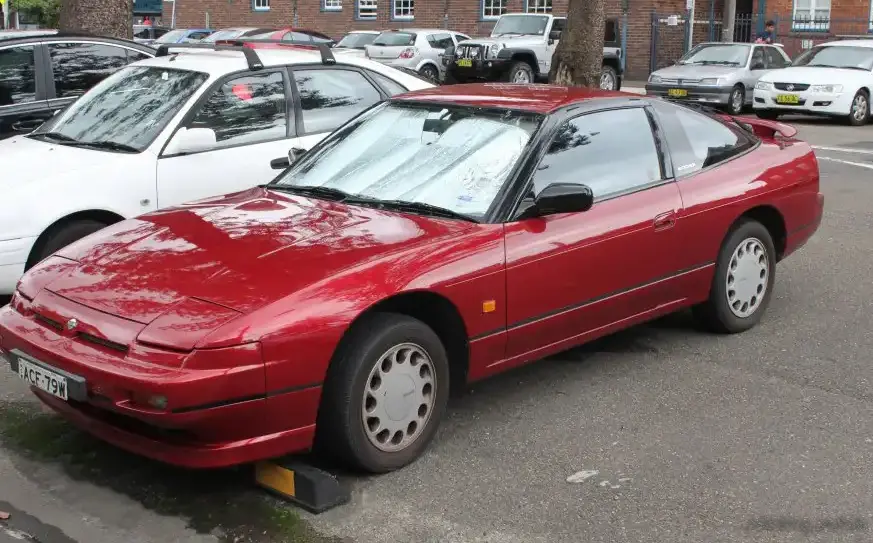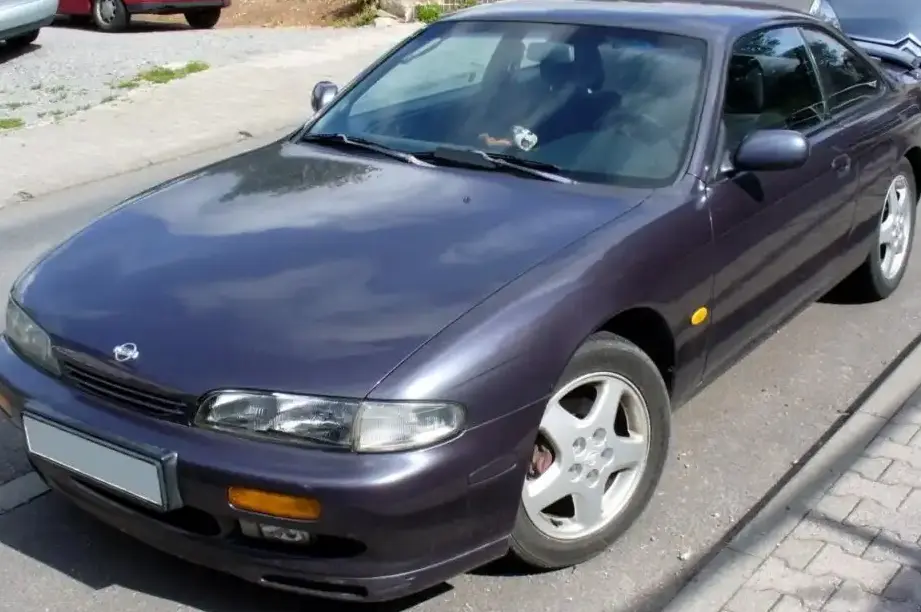
The Nissan 200 SX (S14) 2.0 i 16V Turbo Automatic, produced between 1993 and 2000, represents a compelling blend of performance and accessibility within the S14 chassis generation. Positioned as a mid-range offering, it catered to drivers seeking the sporty aesthetics and turbocharged power of the 200 SX, but with the convenience of an automatic transmission. This variant played a significant role in the North American and European markets, offering a more approachable entry point into the world of rear-wheel-drive, turbocharged coupes compared to the more focused manual transmission models. While often overshadowed by its manual counterpart, the automatic version offered a unique driving experience and remains a popular choice among enthusiasts today.
Technical Specifications
| Brand | Nissan |
| Model | 200 SX |
| Generation | 200 SX (S14) |
| Type (Engine) | 2.0 i 16V Turbo (200 Hp) Automatic |
| Start of production | 1993 |
| End of production | 2000 |
| Powertrain Architecture | Internal Combustion engine |
| Body type | Coupe |
| Seats | 4 |
| Doors | 2 |
| Fuel consumption (combined) | 8.8 l/100 km |
| Fuel consumption (US mpg) | 26.7 US mpg |
| Fuel consumption (UK mpg) | 32.1 UK mpg |
| Fuel consumption (km/l) | 11.4 km/l |
| Fuel Type | Petrol (Gasoline) |
| Acceleration 0 – 100 km/h | 7.5 sec |
| Acceleration 0 – 62 mph | 7.5 sec |
| Acceleration 0 – 60 mph | 7.1 sec |
| Maximum speed | 235 km/h (146.02 mph) |
| Weight-to-power ratio | 6.8 kg/Hp, 148.1 Hp/tonne |
| Weight-to-torque ratio | 5.1 kg/Nm, 196.3 Nm/tonne |
| Power | 200 Hp @ 6400 rpm |
| Power per litre | 100.1 Hp/l |
| Torque | 265 Nm @ 4800 rpm (195.45 lb.-ft. @ 4800 rpm) |
| Engine layout | Front, Longitudinal |
| Engine Model/Code | SR20DET |
| Engine displacement | 1998 cm3 (121.93 cu. in.) |
| Number of cylinders | 4 |
| Engine configuration | Inline |
| Cylinder Bore | 86 mm (3.39 in.) |
| Piston Stroke | 86 mm (3.39 in.) |
| Compression ratio | 8.5:1 |
| Number of valves per cylinder | 4 |
| Fuel injection system | Multi-port manifold injection |
| Engine aspiration | Turbocharger |
| Valvetrain | DOHC |
| Engine oil capacity | 3.7 l (3.91 US qt | 3.26 UK qt) |
| Coolant capacity | 6.2 l (6.55 US qt | 5.46 UK qt) |
| Kerb Weight | 1350 kg (2976.24 lbs.) |
| Max. weight | 1780 kg (3924.23 lbs.) |
| Max load | 430 kg (947.99 lbs.) |
| Trunk (boot) space – minimum | 307 l (10.84 cu. ft.) |
| Fuel tank capacity | 65 l (17.17 US gal | 14.3 UK gal) |
| Length | 4560 mm (179.53 in.) |
| Width | 1730 mm (68.11 in.) |
| Height | 1295 mm (50.98 in.) |
| Wheelbase | 2525 mm (99.41 in.) |
| Front track | 1480 mm (58.27 in.) |
| Rear (Back) track | 1470 mm (57.87 in.) |
| Drivetrain Architecture | Rear wheel drive |
| Number of gears | 4 |
| Gearbox type | Automatic transmission |
| Front suspension | Wishbone |
| Rear suspension | Coil spring |
| Front brakes | Ventilated discs |
| Rear brakes | Disc |
| Assisting systems | ABS (Anti-lock braking system) |
| Steering type | Steering rack and pinion |
| Power steering | Hydraulic Steering |
| Tires size | 205/55 R16 |
| Wheel rims size | 16 |
Powertrain & Engine Architecture
At the heart of the 200 SX Automatic lies the SR20DET, a 2.0-liter, inline-four cylinder engine. This engine is renowned for its robust construction and tuning potential. The ‘DET’ designation signifies a dual overhead camshaft (DOHC) configuration, multi-point fuel injection, and a turbocharger. The turbocharger, typically a Garrett T25 or similar, provides a significant boost in power output. The 8.5:1 compression ratio was a compromise between performance and reliability, allowing for safe operation on readily available fuel grades. The automatic transmission used in this variant is a four-speed unit, designed to provide smooth shifts and ease of driving. While not as sporty as a manual, it offered a more relaxed driving experience, particularly in urban environments. The transmission’s gear ratios were optimized for both acceleration and highway cruising, though it did slightly diminish the overall performance potential compared to the manual transmission versions.
Driving Characteristics
The 200 SX 2.0 i 16V Turbo Automatic delivers a distinct driving experience. While the 200 horsepower and 265 Nm (195 lb-ft) of torque are substantial, the automatic transmission introduces a degree of torque converter slip, resulting in slightly slower acceleration compared to the manual. 0-60 mph times typically fall around 7.1-7.5 seconds. The automatic transmission prioritizes smooth shifts over aggressive gear changes, making it less engaging for performance-oriented drivers. However, the convenience of not having to operate a clutch is a significant benefit in everyday driving. The rear-wheel-drive layout provides a balanced handling characteristic, though the automatic transmission can sometimes feel less responsive during quick transitions.
Equipment & Trim Levels
The 200 SX Automatic typically came equipped with a reasonable level of standard features. These included power windows, power locks, air conditioning, and a basic audio system. Interior upholstery was generally cloth, with optional leather available. The dashboard layout was functional and driver-focused, with clear instrumentation. Optional extras included a sunroof, upgraded audio systems, and alloy wheels. The trim level often dictated the availability of these features, with higher trims offering more luxurious appointments.
Chassis & Braking
The S14 chassis features an independent front suspension with wishbones and coil springs, providing responsive handling. The rear suspension utilizes a coil spring setup. Braking duties are handled by ventilated discs at the front and solid discs at the rear. Anti-lock Braking System (ABS) was standard, enhancing safety and control. The chassis was designed to handle the increased power output of the turbocharged engine, offering a stable and predictable driving experience. Stabilizer bars were fitted front and rear to reduce body roll during cornering.
Market Reception & Comparison
The 200 SX Automatic received mixed reviews. Critics acknowledged the engine’s performance and the car’s sporty styling, but often criticized the automatic transmission for detracting from the overall driving experience. Compared to the manual transmission versions, the automatic was generally considered less engaging and slightly slower. However, it offered a more accessible entry point for drivers unfamiliar with manual transmissions. Fuel economy was reasonable for a turbocharged coupe, averaging around 26.7 mpg. Reliability was generally good, though the turbocharger and associated components required regular maintenance.
Legacy
The Nissan 200 SX (S14) 2.0 i 16V Turbo Automatic has developed a loyal following among enthusiasts. The SR20DET engine remains highly regarded for its tuning potential and durability. While not as sought after as the manual transmission models, the automatic version offers a unique and enjoyable driving experience. Today, well-maintained examples are becoming increasingly collectible, representing a piece of 1990s Japanese performance car history. The powertrain, while aging, is known for its longevity when properly maintained, making it a viable option for those seeking a classic turbocharged coupe.