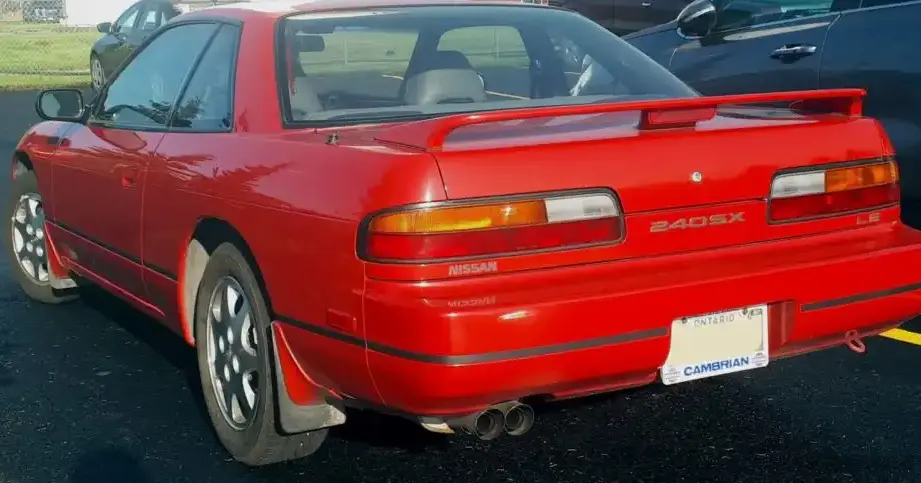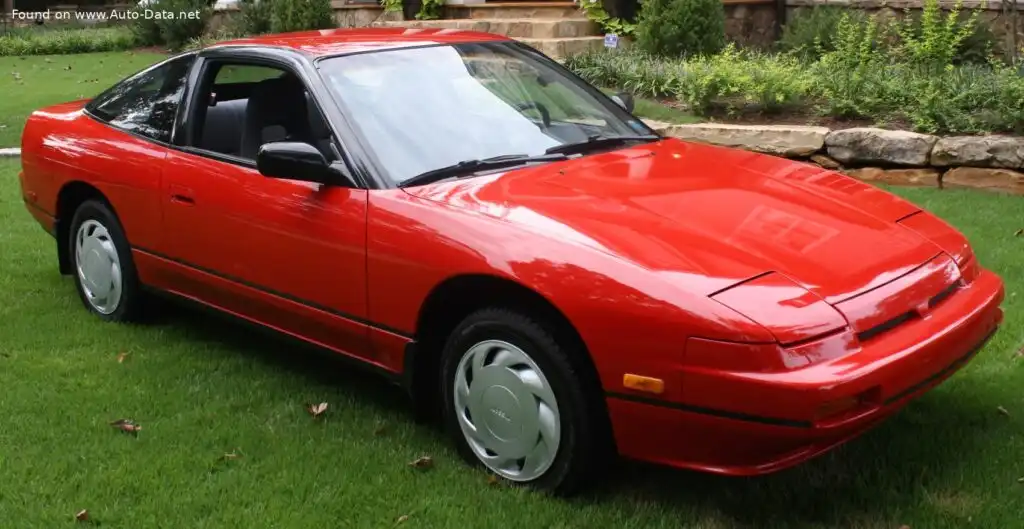
The Nissan 240SX Fastback (S13) 2.4, produced from 1989 to 1990, represents a pivotal entry point into the S13 chassis generation. Positioned as a more accessible variant within the 240SX lineup, it offered a blend of sporty styling and reasonable performance. The S13, as a whole, was Nissan’s direct response to the increasingly popular rear-wheel-drive sport compact market, particularly in North America. While the later models gained notoriety for their potential in drifting and modification, the 2.4-liter version served as a solid, reliable, and relatively affordable platform for enthusiasts and daily drivers alike. It was a key component of Nissan’s strategy to capture a younger demographic seeking a stylish and engaging driving experience.
Technical Specifications
| Brand | Nissan |
| Model | 240SX |
| Generation | 240SX Fastback (S13) |
| Type (Engine) | 2.4 (134 Hp) |
| Start of production | 1989 |
| End of production | 1990 |
| Powertrain Architecture | Internal Combustion engine |
| Body type | Hatchback, Fastback |
| Seats | 4 |
| Doors | 3 |
| Fuel Type | Petrol (Gasoline) |
| Weight-to-power ratio | 9.1 kg/Hp, 109.5 Hp/tonne |
| Weight-to-torque ratio | 5.9 kg/Nm, 168.3 Nm/tonne |
| Power | 134 Hp @ 5600 rpm |
| Power per litre | 56.1 Hp/l |
| Torque | 206 Nm @ 4400 rpm (151.94 lb.-ft. @ 4400 rpm) |
| Engine layout | Front, Longitudinal |
| Engine Model/Code | KA24E |
| Engine displacement | 2389 cm3 (145.79 cu. in.) |
| Number of cylinders | 4 |
| Engine configuration | Inline |
| Cylinder Bore | 89 mm (3.5 in.) |
| Piston Stroke | 96 mm (3.78 in.) |
| Compression ratio | 9.1:1 |
| Number of valves per cylinder | 3 |
| Fuel injection system | Multi-port manifold injection |
| Engine aspiration | Naturally aspirated engine |
| Valvetrain | SOHC |
| Engine oil capacity | 3.5 l (3.7 US qt | 3.08 UK qt) |
| Coolant | 6.7 l (7.08 US qt | 5.9 UK qt) |
| Kerb Weight | 1224 kg (2698.46 lbs.) |
| Permitted towbar download | 110 kg (242.51 lbs.) |
| Length | 4521 mm (177.99 in.) |
| Width | 1689 mm (66.5 in.) |
| Height | 1290 mm (50.79 in.) |
| Wheelbase | 2474 mm (97.4 in.) |
| Front track | 1465 mm (57.68 in.) |
| Rear (Back) track | 1460 mm (57.48 in.) |
| Drivetrain Architecture | The Internal combustion engine (ICE) drives the rear wheels of the vehicle. |
| Drive wheel | Rear wheel drive |
| Number of gears and type of gearbox | 5 gears, manual transmission |
| Front suspension | Independent, type McPherson with coil spring and anti-roll bar |
| Rear suspension | Dependent, multi-link spring with telescopic shock absorbers, Transverse stabilizer, Trailing arm |
| Front brakes | Ventilated discs, 257 mm |
| Rear brakes | Disc, 258 mm |
| Steering type | Steering rack and pinion |
| Power steering | Hydraulic Steering |
| Front wheel tires | 195/60 R15 |
| Rear wheel tires | 205/60 R15 |
| Front wheel rims | 6J x 15 |
| Rear wheel rims | 6J x 15 |
Powertrain & Engine Architecture
The heart of the 240SX 2.4 was the KA24E engine, a 2.4-liter inline-four cylinder powerplant. This engine utilized a single overhead camshaft (SOHC) valvetrain with three valves per cylinder (two intake, one exhaust). The KA24E employed multi-port fuel injection, a significant advancement over earlier carbureted designs, contributing to improved fuel efficiency and smoother power delivery. The engine’s longitudinal mounting within the engine bay, coupled with rear-wheel drive, was a deliberate design choice aimed at providing a balanced and engaging driving experience. The five-speed manual transmission was standard, offering precise gear changes and allowing drivers to fully exploit the engine’s power band. The KA24E was known for its durability and relative simplicity, making it a popular choice for modifications, though it lacked the high-revving nature of some of its competitors.
Driving Characteristics
The 240SX 2.4, with its 134 horsepower and 151.94 lb-ft of torque, provided adequate, though not overwhelming, performance. Acceleration was respectable for its time, but it wasn’t designed to be a drag racer. The focus was more on balanced handling and driver involvement. The five-speed manual transmission allowed for precise control, and the rear-wheel-drive layout contributed to a neutral handling balance. Compared to the more powerful SE models, the 2.4 offered a more relaxed driving experience, prioritizing fuel economy and everyday usability. While the higher-output engines provided more thrilling acceleration, the 2.4’s power delivery was more linear and predictable, making it easier to control for less experienced drivers.
Equipment & Trim Levels
The base 240SX 2.4 typically came equipped with standard features such as cloth upholstery, manual windows and locks, and a basic AM/FM stereo. Air conditioning was often an optional extra. The interior design was functional and straightforward, prioritizing practicality over luxury. Available options included power windows and locks, a sunroof, and upgraded audio systems. The exterior styling was clean and sporty, with a fastback roofline that distinguished it from the more conventional coupe models. The 2.4 trim level generally represented the entry point into the 240SX range, offering a good value proposition for buyers seeking a stylish and engaging sport compact car.
Chassis & Braking
The 240SX chassis featured an independent McPherson strut suspension in the front and a multi-link suspension with trailing arms in the rear. This setup provided a good balance of ride comfort and handling precision. The front suspension incorporated an anti-roll bar to reduce body roll during cornering. Braking duties were handled by ventilated discs in the front and solid discs in the rear. Hydraulic power steering was standard, providing light and responsive steering feel. The suspension tuning was geared towards providing a comfortable ride for everyday driving, while still offering enough support for spirited handling. The braking system, while adequate, wasn’t particularly powerful, and upgrades were often considered by enthusiasts seeking improved stopping performance.
Market Reception & Comparison
The 240SX 2.4 was generally well-received by automotive critics as an affordable and enjoyable sport compact car. It was praised for its balanced handling, responsive steering, and durable engine. However, some critics noted that the engine’s power output was somewhat modest compared to its competitors. Compared to the higher-trim 240SX models, the 2.4 offered a more economical option, sacrificing some performance for improved fuel efficiency and a lower price point. It also provided a more accessible entry point for younger buyers looking to get into the rear-wheel-drive sport compact market. Fuel economy was a strong point, averaging around 22 mpg city and 29 mpg highway.
Legacy
The Nissan 240SX 2.4, while often overshadowed by its more powerful siblings, holds a significant place in the history of sport compact cars. Its durable KA24E engine and balanced chassis made it a popular choice for enthusiasts and a solid foundation for modifications. Today, well-maintained examples of the 240SX 2.4 are becoming increasingly collectible, particularly among those who appreciate its simplicity and reliability. The KA24E engine, while not as highly regarded as the SR20DET or RB series engines, remains a robust and relatively easy-to-maintain powerplant. The 240SX 2.4 represents a bygone era of affordable, rear-wheel-drive sport compact cars, and its legacy continues to endure among enthusiasts.