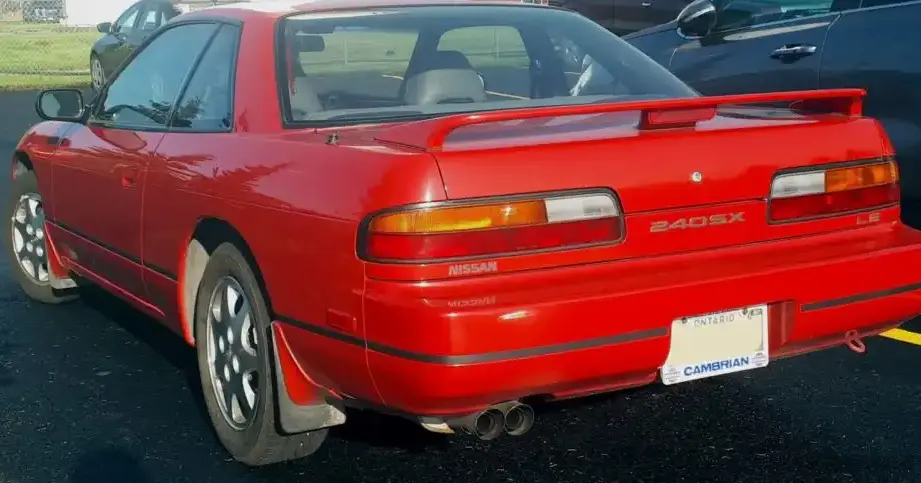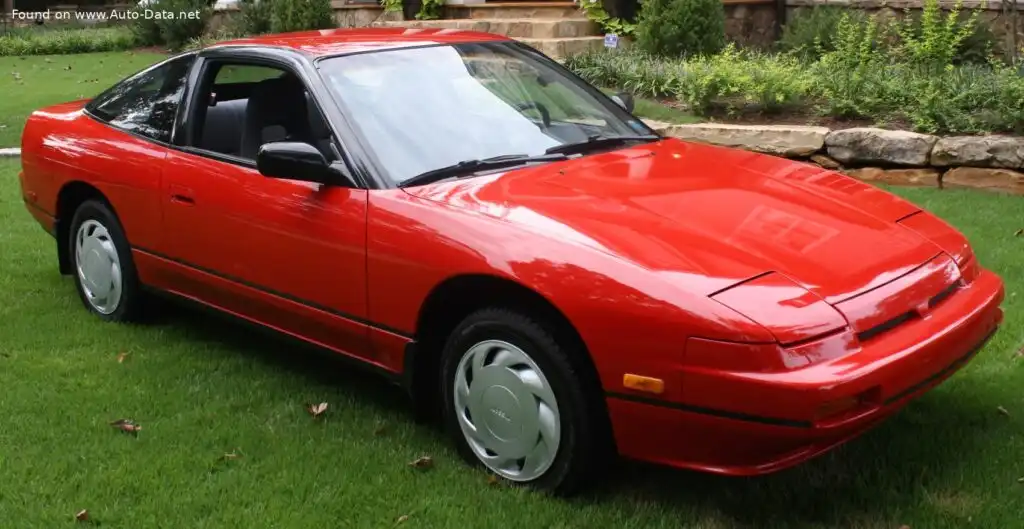
The Nissan 240SX Fastback, specifically the facelifted version introduced in 1991, represents a pivotal moment in the model’s lifecycle and a significant offering in the North American sports coupe market. Produced from 1991 through 1994, this iteration – part of the S13 chassis generation – aimed to refine the original 240SX, offering a blend of affordability, rear-wheel-drive handling, and a relatively potent engine. It quickly gained a following among enthusiasts for its tuning potential and balanced driving dynamics. This variant, equipped with the 2.4-liter KA24DE engine producing 155 horsepower, served as a mid-range offering within the 240SX lineup, positioned above the base model and below potential special editions.
Technical Specifications
| Brand | Nissan |
| Model | 240SX |
| Generation | 240SX Fastback (S13 facelift 1991) |
| Type (Engine) | 2.4 (155 Hp) |
| Start of production | 1991 |
| End of production | 1994 |
| Powertrain Architecture | Internal Combustion engine |
| Body type | Hatchback, Fastback |
| Seats | 4 |
| Doors | 3 |
| Fuel consumption (urban) | 10.7 l/100 km (22 US mpg) |
| Fuel consumption (extra urban) | 8.4 l/100 km (28 US mpg) |
| Fuel Type | Petrol (Gasoline) |
| Weight-to-power ratio | 7.8 kg/Hp |
| Weight-to-torque ratio | 5.6 kg/Nm |
| Power | 155 Hp @ 5600 rpm |
| Power per litre | 64.9 Hp/l |
| Torque | 217 Nm @ 4400 rpm (160.05 lb.-ft. @ 4400 rpm) |
| Engine layout | Front, Longitudinal |
| Engine Model/Code | KA24DE |
| Engine displacement | 2389 cm3 (145.79 cu. in.) |
| Number of cylinders | 4 |
| Engine configuration | Inline |
| Cylinder Bore | 89 mm (3.5 in.) |
| Piston Stroke | 96 mm (3.78 in.) |
| Compression ratio | 8.6:1 |
| Number of valves per cylinder | 4 |
| Fuel injection system | Multi-port manifold injection |
| Engine aspiration | Naturally aspirated engine |
| Valvetrain | DOHC |
| Engine oil capacity | 3.5 l (3.7 US qt | 3.08 UK qt) |
| Coolant capacity | 6.7 l (7.08 US qt | 5.9 UK qt) |
| Kerb Weight | 1205 kg (2656.57 lbs.) |
| Trunk (boot) space – maximum | 402 l (14.2 cu. ft.) |
| Fuel tank capacity | 60 l (15.85 US gal | 13.2 UK gal) |
| Permitted trailer load without brakes | 206 kg (454.15 lbs.) |
| Permitted towbar download | 110 kg (242.51 lbs.) |
| Length | 4521 mm (177.99 in.) |
| Width | 1689 mm (66.5 in.) |
| Height | 1290 mm (50.79 in.) |
| Wheelbase | 2474 mm (97.4 in.) |
| Front track | 1466 mm (57.72 in.) |
| Rear track | 1461 mm (57.52 in.) |
| Minimum turning circle | 9.4 m (30.84 ft.) |
| Drivetrain | Rear wheel drive |
| Number of gears and type of gearbox | 5 gears, manual transmission |
| Front suspension | Independent, McPherson with coil spring and anti-roll bar |
| Rear suspension | Dependent, multi-link with telescopic shock absorbers, Transverse stabilizer, Trailing arm |
| Front brakes | Ventilated discs, 252 mm |
| Rear brakes | Disc, 258 mm |
| Steering type | Steering rack and pinion |
| Power steering | Hydraulic |
| Tires size | Front: 195/60 R15; 205/60 R15, Rear: 195/60 R15; 205/60 R15 |
| Wheel rims size | Front: 6J x 15, Rear: 6J x 15 |
Powertrain & Engine Architecture
The heart of this 240SX variant is the KA24DE, a 2.4-liter inline-four cylinder engine. This engine, a successor to the KA24E, featured multi-port fuel injection and a dual overhead camshaft (DOHC) valvetrain, contributing to improved power and efficiency. The KA24DE is known for its robust construction and relative simplicity, making it a popular choice for modifications. The engine’s 8.6:1 compression ratio was a compromise between performance and reliability, allowing it to run on readily available 87 octane gasoline. The 155 horsepower and 160 lb-ft of torque were delivered through a five-speed manual transmission, providing a direct connection to the rear wheels. While an automatic transmission was available, the manual was favored by enthusiasts for its greater control and responsiveness. The automatic, a four-speed unit, offered smoother operation but at the expense of some performance and driver engagement.
Driving Characteristics
The 240SX with the 2.4-liter engine and manual transmission offered a balanced driving experience. Acceleration was respectable for its time, with a 0-60 mph time estimated around 7.5-8.5 seconds. The rear-wheel-drive layout provided a playful and engaging driving experience, allowing for controlled oversteer. The five-speed manual transmission featured gear ratios geared towards everyday usability, with a relatively tall fifth gear for highway cruising. The automatic transmission, while comfortable, resulted in slightly slower acceleration and a less direct feel. Compared to the base model 240SX with the smaller KA24E engine, the 2.4-liter version offered a noticeable improvement in power and torque, making it more enjoyable for spirited driving. However, it didn’t possess the outright performance of the later 240SX models equipped with the SR20DET turbocharged engine (a JDM engine often swapped into US models). The KA24DE’s powerband was relatively flat, providing usable torque across a wide range of RPMs, making it a forgiving engine for both novice and experienced drivers.
Equipment & Trim Levels
The 1991-1994 240SX Fastback with the 2.4-liter engine typically came standard with features such as power steering, air conditioning, and a basic audio system. Interior upholstery was typically cloth, with options for upgraded materials available. The dashboard layout was functional and straightforward, prioritizing usability over luxury. Optional extras included a sunroof, upgraded sound systems, and alloy wheels. The trim level generally fell into a mid-range category, offering a good balance of features and affordability. It wasn’t as bare-bones as the base model, but lacked the premium features found in potential limited-edition trims. The SE trim, for example, often included features like a limited-slip differential and upgraded suspension components, placing it a step above the standard 2.4-liter model.
Chassis & Braking
The 240SX chassis featured an independent McPherson strut suspension in the front and a multi-link suspension in the rear. This setup provided a good balance of ride comfort and handling precision. The front suspension included an anti-roll bar to reduce body roll during cornering. Braking duties were handled by ventilated discs in the front and solid discs in the rear. While adequate for everyday driving, the braking system wasn’t particularly powerful by modern standards. The relatively lightweight nature of the 240SX – around 2656 lbs – helped to offset the limitations of the braking system. The rear suspension geometry was tuned to minimize rear-end squat during acceleration and maintain stability during cornering, contributing to the car’s balanced handling characteristics.
Market Reception & Comparison
The 1991-1994 Nissan 240SX Fastback was generally well-received by automotive critics. It was praised for its handling, affordability, and tuning potential. Compared to other sports coupes of the era, such as the Mazda MX-5 Miata and the Toyota Celica, the 240SX offered a more practical and spacious interior, as well as the advantage of rear-wheel drive. Fuel economy was reasonable for a sports coupe, averaging around 22 mpg in the city and 28 mpg on the highway. Reliability was generally good, although some owners reported issues with the cooling system and minor electrical components. The 2.4-liter engine proved to be durable and relatively maintenance-free. The automatic transmission models, while less popular with enthusiasts, offered a more comfortable and convenient driving experience for everyday commuters.
Legacy
The Nissan 240SX, particularly the S13 chassis, has achieved a cult following among car enthusiasts. Its rear-wheel-drive layout, robust engine, and relatively low cost have made it a popular platform for drifting, road racing, and street performance modifications. The KA24DE engine, while not as powerful as some of its competitors, is known for its durability and ease of modification. Today, well-maintained 240SX models are becoming increasingly rare and valuable, particularly those with the 2.4-liter engine and manual transmission. The 240SX remains a beloved icon of the 1990s sports coupe scene, and its legacy continues to inspire a new generation of car enthusiasts. The KA24DE’s simplicity and readily available parts continue to make it a viable engine for performance builds, even decades after production ceased. The car’s enduring popularity has ensured a strong aftermarket support network, further solidifying its place in automotive history.