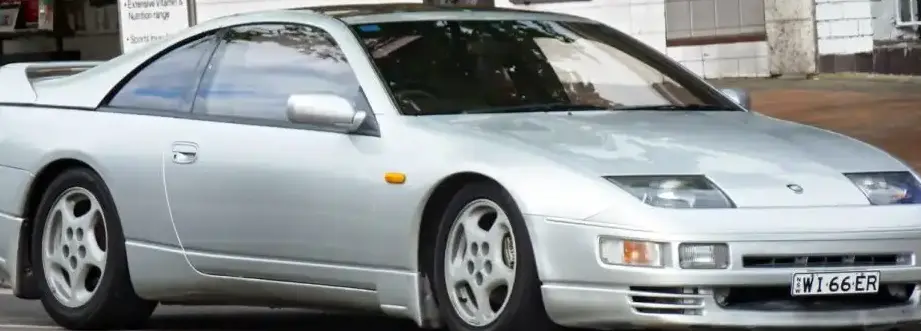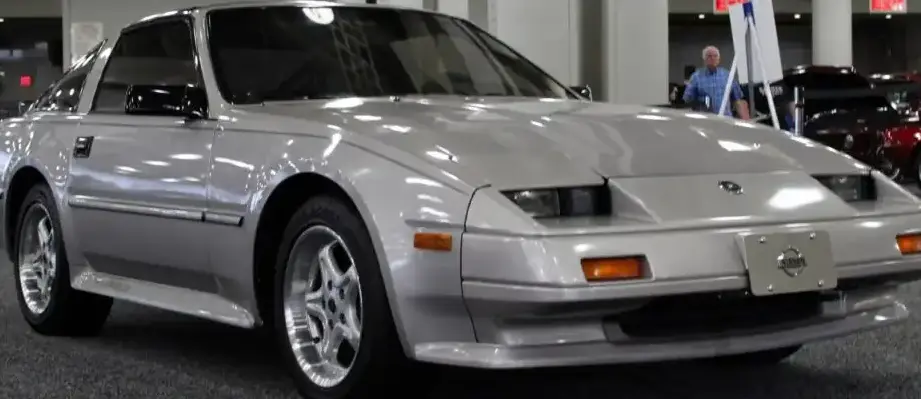
The Nissan 300ZX (Z31) 3.0, produced from 1984 to 1987, represented a significant evolution in Nissan’s sports car lineage. Positioned as a mid-range offering within the Z31 generation, which spanned from 1984 to 1989, the 3.0-liter variant aimed to balance performance with relative affordability. It served as a step up from the base 2.8-liter models, while remaining more accessible than the later, turbocharged versions. The Z31 series as a whole was a departure from the more utilitarian 280ZX (S130) it replaced, embracing a more modern, aerodynamic design and incorporating advanced technology for its time. This model was primarily marketed in North America, Japan, and Europe, with variations in equipment levels depending on the region.
Technical Specifications
| Brand | Nissan |
| Model | 300 ZX |
| Generation | 300 ZX (Z31) |
| Type (Engine) | 3.0 (170 Hp) |
| Start of production | 1984 |
| End of production | 1987 |
| Powertrain Architecture | Internal Combustion engine |
| Body type | Coupe |
| Seats | 4 |
| Doors | 2 |
| Fuel consumption (urban) | 15.1 l/100 km (15.6 US mpg, 18.7 UK mpg, 6.6 km/l) |
| Fuel consumption (extra urban) | 7.7 l/100 km (30.5 US mpg, 36.7 UK mpg, 13 km/l) |
| Fuel Type | Petrol (Gasoline) |
| Acceleration 0 – 100 km/h | 9 sec |
| Acceleration 0 – 62 mph | 9 sec |
| Acceleration 0 – 60 mph | 8.6 sec |
| Maximum speed | 225 km/h (139.81 mph) |
| Weight-to-power ratio | 8.2 kg/Hp, 122.3 Hp/tonne |
| Weight-to-torque ratio | 5.9 kg/Nm, 169.8 Nm/tonne |
| Power | 170 Hp @ 5600 rpm |
| Power per litre | 57.4 Hp/l |
| Torque | 236 Nm @ 4400 rpm (174.06 lb.-ft. @ 4400 rpm) |
| Engine layout | Front, Longitudinal |
| Engine Model/Code | VG30E |
| Engine displacement | 2960 cm3 (180.63 cu. in.) |
| Number of cylinders | 6 |
| Engine configuration | V-engine |
| Cylinder Bore | 87 mm (3.43 in.) |
| Piston Stroke | 83 mm (3.27 in.) |
| Compression ratio | 9:1 |
| Number of valves per cylinder | 4 |
| Fuel injection system | Multi-port manifold injection |
| Engine aspiration | Naturally aspirated engine |
| Valvetrain | DOHC |
| Engine oil capacity | 4 l (4.23 US qt | 3.52 UK qt) |
| Coolant capacity | 10.5 l (11.1 US qt | 9.24 UK qt) |
| Kerb Weight | 1390 kg (3064.43 lbs.) |
| Max. weight | 1760 kg (3880.14 lbs.) |
| Max load | 370 kg (815.71 lbs.) |
| Fuel tank capacity | 77 l (20.34 US gal | 16.94 UK gal) |
| Max. roof load | 100 kg (220.46 lbs.) |
| Permitted trailer load with brakes (12%) | 1500 kg (3306.93 lbs.) |
| Permitted trailer load without brakes | 600 kg (1322.77 lbs.) |
| Permitted towbar download | 75 kg (165.35 lbs.) |
| Length | 4540 mm (178.74 in.) |
| Width | 1725 mm (67.91 in.) |
| Height | 1310 mm (51.57 in.) |
| Wheelbase | 2520 mm (99.21 in.) |
| Front track | 1415 mm (55.71 in.) |
| Rear track | 1435 mm (56.5 in.) |
| Minimum turning circle | 10.6 m (34.78 ft.) |
| Drivetrain | Rear wheel drive |
| Number of gears | 5 gears, manual transmission |
| Front suspension | Independent, type McPherson with coil spring and anti-roll bar |
| Rear suspension | Transverse stabilizer, Trailing arm |
| Front brakes | Ventilated discs |
| Rear brakes | Disc |
| Steering type | Steering rack and pinion |
| Power steering | Hydraulic Steering |
| Tires size | Front wheel tires: 215/60 R15 Rear wheel tires: 215/60 R15 |
| Wheel rims size | Front wheel rims: 6.5J x 15 Rear wheel rims: 6.5J x 15 |
Powertrain & Engine Architecture
The heart of the 300ZX 3.0 was the VG30E engine, a 3.0-liter, naturally aspirated V6. This engine featured a 90-degree V-angle, contributing to a smoother power delivery. The VG30E utilized multi-port fuel injection, a significant advancement over the carburetors found in earlier Z-cars, improving efficiency and responsiveness. The engine employed a double overhead camshaft (DOHC) valvetrain, operating four valves per cylinder, which aided in maximizing volumetric efficiency. The 5-speed manual transmission was the standard offering, providing a direct connection between the engine and the rear wheels. The transmission featured a conventional gear layout, optimized for both cruising and spirited driving. The VG30E was known for its relatively robust construction and its ability to handle moderate modifications.
Driving Characteristics
The 300ZX 3.0 with the 5-speed manual offered a balanced driving experience. Acceleration from 0-60 mph took around 8.6 seconds, respectable for the mid-1980s. While not as quick as the later turbocharged models, the naturally aspirated 3.0 provided a linear power delivery, making it predictable and easy to control. The gear ratios were well-matched to the engine’s torque curve, allowing for strong acceleration in each gear. Handling was competent, thanks to the independent McPherson strut front suspension and the trailing arm rear suspension. The car felt stable and planted in corners, although body roll was noticeable. Compared to the turbocharged 300ZX, the 3.0 felt less urgent but more approachable, making it a good choice for drivers who prioritized everyday usability over outright performance.
Equipment & Trim Levels
The 300ZX 3.0 typically came standard with features like power steering, power brakes, and a reasonably well-appointed interior. Interior upholstery was usually cloth, with options for leather available. Dashboard layouts were modern for the time, featuring a comprehensive instrument cluster with gauges for speed, tachometer, fuel level, coolant temperature, and oil pressure. Optional extras included air conditioning, a premium sound system, cruise control, and power windows and locks. Trim levels varied by market, but generally, the 3.0 represented a step up in terms of features compared to the base 2.8-liter models.
Chassis & Braking
The Z31 chassis was a monocoque construction, providing a good balance of rigidity and weight. The front suspension utilized McPherson struts with coil springs and an anti-roll bar, while the rear suspension employed a trailing arm setup with a transverse stabilizer. Braking duties were handled by ventilated discs at the front and solid discs at the rear, providing adequate stopping power for the car’s weight and performance. The hydraulic power steering system offered a good level of assistance, making the car easy to maneuver at low speeds.
Market Reception & Comparison
The 300ZX 3.0 was generally well-received by automotive critics. It was praised for its modern styling, comfortable interior, and balanced driving dynamics. However, some critics noted that the naturally aspirated engine lacked the punch of the turbocharged models. Compared to the 2.8-liter base models, the 3.0 offered a noticeable improvement in performance and refinement. Compared to the turbocharged 300ZX, it offered a more affordable entry point into the Z31 lineup, albeit with a compromise in outright speed. Fuel economy was reasonable for the time, averaging around 22 mpg in combined driving.
Legacy
The VG30E engine proved to be a durable and reliable powerplant, and many 300ZX 3.0 models are still on the road today. While not as sought-after as the turbocharged versions, the naturally aspirated 3.0 offers a compelling combination of affordability, reliability, and classic Z-car styling. The Z31 generation as a whole is remembered as a pivotal moment in Nissan’s sports car history, bridging the gap between the classic Datsun Z-cars and the more technologically advanced 350Z and 370Z that followed. The 300ZX 3.0 remains a popular choice for enthusiasts looking for a classic Japanese sports car that is both enjoyable to drive and relatively easy to maintain.