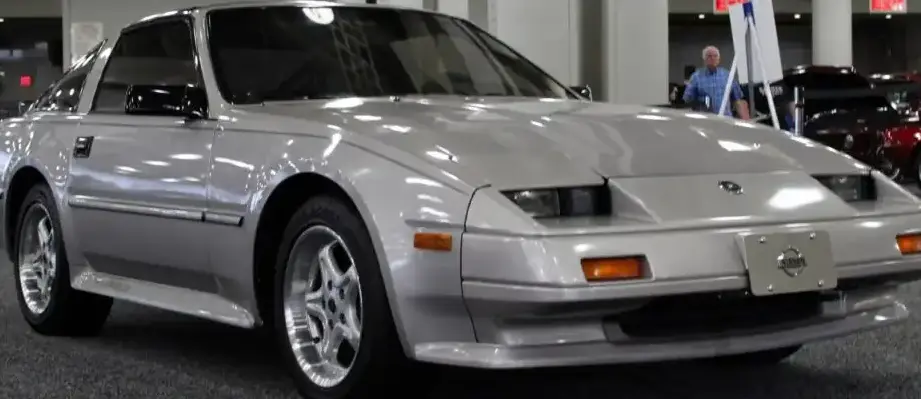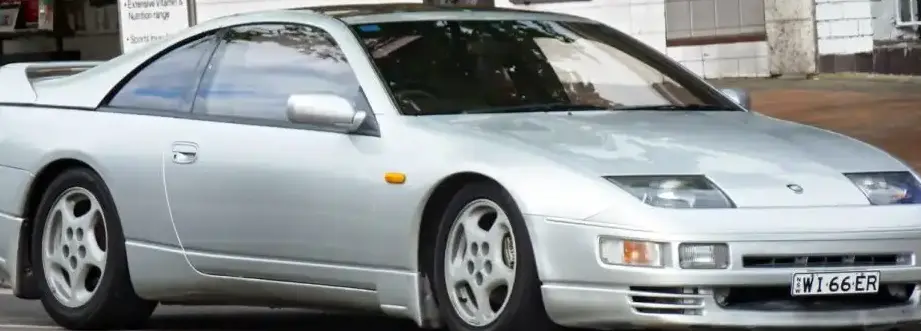
The Nissan 300ZX (Z32) 3.0 Twin Turbo, produced from 1990 to 1995, represents the final iteration of Nissan’s long-running Z-car lineage until the 370Z’s arrival. Positioned as the flagship performance model, the Z32 aimed to compete directly with established sports cars like the Porsche 911 and Mazda RX-7. This generation marked a significant departure from its predecessors, embracing advanced technology and a more sophisticated design. The 3.0 Twin Turbo variant, generating 268 horsepower, was the top-of-the-line offering, representing the pinnacle of Nissan’s engineering capabilities during that era. It was primarily marketed in North America and Japan, with limited availability in other global markets.
Technical Specifications
| Brand | Nissan |
| Model | 300 ZX |
| Generation | 300 ZX (Z32) |
| Type (Engine) | 3.0 Twin Turbo (268 Hp) |
| Start of production | 1990 |
| End of production | 1995 |
| Powertrain Architecture | Internal Combustion engine |
| Body type | Coupe |
| Seats | 4 |
| Doors | 2 |
| Fuel consumption (urban) | 15 l/100 km (15.7 US mpg, 18.8 UK mpg, 6.7 km/l) |
| Fuel consumption (extra urban) | 9 l/100 km (26.1 US mpg, 31.4 UK mpg, 11.1 km/l) |
| Fuel Type | Petrol (Gasoline) |
| Acceleration 0 – 100 km/h | 7.2 sec |
| Acceleration 0 – 62 mph | 7.2 sec |
| Acceleration 0 – 60 mph | 6.8 sec |
| Maximum speed | 280 km/h (173.98 mph) |
| Weight-to-power ratio | 6.1 kg/Hp, 164 Hp/tonne |
| Power | 268 Hp @ 7000-9000 rpm |
| Power per litre | 89.4 Hp/l |
| Engine layout | Middle, Longitudinal |
| Engine Model/Code | VG30DETT |
| Engine displacement | 2998 cm3 (182.95 cu. in.) |
| Number of cylinders | 6 |
| Engine configuration | V-engine |
| Number of valves per cylinder | 4 |
| Fuel injection system | Multi-port manifold injection |
| Engine aspiration | Twin-Turbo, Intercooler |
| Valvetrain | DOHC |
| Engine oil capacity | 3.4 l (3.59 US qt, 2.99 UK qt) |
| Coolant capacity | 9 l (9.51 US qt, 7.92 UK qt) |
| Kerb Weight | 1634 kg (3602.35 lbs) |
| Max. weight | 2000 kg (4409.25 lbs) |
| Max load | 366 kg (806.89 lbs) |
| Trunk (boot) space – minimum | 300 l (10.59 cu. ft.) |
| Trunk (boot) space – maximum | 400 l (14.13 cu. ft.) |
| Fuel tank capacity | 65 l (17.17 US gal, 14.3 UK gal) |
| Length | 4520 mm (177.95 in) |
| Width | 1800 mm (70.87 in) |
| Height | 1255 mm (49.41 in) |
| Wheelbase | 2570 mm (101.18 in) |
| Minimum turning circle | 12 m (39.37 ft) |
| Drivetrain Architecture | Rear wheel drive |
| Number of gears | 5 gears, manual transmission |
| Front suspension | Independent torsion bar, double wishbone |
| Rear suspension | Independent multi-link spring suspension with stabilizer |
| Front brakes | Ventilated discs |
| Rear brakes | Ventilated discs |
| Steering type | Steering rack and pinion |
| Power steering | Hydraulic Steering |
| Tires size | 205/55 R16 |
| Wheel rims size | 16 |
Powertrain & Engine Architecture
The heart of the 300ZX Twin Turbo is the VG30DETT, a 3.0-liter V6 engine. This engine is notable for its sophisticated design, featuring dual Garrett T25 turbochargers, intercooling, and multi-port fuel injection. The engine utilizes a double overhead camshaft (DOHC) valvetrain with four valves per cylinder, contributing to its high specific output. The VG30DETT was designed with robustness in mind, employing forged pistons and connecting rods to handle the increased stresses of forced induction. The engine’s electronic control unit (ECU) managed fuel delivery, ignition timing, and turbocharger boost pressure. The standard transmission for the Twin Turbo model was a robust 5-speed manual. While an automatic transmission was offered, it was generally considered less desirable by enthusiasts due to its impact on performance and responsiveness. The automatic, a 4-speed unit, was geared more towards comfortable cruising than spirited driving, and its electronic controls sometimes struggled to keep pace with the engine’s power delivery.
Driving Characteristics
The 300ZX Twin Turbo delivered exhilarating performance for its time. The twin-turbo setup minimized turbo lag, providing a broad and usable powerband. Acceleration from 0 to 60 mph was consistently achieved in around 6.8 seconds, and the car could reach a top speed of 174 mph. The manual transmission offered precise shifts and allowed drivers to fully exploit the engine’s potential. The rear-wheel-drive layout contributed to balanced handling, although the car’s weight (around 3600 lbs) could be felt during aggressive cornering. Compared to the naturally aspirated 300ZX models, the Twin Turbo offered a significantly more potent driving experience, but at the cost of increased complexity and potential maintenance requirements. The automatic transmission, while smoother in everyday driving, noticeably dulled the car’s responsiveness, with slower shifts and a less engaging driving experience. Gear ratios were optimized for highway cruising, sacrificing some of the low-end punch found in the manual version.
Equipment & Trim Levels
The 300ZX Twin Turbo was well-equipped, even by 1990s standards. Standard features included leather upholstery, power windows and locks, air conditioning, a premium sound system, and a limited-slip differential. Optional extras included a Bose audio system, heated seats, and a sunroof. The interior design was driver-focused, with analog gauges providing comprehensive information about the engine’s performance. The Z32 also featured a sophisticated climate control system and a well-integrated dashboard layout. The interior trim was generally consistent across Twin Turbo models, with the primary differentiation being the addition of optional packages. The base model offered a comfortable and well-appointed cabin, while the optional extras elevated the experience to a more luxurious level.
Chassis & Braking
The Z32 chassis was a significant improvement over previous Z-cars, offering increased rigidity and improved handling. The suspension utilized independent torsion bar front suspension and an independent multi-link rear suspension with a stabilizer bar. This setup provided a comfortable ride while maintaining good control. Braking duties were handled by ventilated discs on all four wheels, providing ample stopping power. The steering was a rack-and-pinion system with hydraulic power assistance, offering precise and responsive steering feel. The chassis design incorporated extensive use of high-strength steel, contributing to its rigidity and crashworthiness. The suspension tuning was a compromise between comfort and performance, providing a relatively compliant ride without sacrificing handling precision.
Market Reception & Comparison
The 300ZX Twin Turbo was generally well-received by automotive critics. It was praised for its performance, handling, and advanced technology. However, its relatively high price and complex mechanicals were also noted. Compared to the naturally aspirated 300ZX models, the Twin Turbo offered a substantial performance upgrade, but it also came with increased maintenance costs and a higher risk of mechanical issues. The Twin Turbo also competed with other sports cars of the era, such as the Mazda RX-7 and Porsche 911, offering a compelling combination of performance and value. The RX-7 offered a more nimble and lightweight driving experience, while the 911 provided a more refined and luxurious experience. The 300ZX Twin Turbo positioned itself as a technologically advanced and powerful alternative, appealing to drivers who wanted a blend of performance and features.
Legacy
The Nissan 300ZX Twin Turbo remains a highly sought-after sports car among enthusiasts. Its combination of performance, technology, and styling has made it a classic. While the VG30DETT engine is known to be robust when properly maintained, it can be susceptible to issues such as turbocharger failure and oil leaks. Finding parts can be challenging, and maintenance costs can be higher than for more common vehicles. Despite these challenges, the 300ZX Twin Turbo continues to command strong prices in the used car market, and well-maintained examples are highly prized by collectors and enthusiasts alike. It represents a high point in Nissan’s engineering history and a testament to the enduring appeal of the Z-car lineage. The car’s complex systems require specialized knowledge for proper maintenance, making it a rewarding but demanding ownership experience.