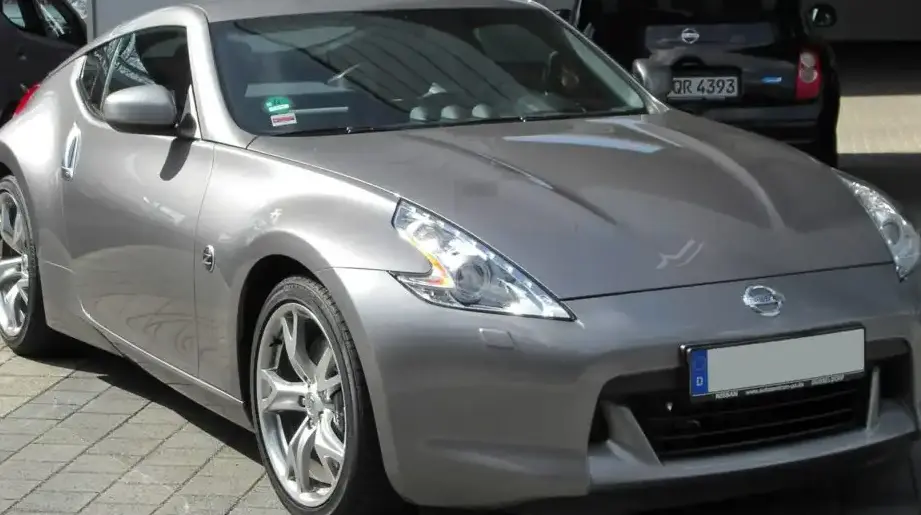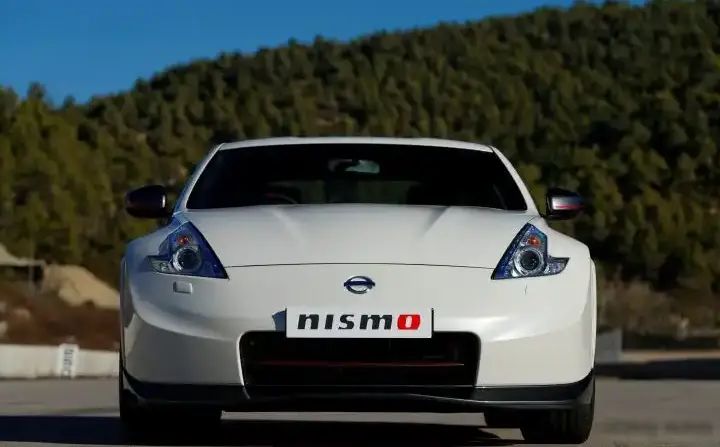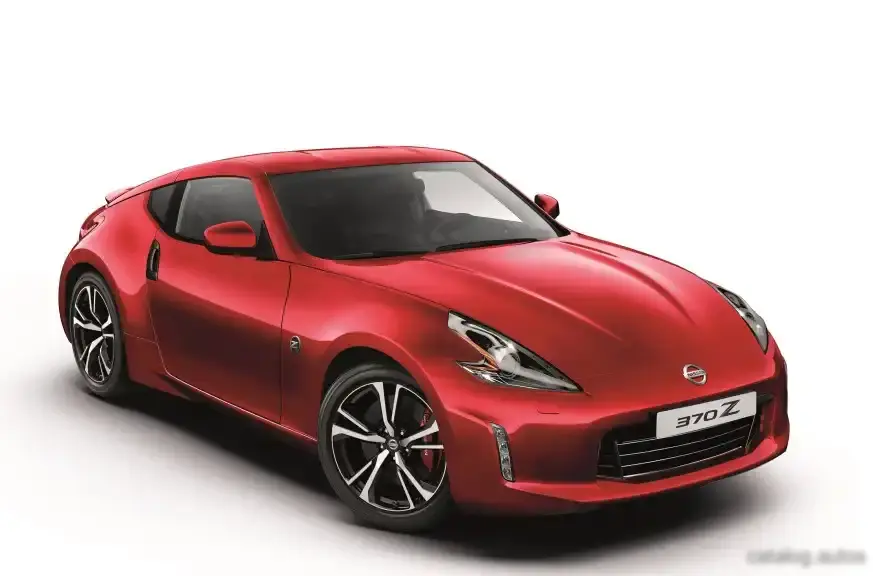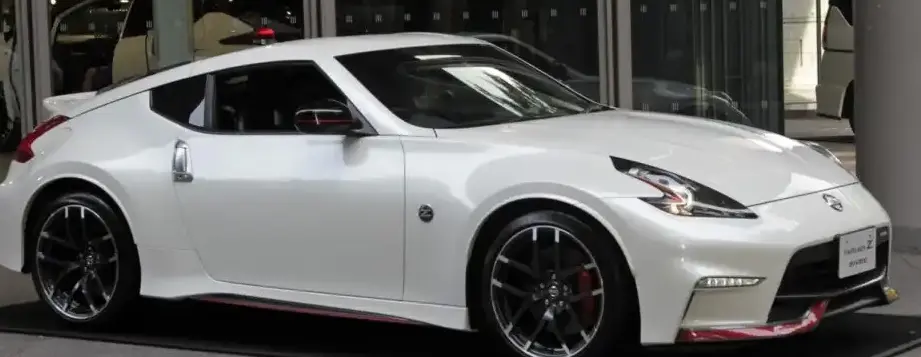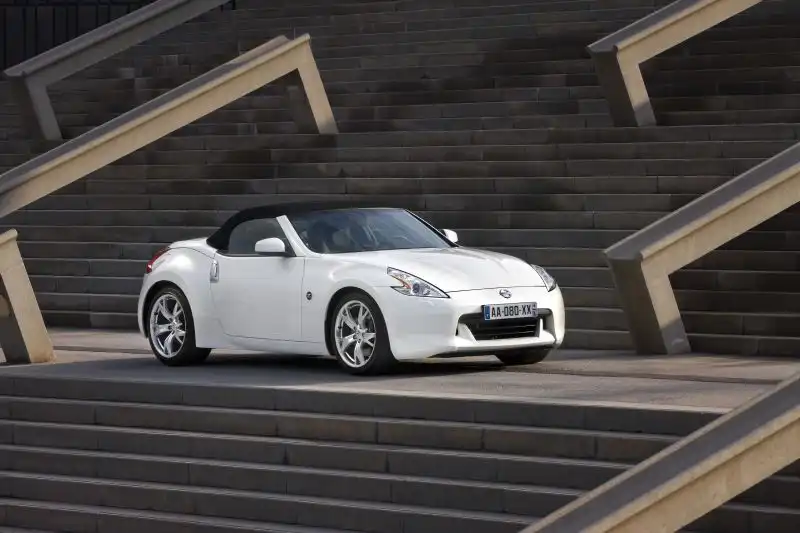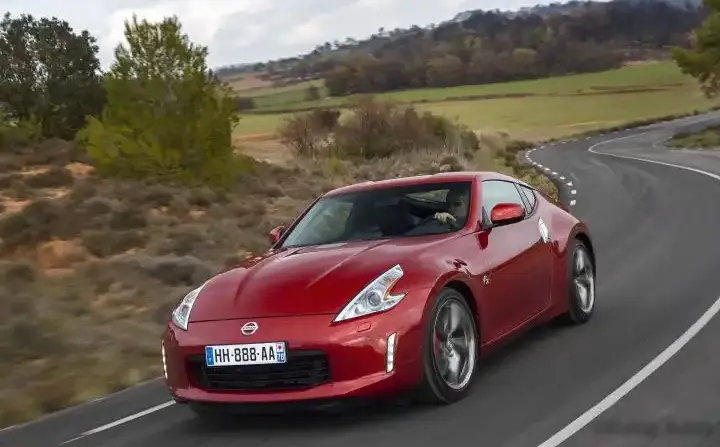
The Nissan 370Z Coupe, particularly the facelifted version introduced in 2012 and continuing through 2017, represents the second generation of Nissan’s long-running Z-car lineage. Positioned as a driver-focused sports car, the 370Z aimed to deliver a blend of performance, style, and relative affordability within the sports coupe segment. The 2012 facelift brought cosmetic updates to the exterior, including revised headlights, a new front bumper, and updated taillights, along with minor interior refinements. This variant, equipped with the 3.7-liter V6 engine producing 328 horsepower, served as the primary offering throughout the facelifted generation, appealing to enthusiasts seeking a potent and engaging driving experience. It was a direct competitor to cars like the BMW Z4, Audi TT, and Ford Mustang.
Technical Specifications
| Brand | Nissan |
| Model | 370Z |
| Generation | 370Z Coupe (facelift 2012) |
| Type (Engine) | 3.7 V6 (328 Hp) |
| Start of production | 2012 |
| End of production | 2017 |
| Powertrain Architecture | Internal Combustion engine |
| Body type | Coupe |
| Seats | 2 |
| Doors | 3 |
| Fuel consumption (economy) – urban (NEDC) | 15.3-15.4 l/100 km (15.4 – 15.3 US mpg, 18.5 – 18.3 UK mpg, 6.5 – 6.5 km/l) |
| Fuel consumption (economy) – extra urban (NEDC) | 7.8 l/100 km (30.2 US mpg, 36.2 UK mpg, 12.8 km/l) |
| Fuel consumption (economy) – combined (NEDC) | 10.5-10.6 l/100 km (22.4 – 22.2 US mpg, 26.9 – 26.6 UK mpg, 9.5 – 9.4 km/l) |
| CO2 emissions (NEDC) | 245-248 g/km |
| Fuel Type | Petrol (Gasoline) |
| Acceleration 0 – 100 km/h | 5.3 sec |
| Acceleration 0 – 62 mph | 5.3 sec |
| Acceleration 0 – 60 mph | 5 sec |
| Maximum speed | 250 km/h (155.34 mph) |
| Emission standard | Euro 5 |
| Weight-to-power ratio | 4.6 kg/Hp, 219.3 Hp/tonne |
| Weight-to-torque ratio | 4.1 kg/Nm, 242.6 Nm/tonne |
| Power | 328 Hp @ 7000 rpm |
| Power per litre | 88.7 Hp/l |
| Torque | 363 Nm @ 5200 rpm (267.74 lb.-ft. @ 5200 rpm) |
| Engine layout | Front, Longitudinal |
| Engine Model/Code | VQ37VHR |
| Engine displacement | 3696 cm3 (225.54 cu. in.) |
| Number of cylinders | 6 |
| Engine configuration | V-engine |
| Cylinder Bore | 95.5 mm (3.76 in.) |
| Piston Stroke | 86 mm (3.39 in.) |
| Compression ratio | 11:1 |
| Number of valves per cylinder | 4 |
| Fuel injection system | Multi-port manifold injection |
| Engine aspiration | Naturally aspirated engine |
| Valvetrain | DOHC, VVEL |
| Engine oil capacity | 4.9 l (5.18 US qt | 4.31 UK qt) |
| Coolant | 9.2 l (9.72 US qt | 8.09 UK qt) |
| Kerb Weight | 1496 kg (3298.12 lbs.) |
| Max. weight | 1800 kg (3968.32 lbs.) |
| Max load | 304 kg (670.21 lbs.) |
| Trunk (boot) space – minimum | 235 l (8.3 cu. ft.) |
| Fuel tank capacity | 72 l (19.02 US gal | 15.84 UK gal) |
| Length | 4250 mm (167.32 in.) |
| Width | 1845 mm (72.64 in.) |
| Height | 1310 mm (51.57 in.) |
| Wheelbase | 2550 mm (100.39 in.) |
| Front track | 1540-1550 mm (60.63 – 61.02 in.) |
| Rear (Back) track | 1565-1595 mm (61.61 – 62.8 in.) |
| Front overhang | 840 mm (33.07 in.) |
| Rear overhang | 860 mm (33.86 in.) |
| Drag coefficient (Cd) | 0.30 |
| Minimum turning circle (turning diameter) | 10.6 m (34.78 ft.) |
| Drivetrain Architecture | Rear wheel drive |
| Drive wheel | Rear wheel drive |
| Number of gears and type of gearbox | 6 gears, manual transmission |
| Front suspension | Double wishbone, Transverse stabilizer |
| Rear suspension | Independent multi-link suspension, Transverse stabilizer |
| Front brakes | Ventilated discs, 355 mm |
| Rear brakes | Ventilated discs, 350 mm |
| Assisting systems | ABS (Anti-lock braking system) |
| Steering type | Steering rack and pinion |
| Power steering | Hydraulic Steering |
| Tires size | Front wheel tires: 225/50 R18; 245/40 R19 Rear wheel tires: 245/45 R18; 275/35 R19 |
| Wheel rims size | Front wheel rims: 8J x 18; 9J x 19 Rear wheel rims: 9J x 18; 10J x 19 |
INTRODUCTION
The Nissan 370Z Coupe (facelift 2012-2017) continued the tradition of the Z-car as a relatively affordable, rear-wheel-drive sports coupe. Built on the Nissan FM (Front Midship) platform, the 370Z prioritized a balanced weight distribution and engaging driving dynamics. The facelifted model refined the aesthetics and maintained the potent 3.7-liter V6 engine. This generation represented the final iteration of the 370Z, with no major mechanical changes occurring after 2012, focusing instead on minor trim and equipment updates. It was sold primarily in North America, Europe, and Australia, with varying levels of success depending on the market.
Powertrain & Engine Architecture
The heart of the 370Z is the VQ37VHR 3.7-liter V6 engine. This engine is a naturally aspirated powerplant, meaning it doesn’t rely on turbocharging or supercharging for increased power. The “VHR” designation stands for “High Revolution,” indicating the engine’s capability to rev freely and produce power at higher RPMs. It features a 60-degree V-angle, dual overhead camshafts (DOHC), and Nissan’s Variable Valve Event and Lift (VVEL) technology. VVEL continuously adjusts valve timing and lift on both the intake and exhaust sides, optimizing engine performance and efficiency across the rev range. Fuel is delivered via multi-port fuel injection. The engine produces 328 horsepower at 7000 rpm and 267.74 lb-ft of torque at 5200 rpm. The standard transmission for this variant was a 6-speed manual, but a 7-speed automatic transmission with paddle shifters was also available. The automatic transmission featured adaptive shift control, adjusting shift points based on driving conditions.
Driving Characteristics
The 370Z with the 3.7-liter V6 and automatic transmission delivers a responsive, albeit not brutally fast, driving experience. The automatic transmission, while offering convenience, doesn’t quite match the engagement of the manual gearbox. Gear changes are generally smooth, but can feel slightly hesitant during aggressive driving. The 7-speed automatic offers quicker shifts than older automatics, but still lacks the direct connection of a manual. The car’s rear-wheel-drive layout and well-tuned suspension contribute to balanced handling and predictable cornering behavior. The relatively short wheelbase and firm suspension can make the ride somewhat firm over rough surfaces. Acceleration from 0-60 mph takes around 5 seconds, making it competitive within its class. The engine’s power delivery is linear, with a strong mid-range providing ample torque for everyday driving and spirited acceleration.
Equipment & Trim Levels
The 370Z Coupe (2012-2017) was offered in several trim levels, including Base, Sport, Touring, and NISMO. The base model typically included features like automatic climate control, power windows and locks, a four-speaker audio system, and basic safety equipment. The Sport trim added features like a limited-slip differential, sport-tuned suspension, and upgraded brakes. The Touring trim offered more luxurious amenities, such as leather upholstery, heated seats, a premium Bose audio system, and navigation. The NISMO trim, the highest performance variant, featured even more aggressive styling, a more powerful engine (typically 350 hp), and track-focused suspension components. The 328 hp automatic variant was available across most trim levels, offering a blend of performance and convenience.
Chassis & Braking
The 370Z utilizes a MacPherson strut front suspension and a multi-link rear suspension. Both ends feature stabilizer bars to reduce body roll during cornering. The chassis is relatively stiff, contributing to the car’s responsive handling. Braking duties are handled by ventilated disc brakes on all four wheels. The front brakes measure 355mm in diameter, while the rear brakes are 350mm. ABS (Anti-lock Braking System) is standard. The steering is a hydraulic rack-and-pinion system, providing good feedback and precise control. The car’s weight distribution is close to 53/47 front/rear, contributing to its balanced handling characteristics.
Market Reception & Comparison
The 2012-2017 Nissan 370Z Coupe was generally well-received by automotive critics. It was praised for its engaging driving dynamics, powerful engine, and relatively affordable price. However, some critics noted the interior felt dated compared to newer competitors, and the fuel economy was not particularly impressive. Compared to the manual transmission version, the automatic 370Z offered slightly slower acceleration and a less engaging driving experience, but provided greater convenience for daily commuting. Against rivals like the BMW Z4 and Audi TT, the 370Z offered a more raw and visceral driving experience at a lower price point. The 370Z’s fuel economy, averaging around 22 mpg combined, was comparable to other sports coupes in its class.
Legacy
The Nissan 370Z, particularly the facelifted models, has developed a loyal following among enthusiasts. The VQ37VHR engine is known for its reliability and durability, although regular maintenance is crucial. The 370Z’s relatively simple mechanical design makes it a popular choice for modification and customization. On the used car market, the 370Z offers a compelling value proposition for those seeking a rear-wheel-drive sports coupe with a powerful engine and engaging driving dynamics. While not as technologically advanced as some newer sports cars, the 370Z remains a capable and enjoyable machine that continues to appeal to driving enthusiasts.