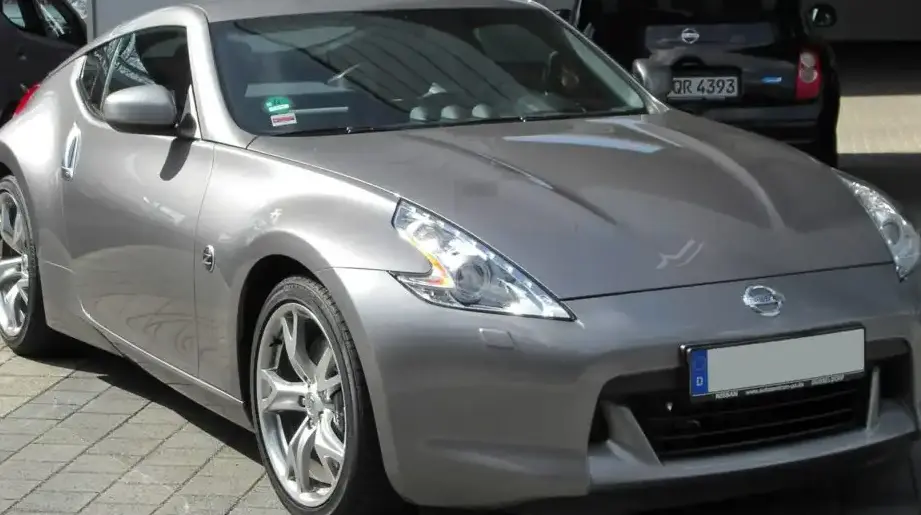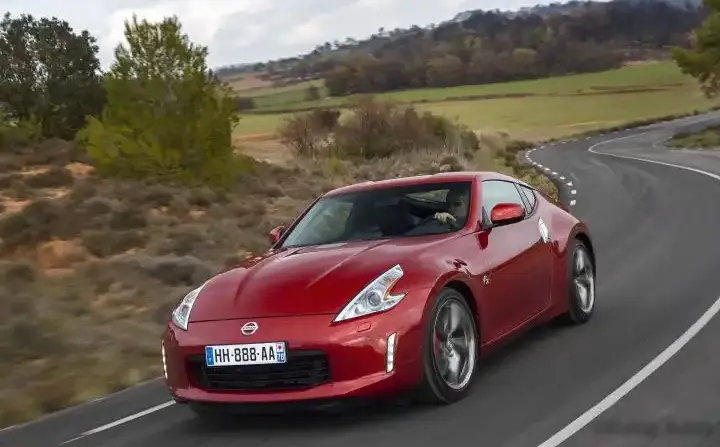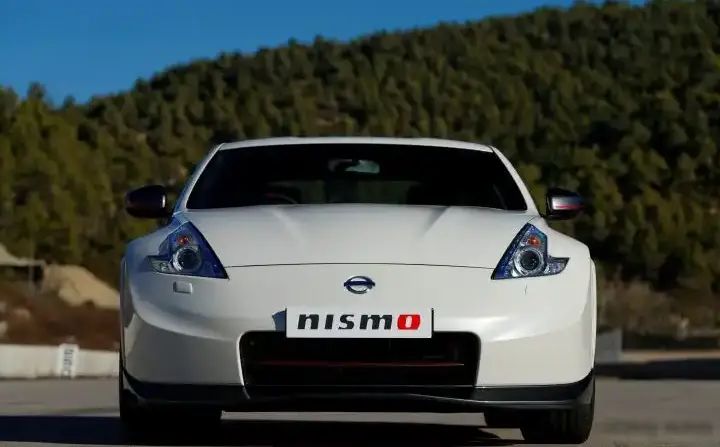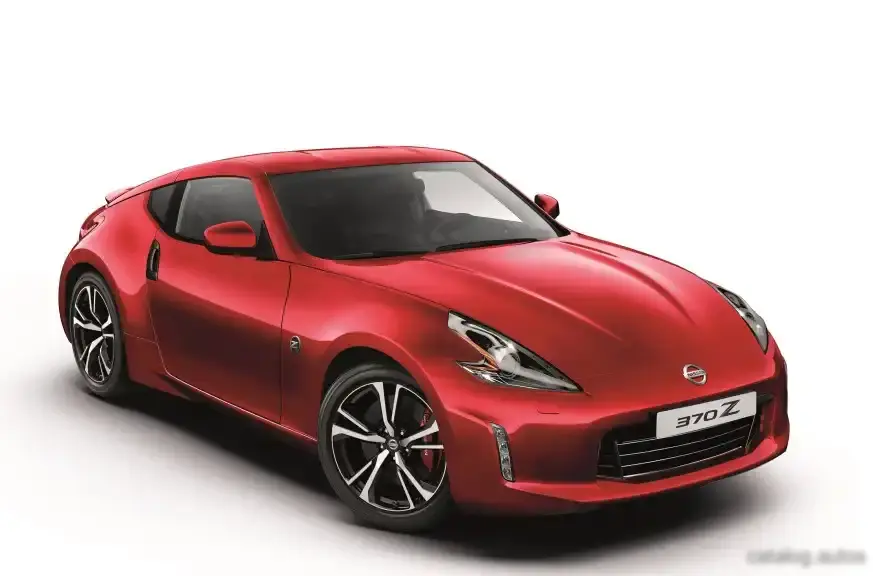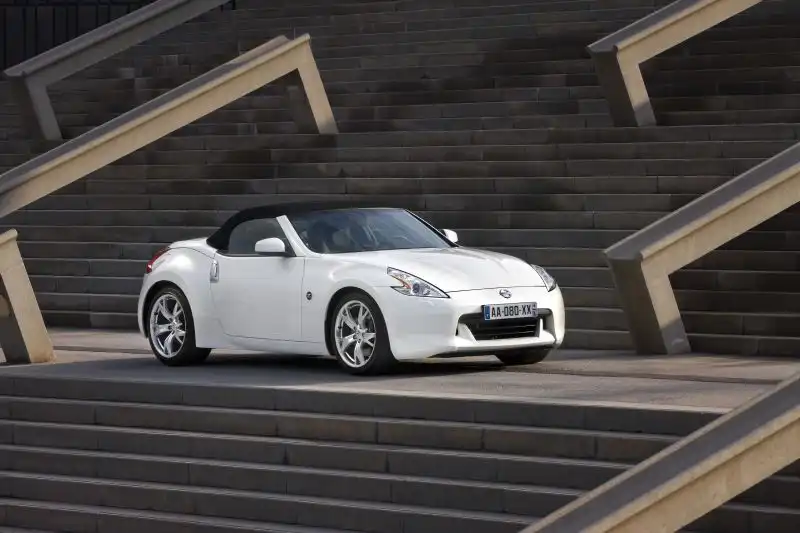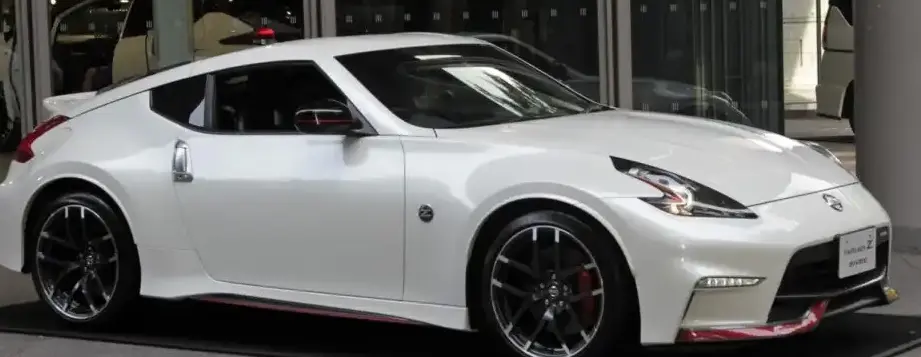
The Nissan 370Z Nismo, specifically the facelifted model produced from 2017 to 2020 for the US market, represents the highest-performance iteration of Nissan’s long-running Z-car lineage. Positioned as the flagship trim, it built upon the already sporty 370Z coupe by incorporating Nismo’s performance enhancements, both visually and mechanically. This variant aimed to deliver a more focused driving experience compared to the standard 370Z models, appealing to enthusiasts seeking a track-capable sports car with aggressive styling. The 2017-2020 Nismo model marked the culmination of the Z34 generation, offering a potent blend of naturally aspirated power and engaging handling.
Technical Specifications
| Brand | Nissan |
| Model | 370Z |
| Generation | 370Z Coupe (facelift 2017) |
| Type (Engine) | Nismo 3.7 V6 (350 Hp) (USA) |
| Start of production | 2017 |
| End of production | 2020 |
| Powertrain Architecture | Internal Combustion engine |
| Body type | Coupe |
| Seats | 2 |
| Doors | 3 |
| Fuel consumption (economy) – urban (EPA) | 13.1 l/100 km (18 US mpg, 21.6 UK mpg, 7.6 km/l) |
| Fuel consumption (economy) – extra urban (EPA) | 9 l/100 km (26.1 US mpg, 31.4 UK mpg, 11.1 km/l) |
| Fuel consumption (economy) – combined (EPA) | 11.2 l/100 km (21 US mpg, 25.2 UK mpg, 8.9 km/l) |
| Fuel Type | Petrol (Gasoline) |
| Weight-to-power ratio | 4.5 kg/Hp, 222.8 Hp/tonne |
| Weight-to-torque ratio | 4.2 kg/Nm, 238.1 Nm/tonne |
| Power | 350 Hp @ 7400 rpm |
| Power per litre | 94.7 Hp/l |
| Torque | 374 Nm @ 5200 rpm (275.85 lb.-ft. @ 5200 rpm) |
| Maximum engine speed | 7500 rpm |
| Engine layout | Front, Longitudinal |
| Engine Model/Code | VQ37VHR |
| Engine displacement | 3696 cm3 (225.54 cu. in.) |
| Number of cylinders | 6 |
| Engine configuration | V-engine |
| Cylinder Bore | 95.5 mm (3.76 in.) |
| Piston Stroke | 86 mm (3.39 in.) |
| Compression ratio | 11:1 |
| Number of valves per cylinder | 4 |
| Fuel injection system | Multi-port manifold injection |
| Engine aspiration | Naturally aspirated engine |
| Valvetrain | DOHC, VVEL |
| Engine oil capacity | 4.9 l (5.18 US qt, 4.31 UK qt) |
| Coolant | 9.2 l (9.72 US qt, 8.09 UK qt) |
| Kerb Weight | 1571 kg (3463.46 lbs.) |
| Max. weight | 1800 kg (3968.32 lbs.) |
| Max load | 229 kg (504.86 lbs.) |
| Trunk (boot) space – minimum | 195 l (6.89 cu. ft.) |
| Fuel tank capacity | 72 l (19.02 US gal, 15.84 UK gal) |
| Length | 4331 mm (170.51 in.) |
| Width | 1870 mm (73.62 in.) |
| Height | 1316 mm (51.81 in.) |
| Wheelbase | 2550 mm (100.39 in.) |
| Front track | 1555 mm (61.22 in.) |
| Rear (Back) track | 1580 mm (62.2 in.) |
| Drag coefficient (Cd) | 0.30 |
| Minimum turning circle (turning diameter) | 10.4 m (34.12 ft.) |
| Drivetrain Architecture | Rear wheel drive. Internal Combustion engine (ICE) drives the rear wheels. |
| Drive wheel | Rear wheel drive |
| Number of gears and type of gearbox | 6 gears, manual transmission |
| Front suspension | Double wishbone, Transverse stabilizer |
| Rear suspension | Independent multi-link suspension, Transverse stabilizer |
| Front brakes | Ventilated discs, 355×33 mm |
| Rear brakes | Ventilated discs, 350×20 mm |
| Assisting systems | ABS (Anti-lock braking system) |
| Steering type | Steering rack and pinion |
| Power steering | Hydraulic Steering |
| Tires size | Front wheel tires: 245/40 R19, Rear wheel tires: 285/35 R19 |
| Wheel rims size | Front wheel rims: 9.5J x 19, Rear wheel rims: 10.5J x 19 |
Powertrain & Engine Architecture
At the heart of the 370Z Nismo lies the VQ37VHR 3.7-liter V6 engine. This engine is a naturally aspirated powerplant, meaning it relies solely on atmospheric pressure to force air into the cylinders, rather than utilizing turbocharging or supercharging. The “VHR” designation stands for “High Revolution,” indicating Nissan’s focus on maximizing engine output at higher RPMs. The engine features a 60-degree V-angle, contributing to a relatively compact engine bay footprint. It employs a dual overhead camshaft (DOHC) valvetrain with Nissan’s Variable Valve Event and Lift (VVEL) technology. VVEL continuously adjusts valve timing and lift on both the intake and exhaust sides, optimizing engine performance and efficiency across a wider range of engine speeds. Fuel delivery is managed by a multi-port fuel injection system. The 2017-2020 Nismo variant produced 350 horsepower at 7400 rpm and 276 lb-ft of torque at 5200 rpm. The engine is paired exclusively with a close-ratio 6-speed manual transmission, prioritizing driver engagement and precise gear changes.
Driving Characteristics
The 370Z Nismo’s driving experience is characterized by its responsive handling and potent acceleration. The manual transmission, with its shorter throws, allows for quick and precise gear changes, enhancing the connection between driver and machine. While not possessing the outright straight-line speed of some turbocharged competitors, the Nismo’s naturally aspirated engine delivers a linear powerband, making it predictable and rewarding to drive. The suspension, tuned by Nismo, is firmer than the standard 370Z, reducing body roll and improving cornering stability. This results in a more planted and confident feel, particularly on winding roads or track environments. The rear-wheel-drive configuration contributes to a balanced chassis, allowing for controlled oversteer when pushed to its limits.
Equipment & Trim Levels
The Nismo trim came standard with a comprehensive suite of features designed to enhance both performance and comfort. Interior appointments included unique Nismo-branded Recaro sport seats, providing exceptional support during spirited driving. A leather-wrapped steering wheel with red stitching, aluminum pedals, and a Nismo-specific gauge cluster further distinguished the interior. Standard exterior features included a unique Nismo body kit with aggressive front and rear fascias, side skirts, and a rear spoiler. The Nismo also featured 19-inch RAYS forged aluminum wheels, providing both aesthetic appeal and reduced unsprung weight. Optional extras included a premium Bose audio system and navigation system.
Chassis & Braking
The 370Z Nismo’s chassis benefits from several Nismo-specific enhancements. Stiffer springs and dampers, along with larger stabilizer bars, contribute to reduced body roll and improved handling. The braking system features ventilated discs at all four corners, with larger front rotors (355mm) compared to the standard 370Z. The Nismo also incorporates a limited-slip differential, enhancing traction and allowing for more effective power delivery during cornering. The steering system utilizes a hydraulic rack-and-pinion setup, providing precise and communicative steering feel.
Market Reception & Comparison
The 370Z Nismo was generally well-received by automotive critics, who praised its engaging driving dynamics, responsive engine, and aggressive styling. However, some reviewers noted its relatively dated interior and lack of modern technology compared to newer sports cars. Compared to the standard 370Z, the Nismo offered a significant upgrade in handling and performance, but at a higher price point. Compared to rivals like the Subaru BRZ/Toyota 86, the 370Z Nismo offered considerably more power and a more refined driving experience, but was also heavier and less fuel-efficient.
Legacy
The Nissan 370Z Nismo (2017-2020) represents a high point in the Z-car lineage, offering a compelling blend of performance, style, and driver engagement. The VQ37VHR engine, while not the most technologically advanced, has proven to be a robust and reliable powerplant when properly maintained. On the used car market, these Nismo models hold their value relatively well, appealing to enthusiasts seeking a naturally aspirated sports car with a strong following. While the 370Z has been discontinued, its legacy continues to inspire Nissan’s future sports car endeavors.