Technical Specifications
| Brand | Nissan |
| Model | 370Z |
| Generation | 370Z Roadster |
| Type (Engine) | 3.7 V6 (328 Hp) Automatic |
| Start of production | 2009 |
| End of production | 2012 |
| Powertrain Architecture | Internal Combustion engine |
| Body type | Roadster |
| Seats | 2 |
| Doors | 2 |
| Fuel consumption (economy) – urban (NEDC) | 15.8 l/100 km (14.9 US mpg, 17.9 UK mpg, 6.3 km/l) |
| Fuel consumption (economy) – extra urban (NEDC) | 8.1 l/100 km (29 US mpg, 34.9 UK mpg, 12.3 km/l) |
| Fuel consumption (economy) – combined (NEDC) | 10.9 l/100 km (21.6 US mpg, 25.9 UK mpg, 9.2 km/l) |
| CO2 emissions (NEDC) | 254 g/km |
| Fuel Type | Petrol (Gasoline) |
| Acceleration 0 – 100 km/h | 5.8 sec |
| Acceleration 0 – 62 mph | 5.8 sec |
| Acceleration 0 – 60 mph | 5.5 sec |
| Maximum speed | 250 km/h (155.34 mph) |
| Emission standard | Euro 5 |
| Weight-to-power ratio | 4.7 kg/Hp, 213.7 Hp/tonne |
| Weight-to-torque ratio | 4.2 kg/Nm, 236.5 Nm/tonne |
| Power | 328 Hp @ 7000 rpm |
| Power per litre | 88.7 Hp/l |
| Torque | 363 Nm @ 5200 rpm (267.74 lb.-ft. @ 5200 rpm) |
| Engine layout | Front, Longitudinal |
| Engine Model/Code | VQ37VHR |
| Engine displacement | 3696 cm3 (225.54 cu. in.) |
| Number of cylinders | 6 |
| Engine configuration | V-engine |
| Cylinder Bore | 95.5 mm (3.76 in.) |
| Piston Stroke | 86 mm (3.39 in.) |
| Compression ratio | 11:1 |
| Number of valves per cylinder | 4 |
| Fuel injection system | Multi-port manifold injection |
| Engine aspiration | Naturally aspirated engine |
| Valvetrain | DOHC, VVEL |
| Engine oil capacity | 4.9 l (5.18 US qt | 4.31 UK qt) |
| Coolant | 8.5 l (8.98 US qt | 7.48 UK qt) |
| Kerb Weight | 1535 kg (3384.1 lbs.) |
| Max. weight | 1885 kg (4155.71 lbs.) |
| Max load | 350 kg (771.62 lbs.) |
| Trunk (boot) space – minimum | 140 l (4.94 cu. ft.) |
| Fuel tank capacity | 72 l (19.02 US gal | 15.84 UK gal) |
| Length | 4250 mm (167.32 in.) |
| Width | 1845 mm (72.64 in.) |
| Height | 1325 mm (52.17 in.) |
| Wheelbase | 2550 mm (100.39 in.) |
| Front track | 1540-1550 mm (60.63 – 61.02 in.) |
| Rear (Back) track | 1565-1595 mm (61.61 – 62.8 in.) |
| Front overhang | 840 mm (33.07 in.) |
| Rear overhang | 860 mm (33.86 in.) |
| Drag coefficient (Cd) | 0.33 |
| Minimum turning circle | 10.6 m (34.78 ft.) |
| Drivetrain Architecture | Rear wheel drive |
| Drive wheel | Rear wheel drive |
| Number of gears and type of gearbox | 7 gears, automatic transmission |
| Front suspension | Double wishbone, Transverse stabilizer |
| Rear suspension | Independent multi-link suspension, Transverse stabilizer |
| Front brakes | Ventilated discs, 355 mm |
| Rear brakes | Ventilated discs, 350 mm |
| Assisting systems | ABS (Anti-lock braking system) |
| Steering type | Steering rack and pinion |
| Power steering | Hydraulic Steering |
| Tires size | Front: 225/50 R18; 245/40 R19, Rear: 245/45 R18; 275/35 R19 |
| Wheel rims size | Front: 8J x 18; 9J x 19, Rear: 9J x 18; 10J x 19 |
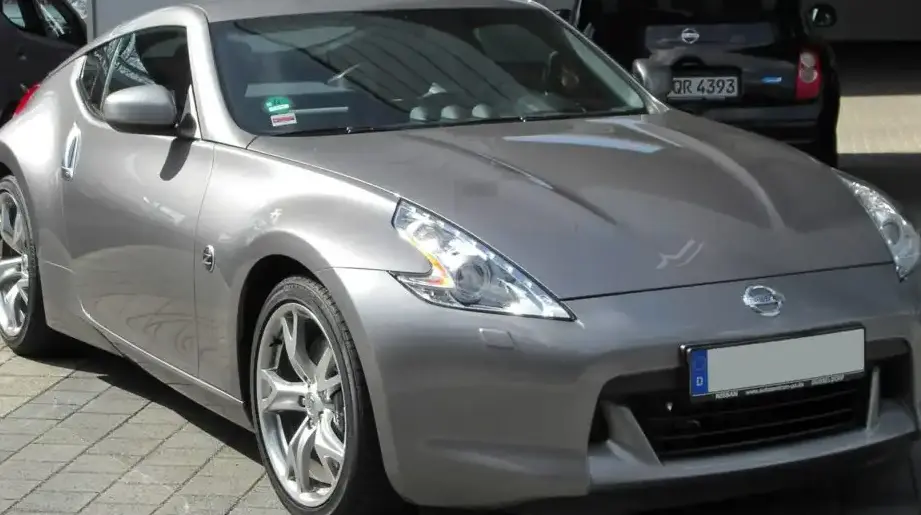
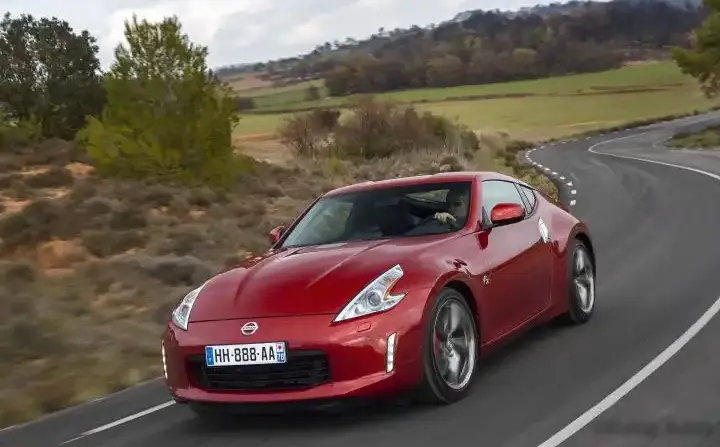
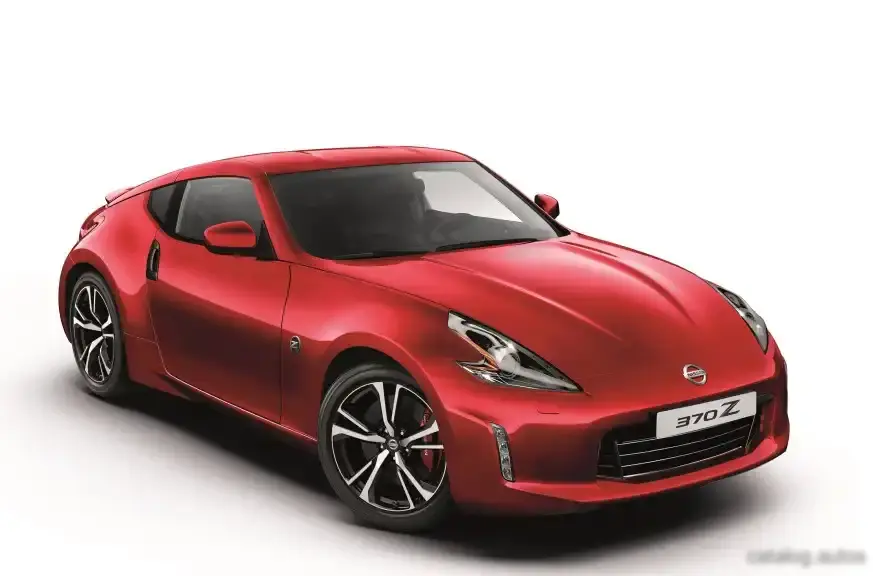
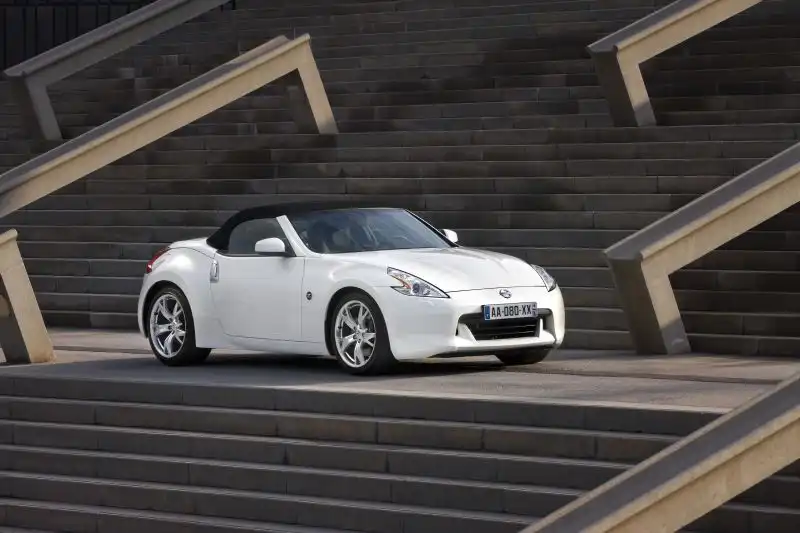
The Nissan 370Z Roadster, launched in 2009, brought a fresh take on the iconic Z car lineage. Building upon the success of the 350Z, the 370Z represented a significant evolution in design, performance, and technology. The Roadster variant, in particular, offered a more engaging and visceral driving experience compared to the coupe, thanks to its open-top configuration. The 3.7-liter V6 engine, coupled with a 7-speed automatic transmission, provided a balance of power and convenience, making it an attractive option for drivers who desired a sporty roadster without the demands of a manual gearbox. This specific combination was available throughout the 2009-2012 production run, representing a core offering within the 370Z Roadster range.
Powertrain & Engine Architecture
At the heart of the 370Z Roadster Automatic lies the VQ37VHR 3.7-liter V6 engine. This engine is a naturally aspirated powerplant, renowned for its smooth power delivery and robust reliability. The “VHR” designation stands for “High Revolution,” indicating the engine’s capability to rev freely and produce power at higher engine speeds. It features a 60-degree V-angle, four valves per cylinder, and Nissan’s Variable Valve Event and Lift (VVEL) technology. VVEL continuously adjusts valve timing and lift based on driving conditions, optimizing both performance and fuel efficiency. The engine utilizes multi-port fuel injection for precise fuel delivery. The 7-speed automatic transmission, sourced from Jatco, features adaptive shift control, allowing it to learn the driver’s habits and adjust shift points accordingly. This transmission offers both manual shift mode and a Drive mode for relaxed cruising. The transmission’s gear ratios are tuned to provide a balance between acceleration and fuel economy, with a relatively tall final drive to enhance highway cruising.
Driving Characteristics
The 370Z Roadster Automatic delivers a distinct driving experience. While not as aggressively geared as the manual transmission versions, the automatic provides smooth and responsive shifts. Acceleration from 0-60 mph is achieved in approximately 5.5 seconds, making it a genuinely quick roadster. The automatic transmission’s programming prioritizes comfort and ease of use, resulting in slightly slower acceleration compared to the 6-speed manual. However, the automatic’s adaptive shift control allows drivers to tailor the shift points to their preferences. The Roadster’s chassis is well-balanced, providing confident handling and minimal body roll. The suspension, featuring double wishbones at the front and a multi-link setup at the rear, effectively absorbs bumps and provides a comfortable ride. The steering is precise and communicative, offering good feedback to the driver.
Equipment & Trim Levels
The 370Z Roadster Automatic typically came well-equipped, even in its base form. Standard features included leather upholstery, automatic climate control, a Bose audio system, power windows and locks, and keyless entry. Optional extras included navigation system, heated seats, and a premium sound system. The interior design was driver-focused, with a clear and concise instrument panel. The Roadster’s soft top was power-operated and featured a glass rear window with a defroster. Trim levels were relatively simple, with most options available as standalone additions rather than packaged into distinct tiers.
Chassis & Braking
The 370Z Roadster’s chassis is a monocoque construction, providing a rigid and lightweight platform. The suspension system is tuned to provide a balance between comfort and handling. The front suspension utilizes double wishbones with a transverse stabilizer bar, while the rear suspension employs an independent multi-link setup, also with a stabilizer bar. Braking duties are handled by ventilated disc brakes on all four wheels. The front brakes measure 355mm in diameter, while the rear brakes are slightly smaller at 350mm. Anti-lock braking system (ABS) is standard, providing enhanced stopping power and control.
Market Reception & Comparison
The 370Z Roadster Automatic was generally well-received by automotive critics. It was praised for its powerful engine, engaging handling, and comfortable ride. However, some critics noted that the automatic transmission lacked the involvement of the manual gearbox. Compared to the manual transmission versions, the automatic offered slightly slower acceleration and reduced fuel economy. However, it provided a more accessible and convenient driving experience, appealing to a wider range of drivers. Against competitors like the Mazda MX-5 Miata and BMW Z4, the 370Z Roadster offered a more powerful engine and a more aggressive driving experience.
Legacy
The Nissan 370Z Roadster Automatic has proven to be a reliable and durable sports car. The VQ37VHR engine is known for its longevity, and the Jatco 7-speed automatic transmission has also demonstrated good reliability. In the used car market, the 370Z Roadster Automatic remains a popular choice for enthusiasts seeking a sporty and affordable roadster. Regular maintenance, including oil changes and fluid checks, is essential to ensure the long-term health of the powertrain. These vehicles are generally well-regarded for their overall build quality and relatively low running costs, making them a compelling option for those looking for a fun and engaging driving experience.