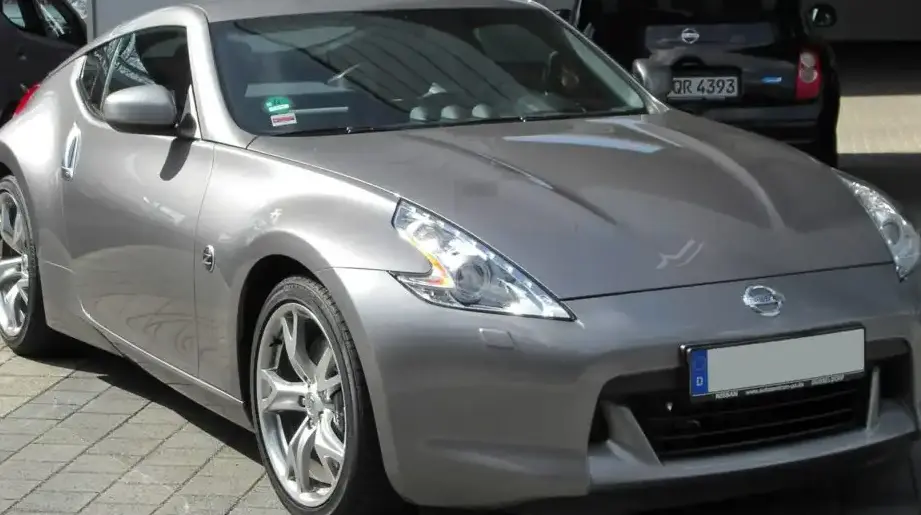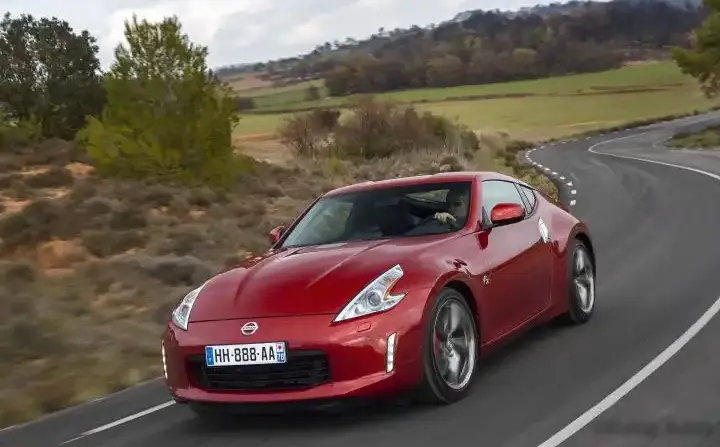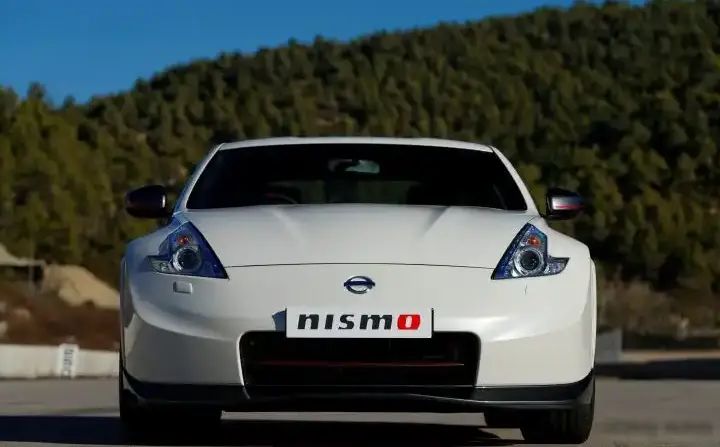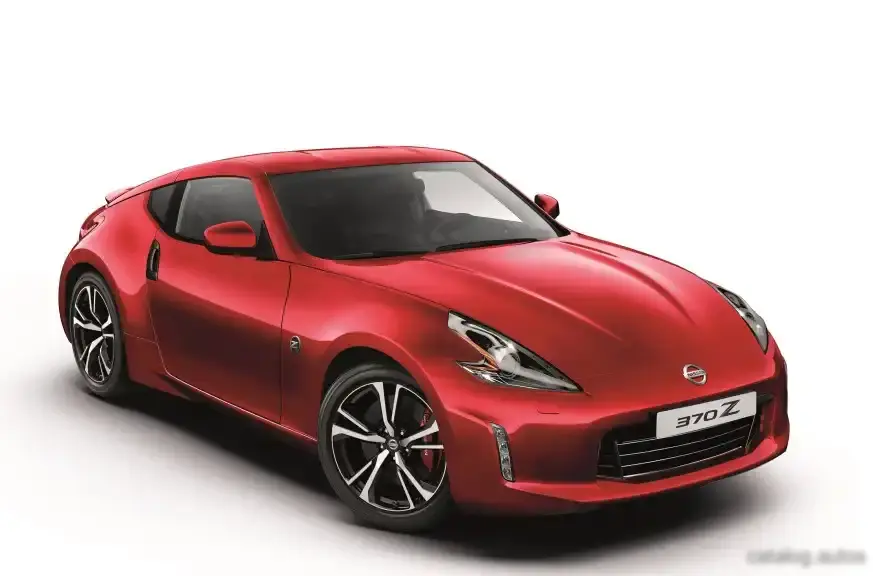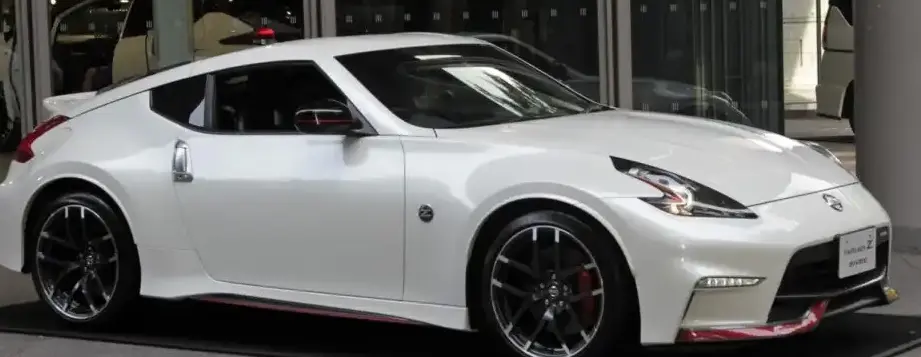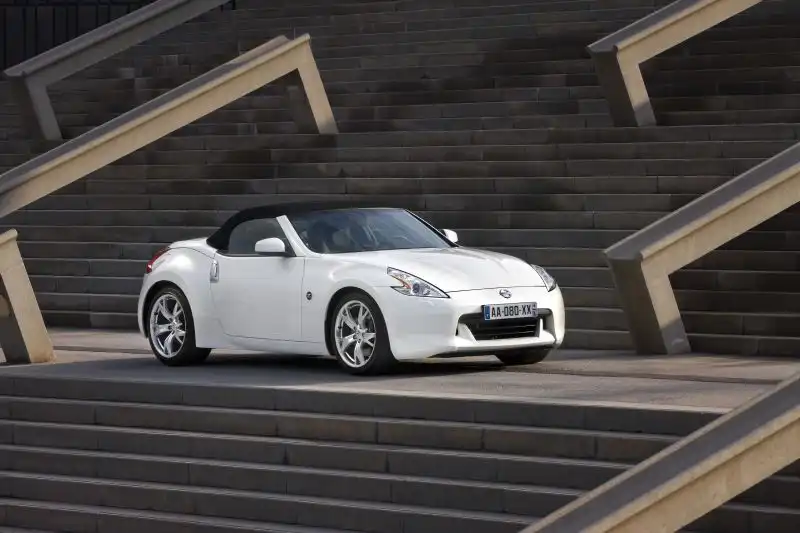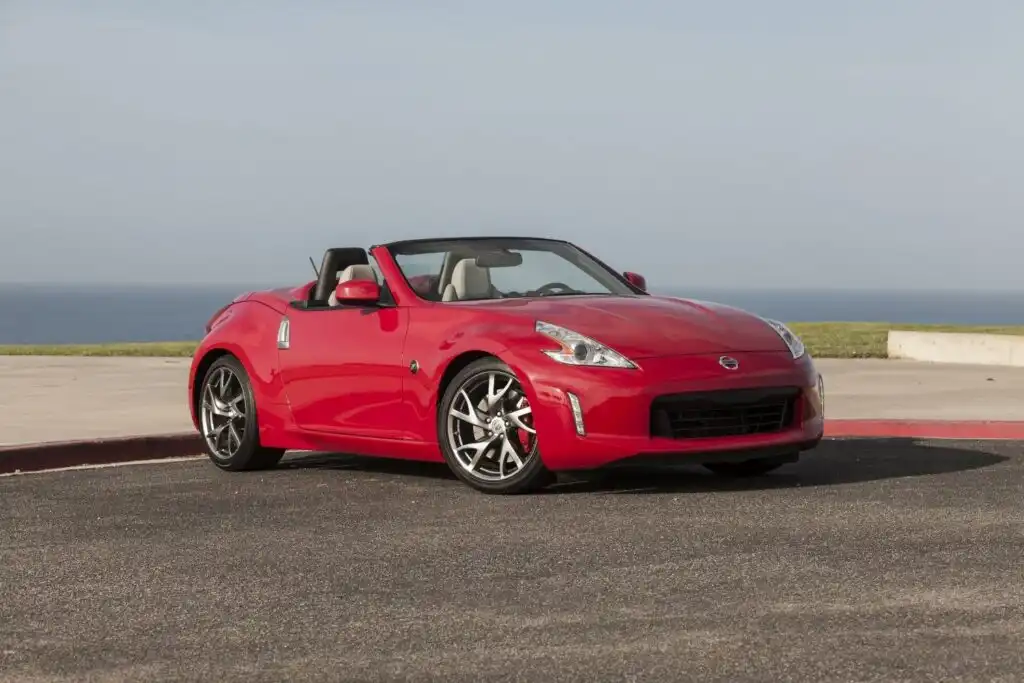
The Nissan 370Z Roadster (facelift, 2012-2017) represents the convertible iteration of Nissan’s popular sports car, building upon the Z33 platform and continuing the Z-car lineage. Introduced as a mid-cycle refresh, the 2012 facelift brought styling updates and minor mechanical revisions to both the coupe and roadster models. This particular variant, equipped with the 3.7-liter V6 engine producing 328 horsepower, occupied the top performance tier of the 370Z Roadster lineup. It aimed to deliver an engaging open-top driving experience, blending performance with a degree of everyday usability. Production spanned from 2012 to 2017, catering primarily to the North American and select international markets where open-top sports cars remained in demand.
Technical Specifications
| Brand | Nissan |
| Model | 370Z |
| Generation | 370Z Roadster (facelift 2012) |
| Type (Engine) | 3.7 V6 (328 Hp) |
| Start of production | 2012 |
| End of production | 2017 |
| Powertrain Architecture | Internal Combustion engine |
| Body type | Roadster |
| Seats | 2 |
| Doors | 2 |
| Fuel consumption (economy) – urban (NEDC) | 16.2 l/100 km (14.5 US mpg, 17.4 UK mpg, 6.2 km/l) |
| Fuel consumption (economy) – extra urban (NEDC) | 8.3 l/100 km (28.3 US mpg, 34 UK mpg, 12 km/l) |
| Fuel consumption (economy) – combined (NEDC) | 11.2 l/100 km (21 US mpg, 25.2 UK mpg, 8.9 km/l) |
| CO2 emissions (NEDC) | 262 g/km |
| Fuel Type | Petrol (Gasoline) |
| Acceleration 0 – 100 km/h | 5.5 sec |
| Acceleration 0 – 62 mph | 5.5 sec |
| Acceleration 0 – 60 mph | 5.2 sec |
| Maximum speed | 250 km/h (155.34 mph), Electronically limited |
| Emission standard | Euro 5 |
| Weight-to-power ratio | 4.7 kg/Hp, 213 Hp/tonne |
| Weight-to-torque ratio | 4.2 kg/Nm, 235.7 Nm/tonne |
| Power | 328 Hp @ 7000 rpm |
| Power per litre | 88.7 Hp/l |
| Torque | 363 Nm @ 5200 rpm (267.74 lb.-ft. @ 5200 rpm) |
| Engine layout | Front, Longitudinal |
| Engine Model/Code | VQ37VHR |
| Engine displacement | 3696 cm3 (225.54 cu. in.) |
| Number of cylinders | 6 |
| Engine configuration | V-engine |
| Cylinder Bore | 95.5 mm (3.76 in.) |
| Piston Stroke | 86 mm (3.39 in.) |
| Compression ratio | 11:1 |
| Number of valves per cylinder | 4 |
| Fuel injection system | Multi-port manifold injection |
| Engine aspiration | Naturally aspirated engine |
| Valvetrain | DOHC, VVEL |
| Engine oil capacity | 4.9 l (5.18 US qt | 4.31 UK qt) |
| Coolant | 9.2 l (9.72 US qt | 8.09 UK qt) |
| Kerb Weight | 1540 kg (3395.12 lbs.) |
| Max. weight | 1885 kg (4155.71 lbs.) |
| Max load | 345 kg (760.59 lbs.) |
| Trunk (boot) space – minimum | 140 l (4.94 cu. ft.) |
| Fuel tank capacity | 72 l (19.02 US gal | 15.84 UK gal) |
| Length | 4250 mm (167.32 in.) |
| Width | 1845 mm (72.64 in.) |
| Height | 1325 mm (52.17 in.) |
| Wheelbase | 2550 mm (100.39 in.) |
| Front track | 1540-1550 mm (60.63 – 61.02 in.) |
| Rear (Back) track | 1565-1595 mm (61.61 – 62.8 in.) |
| Front overhang | 840 mm (33.07 in.) |
| Rear overhang | 860 mm (33.86 in.) |
| Drag coefficient (Cd) | 0.33 |
| Minimum turning circle (turning diameter) | 10.6 m (34.78 ft.) |
| Drivetrain Architecture | Rear wheel drive |
| Drive wheel | Rear wheel drive |
| Number of gears and type of gearbox | 6 gears, manual transmission |
| Front suspension | Double wishbone, Transverse stabilizer |
| Rear suspension | Independent multi-link suspension, Transverse stabilizer |
| Front brakes | Ventilated discs, 355 mm |
| Rear brakes | Ventilated discs, 350 mm |
| Assisting systems | ABS (Anti-lock braking system) |
| Steering type | Steering rack and pinion |
| Power steering | Hydraulic Steering |
| Tires size | Front wheel tires: 225/50 R18; 245/40 R19 Rear wheel tires: 245/45 R18; 275/35 R19 |
| Wheel rims size | Front wheel rims: 8J x 18; 9J x 19 Rear wheel rims: 9J x 18; 10J x 19 |
Powertrain & Engine Architecture
The heart of the 2012-2017 370Z Roadster is Nissan’s VQ37VHR 3.7-liter V6 engine. This engine is a naturally aspirated powerplant, renowned for its smooth power delivery and robust construction. The “VHR” designation stands for “High Revolution,” indicating the engine’s capability to rev freely. It features a 60-degree V-angle, four valves per cylinder, and Nissan’s Variable Valve Event and Lift (VVEL) technology. VVEL continuously adjusts valve timing and lift based on driving conditions, optimizing both performance and fuel efficiency. Fuel delivery is managed by a multi-port fuel injection system. The engine produces 328 horsepower at 7000 rpm and 267.74 lb-ft of torque at 5200 rpm. The engine is longitudinally mounted, driving the rear wheels. The standard transmission for this variant was a 6-speed manual, although a 7-speed automatic transmission with paddle shifters was also available as an option.
Driving Characteristics
The 370Z Roadster with the 3.7-liter V6 and manual transmission delivers a classic sports car driving experience. Acceleration from 0-60 mph takes approximately 5.2 seconds, and the car feels responsive and eager to rev. The rear-wheel-drive configuration provides a balanced feel, and the relatively short wheelbase contributes to agile handling. The automatic transmission, while offering convenience, slightly diminishes the raw engagement of the manual. Gear ratios are tuned for a balance of acceleration and cruising comfort. The Roadster’s open-top design adds to the sensory experience, but also introduces some body flex compared to the coupe.
Equipment & Trim Levels
The 370Z Roadster, even in its base form, came reasonably well-equipped. Standard features included leather upholstery, air conditioning, power windows and locks, a Bose audio system, and Bluetooth connectivity. The 2012 facelift brought updated interior trim and available features like Nissan’s Navigation System. Optional extras included heated seats, a premium Bose audio package with more speakers, and various cosmetic enhancements. The Roadster trim generally sat at the higher end of the 370Z lineup, offering a more luxurious and refined experience than the base coupe.
Chassis & Braking
The 370Z Roadster utilizes a double wishbone suspension setup at the front and an independent multi-link suspension at the rear, both incorporating transverse stabilizers to minimize body roll. The chassis is reinforced compared to the original Z33 to compensate for the lack of a fixed roof. Braking duties are handled by ventilated disc brakes on all four wheels, with larger diameter rotors (355mm front, 350mm rear) providing ample stopping power. The car is equipped with an Anti-lock Braking System (ABS) as standard. Steering is rack-and-pinion with hydraulic power assistance, offering a direct and communicative feel.
Market Reception & Comparison
The 2012-2017 Nissan 370Z Roadster was generally well-received by automotive critics. It was praised for its engaging driving dynamics, powerful engine, and attractive styling. However, some reviewers noted the interior felt dated compared to newer sports cars. Compared to the 370Z coupe, the Roadster offered a more open-air driving experience but came with a weight penalty and slightly reduced structural rigidity. The automatic transmission, while smooth, was often seen as less engaging than the manual. Fuel economy was typical for a sports car of its class, averaging around 21 mpg combined.
Legacy
The Nissan 370Z Roadster, particularly the 3.7-liter V6 variant, has proven to be a relatively reliable sports car. The VQ37VHR engine is known for its durability, and with proper maintenance, can last for many years. The car has maintained a strong following among enthusiasts, and used examples remain relatively affordable. While it may not offer the latest technology found in modern sports cars, the 370Z Roadster continues to provide a rewarding and enjoyable driving experience, making it a popular choice for those seeking a classic open-top sports car.