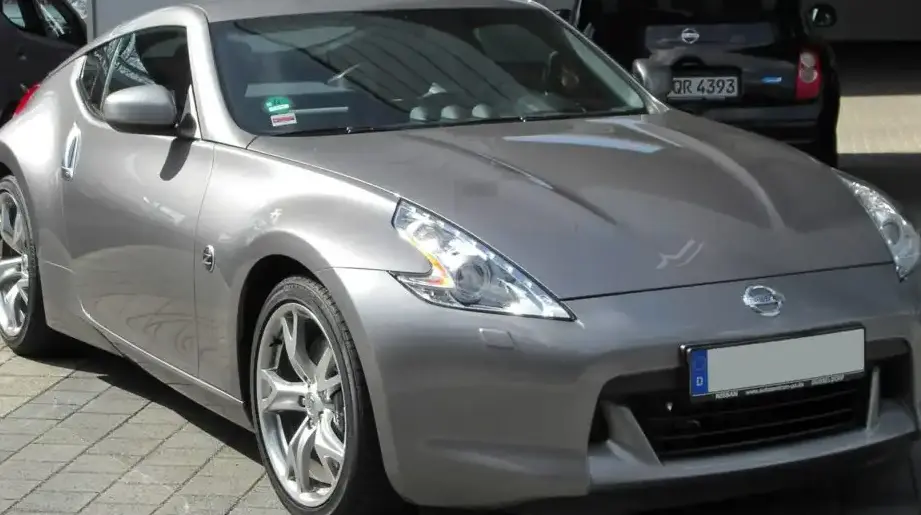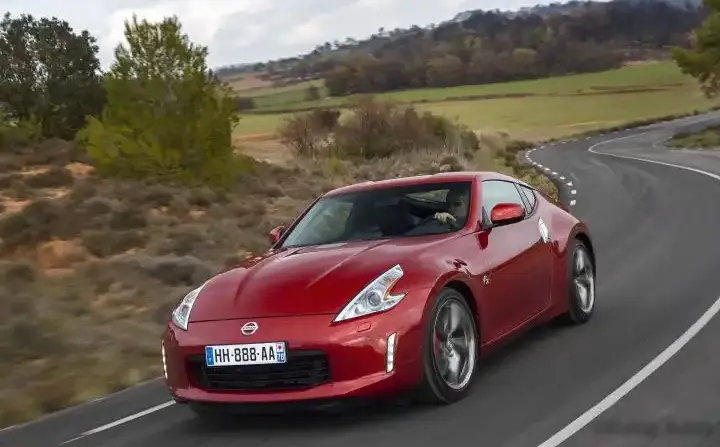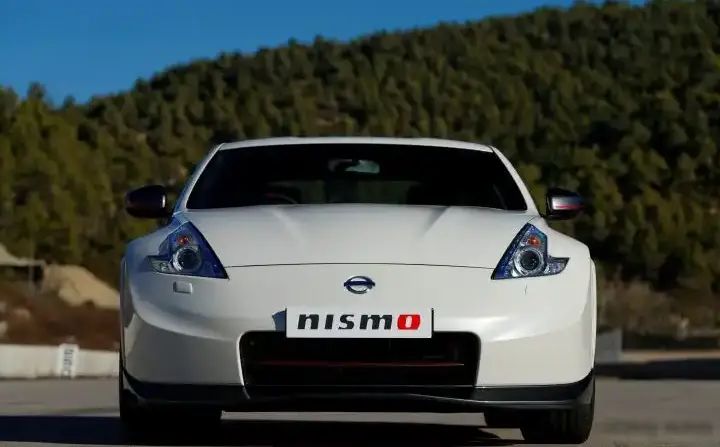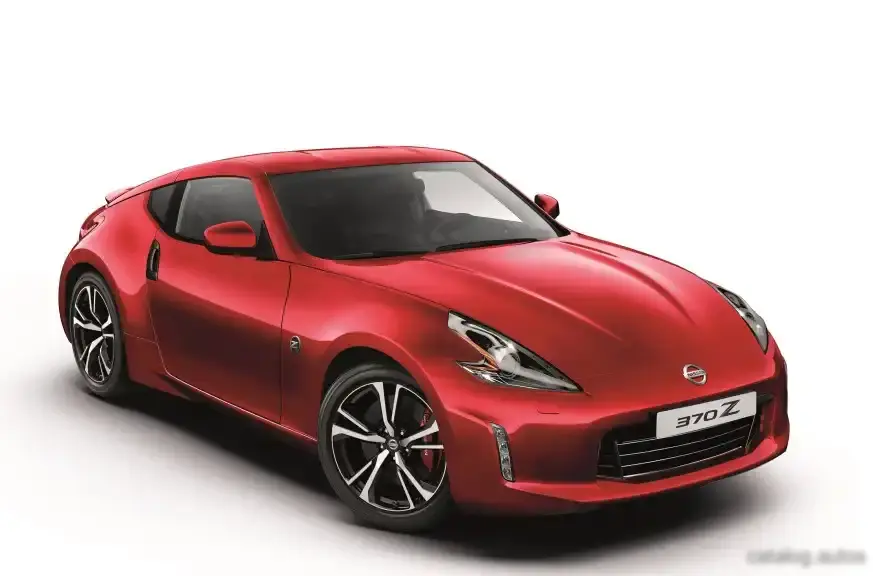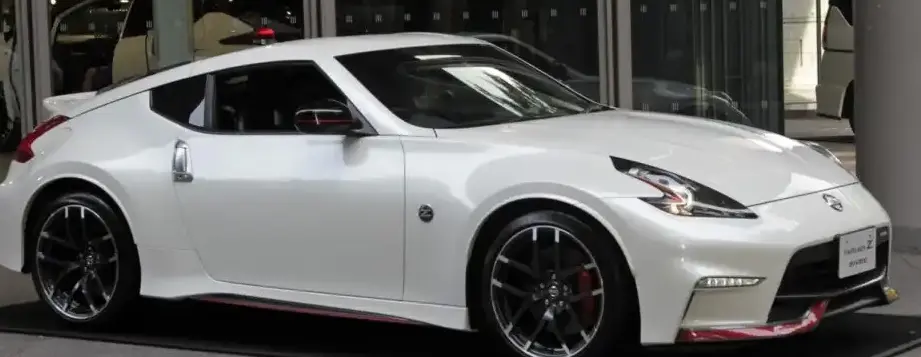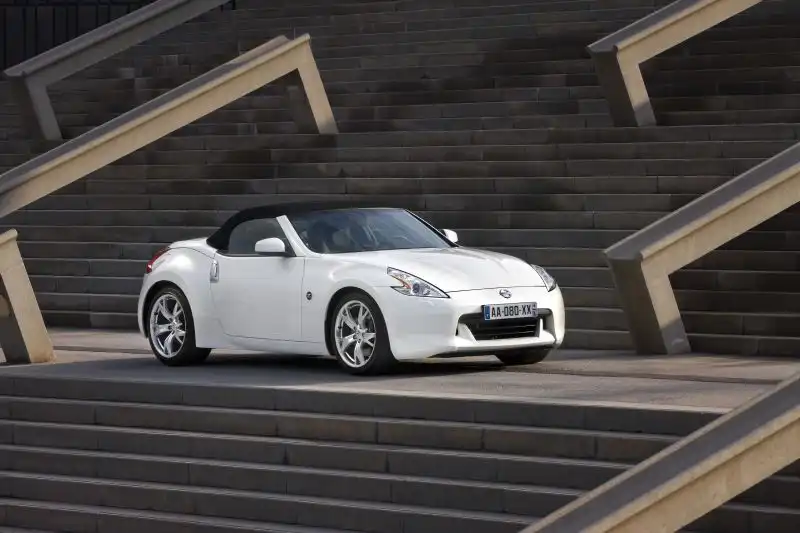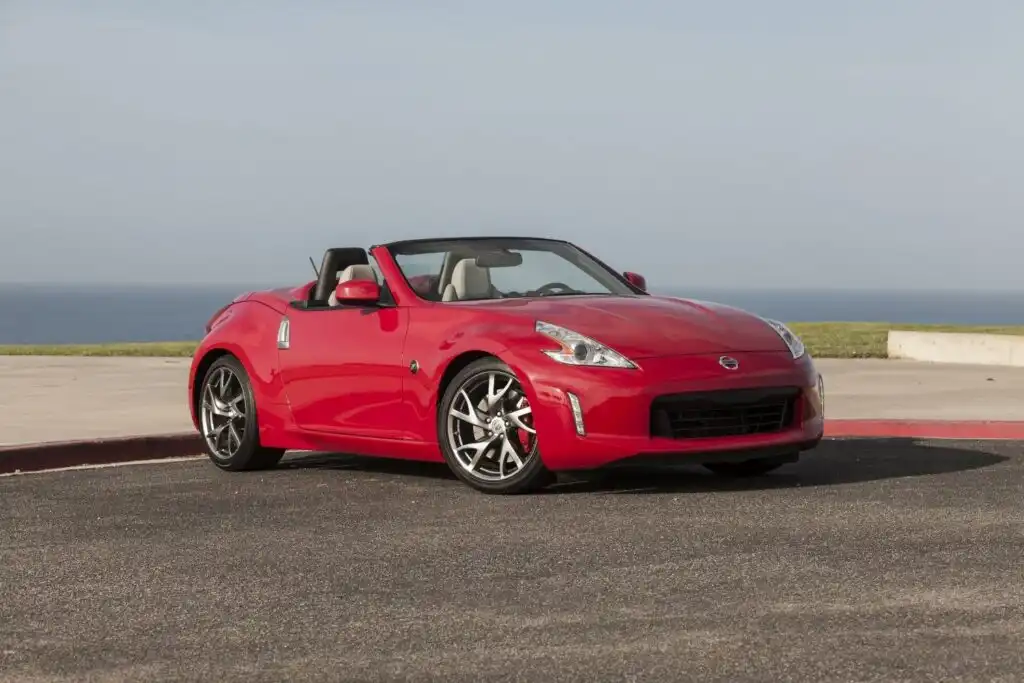
The Nissan 370Z Roadster, specifically the facelifted version produced from 2012 to 2017, represents the convertible iteration of Nissan’s popular sports car. This generation, internally designated as the Z34, continued the 370Z lineage, offering an open-top driving experience while retaining the core performance characteristics of the coupe. The 3.7-liter V6 engine paired with a seven-speed automatic transmission was a significant offering within the 370Z range, positioned as a blend of performance and convenience. It aimed to broaden the car’s appeal beyond the enthusiast market traditionally focused on manual transmissions.
Technical Specifications
| Brand | Nissan |
| Model | 370Z |
| Generation | 370Z Roadster (facelift 2012) |
| Type (Engine) | 3.7 V6 (328 Hp) Automatic |
| Start of production | 2012 |
| End of production | 2017 |
| Powertrain Architecture | Internal Combustion engine |
| Body type | Roadster |
| Seats | 2 |
| Doors | 2 |
| Fuel consumption (economy) – urban (NEDC) | 15.8 l/100 km (14.9 US mpg, 17.9 UK mpg, 6.3 km/l) |
| Fuel consumption (economy) – extra urban (NEDC) | 8.1 l/100 km (29 US mpg, 34.9 UK mpg, 12.3 km/l) |
| Fuel consumption (economy) – combined (NEDC) | 10.9 l/100 km (21.6 US mpg, 25.9 UK mpg, 9.2 km/l) |
| CO2 emissions (NEDC) | 254 g/km |
| Fuel Type | Petrol (Gasoline) |
| Acceleration 0 – 100 km/h | 5.8 sec |
| Acceleration 0 – 62 mph | 5.8 sec |
| Acceleration 0 – 60 mph | 5.5 sec |
| Maximum speed | 250 km/h (155.34 mph) – Electronically limited |
| Emission standard | Euro 5 |
| Weight-to-power ratio | 4.8 kg/Hp, 208.4 Hp/tonne |
| Weight-to-torque ratio | 4.3 kg/Nm, 230.6 Nm/tonne |
| Power | 328 Hp @ 7000 rpm |
| Power per litre | 88.7 Hp/l |
| Torque | 363 Nm @ 5200 rpm (267.74 lb.-ft. @ 5200 rpm) |
| Engine layout | Front, Longitudinal |
| Engine Model/Code | VQ37VHR |
| Engine displacement | 3696 cm3 (225.54 cu. in.) |
| Number of cylinders | 6 |
| Engine configuration | V-engine |
| Cylinder Bore | 95.5 mm (3.76 in.) |
| Piston Stroke | 86 mm (3.39 in.) |
| Compression ratio | 11:1 |
| Number of valves per cylinder | 4 |
| Fuel injection system | Multi-port manifold injection |
| Engine aspiration | Naturally aspirated engine |
| Valvetrain | DOHC, VVEL |
| Engine oil capacity | 4.9 l (5.18 US qt | 4.31 UK qt) |
| Coolant | 9.1 l (9.62 US qt | 8.01 UK qt) |
| Kerb Weight | 1574 kg (3470.08 lbs.) |
| Max. weight | 1885 kg (4155.71 lbs.) |
| Max load | 311 kg (685.64 lbs.) |
| Trunk (boot) space – minimum | 140 l (4.94 cu. ft.) |
| Fuel tank capacity | 72 l (19.02 US gal | 15.84 UK gal) |
| Length | 4250 mm (167.32 in.) |
| Width | 1845 mm (72.64 in.) |
| Height | 1325 mm (52.17 in.) |
| Wheelbase | 2550 mm (100.39 in.) |
| Front track | 1540-1550 mm (60.63 – 61.02 in.) |
| Rear (Back) track | 1565-1595 mm (61.61 – 62.8 in.) |
| Front overhang | 840 mm (33.07 in.) |
| Rear overhang | 860 mm (33.86 in.) |
| Drag coefficient (Cd) | 0.33 |
| Minimum turning circle | 10.6 m (34.78 ft.) |
| Drivetrain | Rear wheel drive |
| Number of gears and type of gearbox | 7 gears, automatic transmission |
| Front suspension | Double wishbone, Transverse stabilizer |
| Rear suspension | Independent multi-link suspension, Transverse stabilizer |
| Front brakes | Ventilated discs, 355 mm |
| Rear brakes | Ventilated discs, 350 mm |
| Assisting systems | ABS (Anti-lock braking system) |
| Steering type | Steering rack and pinion |
| Power steering | Hydraulic Steering |
| Tires size | Front: 225/50 R18; 245/40 R19, Rear: 245/45 R18; 275/35 R19 |
| Wheel rims size | Front: 8J x 18; 9J x 19, Rear: 9J x 18; 10J x 19 |
INTRODUCTION
The 2012-2017 Nissan 370Z Roadster facelift represented a mid-cycle refresh for the Z34 platform. Introduced in 2009, the 370Z aimed to modernize the Z car legacy with a more powerful engine and refined handling. The Roadster variant, offering open-air motoring, was a key component of the lineup. The 3.7-liter V6 engine paired with the seven-speed automatic transmission was positioned as a more accessible entry point into the 370Z experience, appealing to buyers who prioritized ease of use over the more engaging experience of a manual gearbox. This configuration was available throughout the facelifted model years, offering a consistent powertrain option alongside the six-speed manual.
Powertrain & Engine Architecture
The heart of the 370Z Roadster Automatic is the VQ37VHR 3.7-liter V6 engine. This engine is a naturally aspirated powerplant, meaning it relies solely on atmospheric pressure for induction, rather than forced induction like turbocharging or supercharging. The “VQ” designation signifies Nissan’s highly regarded V6 engine family, known for its reliability and smooth power delivery. The “HR” suffix denotes High Revolution, indicating a focus on high-rpm performance. The engine utilizes a multi-port fuel injection system and a Double Overhead Camshaft (DOHC) valvetrain with Variable Valve Event and Lift (VVEL) technology. VVEL continuously adjusts valve timing and lift based on driving conditions, optimizing both power and fuel efficiency. The engine produces 328 horsepower at 7000 rpm and 267.74 lb-ft of torque at 5200 rpm. The seven-speed automatic transmission features adaptive shift control, attempting to learn the driver’s style and adjust shift points accordingly. It also includes manual shift mode with paddle shifters, offering some degree of driver control.
Driving Characteristics
The 370Z Roadster Automatic delivers a comfortable and capable driving experience. While not as overtly sporty as the manual transmission version, the automatic provides smooth and predictable acceleration. The seven-speed transmission offers relatively quick shifts, but lacks the immediacy and engagement of a manual. The automatic’s gear ratios are tuned for a balance of acceleration and fuel economy. In real-world driving, the 0-60 mph time is consistently around 5.5-5.8 seconds. The Roadster’s chassis is well-balanced, providing good handling characteristics. However, the added weight of the automatic transmission and convertible top mechanism does slightly diminish the car’s agility compared to the coupe or manual-equipped models.
Equipment & Trim Levels
The 370Z Roadster Automatic was typically offered in a single, well-equipped trim level. Standard features included leather upholstery, automatic climate control, a Bose premium audio system, Bluetooth connectivity, and power-adjustable seats. Optional extras included navigation, heated seats, and a rear spoiler. The interior design was driver-focused, with a clear and concise instrument cluster and logically arranged controls. The Roadster’s interior differed from the coupe in terms of the convertible top mechanism and the reinforced chassis structure, which slightly reduced interior space.
Chassis & Braking
The 370Z Roadster utilizes a reinforced chassis to compensate for the lack of a fixed roof. The suspension consists of a double wishbone setup at the front and an independent multi-link suspension at the rear, both with transverse stabilizers to reduce body roll. The braking system features ventilated discs at all four corners, providing ample stopping power. The front brakes measure 355mm, while the rear brakes are 350mm. Anti-lock Braking System (ABS) is standard. The Roadster’s suspension tuning is slightly softer than the coupe’s, prioritizing ride comfort over ultimate track performance.
Market Reception & Comparison
The 370Z Roadster Automatic received generally positive reviews. Critics praised its powerful engine, comfortable ride, and well-equipped interior. However, some noted that the automatic transmission lacked the engagement of the manual and that the car’s fuel economy was relatively poor for its class. Compared to the six-speed manual version, the automatic offered greater convenience but sacrificed some driving enjoyment. Compared to other roadsters in its price range, such as the Mazda MX-5 Miata, the 370Z Roadster offered significantly more power but was also larger and heavier.
Legacy
The Nissan 370Z Roadster, particularly the 3.7-liter V6 Automatic variant, has proven to be a relatively reliable sports car. The VQ37VHR engine is known for its durability, and the seven-speed automatic transmission has generally held up well over time. On the used car market, these models are often sought after by buyers looking for an affordable and stylish roadster with a powerful engine. While maintenance costs can be higher than some competitors, the 370Z Roadster remains a popular choice for enthusiasts and casual drivers alike. Its blend of performance, comfort, and open-air driving experience continues to appeal to a wide range of buyers.