
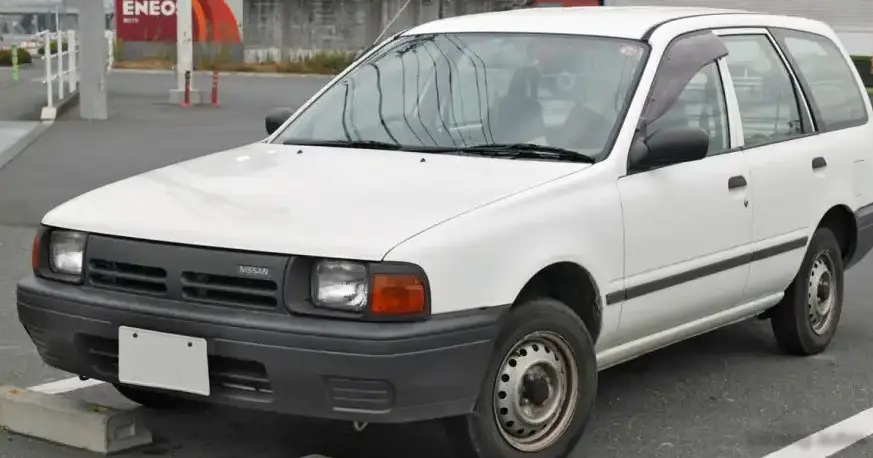
The Nissan AD Y10 1.7 d, produced between 1990 and 1996, represents a utilitarian and economical variant within the broader Y10 series of compact, commercial-oriented station wagons. Positioned as an entry-level offering, this diesel-powered version of the AD catered to buyers prioritizing fuel efficiency and practicality over outright performance. The Y10 series, sold primarily in Japan and select export markets, served as a workhorse vehicle for small businesses and families needing a versatile and affordable transport solution. This particular 1.7 diesel configuration was designed to meet the demands of a market increasingly focused on economical transportation, especially in the wake of rising fuel costs.
Technical Specifications
| Brand | Nissan |
| Model | AD |
| Generation | AD Y10 |
| Type (Engine) | 1.7 d (55 Hp) |
| Start of production | 1990 year |
| End of production | 1996 year |
| Powertrain Architecture | Internal Combustion engine |
| Body type | Station wagon (estate) |
| Seats | 5 |
| Doors | 5 |
| Fuel Type | Diesel |
| Weight-to-power ratio | 18.7 kg/Hp, 53.4 Hp/tonne |
| Weight-to-torque ratio | 9.9 kg/Nm, 101 Nm/tonne |
| Power | 55 Hp |
| Power per litre | 32.7 Hp/l |
| Torque | 104 Nm @ 2800 rpm (76.71 lb.-ft. @ 2800 rpm) |
| Engine displacement | 1681 cm3 (102.58 cu. in.) |
| Number of cylinders | 4 |
| Engine configuration | Inline |
| Cylinder Bore | 80 mm (3.15 in.) |
| Piston Stroke | 83.6 mm (3.29 in.) |
| Compression ratio | 22:1 |
| Engine aspiration | Naturally aspirated engine |
| Kerb Weight | 1030 kg (2270.76 lbs.) |
| Fuel tank capacity | 50 l (13.21 US gal | 11 UK gal) |
| Length | 4175 mm (164.37 in.) |
| Width | 1665 mm (65.55 in.) |
| Height | 1480 mm (58.27 in.) |
| Wheelbase | 2400 mm (94.49 in.) |
| Front track | 1445 mm (56.89 in.) |
| Rear (Back) track | 1445 mm (56.89 in.) |
| Ride height (ground clearance) | 140 mm (5.51 in.) |
| Drivetrain Architecture | The Internal combustion engine (ICE) drives the front wheels of the vehicle. |
| Drive wheel | Front wheel drive |
| Number of gears and type of gearbox | 5 gears, manual transmission |
| Front brakes | Ventilated discs |
| Rear brakes | Drum |
Powertrain & Engine Architecture
The heart of the AD Y10 1.7 d is a 1.7-liter inline-four cylinder diesel engine. While specific engine codes varied depending on the market, this engine generally falls under the categorization of a naturally aspirated, indirect injection diesel. This engine was not known for its sophistication; it relied on a mechanical fuel injection pump to deliver fuel to the cylinders. The relatively low compression ratio of 22:1, while high for modern standards, was typical for diesel engines of the era. The engine’s valvetrain employed a single overhead camshaft (SOHC) design, keeping complexity and cost down. The 5-speed manual transmission was the only gearbox option available with this engine, prioritizing fuel economy and durability over sporty performance. The transmission was a conventional setup, designed to handle the relatively low horsepower and high torque output of the diesel engine.
Driving Characteristics
The driving experience in the AD Y10 1.7 d is best described as utilitarian. With only 55 horsepower on tap, acceleration is decidedly slow. The engine produces a maximum of 104 Nm (76.71 lb-ft) of torque at 2800 rpm, which provides adequate pulling power for everyday driving and light commercial use, but doesn’t offer much in the way of spirited performance. The 5-speed manual transmission is geared to maximize fuel efficiency, meaning that highway cruising requires the engine to work relatively hard. Compared to the gasoline-powered versions of the AD Y10, the diesel model offers significantly better fuel economy but sacrifices responsiveness. The gear ratios are spaced to provide reasonable acceleration from a standstill, but overtaking maneuvers require careful planning. The overall driving experience is focused on practicality and economy rather than driver enjoyment.
Equipment & Trim Levels
The AD Y10 1.7 d was typically offered with a very basic level of equipment, reflecting its position as an entry-level workhorse vehicle. Standard features generally included vinyl or cloth upholstery, a simple dashboard layout with basic instrumentation, and manual windows and door locks. Power steering was not typically standard, and air conditioning was often an optional extra. The interior was designed for durability and ease of cleaning, rather than luxury. Trim levels were minimal, with most variations relating to the presence or absence of optional extras like a radio or upgraded upholstery. The focus was on providing a functional and reliable vehicle at the lowest possible price point.
Chassis & Braking
The AD Y10 featured a relatively simple chassis design. It utilized a front MacPherson strut suspension and a rear twist beam suspension. This setup prioritized cost-effectiveness and durability over sophisticated handling. The front brakes were ventilated discs, providing adequate stopping power for the vehicle’s weight and performance. However, the rear brakes were drums, which were less effective than disc brakes and reflected the vehicle’s budget-oriented nature. Stabilizer bars were often omitted on the base models to further reduce costs. The suspension was tuned for comfort and load-carrying capacity, rather than sporty handling. The relatively high ride height (140 mm) provided good ground clearance for navigating rough roads.
Market Reception & Comparison
The Nissan AD Y10 1.7 d was generally well-received in its target market as a practical and economical vehicle. Critics praised its fuel efficiency and durability, but noted its lack of performance and refinement. Compared to other compact station wagons of the time, the AD Y10 offered a competitive price point and a reputation for reliability. The diesel version was particularly popular with businesses and individuals who needed a vehicle for frequent, short trips and valued fuel economy above all else. Compared to the gasoline-powered AD Y10 variants, the 1.7 d offered significantly better fuel economy but sacrificed performance and refinement. The 1.5-liter gasoline engine provided a more responsive driving experience, but at the cost of increased fuel consumption.
Legacy
The Nissan AD Y10 1.7 d, while not a particularly glamorous vehicle, has proven to be remarkably durable over the years. Many examples are still on the road today, testament to the robustness of its mechanical components. The 1.7-liter diesel engine, while simple in design, is known for its longevity and relatively low maintenance costs. In the used car market, these vehicles are often sought after by those looking for a reliable and affordable workhorse. However, finding parts can sometimes be challenging, as the vehicle is now quite old. The AD Y10 1.7 d represents a bygone era of automotive engineering, where practicality and durability were prioritized over performance and luxury. It remains a popular choice for those seeking a simple, reliable, and economical vehicle.
