
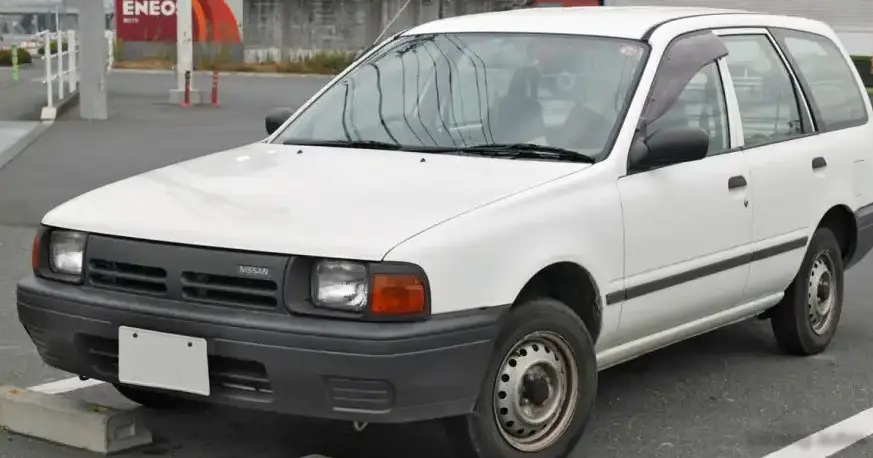
The Nissan AD Y10 2.0 d, produced between 1990 and 1996, represents a practical and utilitarian offering within the broader Y10 series of light commercial vehicles and compact station wagons. Positioned as a workhorse variant, the 2.0 d distinguished itself with a diesel engine option aimed at buyers prioritizing fuel efficiency and durability over outright performance. This model played a significant role in the Japanese domestic market (JDM) and export markets, serving as a versatile vehicle for small businesses, families, and commercial applications. The AD Y10 series, built on the B11 chassis, was known for its compact dimensions and relatively affordable price point.
Technical Specifications
| Brand | Nissan |
| Model | AD |
| Generation | AD Y10 |
| Type (Engine) | 2.0 d (76 Hp) |
| Start of production | 1990 year |
| End of production | 1996 year |
| Powertrain Architecture | Internal Combustion engine |
| Body type | Station wagon (estate) |
| Seats | 5 |
| Doors | 5 |
| Fuel Type | Diesel |
| Weight-to-power ratio | 14.1 kg/Hp, 71 Hp/tonne |
| Weight-to-torque ratio | 8.1 kg/Nm, 123.4 Nm/tonne |
| Power | 76 Hp @ 4800 rpm |
| Power per litre | 38.5 Hp/l |
| Torque | 132 Nm @ 2800 rpm (97.36 lb.-ft. @ 2800 rpm) |
| Engine layout | Front, Transverse |
| Engine displacement | 1974 cm3 (120.46 cu. in.) |
| Number of cylinders | 4 |
| Engine configuration | Inline |
| Cylinder Bore | 84.5 mm (3.33 in.) |
| Piston Stroke | 88 mm (3.46 in.) |
| Compression ratio | 22.2:1 |
| Number of valves per cylinder | 2 |
| Fuel injection system | Precombustion chamber injection |
| Engine aspiration | Naturally aspirated engine |
| Valvetrain | OHC |
| Kerb Weight | 1070 kg (2358.95 lbs.) |
| Fuel tank capacity | 50 l (13.21 US gal | 11 UK gal) |
| Length | 4175 mm (164.37 in.) |
| Width | 1665 mm (65.55 in.) |
| Height | 1480 mm (58.27 in.) |
| Wheelbase | 2400 mm (94.49 in.) |
| Front track | 1445 mm (56.89 in.) |
| Rear (Back) track | 1445 mm (56.89 in.) |
| Ride height (ground clearance) | 140 mm (5.51 in.) |
| Drivetrain Architecture | The Internal combustion engine (ICE) drives the front wheels of the vehicle. |
| Drive wheel | Front wheel drive |
| Number of gears and type of gearbox | 5 gears, manual transmission |
| Front brakes | Ventilated discs |
| Rear brakes | Drum |
Powertrain & Engine Architecture
The heart of the AD Y10 2.0 d is a 1.974-liter inline-four cylinder diesel engine. This engine, typically identified by its engine code (specific codes varied by market), utilizes a precombustion chamber injection system. This system, common in diesel engines of the era, involves injecting fuel into a precombustion chamber connected to the main cylinder, promoting more complete combustion and reducing engine noise. The engine features an overhead camshaft (OHC) valvetrain operating two valves per cylinder. The 76 horsepower output at 4800 rpm and 132 Nm (97.36 lb-ft) of torque at 2800 rpm were modest, but sufficient for the vehicle’s intended purpose. The engine’s robust construction and relatively simple design contributed to its reputation for reliability and longevity.
Driving Characteristics
The driving experience in the AD Y10 2.0 d is characterized by its practicality and fuel economy rather than sporty performance. The 5-speed manual transmission provides adequate control, but the engine’s limited horsepower and torque necessitate careful gear selection, especially when fully loaded or climbing hills. Acceleration is leisurely, and highway cruising requires maintaining a consistent throttle position. Compared to gasoline-powered versions of the Y10, the 2.0 d offers significantly better fuel efficiency, but at the expense of responsiveness. The gear ratios are tuned for maximizing fuel economy and providing sufficient pulling power at lower engine speeds. The diesel engine’s torque curve, while not broad, provides usable power for everyday driving situations.
Equipment & Trim Levels
The AD Y10 2.0 d was typically offered with a fairly basic level of equipment, reflecting its positioning as a value-oriented vehicle. Standard features generally included cloth upholstery, a simple dashboard layout with basic instrumentation, and manual windows and door locks. Air conditioning and power steering were often optional extras, depending on the market and trim level. The interior prioritized functionality and durability over luxury. The exterior styling was similarly understated, with minimal chrome trim and a focus on practicality. Optional extras could include upgraded audio systems and different wheel covers.
Chassis & Braking
The AD Y10 utilizes a front-engine, front-wheel-drive layout. The suspension consists of MacPherson struts at the front and a twist-beam axle at the rear. This setup provides a comfortable ride quality, although it is not particularly sporty. The front brakes are ventilated discs, offering adequate stopping power, while the rear brakes are drums. The relatively lightweight construction of the vehicle helps to compensate for the limitations of the rear drum brakes. Stabilizer bars were often omitted on base models to keep costs down, impacting handling during cornering.
Market Reception & Comparison
The Nissan AD Y10 2.0 d was generally well-received in markets where fuel efficiency and reliability were highly valued. Critics praised its practicality, affordability, and durability. However, the engine’s modest power output and somewhat noisy operation were common criticisms. Compared to other diesel-powered compact wagons of the era, such as the Toyota Corolla Wagon or the Mitsubishi Mirage Wagon, the AD Y10 offered a competitive combination of price, fuel economy, and cargo space. The gasoline-powered AD Y10 variants offered more spirited performance, but at the cost of significantly higher fuel consumption.
Legacy
The Nissan AD Y10 2.0 d has developed a reputation as a reliable and durable workhorse. Many examples remain on the road today, testament to the engine’s longevity and the vehicle’s robust construction. In the used car market, these models are often sought after by those looking for an affordable and practical vehicle for light commercial use or as a budget-friendly family wagon. While not a particularly collectible vehicle, the AD Y10 2.0 d represents a significant chapter in Nissan’s history and a practical solution for transportation needs in the 1990s. Maintenance is generally straightforward due to the engine’s relatively simple design, although sourcing parts can become increasingly challenging as the vehicle ages.
