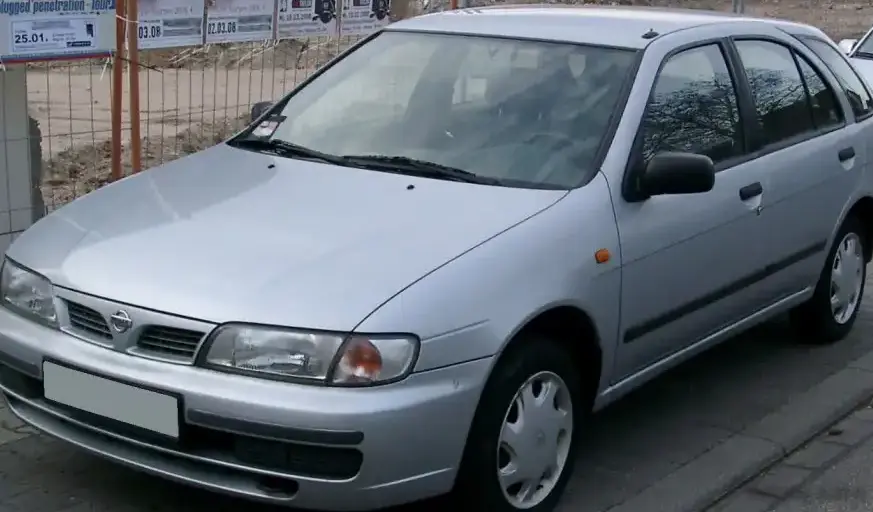
The Nissan Almera Classic (B10) 1.6 i 16V Automatic, produced between 2006 and 2010, represented a continuation of the Almera line, specifically tailored for markets where a more traditional, cost-effective sedan was preferred. This variant occupied a mid-range position within the B10 Almera Classic lineup, offering a balance between affordability and convenience with its automatic transmission. It was primarily sold in markets like Russia, Ukraine, and other Eastern European countries, where it served as a practical and reliable family vehicle. The B10 generation was essentially a facelifted and re-engineered version of the earlier Almera (N16) platform, adapted for localized production and market demands.
Technical Specifications
| Brand | Nissan |
| Model | Almera |
| Generation | Almera Classic (B10) |
| Type (Engine) | 1.6 i 16V (107 Hp) Automatic |
| Start of production | 2006 |
| End of production | 2010 |
| Powertrain Architecture | Internal Combustion engine |
| Body type | Sedan |
| Seats | 5 |
| Doors | 4 |
| Fuel consumption (urban) | 10.4 l/100 km (22.6 US mpg / 27.2 UK mpg / 9.6 km/l) |
| Fuel consumption (extra urban) | 6 l/100 km (39.2 US mpg / 47.1 UK mpg / 16.7 km/l) |
| Fuel consumption (combined) | 7.6 l/100 km (30.9 US mpg / 37.2 UK mpg / 13.2 km/l) |
| Fuel Type | Petrol (Gasoline) |
| Acceleration 0 – 100 km/h | 13.9 sec |
| Acceleration 0 – 62 mph | 13.9 sec |
| Acceleration 0 – 60 mph | 13.2 sec |
| Maximum speed | 177 km/h (109.98 mph) |
| Weight-to-power ratio | 11.1 kg/Hp |
| Weight-to-torque ratio | 7.9 kg/Nm |
| Power | 107 Hp @ 5600 rpm |
| Torque | 150 Nm @ 4000 rpm (110.63 lb.-ft. @ 4000 rpm) |
| Engine layout | Front, Transverse |
| Engine Model/Code | QG16DE |
| Engine displacement | 1597 cm3 (97.45 cu. in.) |
| Number of cylinders | 4 |
| Engine configuration | Inline |
| Cylinder Bore | 76 mm (2.99 in.) |
| Piston Stroke | 88 mm (3.46 in.) |
| Compression ratio | 9.5:1 |
| Number of valves per cylinder | 4 |
| Fuel injection system | Multi-port manifold injection |
| Engine aspiration | Naturally aspirated |
| Valvetrain | DOHC |
| Engine oil capacity | 2.7 l (2.85 US qt | 2.38 UK qt) |
| Coolant capacity | 6.6 l (6.97 US qt | 5.81 UK qt) |
| Kerb Weight | 1185 kg (2612.48 lbs.) |
| Max. weight | 1700 kg (3747.86 lbs.) |
| Max load | 515 kg (1135.38 lbs.) |
| Trunk (boot) space – minimum | 460 l (16.24 cu. ft.) |
| Fuel tank capacity | 55 l (14.53 US gal | 12.1 UK gal) |
| Length | 4510 mm (177.56 in.) |
| Width | 1710 mm (67.32 in.) |
| Height | 1440 mm (56.69 in.) |
| Wheelbase | 2535 mm (99.8 in.) |
| Front track | 1490 mm (58.66 in.) |
| Rear track | 1490 mm (58.66 in.) |
| Ride height (ground clearance) | 165 mm (6.5 in.) |
| Minimum turning circle | 10.6 m (34.78 ft.) |
| Drivetrain Architecture | Front wheel drive |
| Number of gears | 4 |
| Gearbox type | Automatic transmission |
| Front suspension | Spring Strut |
| Rear suspension | Torsion |
| Front brakes | Ventilated discs |
| Rear brakes | Drum |
| Assisting systems | ABS (Anti-lock braking system) |
| Steering type | Steering rack and pinion |
| Tires size | 175/70 R14; 185/65 R15 |
| Wheel rims size | 14; 15 |
Powertrain & Engine Architecture
The heart of the Almera Classic 1.6 i Automatic is the QG16DE engine, a 1.6-liter inline-four cylinder gasoline engine. This engine is a member of Nissan’s QG engine family, known for its relatively simple design and durability. The QG16DE features a dual overhead camshaft (DOHC) valvetrain with four valves per cylinder, contributing to its respectable power output for its displacement. Fuel delivery is managed by a multi-port fuel injection system, providing precise fuel metering for efficient combustion. The engine produces 107 horsepower at 5600 rpm and 150 Nm (110.63 lb-ft) of torque at 4000 rpm. Paired with the engine is a four-speed automatic transmission. While not the most modern transmission, it provided a convenient driving experience for those prioritizing ease of use over sporty performance. The transmission’s gear ratios were tuned for fuel efficiency and smooth acceleration, rather than aggressive shifts.
Driving Characteristics
The 1.6L automatic Almera Classic delivers a comfortable, if not particularly exciting, driving experience. Acceleration from 0-60 mph takes around 13.2 seconds, and top speed is rated at 177 km/h (109.98 mph). The automatic transmission contributes to a smooth ride, but it does impact performance compared to the available manual transmission options. The four-speed automatic lacks the close ratios of a modern gearbox, resulting in noticeable engine revving during acceleration. The power delivery is linear, but the engine feels strained when pushed hard, especially when fully loaded. The suspension is tuned for comfort, absorbing bumps and imperfections in the road well, but it doesn’t offer particularly sharp handling.
Equipment & Trim Levels
The 1.6 i Automatic trim typically included standard features such as power windows, central locking, air conditioning, and a basic audio system. Interior upholstery was usually cloth, with a relatively simple dashboard layout. Optional extras could include alloy wheels, a more advanced audio system, and sometimes, power mirrors. The Almera Classic was not positioned as a luxury vehicle, so the focus was on providing essential features at an affordable price point. Higher trim levels within the B10 range offered features like fog lights, upgraded interior materials, and more sophisticated audio systems.
Chassis & Braking
The Almera Classic utilizes a front-engine, front-wheel-drive layout. The front suspension consists of a MacPherson strut setup, while the rear employs a torsion beam axle. This configuration provides a good balance between ride comfort and handling. Braking duties are handled by ventilated discs at the front and drum brakes at the rear. An Anti-lock Braking System (ABS) was standard, enhancing safety by preventing wheel lockup during hard braking. The steering system is a rack and pinion type, offering reasonable precision and feedback.
Market Reception & Comparison
The Almera Classic 1.6 i Automatic was generally well-received in its target markets as a practical and affordable family sedan. Critics noted its comfortable ride, reliable engine, and reasonable fuel economy. However, the automatic transmission was sometimes criticized for its lack of responsiveness and limited number of gears. Compared to the manual transmission version, the automatic offered slightly worse fuel economy and slower acceleration. Against competitors like the Skoda Octavia or Renault Logan, the Almera Classic offered a similar level of practicality and affordability, but often lacked the more refined interior or advanced features of some rivals.
Legacy
The Nissan Almera Classic (B10) 1.6 i Automatic has proven to be a relatively reliable vehicle, with the QG16DE engine known for its longevity. In the used car market, these models are often sought after for their affordability and practicality. Maintenance costs are generally reasonable, and spare parts are readily available. While not a particularly exciting or technologically advanced vehicle, the Almera Classic 1.6 i Automatic served its purpose as a dependable and economical family sedan, leaving a lasting impression in the markets where it was sold.