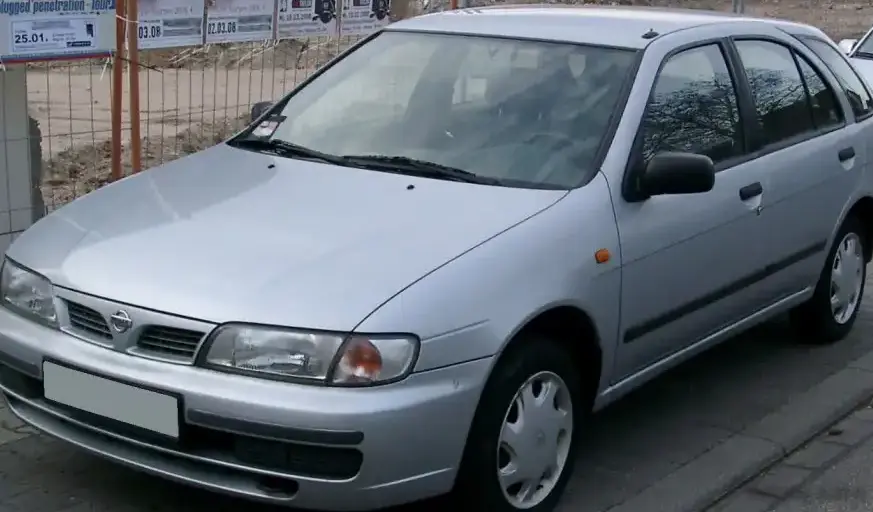
The Nissan Almera I Hatchback, specifically the 1.6-liter (99 horsepower) variant, was a key model in Nissan’s European lineup during the mid to late 1990s. Produced from 1995 to 2000, this iteration – designated the N15 series – represented Nissan’s entry into the competitive compact hatchback segment. Positioned as a practical and affordable option, the 1.6L model served as a mid-range offering, bridging the gap between the base 1.4-liter engine and the more powerful 1.6 SR trim. It was primarily aimed at buyers seeking a reliable and economical daily driver, offering a balance between performance and fuel efficiency.
Technical Specifications
| Brand | Nissan |
| Model | Almera |
| Generation | Almera I Hatchback (N15) |
| Type (Engine) | 1.6 (99 Hp) |
| Start of production | 1995 |
| End of production | 2000 |
| Powertrain Architecture | Internal Combustion engine |
| Body type | Hatchback |
| Seats | 5 |
| Doors | 3 |
| Fuel consumption (urban) | 8.6 l/100 km (27.4 US mpg) |
| Fuel consumption (extra urban) | 5.5 l/100 km (42.8 US mpg) |
| Fuel consumption (combined) | 7.2 l/100 km (32.7 US mpg) |
| Fuel Type | Petrol (Gasoline) |
| Acceleration 0 – 100 km/h | 11 sec |
| Acceleration 0 – 62 mph | 11 sec |
| Acceleration 0 – 60 mph | 10.5 sec |
| Maximum speed | 180 km/h (111.85 mph) |
| Weight-to-power ratio | 10.8 kg/Hp |
| Weight-to-torque ratio | 7.8 kg/Nm |
| Power | 99 Hp @ 6000 rpm |
| Torque | 136 Nm @ 4000 rpm (100.31 lb.-ft. @ 4000 rpm) |
| Engine layout | Front, Transverse |
| Engine Model/Code | GA16DE |
| Engine displacement | 1597 cm3 (97.45 cu. in.) |
| Number of cylinders | 4 |
| Engine configuration | Inline |
| Cylinder Bore | 76 mm (2.99 in.) |
| Piston Stroke | 88 mm (3.46 in.) |
| Compression ratio | 9.8:1 |
| Number of valves per cylinder | 4 |
| Fuel injection system | Multi-port manifold injection |
| Engine aspiration | Naturally aspirated engine |
| Valvetrain | DOHC |
| Engine oil capacity | 3.2 l (3.38 US qt | 2.82 UK qt) |
| Coolant capacity | 5.9 l (6.23 US qt | 5.19 UK qt) |
| Kerb Weight | 1065 kg (2347.92 lbs.) |
| Max. weight | 1595 kg (3516.37 lbs.) |
| Max load | 530 kg (1168.45 lbs.) |
| Trunk (boot) space – minimum | 340 l (12.01 cu. ft.) |
| Fuel tank capacity | 50 l (13.21 US gal | 11 UK gal) |
| Length | 4120 mm (162.2 in.) |
| Width | 1690 mm (66.54 in.) |
| Height | 1395 mm (54.92 in.) |
| Wheelbase | 2535 mm (99.8 in.) |
| Front track | 1470 mm (57.87 in.) |
| Rear (Back) track | 1435 mm (56.5 in.) |
| Drivetrain Architecture | Front wheel drive |
| Number of gears and type of gearbox | 5 gears, manual transmission |
| Front suspension | Wishbone |
| Rear suspension | Rigid axle suspension |
| Front brakes | Ventilated discs |
| Rear brakes | Drum |
| Assisting systems | ABS (Anti-lock braking system) |
| Steering type | Steering rack and pinion |
| Power steering | Hydraulic Steering |
| Tires size | 175/65 R14 |
Powertrain & Engine Architecture
The heart of the Almera 1.6 was the GA16DE engine, a 1.6-liter inline-four cylinder gasoline engine. This engine was a staple in Nissan’s lineup during the 1990s, known for its relative simplicity and durability. The GA16DE featured a double overhead camshaft (DOHC) valvetrain with four valves per cylinder, contributing to its respectable power output for its displacement. Fuel delivery was handled by a multi-port fuel injection system, optimizing combustion efficiency. The engine produced 99 horsepower at 6000 rpm and 136 Nm (100.31 lb-ft) of torque at 4000 rpm. The engine’s transverse mounting and front-wheel-drive configuration were typical for compact European hatchbacks of the era. The standard transmission was a five-speed manual, although a four-speed automatic transmission was also offered, impacting performance and fuel economy.
Driving Characteristics
The 1.6-liter Almera with the five-speed manual transmission offered adequate performance for everyday driving. Acceleration from 0 to 60 mph took around 10.5 seconds, and the top speed was approximately 112 mph. The engine felt reasonably responsive in the mid-range, making it suitable for both city and highway driving. The automatic transmission, while providing convenience, noticeably dulled acceleration, extending the 0-60 mph time to around 11 seconds. Gear ratios were tuned for fuel efficiency rather than outright performance. Compared to the higher-output 1.6 SR model, the standard 1.6 felt less eager to rev, but it provided a smoother and more relaxed driving experience. The manual transmission offered more driver engagement, while the automatic prioritized ease of use.
Equipment & Trim Levels
The 1.6-liter Almera typically came equipped with basic but functional features. Standard equipment included power steering, central locking, and an adjustable steering column. Interior upholstery was typically cloth, and the dashboard featured a straightforward layout with easy-to-read gauges. Optional extras included air conditioning, electric windows, and a radio/cassette player. Higher trim levels, such as the SE, added features like alloy wheels, upgraded interior trim, and a sunroof. The 1.6 model was generally considered a well-equipped base model, offering a good value for money.
Chassis & Braking
The Almera I Hatchback utilized a front independent suspension with wishbones and a rear rigid axle suspension. This setup provided a comfortable ride, although it wasn’t particularly sporty. The front brakes were ventilated discs, offering good stopping power, while the rear brakes were drums. Anti-lock Braking System (ABS) was available as an option, enhancing safety. The chassis was relatively lightweight, contributing to the car’s fuel efficiency. Stabilizer bars were fitted to both the front and rear axles, helping to reduce body roll during cornering.
Market Reception & Comparison
The Nissan Almera 1.6 was generally well-received by automotive critics as a practical and affordable hatchback. It was praised for its reliability, fuel efficiency, and comfortable ride. However, it was often criticized for its somewhat bland styling and uninspiring driving dynamics. Compared to rivals like the Ford Focus and Volkswagen Golf, the Almera lacked the same level of refinement and driving engagement. The 1.6-liter engine offered a good balance between performance and economy, making it a popular choice for buyers seeking a sensible and reliable car. The automatic transmission version, while convenient, suffered from reduced fuel economy and slower acceleration compared to the manual.
Legacy
The GA16DE engine proved to be a durable and reliable powerplant, and many Almera 1.6 models are still on the road today. While not known for its high performance, the engine’s simplicity and robust construction have contributed to its longevity. The Almera I Hatchback, particularly the 1.6-liter variant, remains a relatively affordable used car option, appealing to buyers seeking a practical and economical vehicle. Parts availability is generally good, and maintenance costs are relatively low. The N15 Almera represents a solid, if unremarkable, entry in the compact hatchback segment of the 1990s, offering a dependable and affordable transportation solution.